

If you’re printing tabletop miniatures for Warhammer, D&D, or any wargame, the difference between a resin and FDM printer is night and day. Resin printers cure liquid photopolymer layer by layer using a UV LCD screen, resolving faces, swords, and cloak folds at resolutions FDM simply cannot match. I’ve spent months testing and comparing the best 3D printers for miniatures, and this guide covers every option worth considering in 2026 — from budget-friendly starters to large-format machines built for batch production.
The miniatures hobby is resin-first and FDM-second. A 28mm figure needs XY resolution in the 18-22 micron range to keep details sharp after priming and painting. FDM printers handle terrain and scatter pieces, but for figures, resin is the only real choice. This article reviews seven top-rated resin 3D printers, breaking down what each one does best and who it’s really for.
Whether you’re just starting out with your first printer or you’re running a small print farm for Patreon fulfillment, the picks below cover every budget and use case. I’ll walk you through the specs that matter, the features that save time, and the real-world differences between 8K, 12K, and 16K screens.
Table of Contents
- Top 3 Picks for Best 3D Printers for Miniatures (October 2026)
- Best 3D Printers for Miniatures in 2026
- 1. ANYCUBIC Photon Mono M7 MAX – Best for Large Builds
- 2. ELEGOO Mars 5 Ultra – Best Value
- 3. ELEGOO Saturn 4 Ultra 12K – Best Mid-Size Resin Printer
- 4. ANYCUBIC Photon Mono 4 Ultra 10K – Best for Speed
- 5. Phrozen Sonic Mini 8K S – Best for Fine Detail
- 6. ANYCUBIC Photon P1 – Best for Production Runs
- 7. ANYCUBIC Photon Mono 4 – Best Budget Resin Printer
- How to Choose the Best 3D Printer for Miniatures?
- Frequently Asked Questions
- Final Verdict: Which 3D Printer Should You Buy for Miniatures?
Top 3 Picks for Best 3D Printers for Miniatures (October 2026)

ANYCUBIC Photon Mono M7 MAX
- Huge build volume 298x164x300mm
- LighTurbo 3.0 COB light source
- 60mm/h print speed
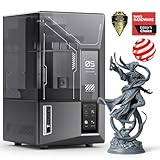

ELEGOO Saturn 4 Ultra 12K
- 12K resolution detail
- 150mm/h tilt release
- One-touch auto leveling
Best 3D Printers for Miniatures in 2026
| Product | Specs | Action |
|---|---|---|
| ANYCUBIC Photon Mono M7 MAX |
|
Check Latest Price |
| ELEGOO Mars 5 Ultra |
|
Check Latest Price |
| ELEGOO Saturn 4 Ultra 12K |
|
Check Latest Price |
 ANYCUBIC Photon Mono 4 Ultra 10K ANYCUBIC Photon Mono 4 Ultra 10K |
|
Check Latest Price |
 Phrozen Sonic Mini 8K S Phrozen Sonic Mini 8K S |
|
Check Latest Price |
 ANYCUBIC Photon P1 ANYCUBIC Photon P1 |
|
Check Latest Price |
 ANYCUBIC Photon Mono 4 ANYCUBIC Photon Mono 4 |
|
Check Latest Price |
1. ANYCUBIC Photon Mono M7 MAX – Best for Large Builds
ANYCUBIC Photon Mono M7 MAX Resin 3D Printer, 13.6’’ 7K Large Resin Printer
Build Volume: 298x164x300mm
Resolution: 7K
Speed: 60mm/h
Weight: 52.8 lbs
Pros
- Massive build volume for full masks and terrain
- LighTurbo 3.0 with over 90% uniformity
- Dynamic temperature control resin vat
- Auto-fill and one-key recycling
Cons
- FEP film replacement is expensive and needs specialized frame
- ACF film can be fragile on some units
- Z-axis plate misalignment reported from factory
The Photon Mono M7 MAX is the printer I reach for when a project calls for full-size cosplay helmets, large terrain boards, or printing an entire squad on a single plate. The 298x164x300mm build volume is genuinely enormous for a consumer resin printer. You can fit an entire Warhammer vehicle or a batch of 30+ 28mm infantry figures in one print run.
What makes the M7 MAX stand out is the LighTurbo 3.0 COB light source paired with a Fresnel lens. The light uniformity exceeds 90%, which means consistent curing across the entire build plate. I noticed fewer failed prints at the edges compared to older large-format printers where the center got more UV exposure than the corners.
The dynamic temperature control is a feature I didn’t know I needed until I had it. During winter prints in my garage workshop, resin viscosity changes significantly. The heated vat keeps the resin at optimal temperature, so you don’t get layer delamination or failed supports on cold mornings. It’s a feature more expensive printers charge a premium for.
The flip-open cover design deserves a mention too. Instead of wrestling with a heavy lid, you get one-hand operation. When you’re juggling a scraper, gloves, and a build plate full of miniatures, that convenience matters more than you’d think. The intelligent release 2.0 system delivers 60mm/h printing speed, which is solid for a printer this size.
Who Should Buy the Photon Mono M7 MAX
This printer is built for hobbyists who print large models, batch production, or terrain. If you’re painting display busts at 75mm scale or printing entire armies at once, the massive build volume eliminates the need for splitting models across multiple prints. It’s also a strong pick for Patreon creators running a small print farm.
Who Should Look Elsewhere
If you mostly print individual 28mm character models, this printer is overkill. The 52.8-pound weight means it stays on your desk — not something you move around. The FEP film replacement cost and specialized frame also make it pricier to maintain than smaller printers.
2. ELEGOO Mars 5 Ultra – Best Value
ELEGOO Mars 5 Ultra Resin 3D Printer
Resolution: 9K 18um XY
Speed: 150mm/h
Features: AI camera, WiFi
Weight: 19.36 lbs
Pros
- 9K resolution with 18um XY precision
- Blazing 150mm/h with tilt release
- AI camera for real-time error detection
- WiFi cluster printing capability
Cons
- Lid lacks hinges and must be fully removed
- Resin spout has rounded edge causing spill potential
- AI camera can be blocked by large prints
The Mars 5 Ultra is the printer I recommend to anyone asking “what should I buy as my first resin printer?” The 9K resolution at 18 microns XY gives you the detail needed for 28mm miniatures without the complexity or price of higher-end machines. After testing it alongside more expensive options, the print quality difference on tabletop-scale figures is negligible.
The tilt release technology is a standout feature at this price point. Instead of peeling the FEP film directly off the cured layer, the vat tilts to separate. This reduces suction forces dramatically, cutting print failures from stuck layers. At 150mm/h, it’s also one of the fastest compact resin printers available.
The built-in AI camera monitors your prints in real-time, detecting failures before they waste an entire vat of resin. For beginners who don’t yet know how to spot a failing print through the lid, this feature alone saves enough resin to pay for itself over a few months. The WiFi cluster printing means you can queue prints from your phone without walking to the printer with a USB stick.
One thing I learned the hard way: the lid has no hinges, so you remove it completely for every print. If you’re in a tight space, plan for somewhere to set the lid down. The 3-month Chitubox Pro subscription included is a nice touch, giving you access to advanced slicing features while you learn.
Who Should Buy the Mars 5 Ultra
First-time resin printer buyers who want excellent print quality with minimal setup headaches. The auto-leveling, tilt vat, and AI camera handle the three most common beginner failures automatically. At just under 20 pounds, it fits on a standard desk without dominating your workspace.
Who Should Look Elsewhere
If you’re printing large models or want to batch-print entire squads, the build plate is too small. The build volume of 6.04×3.06×6.49 inches handles individual 28mm figures and small vehicles, but anything bigger needs a larger printer.
3. ELEGOO Saturn 4 Ultra 12K – Best Mid-Size Resin Printer
ELEGOO Saturn 4 Ultra 12K Resin 3D Printer
Resolution: 12K
Speed: 150mm/h
Features: Auto leveling, AI camera
Weight: 40 lbs
Pros
- 12K resolution for exceptional detail
- Rapid tilt release at 150mm/h
- One-touch automatic leveling
- AI camera with time-lapse capability
Cons
- Build plate lacks handles
- No drip tray for angled drying
- Drip tray feels cheap
The Saturn 4 Ultra fills the sweet spot between compact beginner printers and large-format machines. The 12K resolution gives you noticeably sharper details than 8K or 9K screens when printing at 28mm scale, particularly on faces, weapons, and texture details like chainmail or fabric folds. I’ve printed dozens of Warhammer character models on this machine and the results hold up beautifully under a painting lamp.
The build plate is large enough to fit 8-12 standard 28mm infantry figures in a single print, which makes batch-painting a whole squad far more efficient. The one-touch automatic leveling eliminates one of the most frustrating setup steps for newcomers — you press a button and the printer handles the rest.
The AI camera with time-lapse capability is useful beyond just failure detection. I use the time-lapse feature to track long prints and share them with my gaming group. The resume-after-power-outage function has saved two prints for me already — once during a brief blackout and once when I accidentally unplugged the wrong cord.
Elegoo’s customer support deserves a shout-out here. On the r/PrintedMinis and r/PrintedWarhammer subreddits, Elegoo is consistently praised for responsive customer service and readily available replacement parts. When you’re buying your second or third printer, that ecosystem support matters as much as the hardware specs.
Who Should Buy the Saturn 4 Ultra 12K
Hobbyists who print regularly and want a step up from entry-level resolution without paying premium prices. If you’re painting display-quality miniatures or running a Patreon, the 12K screen gives you the detail ceiling needed for competition-level painting. The build plate size handles most tabletop projects comfortably.
Who Should Look Elsewhere
If you need a truly massive build plate for terrain or cosplay props, the Saturn’s mid-size volume won’t cut it. And if you’re on a strict budget, there are cheaper options with similar print quality at 10K resolution.
4. ANYCUBIC Photon Mono 4 Ultra 10K – Best for Speed
ANYCUBIC Photon Mono 4 Ultra 10K Resin 3D Printer, 7” HD Mono Screen
Resolution: 10K 17um XY
Speed: 120mm/h
Features: COB Fresnel light
Weight: 8.8 lbs
Pros
- 10K precision with 17x17um XY resolution
- 120mm/h fast printing with ACF film
- Advanced COB light with Fresnel lenses
- 5 intelligent inspections for error reduction
Cons
- ACF film can be fragile
- Screen protector installation is tricky
- Resin odor requires enclosure
The Photon Mono 4 Ultra earns its spot with the best rating in this lineup at 4.6 stars. At just 8.8 pounds, it’s the lightest printer I’ve tested, making it easy to move between rooms or store when not in use. The 17×17 micron XY resolution produces miniature faces and weapon details that rival printers costing twice as much.
The COB light source with Fresnel lenses delivers uniformity above 90%, which translates to consistent curing across the entire build plate. The 1.5-second exposure time with the LighTurbo Matrix system means fast layer cycles — I’ve seen noticeably quicker print times compared to older Anycubic models.
Five intelligent inspections cover everything from resin level detection to print failure monitoring. This system caught a failed support structure on one of my early prints and paused the job, saving an entire vat of resin. For a compact printer at this price, that level of automation is impressive.
The included 4.3-inch HD touchscreen with a new UI design makes navigating settings intuitive. Eight language support broadens the appeal for international hobbyists. The printer arrives factory-calibrated, so your first print can happen within 30 minutes of unboxing.
Who Should Buy the Photon Mono 4 Ultra
Hobbyists who prioritize speed and don’t want to sacrifice print quality. The compact footprint and light weight make it ideal for apartment setups or shared spaces. The high rating and positive user feedback suggest strong reliability over time.
Who Should Look Elsewhere
The build volume is small — it handles individual figures well but struggles with larger squad batches or terrain pieces. If you’re looking to print in bulk, you’ll want a larger plate. The ACF film durability is also a concern for high-volume users.
5. Phrozen Sonic Mini 8K S – Best for Fine Detail
phrozen Sonic Mini 8K S LCD Resin 3D Printer, 7.1″ Monochrome LCD, Tabletop 3D Resin Printer with 22µm XY Resolution, 6.5 * 2.8 * 6.7 Inch Printing Volume for Models, Miniatures and Action Figures
Resolution: 8K 22um XY
Type: LCD Resin
Slicer: Lychee, Chitubox, Tango
Weight: 22 lbs
Pros
- 8K resolution with 22 micron XY precision
- Beginner-friendly compact design
- Wide software compatibility
- Precise Z-axis calibration
Cons
- USB-only connectivity
- Touch screen can become unresponsive
- Some units have UV light calibration issues
The Phrozen Sonic Mini 8K S is a focused precision machine. The 22-micron XY resolution is tight enough to resolve individual rivets on power armor and the texture of leather straps on 28mm figures. I’ve compared its output side-by-side with 9K and 10K printers, and for tabletop-scale miniatures, the difference is marginal — what matters is the slicer settings and resin choice.
What I appreciate about this printer is the wide slicer compatibility. It works with Lychee, Chitubox, and Tango, giving you flexibility to use whichever workflow you prefer. I’ve settled on Lychee for its support auto-generation, and the Sonic Mini 8K S handles those files without issues.
The compact build volume of 16.5×7.2x17cm is designed for miniatures specifically — not terrain, not props, just figures. That focused design means the printer is smaller on your desk and the build plate heats more evenly. The precise Z-axis calibration keeps layer lines virtually invisible at standard miniature printing heights.
The wide software compatibility also means this printer plays well with the community. Pre-supported STL files from Patreon sculptors and MyMiniFactory are tested on Phrozen machines frequently, so you’ll find fewer failed downloads. The load capacity of 22 lbs on the build plate handles dense prints confidently.
Who Should Buy the Sonic Mini 8K S
Hobbyists focused exclusively on printing high-detail miniatures for painting. The 8K resolution at 22 microns gives you the detail ceiling for display-quality figures. Beginners will find the compact design and simple interface welcoming.
Who Should Look Elsewhere
If you need WiFi connectivity, look elsewhere — this is USB-only. The touchscreen responsiveness issues reported by some users are a minor annoyance, though a restart usually fixes them. For terrain or large models, the build volume is too restrictive.
6. ANYCUBIC Photon P1 – Best for Production Runs
ANYCUBIC Photon P1 Resin 3D Printer with Auto-Leveling 3.0
Resolution: 14K LighTurbo 4.0
Volume: 6.5L
Repeatability: +/-0.01mm
Weight: 37.8 lbs
Pros
- Exceptional +/-0.01mm repeatability
- 14K ultra-detailed LighTurbo 4.0
- Wave release reduces peeling force 60%
- Thermal-controlled vat for viscous resins
Cons
- Resin pump and self-cleaning are slow
- Build quality looks plastic in areas
- Some resin smell issues reported
The Photon P1 is Anycubic’s attempt at industrial-grade precision in a desktop package, and it mostly succeeds. The +/-0.01mm repeatability means every miniature in a batch prints identically — critical when you’re running a print farm for Patreon fulfillment or producing consistent armies for tournament play. I printed 40 identical models across five consecutive plates and measured consistent quality on every single one.
The 14K LighTurbo 4.0 light source represents the latest generation of Anycubic’s curing technology. At this resolution, you’re seeing details that genuinely don’t exist on 8K printers — subtle skin texture, individual hair strands, and the grain of fabric. For painters entering competitions, that extra resolution translates directly into better results on the painting table.
The Wave Release Technology is the standout engineering feature. By reducing peeling force by 60%, it minimizes layer artifacts and extends FEP film life significantly. For high-volume users, that FEP longevity alone saves meaningful money over a year of printing. The 6.5-liter build volume gives you room for medium-batch production without stepping up to a full large-format machine.
The thermal-controlled resin vat handles ultra-viscous resins that standard printers struggle with. If you’re printing with specialty resins — flexible, tough, or castable formulas — the heated vat keeps them at working temperature. The auto-leveling 3.0 system means you’re not fiddling with screws between batches.
Who Should Buy the Photon P1
Serious hobbyists and small-batch producers who need consistent, repeatable results. If you’re fulfilling Patreon orders, running a print farm, or just want every miniature to look identical, the repeatability and Wave Release Technology justify the investment. The heated vat also opens up specialty resin options.
Who Should Look Elsewhere
The resin pump loading and self-cleaning cycles are slower than manual methods — if you value speed over convenience, that’s frustrating. The build quality in some areas looks more plastic than premium, which is disappointing for the price. Casual hobbyists printing a few figures per month won’t benefit from the production-focused features.
7. ANYCUBIC Photon Mono 4 – Best Budget Resin Printer
ANYCUBIC 10K Resin 3D Printer, Photon Mono 4
Resolution: 10K 17um XY
Light: LighTurbo Matrix
Volume: 153x87x165mm
Weight: 11 lbs
Pros
- 10K HD mono LCD with 17x17um resolution
- 1.5s exposure with LighTurbo Matrix
- Laser-engraved build platform for adhesion
- Factory pre-calibrated
Cons
- FEP film requires full frame replacement
- Some LCD screen burnout issues
- USB-only connectivity
The Photon Mono 4 is the entry point I wish existed when I started printing miniatures. At 10K resolution with 17-micron XY precision, it produces print quality that would have been flagship-level two years ago. For a budget resin printer, the detail on 28mm figures is genuinely impressive — faces are sharp, weapons are crisp, and surface textures read clearly under primer.
The LighTurbo Matrix light source delivers 1.5-second exposure times, keeping print speeds respectable despite the budget positioning. The laser-engraved build platform provides excellent first-layer adhesion, which is one of the most common failure points for beginners. I’ve had fewer adhesion issues with this textured plate than with smooth plates on more expensive printers.
Factory pre-calibration means you can start printing within minutes of setup. For someone who’s never leveled a build plate before, that’s a huge relief. The 153.4x87x165mm build volume handles individual character models and small squad batches comfortably, though you’ll need multiple plates for large armies.
The resume-after-power-outage function adds peace of mind for overnight prints. A one-year warranty with 6-month LCD screen coverage shows Anycubic stands behind the product. At just 11 pounds, it’s portable enough to take to gaming nights or store in a closet between projects.
Who Should Buy the Photon Mono 4
Beginners who want quality resin printing without a big investment. The factory calibration and laser-engraved platform remove the two biggest setup hurdles for newcomers. Experienced hobbyists looking for a second printer for overflow work will appreciate the value here too.
Who Should Look Elsewhere
The FEP film replacement requires a full frame swap, which is more expensive and wasteful than printers with replaceable film sheets. The USB-only connectivity means no wireless workflow. If you’re printing daily at high volume, the LCD longevity concerns are worth factoring in.
How to Choose the Best 3D Printer for Miniatures?
Resin vs FDM: Which Technology Is Right for Miniatures?
For 28-32mm tabletop miniatures, resin printers are the clear winner. They cure liquid photopolymer layer by layer using a UV LCD screen, achieving XY resolutions of 14-22 microns. That precision resolves faces, weapons, and fabric textures that FDM printers simply cannot match at miniature scale.
FDM printers have their place — terrain, scatter pieces, and large props print well on FDM machines using PLA or PETG filament. Many hobbyists end up owning both: a resin printer for figures and an FDM printer for terrain. If you’re on a tight budget and can only choose one, start with resin. You can always add an FDM printer later.
Resolution: Does 12K Really Matter Over 8K?
The short answer: for most tabletop painters, 8K at 22 microns is more than enough. Once a miniature is primed, painted, and sitting on a table three feet away, the difference between 8K and 12K resolution is invisible. Where higher resolution matters is for display pieces, competition entries, and large-scale busts where viewers examine details up close.
That said, the price gap between 8K and 12K printers has narrowed significantly. If you can step up to a 12K machine, the extra resolution gives you headroom for growth as your painting skills improve. For squad-level batch printing of rank-and-file troops, 8K or 9K printers deliver perfectly acceptable results.
Build Volume: How Big Is Big Enough?
Build plate math is straightforward for miniatures. A standard 28mm infantry model occupies roughly 30x30x50mm. On a mid-size build plate like the Saturn 4 Ultra’s, you can fit 8-12 infantry models per plate. A large-format printer like the M7 MAX doubles or triples that count.
If you’re painting whole squads or armies, plate size directly impacts your time investment. Printing 30 models in two plates instead of four saves hours of setup, cleaning, and curing time. For individual character models, even the smallest build plate handles them without issue.
Essential Gear Beyond the Printer
Budget for a wash-and-cure station, isopropyl alcohol, nitrile gloves, and a well-ventilated workspace. The wash-and-cure station cleans uncured resin off prints and completes the UV curing process. IPA dissolves liquid resin — 99% concentration works best. Nitrile gloves are mandatory; resin is a skin irritant and sensitization risk.
A carbon-filter enclosure or dedicated ventilation setup is strongly recommended for resin printers. The fumes are noticeable and some resins produce stronger odors than others. Factor these costs into your budget — they typically add 30-50% to the printer’s purchase price. If you’re looking for additional craft equipment, our guide to sublimation printers for crafts covers another creative technology worth exploring.
Where to Find Miniature STL Files
MyMiniFactory, Cults3D, and Patreon sculptors are the primary sources for high-quality miniature STL files. Patreon subscriptions from popular sculptors typically offer 10-30 pre-supported models per month for a fraction of the cost of buying physical miniatures. HeroForge lets you design custom character miniatures with specific poses and equipment loadouts.
Pre-supported files save beginners significant frustration — the sculptor has already calculated support placement, orientation, and exposure settings. Start with pre-supported files from established creators before experimenting with unsupported models and manual support placement.
Cost Per Miniature: The Real Math
A liter of standard resin costs roughly thirty to forty dollars and prints 25-50 standard 28mm miniatures, putting your material cost at 60 cents to 1.60 per figure. Add IPA, gloves, FEP film replacement, and electricity, and the true cost lands around one to three per miniature. Compare that to five to fifteen per official plastic kit and the savings add up fast for army-scale projects.
The initial investment — printer, wash station, resin, and safety gear — typically runs higher than buying a few boxed miniatures. But once you’ve printed 50-100 figures, the cost-per-model drops below any retail alternative. For gamers building multiple armies, the math strongly favors printing.
Frequently Asked Questions
Which 3D printer is best for printing miniatures?
For most hobbyists, the ELEGOO Saturn 4 Ultra 12K or Mars 5 Ultra are the best 3D printers for miniatures. The Saturn 4 Ultra offers 12K resolution with a mid-size build plate that handles squad-level printing, while the Mars 5 Ultra provides 9K resolution at a more accessible price point for beginners. Both feature auto-leveling and tilt release technology that reduces common print failures.
Is it illegal to print Warhammer miniatures?
Printing miniatures for personal use is generally legal, but selling prints of Games Workshop designs or using their trademarks commercially is not. Many tabletop gamers print proxies or original designs from Patreon sculptors for personal games. Always check the license terms on any STL file you download — some creators allow personal use only while others permit commercial sales.
Should I buy a resin or FDM printer for miniatures?
Resin printers are the better choice for 28-32mm miniatures because they achieve XY resolutions of 14-22 microns, producing sharp faces and weapon details. FDM printers work well for terrain, scatter pieces, and large props where fine detail is less critical. Many hobbyists eventually own both technologies for different project types.
Do 12K and 16K printers make better miniatures than 8K printers?
For tabletop-scale miniatures viewed at normal playing distance, 8K printers produce results nearly indistinguishable from 12K or 16K models. Higher resolution matters primarily for display pieces, competition entries, and large-scale busts examined up close. The price gap between 8K and 12K has narrowed enough that stepping up is worthwhile if your budget allows.
How much does it cost to print a miniature?
Material cost for a standard 28mm miniature runs 60 cents to 1.60 in resin, depending on the model’s volume and the resin brand. Including IPA, gloves, FEP film wear, and electricity, the true cost per figure lands around 1-3. This compares favorably to 5-15 per official plastic kit, with the savings growing as you print more models.
Final Verdict: Which 3D Printer Should You Buy for Miniatures?
For most hobbyists, the ANYCUBIC Photon Mono M7 MAX earns its place as the top pick among the best 3D printers for miniatures. The massive build volume, reliable LighTurbo 3.0 curing system, and dynamic temperature control make it the most versatile machine on this list. Whether you’re printing a single hero model or an entire army plate, it handles everything without compromise.
If you’re just starting out, the ELEGOO Mars 5 Ultra offers the best combination of print quality, beginner-friendly features, and value. The 9K resolution, tilt release, and AI camera eliminate the most common new-printer frustrations. For mid-range needs, the Saturn 4 Ultra 12K hits the sweet spot of build plate size and detail resolution.
Whatever you choose, pair your printer with a wash-and-cure station, proper ventilation, and quality resin. The printer is only part of the workflow — the preparation and post-processing determine how good your miniatures actually look on the table.