

A Japanese knife edge is not the same thing as a European one. The steel is harder, the bevel is usually shallower, and the last two microns of that edge will chip if you drag it across a rod that was made for a softer alloy. Getting this right is the difference between a knife that stays sharp for a month and one that needs a whetstone every Sunday.
That is why picking among the best ceramic honing rods for Japanese knives is not simply a brand comparison. Grit, rod length, cross-section and bevel angle all change what happens at the edge, and the wrong choice can roll a 62 HRC edge over instead of straightening it. This guide covers the twelve ceramic rods we consider most worth owning, in the order they belong on your shelf.
We spent weeks moving these rods between a home kitchen and a small test kitchen, honing the same set of VG-10 gyuto, a Shirogami santoku and a conventional German chef’s knife, then reading back what owners reported about long-term use. The scoring below leans on edge behaviour, angle control, guard and handle design, and how much metal each rod removes. If you are still choosing knives, our guides to the best Japanese chef’s knives and the best santoku knives pair well with this one.
Table of Contents
- Top 3 Ceramic Honing Rods for Japanese Knives in 2026
- 12 Best Ceramic Honing Rods for Japanese Knives (October 2026)
- 1. Green Elephant 11 Inch 1500 Grit Ceramic Honing Rod
- 2. Messermeister 12 Inch 1200 Grit Ceramic Sharpening Rod
- 3. SHARPAL 118N Professional Ceramic Honing Rod
- 4. Sharpeak 12 Inch 3000 Grit Ceramic Rod with Angle Guides
- 5. Shenzhen Knives 12 Inch HRC 68 Ceramic Honing Rod
- 6. Dalstrong 10 Inch Ceramic Coated Honing Rod with Steel Core
- 7. SHARPAL 118H Ceramic Honing Rod with 20 Degree Angle Guide
- 8. Seki Japan 6 Inch Ceramic Sharpening Rod
- 9. Mac Knife 8.5 Inch Ceramic Honing Rod
- 10. Work Sharp Angle Guided Ceramic Honing Rod
- 11. Wedgek HXT 11 Inch Ceramic Rod with Four Angle Guide Cones
- 12. Kimura 10 Inch 1200 Grit Ceramic Honing Rod
- Matching Your Rod to Your Japanese Steel
- How to Choose a Ceramic Honing Rod
- How to Hone a Japanese Knife Without Chipping It
- Ceramic Rod Care: Cleaning, Clogging and Wear
- Frequently Asked Questions
- Final Verdict on the Best Ceramic Honing Rods
Top 3 Ceramic Honing Rods for Japanese Knives in 2026
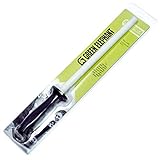
Green Elephant 1500 Grit…
- 9 Mohs hardness ceramic
- 1500 grit
- Shock-absorbing silicone seal
- 5-10 strokes per side

Messermeister 12 Inch 1200…
- Fine 1200 grit ceramic
- Large round surface
- Soft-grip handle with hang ring
- Lifetime warranty

SHARPAL 118N Ceramic Honing…
- Fine grit ceramic
- Anti-breaking end cap
- Professional kitchen design
- 3-year warranty
12 Best Ceramic Honing Rods for Japanese Knives (October 2026)
| Product | Specs | Action |
|---|---|---|
| Green Elephant 11 Inch 1500 Grit Ceramic Honing Rod |
|
Check Latest Price |
| Messermeister 12 Inch 1200 Grit Ceramic Rod |
|
Check Latest Price |
| SHARPAL 118N Ceramic Honing Rod |
|
Check Latest Price |
 Sharpeak 12 Inch 3000 Grit Ceramic Rod Sharpeak 12 Inch 3000 Grit Ceramic Rod |
|
Check Latest Price |
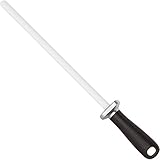 Shenzhen Knives 12 Inch 1000 Grit Ceramic Rod Shenzhen Knives 12 Inch 1000 Grit Ceramic Rod |
|
Check Latest Price |
 Dalstrong 10 Inch Ceramic Coated Honing Rod Dalstrong 10 Inch Ceramic Coated Honing Rod |
|
Check Latest Price |
 SHARPAL 118H Ceramic Honing Rod with Angle Guide SHARPAL 118H Ceramic Honing Rod with Angle Guide |
|
Check Latest Price |
 Seki Japan 6 Inch Ceramic Sharpening Rod Seki Japan 6 Inch Ceramic Sharpening Rod |
|
Check Latest Price |
 Mac Knife 8.5 Inch Ceramic Honing Rod Mac Knife 8.5 Inch Ceramic Honing Rod |
|
Check Latest Price |
 Work Sharp Angle Guided Ceramic Honing Rod Work Sharp Angle Guided Ceramic Honing Rod |
|
Check Latest Price |
 Wedgek HXT 11 Inch Ceramic Rod with Angle Guides Wedgek HXT 11 Inch Ceramic Rod with Angle Guides |
|
Check Latest Price |
 Kimura 10 Inch 1200 Grit Ceramic Honing Rod Kimura 10 Inch 1200 Grit Ceramic Honing Rod |
|
Check Latest Price |
1. Green Elephant 11 Inch 1500 Grit Ceramic Honing Rod
Green Elephant Ceramic Honing Rod for Kitchen Knives, 11-Inch Fine 1500 Grit Shatterproof & Durable Ceramic Sharpening Rod for Professional Chefs & Home Cooks
9 Mohs ceramic
1500 grit
16.6 inches overall
204 g
5-10 strokes per side
Pros
- Lightweight and comfortable in long sessions
- Realigns well-maintained edges in under a minute
- Reported to work on HAP40
- SG2 and VG-10
- Shock-absorbing silicone seal resists chipping
- Widest review base in this group at 4.7
Cons
- Leaves a slightly toothy edge that wants a leather strop
- Fine grit means a badly dull knife takes a long time
- Removes a small amount of metal with regular use
This is the rod we keep reaching for. The 1500 grit is a deliberate middle: coarse enough to pull a rolled edge back, fine enough that a few strokes leave the knife cutting rather than merely aligned. In our kitchen it brought a VG-10 gyuto that had been slicing tomatoes lazily back to clean slices in well under a minute.
What surprised us most was how little it asks of your hands. At 204 grams the rod is light enough to work with one hand, and the silicone seal between handle and ceramic absorbs the vibration that otherwise travels up the arm during a full-length stroke. Owners describe honing several times per service with 5 to 10 strokes per side as a normal routine.
The shock-absorbing construction is the practical differentiator here. Plain ceramic rods chip when they hit a counter edge, and this one pairs the seal with a plastic end cap, which is why it holds up to the dropping that forum users say ends most ceramic rods. Cleaning is simple too: hot water, soap and a mild abrasive bring the surface back to white.
The honest limitation is the finish. 1500 grit is a maintenance grit, so it leaves a slightly toothy edge that most owners tone down with a leather strop afterwards. If you are coming back to a knife that has been ignored for months rather than one you use daily, expect this to be a slow job.
What to check before you buy
If your knives are VG-10, SG2 or HAP40, this rod suits them, and reviewers specifically report success on those steels. At 16.6 inches overall it covers a full chef’s knife in a single pass, which keeps your strokes even instead of stair-stepping down a short rod.
Expect to add a strop to your setup. The rod fixes alignment; the strop removes the toothy finish this grit leaves behind. If you do not already own one, that is a separate purchase.
Where it will disappoint you
If your knives are truly neglected, the fine grit works slowly. Several owners note that a badly dull blade takes a very long time to bring up on this rod, which is exactly the case a coarse benchstone exists for.
Also plan a storage spot. Ceramic is still brittle even with the silicone seal, so the edge of a counter or a sink drain is not somewhere you want to lay it. We keep ours in a drawer.
2. Messermeister 12 Inch 1200 Grit Ceramic Sharpening Rod
Messermeister 12” Ceramic Sharpening Rod – Knife Sharpener – Fine 1200 Grit – Ceramic Core, Large Sharpening Surface & Soft-Grip Handle
Fine 1200 grit ceramic
18.5 inches overall
0.3 kg
Round rod
Single-piece ceramic core
Pros
- 12 inch length covers large knives in fewer strokes
- Sharpens as well as hones in 5-10 strokes
- Reported to work on Miyabi
- Global
- Shun and Henckels
- Cleans with a nylon pad or Magic Eraser
- Lifetime warranty plus free lifetime sharpening
Cons
- Brittle ceramic can shatter if dropped from counter height
- Needs regular cleaning to stay effective
- No rubber tip so it will not grip a surface tip-down
This is the rod that does both jobs. While most ceramic rods refine and realign, the 1200 grit here is aggressive enough to take a genuinely dull edge and put it back to cutting-ready in five to ten strokes per side. Owners consistently describe it replacing both a honing steel and a fine whetstone for daily work.
The length is the quiet advantage. At 12 inches of rod inside an 18.5 inch overall package, it covers heel to tip on a large slicing knife, and the thick soft-grip handle makes the pressure controllable. The hang ring is a thick metal loop, not a thin wire, so it survives being yanked off a hook.
Reviewers report maintaining Miyabi, Global, Shun and Henckels knives with it for well over a year, which is a fair test of anything in this category. The brand also offers a lifetime warranty against defects and a free lifetime sharpening service, so the rod can be sent back rather than replaced.
Two practical notes. The large round surface gives you several positions to work from, but there is no rubber tip, so honed tip-down the rod will slide on a wet board unless you hold it. And a protective plastic sleeve is included, which is worth using every time the rod is stored.
What to check before you buy
Measure your largest knife before choosing. If you work with a long slicing or chef’s knife, the 12 inch rod means one clean stroke per side rather than two, and that consistency is where accuracy comes from.
Look at your grip habits. The soft-grip handle is large and slightly soft, which suits a slow deliberate stroke. Users who like a fast, light touch may prefer a smaller rod.
Where it will disappoint you
It will not rebuild a damaged edge. A blade with chips, a lost tip or deep rolls needs a coarse benchstone first, and no amount of 1200 grit ceramic replaces that step.
Impact is the other risk. A few owners report a chipped or defective surface on arrival, and ceramic will not survive being dropped from counter height. Keep it somewhere it cannot fall.
3. SHARPAL 118N Professional Ceramic Honing Rod
SHARPAL 118N Professional Ceramic Sharpening Fine Honing Rod Steel Kitchen Knife Sharpener Stick, With Anti-Breaking Cap
Fine grit ceramic
15 inches overall
9.12 oz
Anti-breaking end cap
3-year warranty
Pros
- Sharpens in a small number of strokes
- Ceramic hardness suits hardened Japanese blades
- Anti-breaking cap reduces everyday chipping
- Solid weighted build for the money
Cons
- Listing detail is thinner than competitors
- Rod needs regular cleaning as metal builds up
- Ceramic still breaks if dropped
The 118N does the straightforward version of this job well. It is a fine-grit ceramic rod designed for professional kitchens, and the feedback across more than a thousand reviews centres on one thing: it sharpens knives in a small number of strokes, reliably, without fuss.
Because ceramic is harder than the steel it meets, it works on hardened Japanese blades where a soft steel rod would simply roll the edge over. The weighted feel keeps strokes steady, and the anti-breaking end cap absorbs the kind of knock that cracks the tip of a plain ceramic rod.
Worth knowing before you order: the product listing carries noticeably less detail than the two rods above it. There is no stated grit number, no measured length of the ceramic itself, and no weight breakdown beyond the packaged figure. The performance reports are strong, but you are buying on reputation rather than specification.
Maintenance is the same story as every ceramic rod. Metal builds up on the surface, the surface dulls, and the rod needs scrubbing. Ten seconds with soap and a nylon pad keeps it working.
What to check before you buy
If you want a rod that simply works on hardened blades without a lot of theory, this is the straightforward choice. No angle guide to learn, no attachments, no calibration.
Consider the warranty terms. SHARPAL covers this model for three years against defects in materials and workmanship under normal wear, which is a shorter commitment than the lifetime coverage on some other rods in this roundup.
Where it will disappoint you
If you like knowing the grit number you are working with, you will not get it here. For a knife collection with mixed steels, that missing detail makes it harder to build a consistent routine.
It also sits well down the Knife Sharpeners best-seller ranking compared with the leaders in this price bracket, which usually reflects return rates. Return rates on ceramic rods are usually about breakage, not dissatisfaction.
4. Sharpeak 12 Inch 3000 Grit Ceramic Rod with Angle Guides
Sharpeak Total L.17.5-Inch/Rod L.12-Inch 3000-Grit Ceramic Sharpening Steel with Built-In Angle Guides and Anti-Breaking Cap, Sharpening Rod, Knife Steel, Ceramic Honing rod, Chaira Afilador Cuchillos
3000 grit ceramic
12 inch rod, 17.5 inch overall
229 g
20 degree guides
3-year warranty
Pros
- Built-in angle guides make the angle repeatable
- 3000 grit refines without cutting the edge away
- True 12 inch rod length is unusually long for this tier
- Removable rubber cap protects counters and chips
- Hexagonal guard stops rolling
Cons
- Fixed 20 degree guides suit European bevels more than Japanese ones
- 3000 grit will not rescue a damaged edge
- Ceramic can still chip on hard impact
This rod sits at the fine end of the range, and that single fact shapes everything about it. A 3000 grit surface is a finishing abrasive. It will polish an already-good edge and straighten a mildly tired one, and it will not touch an edge that has genuinely been damaged. Use it as the last step of a routine, not the first.
What it does well is angle control. The built-in guides make the stroke repeatable, which is the single hardest thing to learn on your own, and beginners in particular pick this up faster than a plain rod. Owners report the guides removing guesswork and the extra length reducing uneven strokes on larger knives.
The hardware is well thought out for the price tier. A hexagonal hand guard keeps the rod from rolling and shields your hand, and the removable rubber cap protects a work surface if the rod goes over, which is a real hazard with a 17.5 inch tool.
The catch is the fixed 20 degree geometry. That angle matches European chef’s knives and many hybrid blades, but a Japanese double-bevel edge is usually shallower. If your knives are 15 degree, the guides will hold you at an angle that does not belong to the edge.
What to check before you buy
Measure or look up your bevel angle before ordering. If your knives are 20 degree European or hybrid blades, the guides help. If they are 15 or 16 degree Japanese, the guides work against you and you would be better with a plain rod or a multi-angle set.
Check your finishing habits too. If you already strop after every sharpening session, this rod complements that. If you want a single tool to do maintenance and finishing, a mid-range grit is more versatile.
Where it will disappoint you
The 2-star feedback comes from people who expected a sharpener. A 3000 grit surface will not fix a dull or nicked edge, and the fixed guide means it is not the right tool for a wide knife collection either.
Metal residue also collects on the marked surface and needs regular cleaning, and ceramic remains breakable on a hard-surface drop even with the cap fitted.
5. Shenzhen Knives 12 Inch HRC 68 Ceramic Honing Rod
Shenzhen Knives Ceramic Honing Rod – 12 Inch, HRC 68, 1000 Grit
HRC 68 ceramic alumina
1000 grit
12 inch rod
350 g
Zinc-alloy rectangular guard
Pros
- 12 inch length covers most knives in one stroke
- HRC 68 alumina is harder than steel and handles hardened blades
- Reinforced rectangular guard is safe and stable
- 1000 grit realigns without heavy metal removal
- Weighty 350 g body stays steady
Cons
- Not suitable for serrated knives
- White ceramic shatters if dropped
- Grey residue streaks need scrubbing with a non-scratch pad
This is the rod to buy if one number matters to you above all others, and that number is 68. The ceramic alumina here is rated at HRC 68, just below diamond on the hardness scale, which makes it the hardest plain ceramic in this group and one of the least likely to be outmatched by a hardened blade.
The 1000 grit is coarser than most rods listed here, and that is deliberate. It gives the rod more correction power on a rolled edge than a 3000 grit finishing surface, while still staying fine enough not to strip a thin Japanese bevel in a single session.
The guard is the design element we appreciate most. A zinc-alloy reinforced rectangular guard does two jobs at once: it keeps your fingers well clear of the stroke, and its flat sides stop the rod rolling off a counter. The 350 g weight does the rest, giving a stable platform when you work tip-down against the board.
Owners report using it on carbon steels and on Japanese blades, and it covers the full length of most kitchen knives heel to tip in a single pass, which is where the extra length pays off.
What to check before you buy
Confirm your knives are straight-edged. Serrations are explicitly out of scope, and a ceramic rod on a serrated blade will not do what you want. If you own a bread knife, look at the Work Sharp instead.
Think about grip strength on the 5 inch nylon handle. It is a fixed handle with a substantial guard, and users who prefer a rod that stands unsupported on the board will be happy with it.
Where it will disappoint you
White ceramic is the most visible when it breaks, and it is brittle. The guard helps, but nothing on this rod makes a drop survivable, so store it away from counter edges.
Cleaning takes consistency. Grey metal residue streaks build up along the stroke line and need a non-scratch pad, and the surface also needs hand washing, since a dishwasher cycle damages it.
6. Dalstrong 10 Inch Ceramic Coated Honing Rod with Steel Core
Dalstrong 10″ Ceramic Honing Rod – Stainless Steel Core
Ceramic coated steel core
10 inches
16 oz
Triple-riveted G10 handle
Silicone anchoring tip
Pros
- Coating is designed not to mark high-hardness Japanese blades
- Silicone tip anchors the rod for controlled strokes
- Triple-riveted G10 handle resists heat and moisture
- Hand-polished bolster shields the hand
- Compact length fits a knife bag
Cons
- Lowest average rating in this group at 4.3 with a 10 percent one-star share
- Hones and realigns rather than sharpening
- Shortest rod here at 10 inches
- Premium price bracket for a honing rod
The idea behind this rod is specific and, if it matches your worry, exactly right. The surface is a scratch-free ceramic coating over a high-carbon stainless steel core, marketed explicitly for high-Rockwell Japanese cutlery, and buyers are largely buying that claim rather than a grit specification.
The build is the strongest here. A triple-riveted black G10 handle with a copper mosaic inlay, a hand-polished bolster running the length of the rod and a silicone-covered tip that anchors to a work surface. Nothing about the construction feels like an afterthought, and the low 4.3 rating is about function rather than quality of make.
Its function is alignment. This rod hones and re-aligns; it will not restore an edge that has actually lost its bite. Owners who expected a sharpener tend to be the source of the one-star reviews, which is a reasonable complaint to raise but also a mismatch of tool to task.
The silicone tip is the feature we liked most in practice. Anchored to a board, the rod does not move, so strokes become repeatable without the angle guides you would need on a plain rod.
What to check before you buy
Check that your knives are already sharp. If they are freshly whetstone sharpened and you want to hold that state between sessions, this is a good tool. If they need metal removed, it is the wrong rod.
Look at your knives’ length. At 10 inches this is the shortest full-size rod in the group, and it does limit coverage on long slicing knives, though its compact size is genuinely convenient for a knife bag.
Where it will disappoint you
It will not fix a dull edge, and the 10 percent share of one-star reviews reflects exactly that expectation gap. The premium bracket makes that mismatch more expensive than it would be elsewhere.
Also know that the coating is the working surface, and coatings wear. With heavy long-term use the scratch-free finish is the first thing that degrades, and there is no way to restore it.
7. SHARPAL 118H Ceramic Honing Rod with 20 Degree Angle Guide
SHARPAL 118H Ceramic Honing Rod – Professional Knife Sharpener Steel
3000 grit ceramic
15.94 inches overall
225 g
20 degree guides
3-year warranty
Pros
- Guided angle gives repeatable sharpening results
- 3000 grit polishes edges to a sharp finish
- Hexagonal guard stops rolling and shields the hand
- Removable rubber cap reduces chipping
- Backed by a 3-year warranty
Cons
- Fixed 20 degree guides may not suit Japanese single-bevel angles
- Extra-fine grit will not repair a damaged edge
- Ceramic remains breakable on hard impact
The 118H is the guided version of the rod above, and the difference is the built-in 20 degree guide plus a hexagonal hand guard and removable rubber cap. If you want the angle handled for you without a separate accessory, this is the same idea in a slightly shorter, lighter package at 225 grams.
Where it performs well is polishing an edge that is already good. The 3000 grit surface refines rather than reshapes, so treat it as the final touch in a routine rather than the corrective step. Owners use it that way and are satisfied with the finish it produces.
The guard is a genuine safety feature rather than decoration. A hexagonal cross-section resists rolling on a counter, and the flats give your support hand something to brace against while the other hand controls the blade.
The company backs the rod with a three-year warranty and runs support branches in the United States, Germany and Australia, which is reassuring if you are outside the region you bought it in.
What to check before you buy
Your bevel angle, again. Twenty degrees is a European and hybrid geometry, so a Japanese knife at 15 or 16 degrees will not benefit from the guide. A multi-angle rod is the better fit for mixed collections.
Check whether you want a finishing tool. If your routine already includes a strop and a stone, this fits neatly at the end of it.
Where it will disappoint you
Expect a higher share of two-star feedback than the plain rods here, because buyers expecting a full sharpener get a finishing tool instead. A 2-star share of about 7 percent is the highest among the rods in this roundup.
Residue still needs periodic cleaning, and the ceramic breaks like any other if it lands on tile or stone.
8. Seki Japan 6 Inch Ceramic Sharpening Rod
Ceramic Sharpening Rod for Kitchen Knives 6 Inch Seki Japan
Fine ceramic whetstone rod
9.6 inches overall
0.08 kg
Round profile
Made in Seki Japan
Pros
- Made in Seki Japan
- a region with a long sharpening tradition
- Compact and the least expensive rod in this group
- Round profile allows honing from several angles
- Stays at its original condition as it wears
- Works on scissors
- clippers and other tools
Cons
- Lowest rating here at 4.1 with a 10 percent one-star share
- Short length limits use on larger knives
- Fine grit maintains an edge rather than restoring one
- No cap or angle guide and easy to chip if dropped
Seki City in Gifu has made cutting and sharpening tools for a very long time, and buying a rod from that region feels appropriate for the task. This one is a fine ceramic whetstone rod, and the unusual thing about it is that it is described as non-consumable, meaning the ceramic wears back to its original round condition rather than being used down.
The round profile is the practical feature. Working one point of the surface at a time means you can approach an edge from more than one angle, which is genuinely useful when you are working on a small knife or an unfamiliar bevel.
It also handles tools beyond the kitchen. Owners use it on scissors, nail clippers, steak knives and other cutlery, which no other rod in this group is really designed for.
What to check before you buy
Measure your knives first. With a 9.6 inch overall length and a small, thin rod, you are limited to smaller blades. A full-size gyuto will not get a single full-length stroke.
Check whether Seki provenance matters to you. If you collect Japanese sharpening tools, the origin is a genuine selling point here and it is the reason this rod is on the list.
Where it will disappoint you
The rating spread is wider than anywhere else in this group, with a 4.1 average and a 10 percent one-star share. The complaints cluster around length and around a grit that maintains rather than restores, so this is a maintenance tool for small knives, not a rescue.
There is no protective cap and no angle guide of any kind, so a dropped rod has nothing protecting the tip. It is also the thinnest rod here, which means less surface for a long, consistent stroke.
9. Mac Knife 8.5 Inch Ceramic Honing Rod
Mac Knife Ceramic Honing Rod, 8-1/2-Inch, White
Fine grit ceramic
8.5 inches
4.8 oz
Made in Japan
Hones, does not sharpen
Pros
- Made in Japan by a knife maker
- Very fine grit produces a refined polished edge
- Quick to hone with a few passes per side
- Light at under 5 ounces
- Consistent 4.6 rating across nearly 400 reviews
Cons
- Hones only
- will not put an edge back on a dull blade
- Shortest rod here at 8.5 inches so it suits smaller knives only
- Ceramic is brittle and can break if dropped
- Hand wash only
This is the traditional answer. Made in Japan by a company known for Japanese kitchen knives, with a very fine ceramic grit that leaves one of the more refined edges in this roundup. Reviewers typically use it as a finishing step after stones, which is the role it was designed for.
Honing takes only a few passes per side, and the result is a fine, polished edge rather than a merely straight one. At under 5 ounces it is the lightest-feeling rod here, which makes quick touch-ups between tasks easy.
What makes it interesting for this topic is the manufacturing origin. A Japanese-made ceramic rod on a Japanese knife is a pairing that feels coherent, and reviewers with high-hardness steels report the same smooth behaviour they get from the rods with much higher stated hardness.
The specification is honest about its limits: the manufacturer describes it as designed to hone and produce a fine edge, not to sharpen. Buyers who read that before ordering are happy; buyers who skip it are not.
What to check before you buy
Check the length against your knife size. At 8.5 inches, it is the shortest rod here and realistically covers a paring knife, a petty chef’s knife or a small santoku. A full-size gyuto will need two strokes per side.
Consider whether your routine already includes stones. If it does, this is a finishing tool. If it does not and your knives are tired, you need something with more correction power.
Where it will disappoint you
The main limit is structural. It hones rather than sharpens, so a genuinely dull blade will not be fixed by more passes, and the short length restricts it to smaller knives.
There is no sleeve and no angle guide, and ceramic breaks on a hard drop. Hand washing is required, and the dishwasher will damage it.
10. Work Sharp Angle Guided Ceramic Honing Rod
Work Sharp Kitchen Ceramic Honing Rod – Angle Guided – For Chef, Santoku, Paring, & Serrated Knives Black
Fine ceramic hone
15.5 inches overall
16 oz
Built-in angle guides
Rubber anchoring tip
Pros
- Angle guides give a repeatable angle without guesswork
- Rubber tip sits on the board for stable honing
- Handles serrated knives as well as straight edges
- Refines rather than aggressively removing material
- Lanyard hole for hanging storage
Cons
- Angle guides are fixed and may not match Japanese single-bevel geometry
- Refines an existing edge only
- Fine surface needs occasional cleaning
- Breakable if dropped on a hard surface
Work Sharp’s rod is the one to buy if you own a broad knife collection, because it is the only rod here that explicitly works on serrated knives alongside standard edges. That matters in a household where a bread knife is part of the daily rotation rather than a special occasion.
Joint-highest rated in this group at 4.7, it earns that score on two practical features. The built-in angle guides make the stroke repeatable for a beginner, and the rubber tip anchors to a cutting board so the rod does not move while you work, which is what turns guided honing into something you can actually do quickly.
The fine ceramic surface is a refiner, not a cutter. Owners use it as a pre-prep touch-up that keeps a factory edge intact between services rather than as a corrective tool, and satisfaction is high because that is what the product claims to be.
It comes from a fourth-generation family-owned company in Ashland, Oregon, and the handle has a lanyard hole so the rod can hang near a grill or a knife block instead of rattling in a drawer.
What to check before you buy
Check the guides against your bevel. The fixed guides suit common Western and hybrid geometry. For a Japanese single-bevel knife, they give you less than a plain rod would, and for a shallow 15 degree edge they will hold you at the wrong angle.
Check your serrated knives. If you have a bread knife and want one tool that covers the whole drawer, this is the rod in the roundup that does that.
Where it will disappoint you
It cannot repair a badly dull knife, and the fixed guides are the reason a Japanese collector may prefer a rod with no guides at all. A rod with swappable angle cones fits a mixed collection better.
Also expect occasional cleaning of metal residue from the fine surface, and treat the ceramic as breakable despite the rubber tip. That tip is for stability on a board, not for surviving a fall.
11. Wedgek HXT 11 Inch Ceramic Rod with Four Angle Guide Cones
Wedgek HXT Ceramic Thick Sharpening Rod and Angle Guides, 11-Inch Shatter Resistant, White 1500 Grit
1500 grit Japanese ceramic
10.75 inch rod
5/8 inch diameter
0.35 kg
Steel core construction
Pros
- Steel core inside the ceramic with elastic handle wrap for drop protection
- Four cones cover edge angles from 12 to 30 degrees
- Thick 5/8 inch rod gives a wide forgiving surface
- Only three strokes per side needed
- Large metal hanging loop included
Cons
- Light grit maintains and refines rather than repairing a dull edge
- Angle guides add complexity and point casual users to a tutorial
- Largest packaged footprint in the group
- Ceramic still needs careful handling
The HXT is the most defensively built rod in this roundup, and the construction is the reason. It has a steel rod running inside the ceramic, an elastic wrap inside the handle and a non-removable shatter-protection tip, which together make it markedly more drop-resistant than a plain ceramic rod.
Then there are the angle guides. Four interchangeable cones cover twelve, thirteen, fourteen, fifteen, sixteen, seventeen, eighteen, nineteen, twenty, twenty-three, twenty-five and thirty degrees. For anyone who owns a mix of Japanese, German and Asian blades, that is the feature that ends the guesswork permanently.
Three strokes per side with very light pressure is the stated routine, and it is fast. The thick 5/8 inch, 16 mm rod diameter gives you a wide surface that is forgiving when your angle is not perfect, and a 10.75 inch ceramic length inside a large handled package.
The ceramic is Japanese, made in Taiwan, which is the combination we see described most often among enthusiast-owned rods. It is rated highly in both the Sharpening Stones and Knife Sharpeners categories.
What to check before you buy
Count your blade geometries. If you own more than one bevel angle, this is the only rod in the roundup that covers them all from one kit, and the cones swap in seconds.
Check the package size. At 17.6 inches packaged it is the largest footprint here, so measure your drawer or knife block before ordering.
Where it will disappoint you
The 1500 grit maintains and refines. It will not rebuild a damaged edge, so it sits alongside stones rather than replacing them, and the light grit gives no correction power.
There is a learning curve. The four-cone system adds complexity for casual users, and the company itself directs buyers to an online tutorial, which is fair but worth knowing before you buy.
12. Kimura 10 Inch 1200 Grit Ceramic Honing Rod
Kimura Professional Ceramic Honing Rod, 10 inch Honing Steel, Ceramic Knife Sharpener, 1200 Grit Finish, Ergonomic & Balanced Polypropylene Handle, Ideal for All Chef Knives, Japanese Gift Box
1200 grit ceramic
10 inches
0.08 kg
Full-tang single-piece build
Lifetime warranty
Pros
- 1200 grit can reshape a torn edge yet stays gentle
- Conical tip allows serration-by-serration sharpening
- Reported to work on hard steels and Japanese knives
- Full-tang single-piece construction feels balanced
- Cleans back to near-white with baking soda
Cons
- Shortest full-size rod here at 10 inches
- No sheath or case included
- Dark metal swarf builds up after heavy sessions
- Ceramic is brittle if dropped
Kimura’s rod is the most capable of the fine-grit options at restoring an edge rather than only refining it. Owners report bringing back neglected blades, removing a tip-snagging defect and working through boning and fillet knives after heavy butchery, which is more correction than a 3000 grit rod will give you.
The conical tip is the detail that catches attention. It lets you sharpen bread knife serrations one at a time, and one owner used it that way to restore a knife that no conventional rod had helped. For straight edges it simply gives you a comfortable approach at shallow angles.
Construction is a single piece of pure white ceramic with a full tang bolstered into the handle, which explains the balanced feel. The 1200 grit finish comes from a proprietary layering and smoothening process, and the recommended routine is a 15 to 20 degree stroke angle, one to three passes per side.
It comes in a gift box with traditional Japanese kanji design and carries a lifetime warranty with responsive support. It also cleans back to near-white with baking soda and a damp sponge, which matters more than it sounds after a heavy session.
What to check before you buy
Check the length. At 10 inches it is the shortest full-size rod in the group, so long slicing knives need two strokes per side, and a paring knife or a smaller santoku is a better fit.
Consider the recommended 15 to 20 degree range. That spans most of what you will meet on double-bevel knives, and it covers Japanese 15 and 16 degree edges as well as European 20 degree ones.
Where it will disappoint you
No case or sheath is included, and a bare ceramic rod sliding around a drawer is exactly how rods get chipped. Plan somewhere safe to store it.
Swarf also builds up quickly. After heavy sharpening sessions the surface goes dark with metal and needs cleaning before it works properly, which is a chore you will do more often than with a coarser rod.
Matching Your Rod to Your Japanese Steel
The steel matters less than most guides admit, but it changes which grit you want. VG-10, the most common Japanese stainless, sits around 60 to 62 HRC and responds well to anything in this roundup. SG2 and R2 run harder, closer to 63 to 65 HRC, and want a fine grit that corrects without removing metal.
Shirogami and Aogami are carbon steels, usually harder and more brittle than stainless, and they chip if treated roughly. White or unbleached Shirogami patinas, which is cosmetic, but the edge still needs a gentle touch. ZDP-189 and HAP40 are powder steels with very fine grain structure, and they reward the finest grit you can find.
So the rule is simple. Harder steel means a finer grit and lighter pressure. Softer or neglected steel means a coarser grit such as the 1000 on the Shenzhen rod. And traditional single-bevel knives skip this guide entirely, because a rod is the wrong tool for them.
If you want the full picture on picking blades that suit this kind of care, our guide to the best Japanese chef’s knives for precision is worth a read. For conventional steel rods as an alternative approach, we tested those separately in our best honing steels for kitchen knives roundup.
How to Choose a Ceramic Honing Rod
Grit is the first decision, and it is simpler than it sounds. At 1000 grit you get correction power. At 1200 to 1500 you get the balance most people want for daily maintenance. At 3000 you get a polisher. Anything finer is a finishing product rather than a maintenance tool.
Length is the second. A 10 inch rod suits paring knives and small santokus. A 12 inch rod covers most kitchen knives heel to tip in a single pass, which reduces the stair-stepping that comes from a short rod and is where consistency comes from.
Angle guides are the third, and they are not always helpful. A fixed 20 degree guide suits European and hybrid knives. A multi-cone set covering 12 to 30 degrees suits a mixed collection. No guide at all suits a single-bevel purist or anyone who already has a reliable feel for the angle.
Cross-section is the fourth and least discussed. A round rod can be worked at many angles, one point of the surface at a time, which suits small knives and unusual tools. An oval or flat face presents a single consistent reference plane, which suits long consistent strokes on a full-size knife.
Finally, look at the guard, the tip and the handle. A hexagonal or reinforced rectangular guard stops the rod rolling and keeps your fingers clear. A silicone or rubber tip lets you work tip-down against a board without holding the top. A long handle gives you control of the pressure, which is the variable that actually decides how much metal comes off.
How to Hone a Japanese Knife Without Chipping It
Start by cleaning the rod. Metal residue packs into the ceramic surface and turns it into a grinder, which is the most common reason people report a knife feeling worse after honing than before.
For the vertical method, hold the rod upright and steady it against a surface with a damp cloth or a non-slip mat. Draw the blade down the rod with light pressure, working from heel to tip in one continuous movement, five to ten strokes per side. Keep the angle constant by watching the blade face, not the rod.
For the horizontal method, lay the rod flat on a board and draw the blade across it. This is faster but less controlled, and it suits users who already have a reliable sense of angle. Light pressure is the rule in both methods. If the rod is cutting rather than polishing, you are pressing too hard.
Finish with a strop if you want a smoother edge. Fine-grit ceramic leaves a slightly toothy result, and a leather or paper strop removes that without adding work to the next session.
If your knife feels dull straight after honing, the cause is almost always one of three things. You used a rod that was clogged with metal, you held an inconsistent angle, or you were expecting a sharpener when a rod can only realign. A coarse benchstone followed by the ceramic rod is the correct sequence.
Ceramic Rod Care: Cleaning, Clogging and Wear
Clean the rod after every few sharpening sessions. Warm water, dish soap and a nylon scrub pad or Magic Eraser will bring a white ceramic surface back to bright. Baking soda and a damp sponge work well on a heavily soiled one. Avoid anything abrasive enough to wear the grit away.
Black ceramic hides the buildup rather than showing it, so cleaning on a schedule matters more than cleaning when you can see it. White ceramic shows the streaks clearly, which is an advantage in one way and makes the rod look neglected in another.
Watch for wear in two ways. Tactile, run a fingernail across the surface: a fresh rod feels gritty, a worn one feels glass-smooth. Visual, look for a polished band along the middle of the stroke line, which is where material has been removed most.
When a ceramic rod wears glass-smooth it stops cutting and only polishes. That is not dangerous, just ineffective, and it is the point at which the answer is a whetstone rather than another rod. Handle the rods with the care you would give glass, and store them away from counter edges.
Frequently Asked Questions
What type of honing steel is best for Japanese knives?
A fine-grit ceramic rod is the best everyday choice for Japanese knives. Ceramic is harder than the hardened steel in VG-10, SG2 and Shirogami blades, so it straightens a rolled micro-bevel without removing much metal. Look for 1200 to 1500 grit in a rod at least 10 inches long. A steel rod is better on soft European steel, and traditional single-bevel knives should be sharpened on stones with a flat back rather than honed at all.
Are ceramic honing rods better than steel honing rods?
For hard Japanese steels, yes. A ceramic rod is several times harder than a typical steel rod, so it will not roll the edge over the way a soft steel rod can, and it leaves a finer result than a grooved steel surface. Steel rods still win on soft European steel and on knives that need a more aggressive correction. The trade is fragility, since ceramic shatters on a hard drop.
Do ceramic honing rods work on Japanese knives?
They do, on double-bevel knives such as gyuto, santoku and petty knives. The ceramic is harder than the blade steel, so it realigns a dulled or slightly rolled edge and removes very little metal in the process. Do not use one on yanagiba, deba or usuba, which are single-bevel and need sharpening on a flat-backed stone or by a sharpener.
Should I use a ceramic or a steel honing rod?
Use ceramic if your knives are hard Japanese stainless or carbon steels, and steel if your knives are conventional European stainless. Ceramic is harder, gentler on a thin edge and leaves a finer finish. Steel is more forgiving, more durable and better at correcting an edge that needs real work. Many cooks own one of each and use steel for European knives and ceramic for Japanese ones.
Why does my knife feel dull after honing?
It is almost always one of three causes. The rod was clogged with metal residue, so it was grinding rather than polishing. Your stroke angle drifted, which folds a fresh micro-bevel instead of aligning it. Or you expected a sharpener, because a honing rod realigns an existing edge and cannot rebuild a damaged one. Clean the rod, keep the angle constant, and start from a coarse stone if the edge is truly damaged.
Final Verdict on the Best Ceramic Honing Rods
The Green Elephant 11 Inch 1500 Grit rod is our pick among the best ceramic honing rods for Japanese knives, because its balance of hardness, length and drop protection works across almost any double-bevel blade. If you want a single rod that also corrects a tired edge, the Messermeister 12 Inch at 1200 grit is the stronger choice.
Own several knives at different angles and the Wedgek HXT with its four angle cones will save you the most frustration over time. Whichever you pick, keep it clean, store it away from counter edges, and treat it as the maintenance step it is. Check the current price for your preferred rod before ordering, and once it is in your hand, spend the first session learning the angle on a knife you care least about.