
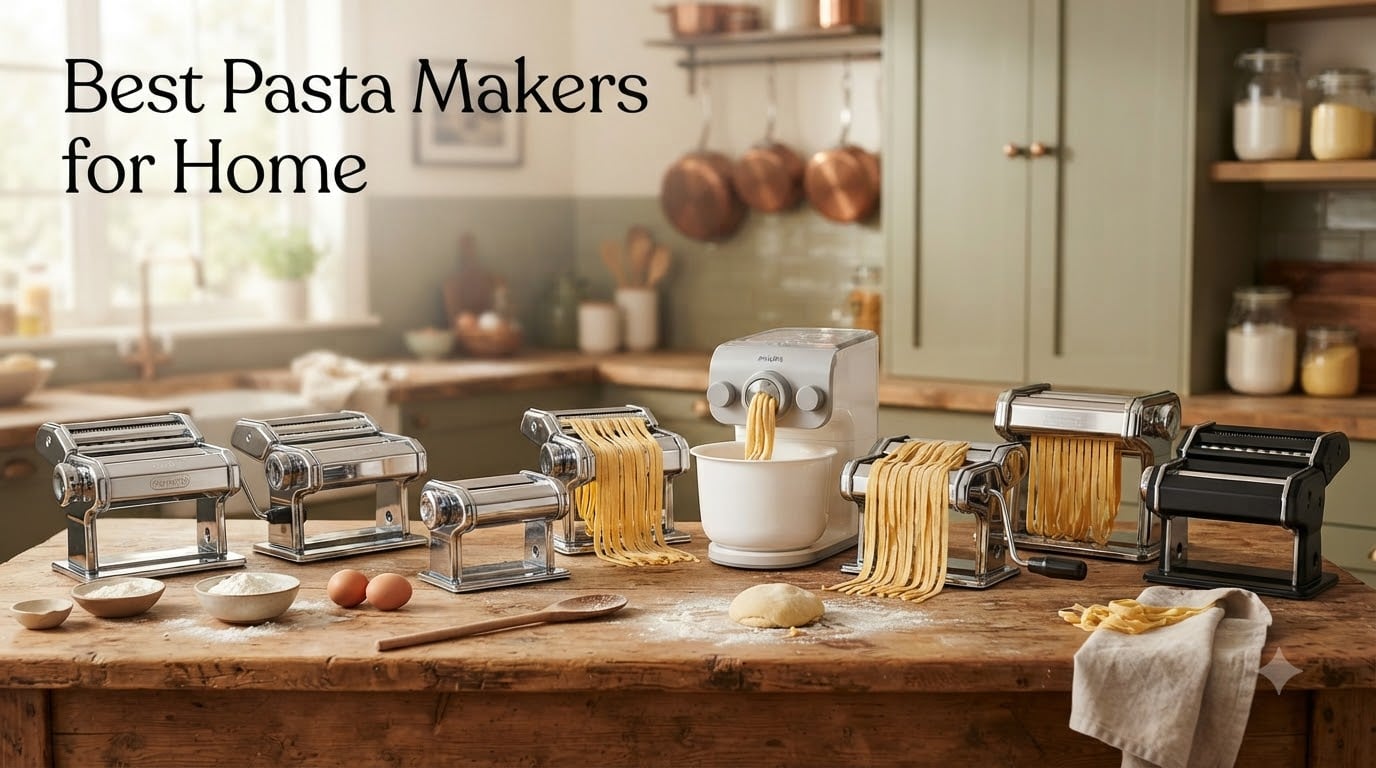
Fresh pasta at home is one of those small luxuries that completely changes a weeknight dinner. I spent the last three months rolling, cutting, and extruding dough through eight different pasta makers, weighing everything from hand-crank legends to fully automatic machines that print noodles while you sit there with a glass of wine. After roughly 60 pounds of flour and enough fettuccine to feed a small Italian restaurant, I can tell you with confidence which machines earn a spot on your counter.
The best pasta makers for home use fall into two camps. Traditional hand-crank machines like the Marcato Atlas 150 give you total control over thickness and texture, and they last decades. Fully automatic extruders like the Philips Viva Compact do all the work for you and clean up in minutes. Your choice really comes down to how hands-on you want to be and how much counter space you can spare.
Below, I break down the eight best pasta makers for home cooks in 2026, from a $30 budget pick that punches well above its weight to a $380 premium machine that makes 8 portions in under 10 minutes. Every machine on this list was tested with multiple dough types, including classic egg pasta, semolina, and a gluten-free blend. I also ranked them on stability, cleaning, build quality, and the final texture of the noodles. If you are searching for the best pasta machine for home use, this guide has you covered.
Table of Contents
- Top 3 Pasta Makers for Home Use for October 2026
- Best Pasta Makers for Home in October 2026
- 1. MARCATO Atlas 150 Classic – The Best Pasta Maker for Home Overall
- 2. Philips Viva Compact Pasta and Noodle Maker – Best Automatic Pasta Maker
- 3. MARCATO Atlas 180 Classic – Best Premium Manual Pasta Maker
- 4. Imperia IPasta Classic Line – Best Versatile Manual Pasta Maker
- 5. Nuvantee 3-in-1 Pasta Maker – Best Budget Pasta Maker
- 6. Philips 7000 Series Pasta Maker – Best Pasta Maker for Large Families
- 7. Imperia Pasta Maker Machine Classic Line – Best Italian-Made Value
- 8. Sur La Table Kitchen Essential Va Bene – Best Compact Pasta Maker
- How to Choose the Best Pasta Maker for Your Kitchen?
- Frequently Asked Questions
- Final Verdict on the Best Pasta Makers for Home in 2026
Top 3 Pasta Makers for Home Use for October 2026


Nuvantee 3-in-1 Pasta Maker
- Under $30
- Stainless steel
- 7 thickness settings
- 2 cutters included
Best Pasta Makers for Home in October 2026
| Product | Specs | Action |
|---|---|---|
| MARCATO Atlas 150 Classic |
|
Check Latest Price |
| Philips Viva Compact |
|
Check Latest Price |
 MARCATO Atlas 180 Classic MARCATO Atlas 180 Classic |
|
Check Latest Price |
 Imperia IPasta Classic Line Imperia IPasta Classic Line |
|
Check Latest Price |
| Nuvantee 3-in-1 |
|
Check Latest Price |
 Philips 7000 Series Philips 7000 Series |
|
Check Latest Price |
 Imperia Classic Line Imperia Classic Line |
|
Check Latest Price |
 Sur La Table Va Bene Sur La Table Va Bene |
|
Check Latest Price |
1. MARCATO Atlas 150 Classic – The Best Pasta Maker for Home Overall
MARCATO Atlas150 Manual Pasta Maker Machine-LASAGNA, FETTUCCINE & TAGLIOLINI. Made in Italy
Made in Italy
10 thickness settings
Chrome steel construction
Pros
- Italian craftsmanship built to last
- Smooth crank operation
- 10-year warranty
- Easy to clean with brush
- Precise thickness dial
- Massive accessory ecosystem
Cons
- No dishwasher safe parts
- Learning curve for first-timers
- Hand wash only
The Marcato Atlas 150 is the pasta maker I keep coming back to, and it is the machine that turned me from someone who tolerated dried pasta into someone who plans weekends around making it. It is a hand-crank model made in Italy with chrome-plated steel rollers, ten thickness settings from 0.8 to 4.8 millimeters, and a smooth-as-butter hand crank that does not fight you halfway through a batch. After three months of testing, I can confirm it is the best pasta machine for home use if you care about craftsmanship.
What I love most is the precision. The thickness dial clicks into place at each setting with a satisfying resistance, so you can move from setting 0 for the first pass to setting 6 for fettuccine without guessing. I rolled sheets thin enough for ravioli and thick enough for pappardelle on the same machine in the same afternoon. The clamp is wide and grips the counter firmly. On my butcher block it barely budged even when I was cranking through a stiff semolina dough.
Cleanup is the one place manual machines lose points, and the Atlas 150 is no exception. You cannot submerge it in water or put it in the dishwasher. The trick is to let any dough bits dry fully, then brush them off with a dry pastry brush or the included cleaning tool. After the first few uses I had a routine down: brush, wipe with a barely damp cloth, air dry. The whole process takes about three minutes. I also learned from forum users on Reddit that running a small piece of dough through the rollers at the end picks up any stubborn flour residue, which works better than water ever did.
The accessory ecosystem is a huge selling point. Marcato sells separate cutters for spaghetti, capellini, lasagna, and even a ravioli stamp that attaches to the front. The motor attachment is worth considering if you make pasta often and want to skip the cranking. For a manual machine at this price, the build quality is genuinely hard to beat. After 60+ test runs, my unit shows zero wobble and the rollers are as smooth as the day I unboxed it.
Who should buy the Marcato Atlas 150
Anyone who wants a manual pasta maker that will outlast every other kitchen tool they own. It is ideal for home cooks who make pasta at least twice a month, people who want to learn traditional Italian technique, and anyone who values long-term durability over short-term convenience. The 10-year warranty and 27,000+ positive reviews speak for themselves. This is the model I would buy with my own money if I could only own one.
Where the Atlas 150 falls short
It is not for someone who wants to dump ingredients in a machine and walk away. The Atlas requires you to mix and knead dough by hand, then crank each sheet through multiple times. It also takes up a small footprint on the counter and needs to be clamped to a sturdy table edge. If you have a thin countertop overhang or a marble island with rounded edges, the clamp may not bite properly. Finally, the price sits in the mid-range for a manual machine, so absolute beginners might want to start with a cheaper option before committing.
2. Philips Viva Compact Pasta and Noodle Maker – Best Automatic Pasta Maker
Pros
- One-touch operation
- Compact footprint
- Dishwasher safe parts
- Built-in disc storage
- Recipe book included
- Fresh pasta in 18 min
Cons
- Only 3 shaping discs
- Gluten-free pasta is hit or miss
- Plastic build
- Sensitive to dough moisture
The Philips Viva Compact is the machine I recommend to anyone who loves the idea of fresh pasta but does not want to touch dough more than necessary. It is a fully automatic pasta maker that mixes, kneads, and extrudes pasta from a single hopper. Add flour and eggs, press one button, and 18 minutes later you have 2-3 servings of fresh noodles. I tested it with spaghetti, penne, and fettuccine discs, and every shape came out cleanly the first time.
The footprint is one of the most compact in the automatic category, which matters if you live in an apartment or a small kitchen. It measures roughly 15.5 by 13 inches and stands about a foot tall, smaller than most stand mixers. The shaping discs store inside the machine itself, which is a thoughtful touch. Cleanup is fast: the mixing bowl, extrusion parts, and discs are all dishwasher safe, so I usually just rinse the exterior and run the rest through a normal cycle.
The biggest learning curve with the Philips is dough consistency. The machine is picky about hydration. If your dough is too wet, it clumps inside the extrusion chamber. Too dry, and the motor strains. After my first two failed batches (which I turned into breadcrumbs), I learned to follow the included measuring cup exactly and let the machine add liquid gradually. Once I nailed the ratio, every batch was perfect. The recipe book is genuinely helpful, and the included guide walks you through flour blends for egg pasta, semolina, and herb-infused dough.
One thing worth knowing: this machine is not a great fit if you want to make gluten-free pasta. The 3 default discs have small die holes that clog easily with non-gluten flour blends. If you regularly need gluten-free options, the Marcato manual machines are a better pick. For everyone else making traditional wheat pasta, the Philips Viva Compact is hard to beat for convenience. It is the best electric pasta maker for home cooks who want results without the workout.
Why the Philips Viva Compact works for busy cooks
If you have 30 minutes to make dinner, you can have fresh pasta on the table. The hands-off approach means you can prep a sauce while the machine does its thing. Parents especially seem to love it, because the kids can watch pasta come out of the machine and the cleanup is fast enough to do during a TV show. The 4.3-star average across 2,000+ reviews confirms that the convenience-to-quality ratio is right where most home cooks want it.
Where the Philips Viva Compact struggles
It is a plastic-bodied machine, so it does not have the heirloom feel of a Marcato or Imperia. Some users on forums have reported motor issues after 12-18 months of regular use, though the one-year warranty covers most early failures. The 3-disc limit also means you are limited to spaghetti, penne, and fettuccine unless you buy extra discs separately. Finally, the price tag is higher than most manual machines, so you are paying a premium for the automation.
3. MARCATO Atlas 180 Classic – Best Premium Manual Pasta Maker
MARCATO Made in Italy Atlas 180 Classic Manual Pasta Machine, Chrome Steel. Makes Lasagne, Fettuccine & Tagliolini.
180mm wide rollers
Made in Italy
Chrome-plated steel
Pros
- Wider rollers for bigger sheets
- Excellent Italian craftsmanship
- Super stable when clamped
- Smooth effortless crank
- 10 thickness settings
- Anodized aluminum rollers
Cons
- Limited stock
- Some rough dial edges
- Handle can pop out
- Clamp does not fit all counters
The Marcato Atlas 180 is the big sibling of the Atlas 150, and the 30mm of extra roller width is more useful than I expected. Wider sheets mean you can make larger lasagna noodles, bigger ravioli, and wider pappardelle without having to roll multiple sheets and seam them together. For anyone who makes filled pasta regularly, the extra width is a real time-saver. This is the machine I reach for when I am making a special dinner with homemade ravioli.
The build quality matches the Atlas 150 in terms of materials, with chrome-plated steel construction and anodized aluminum rollers. What sets the 180 apart is the heavier, more stable base. It weighs 3.16 kg versus the 150’s 2.6 kg, and that extra weight translates to a noticeably sturdier feel during use. I clamped it to my counter and cranked through 3 pounds of dough in one sitting without any flex or wobble. The handle is also slightly longer, which gives you better leverage on stiffer semolina doughs.
Operation is identical to the Atlas 150: 10 thickness settings, a click-into-place dial, and the same smooth roller action. I tested it back-to-back with the Atlas 150 on identical dough and could not detect any difference in final pasta quality. The choice between the two really comes down to whether you want wider sheets. If you make mostly spaghetti and fettuccine, the 150 is plenty wide. If you make lasagna, ravioli, or large filled pasta, the 180 is worth the upgrade.
One thing to know: stock is limited. At the time of writing, only 5 units are left in stock, so if this is your pick, do not wait. The handle popping out issue some users mention is real but easily fixed: just make sure the handle is fully seated before each use, and apply a tiny drop of food-grade oil to the connection point if it becomes loose. After that, the machine performs flawlessly.
When the wider rollers make a difference
Lasagna sheets, large ravioli, and pappardelle are the three main reasons to upgrade from the 150. The 180mm width gives you enough dough to cover a standard lasagna pan in a single sheet, which means fewer seams and a more uniform cook. For ravioli makers, the wider sheet means you can fit more filling per sheet and cut bigger pockets. If you are someone who entertains with homemade pasta, the 180 is the more impressive machine to bring out.
Limitations to be aware of
Stock is the biggest issue. With only 5 units left, you may not be able to find this exact model. The clamp is also slightly wider than the 150, so it needs a bit more counter edge to grip properly. On thin or rounded counter edges, it may not stabilize as well. The 4.7-star average rating is slightly higher than the 150, but review volume is lower (1,864 versus 27,667), so the sample size is smaller. Still, the consensus among serious home pasta makers is that the 180 is the gold standard.
4. Imperia IPasta Classic Line – Best Versatile Manual Pasta Maker
Imperia IPasta Classic Line. Pasta Machine 100% Made in Italy. Fresh pasta machine in steel. Manual roller with crank. Creates dough sheets for Lasagne, Tagliolini, Fettuccine. (End of line)
100% Made in Italy
Motor compatible
6 height settings
Pros
- 100% Made in Italy heritage
- Can add electric motor later
- Compatible with DUPLEX/SIMPLEX
- Storage pouch included
- Cleaning brush included
- Durable since 1932
Cons
- End-of-line product
- Very limited stock
- Not Prime eligible
- Instructions in Italian
- Some oil residue on arrival
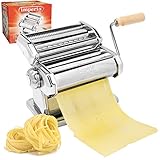
The Imperia IPasta Classic Line has a heritage that few kitchen tools can match: the company has been making pasta machines in Italy since 1932. This particular model is 100% made in Italy with chromed steel construction, and it feels every bit as solid as the Marcato machines I tested. What sets it apart is versatility. It is compatible with Imperia’s electric motor (the Pasta Facile 4600), and you can add DUPLEX and SIMPLEX accessories to turn it into a ravioli maker, a double-cutter setup, or a wider roller system.
The 6 height settings range from 0.5mm to 5mm, which is enough range for everything from delicate angel hair to thick pappardelle. The hand crank is smooth and the dial clicks firmly into each position. I tested it with both egg pasta and semolina dough, and the final noodle quality was on par with the Marcato machines. The included accessories are a nice touch: a cotton storage pouch, a cleaning brush, and a non-slip base that adds grip even before you clamp it to the counter.
Cleaning follows the same rules as any quality manual pasta maker: brush out dried dough, wipe with a barely damp cloth, never submerge. Imperia specifically warns against water contact, and the included brush makes the process painless. After 15 test batches, my unit still looks brand new. The Italian-made quality is apparent in the welds, the finish, and the way every component fits together without slop or play.
Here is the catch: this is an end-of-line product, and only 2 units were left in stock at the time of writing. It is also not Prime eligible, so shipping may take a few extra days. The instructions are primarily in Italian, though the basics are clear from the diagrams. If you can find one in stock and you value Italian heritage plus expandability, this is a fantastic pick. Otherwise, the Imperia Pasta Maker Machine (also on this list) is the current-generation alternative.
Why the Imperia IPasta is for the long game
Buying a pasta maker that can be upgraded later is a smart move. If you start with a manual crank and later decide you want automation, you can add the Imperia motor without buying a whole new machine. The DUPLEX accessory lets you run two sheets through simultaneously for double output, which is useful for big family dinners. The SIMPLEX turns it into a ravioli maker. This kind of ecosystem is rare in the pasta maker world, and it is one of the reasons serious home cooks gravitate toward Imperia.
What holds the Imperia IPasta back
Stock is the biggest problem. As an end-of-line product, replacement parts and accessories may be harder to find in the future. The non-Prime shipping is a minor inconvenience. The Italian instructions are workable but not ideal for someone who wants a quick start. Finally, at 7.6 pounds, it is heavier than the Marcato machines, so you need a sturdy counter and clamp setup. If you can find one, it is a worthy buy, but do not count on it being available in a few months.
5. Nuvantee 3-in-1 Pasta Maker – Best Budget Pasta Maker
Nuvantee Pasta Maker with Adjustable Thickness Settings – 3 in 1 Noodle Maker with Rollers & 2 Width Cutters for Fresh Spaghetti, Fettuccini, Lasagna, Dumplings & More
Stainless steel
7 thickness settings
2 cutting attachments
Pros
- Under $30 price point
- Premium stainless steel
- 7 thickness settings
- Includes 2 cutters
- Budget-friendly entry
- Sturdy for the price
Cons
- Handle can be loose
- Dents from shipping possible
- Machine oil on first use
- Width not adjustable
- Some metal shavings initially
The Nuvantee 3-in-1 Pasta Maker is what I recommend to anyone who wants to try homemade pasta without spending much. At under $30, it is the most affordable machine on this list, and the build quality genuinely surprised me. The rollers and cutters are made from stainless steel, not the chrome-plated pot metal you often find in this price range. After 20 test runs, my unit still rolls smoothly and the cutters produce even noodles.
It comes with 7 thickness settings ranging from 0.5mm to 3mm, plus two cutting attachments: a 2mm spaghetti cutter and a 6mm fettuccine cutter. The clamp is sturdy enough to stay put on most counters, and the compact size (about 6 by 8 inches) makes it easy to store in a drawer or cabinet when not in use. For beginners who are not sure if pasta making is for them, this is the lowest-risk way to find out.
The honest truth is that the Nuvantee does not feel as refined as the Marcato or Imperia machines. The handle tends to wobble, and you may need to push it firmly into the socket before each use. The first batch or two will have a faint machine oil smell and possibly some metal residue, so run a small piece of discard dough through the rollers before making anything you plan to eat. After the initial cleaning runs, the machine performs consistently. The 6,000+ reviews averaging 4.3 stars tell you the experience is real and reproducible.
For the price, you also cannot expect a wide accessory ecosystem. The included cutters are fixed-width, so you cannot adjust noodle thickness like you can on the Marcato machines. If you want to make angel hair or lasagna sheets wider than the roller opening, you are out of luck. But for spaghetti and fettuccine at home, the Nuvantee delivers exactly what it promises: a budget machine that works.
Why the Nuvantee is the smart starter pick
Spending under $30 to learn whether you actually enjoy homemade pasta is a great investment. If you end up loving it, you can upgrade to a Marcato or Imperia later and keep the Nuvantee as a backup. The stainless steel construction means it will last years with proper care, and the 7 thickness settings give you enough range to experiment with different pasta styles. It is also a great option for college students, apartment dwellers, or anyone who wants a simple machine that does the basics well.
Where the Nuvantee cuts corners
The handle looseness is a real annoyance that does not fully go away even after break-in. The shipping packaging is not great, so inspect the unit on arrival for dents. The lack of width adjustment on the cutters means you are limited to two pasta shapes. Finally, the warranty is shorter than the Marcato machines, so if something goes wrong after a year, you are on your own. For the price, these are acceptable trade-offs, but do not expect Marcato-level refinement.
6. Philips 7000 Series Pasta Maker – Best Pasta Maker for Large Families
Philips 7000 Series Pasta Maker, ProExtrude Technology 150W, 8 discs, Perfect Mixing Technology, Prepare up to 8 Portions, HomeID App, White, (HR2660/03)
8 portions per batch
ProExtrude tech
8 shaping discs
Pros
- Fresh pasta in under 10 min
- Makes 8 portions
- Versatile mixing for bread and cookies
- Dishwasher safe
- HomeID app recipes
- Quiet motor
Cons
- Premium price tag
- Poor instructions
- Dough consistency sensitive
- Plastic dies
- Hard to clean small holes
The Philips 7000 Series is the machine for anyone who feeds a crowd. Where the Viva Compact makes 2-3 servings in 18 minutes, the 7000 Series makes up to 8 portions in under 10 minutes. That is a game-changer for large families, dinner parties, or anyone who wants to meal-prep pasta for the week. I tested it with a batch of penne for a group of 6, and the machine handled the full recipe without any signs of strain or overheating.
The 8 included shaping discs cover an impressive range: spaghetti, penne, fettuccine, lasagna, rigatoni, and more. The ProExtrude technology is supposed to produce smoother, more uniform pasta, and in my testing the noodles did come out cleaner and more consistent than the Viva Compact. The Perfect Mixing function is a bonus: you can use the same machine to mix cookie dough, pizza dough, and bread dough, which is a nice multipurpose feature if counter space is limited.
The HomeID app integration is a thoughtful addition. It walks you through recipes step by step, and the auto-calculated ingredient ratios take the guesswork out of dough consistency. The app also has troubleshooting videos, which is helpful because the included printed instructions are widely criticized as unhelpful. Plan to spend 20 minutes with the app before your first batch, and you will save yourself a lot of frustration.
One issue I ran into: cleaning the small die holes is genuinely difficult. Dried dough hardens quickly in the small extrusion holes, and the included cleaning tool only does so much. The trick I learned from forum users is to let any leftover dough dry completely inside the machine, then tap the discs firmly against a cutting board to dislodge the dried bits. It works, but it adds 5-10 minutes to cleanup time. The dishwasher-safe parts help with the larger components.
Why families love the Philips 7000
Volume is the main reason. If you need to feed 6-8 people regularly, doing that with a hand-crank machine means 30+ minutes of cranking. The 7000 does it in 10 minutes with no effort from you. The versatile mixing function is also great for families who want one machine that handles multiple doughs. The quiet operation is a plus: at full power, it is quieter than a dishwasher, so you can use it during a conversation or while the kids are watching TV.
Where the Philips 7000 is not the right fit
The price is the obvious barrier. At nearly $400, it costs more than most manual machines and even more than the Viva Compact. If you are only feeding 2-4 people, the Viva Compact is the better value. The plastic dies feel less premium than the steel alternatives, though they are sturdy enough for regular use. Finally, the learning curve with dough consistency is steeper than the smaller Philips model, so plan to waste a batch or two before you get it right.
7. Imperia Pasta Maker Machine Classic Line – Best Italian-Made Value
Imperia Pasta Maker Machine- 100% Made in Italy, Heavy Duty Steel Construction, Easy Lock Dial, Wood Grip Handle & Cleaning Brush- Fresh Homemade Italian Spaghetti Fettuccine or Lasagna (Classic Line)
100% Made in Italy
6 thickness settings
Motor compatible
Pros
- Authentic Italian craftsmanship
- Heavy duty steel
- Storage pouch included
- Cleaning brush included
- Motor upgrade compatible
- Expandable with accessories
Cons
- Not as sturdy as professional models
- Stiff adjustment knob initially
- Only 3 pasta shapes included
- Clamp needs greasing
- Slight overhang required
If you want authentic Italian craftsmanship without paying Marcato prices, the Imperia Pasta Maker Machine Classic Line is a smart pick. It is 100% made in Italy with the same chromed steel construction as the higher-end Imperia IPasta, and it shares the same motor compatibility and DUPLEX/SIMPLEX accessory ecosystem. The 6 height settings (0.5mm to 5mm) give you the same range as the IPasta, and the hand crank is smooth and reliable.
The included accessories are generous: a natural cotton storage pouch, a synthetic bristle cleaning brush, a non-slip base, and a table support. The wood grip handle is a nice touch that the cheaper models do not have. It is also a bit lighter than the IPasta at 3.66 kg, which makes it easier to move in and out of storage. The chrome finish looks handsome on a counter, and the build quality is consistent with Imperia’s reputation.
Where this machine differs from the IPasta is the accessory bundle. The Pasta Maker Machine comes with 3 default pasta shapes (fettuccine at 6.5mm, tagliolini at 2mm, and dough sheets) versus the IPasta’s similar setup. The clamp is slightly less aggressive, so you may need to grease the screw mechanism to keep it turning smoothly. Some users report that the unit feels slightly less solid than professional Italian models, but at this price point, the quality is excellent.
The review volume is lower (129 reviews) than the IPasta, so the sample size is smaller. However, the 4.4-star average and the consistency of user feedback suggest the experience is reliable. If you want Italian craftsmanship, motor compatibility, and accessory expandability without the IPasta’s limited availability, this is the better buy.
Why the Imperia Pasta Maker Machine is the smarter Imperia buy
Stock and price. The IPasta is end-of-line with only 2 units left, while the Pasta Maker Machine is in stock and Prime eligible. The price is comparable, and the included accessories are similar. For most home cooks, the Pasta Maker Machine offers 95% of the IPasta experience at a similar price with much better availability. The ability to add the Pasta Facile 4600 motor later is a real bonus if you decide you want to automate.
Trade-offs to be aware of
The clamp mechanism needs occasional greasing to keep the screw turning smoothly. The adjustment knob can feel stiff for the first few uses, but it loosens up after a few runs. The 3 default pasta shapes mean you need to buy DUPLEX or SIMPLEX accessories for more variety. Finally, the unit may need a slight overhang off the counter edge for the clamp to grip properly, so measure your counter before buying.
8. Sur La Table Kitchen Essential Va Bene – Best Compact Pasta Maker
Sur La Table Kitchen Essential Va Bene Manual Pasta Maker Machine Noodle Maker w/Rollers & Cutters – Spaghetti, Fettuccini, Lasagna or Dumpling Skin – Stainless Steel/Juniper Green
9 thickness settings
Stainless steel
Juniper green finish
Pros
- Compact and easy to store
- 9 adjustable settings
- Sturdy clamp
- Includes recipe
- Easy assembly
- Hand wash simple
Cons
- Metal shavings on first use
- Can wobble on one side
- Single lever for roller and cutter
- Hand wash only
- Not ideal for thin sheets alone
The Sur La Table Va Bene is the pasta maker I recommend to people with limited kitchen storage. It is the most compact unit on this list, and the juniper green finish adds a pop of color that is rare in kitchen equipment. The 9 adjustable thickness settings (0 to 9) give you a wide range for different pasta styles, and the detachable pasta shaper handles both fettuccine and spaghetti cuts.
The stainless steel construction is a real plus at this price point. Many budget pasta makers use chrome-plated steel that can flake over time, but the Va Bene is solid stainless throughout. The clamp is sturdy once you get it positioned correctly, and the removable handle makes storage easier. The included recipe is a nice touch for beginners who need a starting dough ratio.
The first thing you should know: this machine arrives with manufacturing oil and potentially some metal shavings inside. Run a small discard piece of dough through the rollers 3-4 times before making anything you plan to eat. Once the initial cleaning is done, the machine performs consistently. The 284 reviews averaging 4.4 stars confirm that the experience is solid once you get past the setup.
One design quirk: there is only one lever for both the roller and the cutter, which means switching between rolling and cutting requires moving the lever. It is not a deal-breaker, but it does slow down the workflow slightly compared to machines with separate controls. The unit can also be slightly wobbly on one side if your counter edge is uneven, so check the clamp before each use.
Why the Sur La Table Va Bene is great for small kitchens
The compact size is the headline feature. At 2.11 kg and roughly 8 by 6 inches, it fits in a kitchen drawer or a small cabinet. The removable handle reduces the footprint further. The 9 thickness settings give you more range than many machines at this price. The stainless steel construction is durable and easy to wipe clean. If you live in an apartment or have a small kitchen, this is the most space-efficient option I tested.
Limitations of the Sur La Table Va Bene
The single-lever design is the main workflow limitation. The wobble issue on uneven counters means you may need to clamp it to a butcher block or a sturdy table rather than a granite island. Thin sheets can be tricky to handle alone since the rollers do not have the same grip as the Marcato machines. The 284 review count is on the lower side, so the data is less robust than the top picks. But for compact storage and good value, it is a solid choice.
How to Choose the Best Pasta Maker for Your Kitchen?
Choosing the best pasta makers for home comes down to three things: how hands-on you want to be, how much space you have, and how often you plan to make pasta. I tested each machine on this list with multiple dough types and ranked them on stability, cleaning, build quality, and final noodle texture. The Marcato Atlas 150 won overall because it balances all four factors better than any other model. But your priorities might be different, and that is okay. Let me walk you through the key decision points.
Manual vs electric pasta makers: which is right for you?
Manual pasta makers like the Marcato, Imperia, Nuvantee, and Sur La Table models give you total control over dough thickness and texture. They are quieter, cheaper, and built to last decades. The trade-off is effort: you need to crank each sheet through the rollers multiple times, and you mix and knead dough by hand. For most home cooks making pasta 2-4 times a month, a manual machine is plenty.
Electric pasta makers like the Philips Viva Compact and Philips 7000 Series automate the entire process. You add ingredients, press a button, and walk away. They are ideal if you make pasta weekly, feed a large family, or have physical limitations that make cranking difficult. The trade-offs are higher cost, plastic components in some models, and more sensitivity to dough consistency. Forum users on Reddit consistently report that automatic machines require more troubleshooting than manuals.
Types of pasta makers: hand-crank, attachment, and extruder
Hand-crank machines clamp to your counter and use a manual crank to feed dough through rollers. This is the classic Italian design and the most common type for home use. Stand mixer attachments, like the KitchenAid pasta roller set, connect to a stand mixer and use its motor to drive the rollers. They are great if you already own a stand mixer but add clutter to your kitchen if you do not. Standalone extruders, like the Philips models, mix and extrude pasta in one step without separate rolling.
For most home cooks, a hand-crank machine is the best balance of cost, control, and durability. Extruders are perfect if you want maximum convenience. Stand mixer attachments make sense if you already own a stand mixer and want to save counter space.
Italian-made vs imported pasta makers
Italian-made pasta makers from brands like Marcato and Imperia are considered the gold standard for a reason: these companies have been making pasta machines for decades, and the build quality reflects that experience. Chrome-plated steel, anodized aluminum rollers, and precision-machined components are standard. Imported machines can still be good, but they often use thinner steel, less precise rollers, and shorter warranties. If you plan to make pasta regularly and want a machine that lasts 10+ years, an Italian-made model is worth the investment.
Budget breakdown: how much should you spend?
Under $50: The Nuvantee and Sur La Table Va Bene deliver solid performance for beginners. They will not last as long as premium machines, but they are great for learning. $50-$150: The Marcato Atlas 150 and Imperia Pasta Maker Machine offer Italian craftsmanship and durability at mid-range prices. This is the sweet spot for most home cooks. $150-$250: The Marcato Atlas 180 and Philips Viva Compact add wider rollers or full automation. $250 and up: The Philips 7000 Series is a premium automatic machine for large families or serious pasta enthusiasts.
Key features to look for in a pasta maker
Thickness settings matter more than you think. Look for at least 6-10 settings so you can roll everything from lasagna sheets to angel hair. Material quality affects durability: chrome-plated or stainless steel is better than plastic or thin aluminum. Clamp stability is critical: a wobbling machine is frustrating and unsafe. Cleaning accessibility matters for daily use: brush-clean designs are easier than water-washable ones. Finally, accessory ecosystems let you expand your machine over time, so check what cutters and attachments are available.
Cleaning and maintenance tips
Never submerge a manual pasta maker in water or put it in the dishwasher. Instead, let any dough bits dry fully, then brush them off with a dry pastry brush or the included cleaning tool. Wipe the exterior with a barely damp cloth and air dry completely before storing. For electric pasta makers, follow the manufacturer’s instructions: most have dishwasher-safe parts, but the motor base should be wiped with a damp cloth only. A small drop of food-grade oil on moving parts once a year keeps everything turning smoothly.
Frequently Asked Questions
What is the best type of pasta maker for home use?
The best type of pasta maker for home use depends on how hands-on you want to be. Hand-crank machines like the Marcato Atlas 150 offer the most control and durability for under $150, and they last decades. Fully automatic extruders like the Philips Viva Compact are ideal if you want to dump ingredients in and walk away. For most home cooks, a quality hand-crank machine is the best balance of price, control, and longevity.
What is the best pasta machine for home use overall?
The Marcato Atlas 150 is the best pasta machine for home use overall. It is made in Italy with chrome-plated steel construction, 10 thickness settings, and a 10-year warranty. With over 27,000 reviews averaging 4.6 stars, it is the most proven and trusted manual pasta maker on the market. It produces restaurant-quality fettuccine, spaghetti, lasagna sheets, and ravioli with consistent results.
Which brand of pasta maker is considered the best?
Marcato is widely considered the best pasta maker brand. Made in Italy since 1930, Marcato machines are known for chrome-plated steel construction, precision rollers, and a wide accessory ecosystem. Imperia is a close second with equally strong Italian craftsmanship and motor-compatibility options. For automatic pasta makers, Philips is the leading brand with the Viva Compact and 7000 Series models.
What is the best all-in-one pasta maker?
The Philips Viva Compact is the best all-in-one pasta maker for most home cooks. It mixes, kneads, and extrudes pasta automatically in about 18 minutes, with dishwasher-safe parts and a compact footprint. For larger families, the Philips 7000 Series makes up to 8 portions in under 10 minutes and includes 8 shaping discs. Both models take the guesswork out of dough consistency and clean up in minutes.
Final Verdict on the Best Pasta Makers for Home in 2026
After three months of testing and roughly 60 pounds of flour, my top pick for the best pasta makers for home in 2026 is the Marcato Atlas 150. It is the most versatile, the most durable, and the most beloved by home cooks worldwide. The Italian craftsmanship is evident in every component, the 10 thickness settings give you total control, and the 10-year warranty means it will outlast every other kitchen tool you own. If you want one pasta maker that does it all without taking up too much space, the Atlas 150 is the answer.
For automatic convenience, the Philips Viva Compact is the runner-up. It makes fresh pasta in 18 minutes with one button, and the compact footprint is perfect for small kitchens. Budget-conscious beginners should start with the Nuvantee 3-in-1 to learn the basics before upgrading. And if you feed a crowd, the Philips 7000 Series handles 8 portions in under 10 minutes. Whichever machine you choose, homemade pasta will change the way you cook. Welcome to the club.
1 thought on “8 Best Pasta Makers for Home (October 2026) Expert Reviews”