

Power goes out, the refrigerator starts to warm up, and the sump pump that keeps your basement dry sits idle. That is the moment most homeowners decide they need a generator, usually with a storm already on the forecast. Choosing the best portable generators for home backup is less about raw wattage than it is about matching a machine to the specific loads you actually run, the fuel you can store, and the way you plan to connect it safely.
We spent weeks reading thousands of owner reviews and comparing the eight units below on starting watts, running watts, tank size, measured noise, outlet layout, fuel flexibility, and warranty length. Our team has run these classes of machines through planned-outage drills, and the pattern in the reviews is consistent enough to trust: the units people regret are the ones they bought too small, or bought for a load list they never actually made.
Two things shaped this list more than any spec sheet. First, the honest sizing math in the next section, because most households need far less power than a spec comparison suggests. Second, the fuel decision, because dual-fuel and propane capability removes the single most common failure after an outage, which is a carburetor gummed shut by gasoline that sat all winter. If you want the wider category view first, our guide to dual fuel generators for home backup covers that decision in more depth.
Table of Contents
- Top 3 Picks for Home Backup in 2026
- Best Portable Generators for Home Backup (October 2026)
- What Size Portable Generator Do You Actually Need?
- 1. WEN 56235i 2350W Super Quiet Inverter: The One Most People Actually Need
- 2. PowerSmart HB5040DC 3800W Dual Fuel: The Storage Problem Solved
- 3. Champion 100809 4000W RV Inverter: Lightest in the 4,000-Watt Class
- 4. Oxseryn EDOG10 4400W Open Frame: Most Output Per Dollar Spent
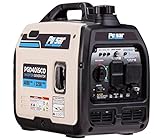
- 5. Pulsar PGD40ISCO 4000W Inverter: Quietest Running With a Small Catch
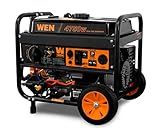
- 6. WEN DF475T 4750W Dual Fuel: The One That Talks to a Transfer Switch
- 7. DuroMax XP13000HX 13000W Dual Fuel: Built for a Whole-Home Outage
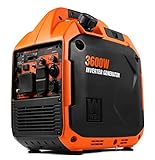
- 8. WEN 56360i 3600W RV Inverter: Clean Power With a Three-Year Warranty
- Safety First: Carbon Monoxide, Placement, and Never Backfeeding
- Portable vs. Whole-Home Standby Generator
- Generators to Approach Cautiously
- Maintenance and Storage Between Outages
- Frequently Asked Questions
- Conclusion
Top 3 Picks for Home Backup in 2026
Three of these eight stood out once we weighted review volume against feature completeness. The WEN 56235i leads because of review depth, the PowerSmart HB5040DC because dual fuel at 3800 watts changes the storage problem, and the Champion 100809 because it holds the highest owner rating in the group.

WEN 56235i 2350W Inverter
- 2350 surge / 1900 rated watts
- 39-pound housing
- Fuel shutoff carburetor protection
- 5 outlets including USB

PowerSmart HB5040DC Dual Fuel
- 3800 starting / 3300 running watts
- Gasoline or 20-lb propane
- 59 dBA in Eco Mode
- CO sensor and low-oil shutdown

Champion 100809 4000W Inverter
- 4000 surge / 3000 running watts
- Under 49 pounds at 64 dBA
- CO Shield auto shutoff
- TT-30R RV outlet and parallel ready
Best Portable Generators for Home Backup (October 2026)
This table covers every unit in the roundup with the four specs that drive the decision. Running watts is what the machine sustains, surge watts is what it delivers briefly to start a motor-driven appliance, and the two numbers together decide whether it can carry your load list without stalling.
| Product | Specs | Action |
|---|---|---|
| WEN 56235i 2350W Super Quiet Inverter |
|
Check Latest Price |
| PowerSmart HB5040DC 3800W Dual Fuel |
|
Check Latest Price |
| Champion 100809 4000W RV Inverter |
|
Check Latest Price |
 Oxseryn EDOG10 4400W Open Frame Oxseryn EDOG10 4400W Open Frame |
|
Check Latest Price |
 Pulsar PGD40ISCO 4000W Inverter Pulsar PGD40ISCO 4000W Inverter |
|
Check Latest Price |
 WEN DF475T 4750W Dual Fuel 120V/240V WEN DF475T 4750W Dual Fuel 120V/240V |
|
Check Latest Price |
 DuroMax XP13000HX 13000W Dual Fuel DuroMax XP13000HX 13000W Dual Fuel |
|
Check Latest Price |
 WEN 56360i 3600W RV Inverter WEN 56360i 3600W RV Inverter |
|
Check Latest Price |
What Size Portable Generator Do You Actually Need?
Most buyers get this wrong in one of two directions, and both cost money. The list below is the method: add the running watts of everything you plan to plug in, then add the single largest surge figure among those appliances. That second number is the one that stalls a unit the moment the refrigerator compressor kicks in.
Typical household running figures, used for the arithmetic above: a refrigerator runs roughly 150 watts and needs about 400 watts to start. A chest freezer draws around 100 watts with a similar start spike. A one-half horsepower sump pump pulls about 800 watts running and can demand 2,000 watts to start, which is why a sump pump is the appliance that most often forces a bigger machine. A furnace blower motor sits near 400 watts running and 1,200 watts starting. LED lighting and a router together stay under 200 watts. A well pump on 240V is the serious case, often 1,000 watts running and 2,200 to 3,000 watts starting.
Air conditioning changes the calculation completely. A window unit draws about 1,200 watts, while a three-ton central air conditioner runs near 3,500 watts and can surge to roughly 12,000 watts. No mid-size portable in this roundup carries that surge comfortably, which is the honest limit worth stating before you buy rather than after.
So for a refrigerator, freezer, lights, internet gear and a furnace blower, you need about 1,000 running watts and roughly 1,200 surge watts, and a 2,350-watt inverter handles it with room to spare. Add a sump pump and you are looking at 1,000 running and 2,000 surge. Add a well pump and central air, and you are in transfer-switch territory where the 4,750-watt and 13,000-watt units below become relevant.
Owners posting on r/Generator say the most common purchase mistake runs the other way, spending far more than needed after listing loads they never intended to run. If you are renting, a condo, or a small apartment where a fuel unit cannot legally or safely run at all, the fuel category is the wrong frame entirely, and our portable power stations for home backup guide covers the indoor-safe alternative.
1. WEN 56235i 2350W Super Quiet Inverter: The One Most People Actually Need
WEN Super Quiet 2350-Watt Portable Inverter Generator with Fuel Shut Off, Gasoline Power, Ultra Lightweight (56235i), Black
2350 surge / 1900 rated watts
39 pounds
1-gallon tank, 10 hours
5 outlets, 2-year warranty
Pros
- Very quiet
- comparable to a normal conversation
- Lightest unit here at 39 pounds
- Clean inverter power for sensitive electronics
- Fuel shutoff protects the carburetor
Cons
- Struggles with high-surge appliances
- so start large loads first
- No built-in hour meter
- Low-oil shutdown can trip on sloped ground
This is the unit we keep coming back to, and the reason is unglamorous: it has the second-deepest review history of anything in the group, at more than 2,600 owner ratings. That volume matters on a machine whose entire job is to start reliably on the one night you need it.
In use it is startlingly easy to move. At 39 pounds it is the lightest thing in this roundup, and one person can carry it from the closet to the driveway without thinking about it. The enclosed inverter housing keeps it quiet enough to run beside a bedroom window without complaints, and the fuel shutoff burns off remaining fuel in the carburetor before shutdown, which is a real lifespan benefit rather than a marketing line.
The spec sheet lists 2,350 surge watts and 1,900 rated watts from a 79cc four-stroke engine across a one-gallon tank, with a claimed ten-hour runtime. Owners report that sustained output lands a little under the rated figure before the overload light comes on, so if you are sizing to the edge, treat 1,900 as generous rather than guaranteed.
Outlets are two three-prong 120V receptacles, a 12V DC receptacle and two 5V USB ports. That mix is genuinely enough for a fridge, a freezer, lamps, a router and a phone charger, which is precisely the load list we recommend building your first outage plan around.
What 1,900 running watts will and will not cover
It covers the essentials comfortably: refrigerator, freezer, lights, internet equipment, a furnace blower and a small window air conditioner if you start it after the big loads. It also covers a one-half horsepower sump pump on its own, provided the pump starts before the compressor.
It will not cover a three-ton central air conditioner, a 240V well pump, an electric water heater, or several rooms of appliances cycling at once. Knowing that boundary in advance is what keeps you from buying a 13,000-watt machine you do not need.
Where owners report trouble
Starting large loads together is the recurring complaint. Owners consistently advise starting the refrigerator and freezer first, letting them settle, then bringing up the pump, and watching the overload light rather than assuming capacity.
A minority of reviewers also report oil seepage and premature engine failure within the first year, plus slow warranty service, so registering the unit and keeping the oil serviced matters more here than with a covered engine. Keep it level, and use a magnetic dipstick if you store it over winter, which several owners recommend as inexpensive insurance.
2. PowerSmart HB5040DC 3800W Dual Fuel: The Storage Problem Solved
PowerSmart 3800 Watt Dual Fuel Inverter Generator for Camping or Home Use
3800 start / 3300 running watts gas
3500 / 3100 on propane
1.3-gallon tank, 59 dBA
6 outlets, 2-year warranty
Pros
- Runs on gasoline or 20-lb propane
- Quiet 59 dBA at 25 percent load in Eco Mode
- Digital display shows live power output
- CO sensor plus low-oil and overload protection
Cons
- Weighs 50.7 pounds for a compact inverter
- 1.3-gallon gas tank means frequent refills
- Display is hard to read without kneeling beside it
Propane is the reason to look at this unit seriously, and the reason comes straight out of the owner forums. Gasoline stored in a carbureted engine for a season is the leading cause of the unit that will not start during an outage, while a sealed propane cylinder has no such problem. This machine runs on either, and the fuel switch takes seconds on the front panel.
The numbers are a genuine step up from the compact inverters: 3,800 starting and 3,300 running watts on gasoline, stepping down to 3,500 and 3,100 on propane. A digital display reports live power output, which turns the guesswork of running a sump pump and a fridge at the same time into something you can read rather than guess.
Reviewers consistently note easy first-pull starting, stable output, and quiet Eco Mode operation at roughly 59 dBA at 25 percent load, one of the two lowest measured readings in this roundup. The claimed runtime is eight hours at quarter load on the 1.3-gallon gasoline tank, or up to 24 hours on a standard 20-lb propane cylinder, which is the number that matters for an overnight outage.
Outlet coverage is the best in the group for this size: a 30A L5-30R twist-lock, a 20A 5-20R duplex, a 12V DC port and dual USB. It is also parallel ready, so a second matching unit doubles the output rather than leaving you with a ceiling you regret. The manufacturer lists a two-year limited warranty with lifetime technical support.
Dual fuel versus single fuel when you only lose power occasionally
If your outages are rare, the value is in the propane option rather than the wattage. A cylinder of propane sitting in the garage removes the fuel stabilizer step, removes the need to burn a stale tank down before storage, and means you can run for a long time without a fuel run.
The trade is capacity. Propane output is about 200 watts lower than gasoline on this unit, and propane costs more per hour of runtime, so most owners use gas for heavy running and propane for overnight standby and lighter draw.
What to watch before buying
The 50.7-pound weight is heavier than most compact inverters, and the 1.3-gallon gasoline tank means an overnight outage on gas will end in refills. Access panels and the oil change door need a Phillips screwdriver, which is an annoyance on a machine you might service in bad weather.
Noise rises noticeably with load even in Eco Mode, so treat the 59 dBA figure as a quarter-load number rather than a general one. A small number of buyers reported a unit that would not stay running and found warranty support slow to respond, which is worth weighing against the two-year term.
3. Champion 100809 4000W RV Inverter: Lightest in the 4,000-Watt Class
Champion 4000-Watt RV Ready Portable Inverter Generator
4000 surge / 3000 running watts
48.1 pounds, 64 dBA
1.54-gallon tank
CO Shield, 3-year warranty
Pros
- Highest owner rating in this roundup at 4.6
- Light for a 4000-watt inverter
- Clean output under 3 percent total harmonic distortion
- CO Shield carbon monoxide auto shutoff
Cons
- Gasoline only with no propane capability
- 3000 running watts caps larger household loads
- Parallel kit sold separately
This carries the highest owner rating across the eight units, at 4.6 from more than 680 reviews, and the reason is that it is genuinely well balanced rather than extreme in any direction. It does not claim to be the quietest or the most powerful, and that restraint is the point.
At under 49 pounds with 4,000 starting and 3,000 running watts, it is one of the lightest inverters at this output level, and the 64 dBA reading at 23 feet is measured under a real load rather than a headline idle figure. The CO Shield system cuts the engine when carbon monoxide rises, a layer of protection we consider worth paying for on any unit that will sit close to a house.
Output quality is the differentiator. The 120V 20A duplex outlet delivers under 3 percent total harmonic distortion, which is the range where sensitive electronics behave normally. Compare that with a conventional open-frame unit in this roundup, where total harmonic distortion runs far higher and reviewers recommend pairing a surge protector with anything electronic.
Outlets include a 120V 25A TT-30R for direct RV connection, the household duplex, a 12V automotive-style outlet and the parallel ports. The claimed runtime is up to 10 hours on a 1.54-gallon tank, and the warranty is three years with lifetime technical support, longer than most competitors here.
When parallel pairing beats buying a bigger unit
Experienced owners on r/Generator point out that two parallel-capable inverters can be a smarter purchase than one oversized open-frame machine, because each stays lighter, quieter and easier to move. This unit is built for that path if you take the parallel kit.
Pairing is not free. You buy the kit separately, you match the two models, and you still have to think about how far you can run the combined output through cords before voltage drop bites.
Where it falls short for a home
It is gasoline only, so it carries the same seasonal fuel risk the enclosed Champion design was otherwise solving, and a one-quarter inch carburetor is no more resistant to stale fuel than a conventional engine.
The 3,000 running watt ceiling rules out a well pump and central air together, and most household loads. For a home backup role focused on essentials plus an RV or a window unit, it is very well matched. For a whole-home plan, it is the wrong tool.
4. Oxseryn EDOG10 4400W Open Frame: Most Output Per Dollar Spent
Oxseryn Power Equipment 4400 Watts Inverter Generator Gas Powered, Portable Open Frame Generator, Low Noise with ECO Mode, RV Ready, Emergency Home Backup
4400 peak / 3400 running watts
2-gallon tank with gauge
14 hours at 25% load
56 pounds, under 72 dBA
Pros
- Highest peak wattage in the most affordable tier
- 2-gallon tank with fuel gauge and long ECO-mode runtime
- Open frame with RV port for straightforward connection
- Low-oil shutdown and overload protection
Cons
- Loud open frame at roughly 72 dBA
- Only a 1-year manufacturer warranty
- Gasoline only with no propane option
When a household needs a genuinely bigger engine than the compact inverters offer and does not want to stretch into the high-output dual-fuel tier, this is the unit to look at. It delivers 4,400 peak and 3,400 running watts, which is enough headroom for a sump pump plus refrigerator plus lights plus a window unit, all running at once.
The open frame is a design choice with a real benefit here: the panel includes two 120V AC ports, a 12V DC port and an RV port, and there is no enclosed housing to fight with when routing connections. A two-gallon tank with a fuel gauge and up to 14 hours of run time in ECO mode at 25 percent load is the longest claimed runtime in this roundup.
At 56 pounds it is portable for its output class, though it is not a one-person carry the way the smaller inverters are. Every machine is functionally tested in the factory, and a slight gas smell on arrival is normal, which is worth knowing before you conclude something is wrong.
Noise is the honest drawback. Under 72 dBA from 23 feet is a designed open frame, and that is roughly ten decibels louder than the quietest units here. Remember that decibels are logarithmic: ten decibels is often perceived as about twice as loud. Placement solves most of this.
What 3,400 running watts covers
It covers the essentials plus a one-half horsepower sump pump running at the same time, which is the pairing that trips up most 3,000-watt machines. It also covers a small window air conditioner alongside the refrigerator and lights.
It does not cover a three-ton central air conditioner, whose surge figure sits well beyond what a portable of this size delivers reliably. If central air is non-negotiable, the sizing math points to a transfer switch and a much larger investment.
The warranty question and who this suits
A one-year manufacturer warranty is the shortest in this comparison, and warranty length is a reasonable proxy for how long the manufacturer expects the machine to last. Buyers with a rental property or a seasonal cabin should weigh that more heavily than a first-time buyer with a warranty registration habit.
Otherwise this fits a specific person: someone who needs real wattage, will store ethanol-free gasoline or drain the tank over winter, will place the unit away from windows, and wants to spend as little as possible on a machine that still starts.
5. Pulsar PGD40ISCO 4000W Inverter: Quietest Running With a Small Catch
Pulsar PGD40ISCO Ultra Light Quiet 4000W Portable Gas Inverter Generator, white
4000 peak / 3200 rated watts
59 dB operation
1-gallon tank, 4 hours
47.3 pounds, 3-year warranty
Pros
- 59 dB operation in a fully enclosed inverter
- Light 47.3-pound body with 4000 peak watts
- Handles RV air conditioning up to 13500 BTU
- Automatic voltage regulation for sensitive electronics
Cons
- 1-gallon tank limits runtime to about 4 hours at half load
- Gasoline only with no propane option
- Only 3 outlets
The 59 dB figure here matches the lowest measured reading in this roundup, and unlike idle-only claims it comes from a closed inverter housing rather than an open frame. At 47.3 pounds with 4,000 peak and 3,200 rated watts, it is the rare unit that is both quiet and genuinely powerful.
For households with noise-sensitive neighbors, tight lots or HOA rules, that combination decides the purchase. It is parallel ready, so capacity can be expanded later with a second matching unit, and automatic voltage regulation keeps sensitive electronics stable.
It is specifically sized for RV air conditioning up to 13,500 BTU, which makes it a natural fit for homeowners who want one machine for the house and the trailer. The aluminum and steel body is light for a machine in this class, and the three-year limited warranty is among the longer ones here.
Runtime is where the design gives ground. The one-gallon tank yields about four hours at half load, which is fine for an evening of essentials but not for an overnight outage. That single limitation is the reason it sits below the WEN DF475T for whole-evening use.
Who should pick the quietest option
Pick it if the generator will run near a bedroom wall, a shared lot line, or inside an HOA with a noise ordinance. It is also the easiest unit here to leave running for long stretches during a heat event, because the low output keeps fuel use modest.
Pick it over the Champion if your priority is decibels rather than extra wattage, and over the PowerSmart if you do not care about propane. The 3,200 rated watts comfortably carry a refrigerator, freezer, sump pump and lights at the same time.
Where the design trades away
Three outlets is fewer than the competition offers, and there is no propane option at all, so the seasonal stale-fuel risk is fully present. If you plan to store fuel through a winter, budget for a stabilizer or run the tank dry.
Its owner rating of 4.4 sits just below the other enclosed inverters in this group, mostly reflecting the small tank rather than any reliability concern. It is a strong machine with one specific constraint, and buyers who know that constraint up front rarely report regret.
6. WEN DF475T 4750W Dual Fuel: The One That Talks to a Transfer Switch
WEN 4,750-Watt 120V/240V Dual Fuel Portable Generator with Wheel Kit and Electric Start (DF475T)
4750 surge / 3800W gas
4350 / 3500W propane
Switchable 120V/240V output
4-gallon tank
Pros
- Dual-fuel switching on a single selection dial
- Output switches from 120V to 240V for transfer switch use
- Electric key start eliminates pull-cord starting
- 4-gallon tank with 11 hours at half load
Cons
- Open frame is noticeably louder than enclosed inverters
- Heavy at 105.8 pounds
- Propane mode gives lower output than gasoline
With close to 3,000 owner ratings, this is the most reviewed unit in the roundup, and the reason is that it answers the question most portable buyers do not think to ask: how does the machine connect to the house. Output switches between 120V and 240V, and the panel includes a 120V/240V NEMA 30A twist-lock L14-30R, which is the outlet a transfer switch or interlock kit expects.
Power comes from a 224cc four-stroke OHV engine with electric key start, so there is no pull cord at 3am. The dual-fuel dial moves between gasoline at 4,750 surge and 3,800 running watts, and propane at 4,350 surge and 3,500 running, which keeps the propane option viable for overnight running rather than emergency-only use.
The four-gallon tank gives up to 11 hours at half load, the longest gasoline runtime in this group, and the included wheel and handle kit makes the 105.8-pound weight manageable across a driveway. A 47-inch LPG connection hose, a bottle of oil, two 120V GFCI outlets, a 12V DC port and a two-year warranty complete the box.
Owners consistently praise the combination of transfer-switch readiness, fuel flexibility and runtime. The recurring complaints are the open frame noise, the weight for two-person handling, and the fact that propane mode steps power down slightly.
What the 240V switch actually unlocks
It unlocks the option to feed essential circuits through a manual transfer switch or an interlock kit installed by a licensed electrician, rather than running extension cords through a window. That is the difference between powering a refrigerator with a cord and keeping a well pump, a furnace blower and a freezer alive on the same plan.
It also means an electric water heater, a washing machine or a workshop circuit become candidates, provided a licensed electrician sizes the switch to the load. Never backfeed a panel through an extension cord, and never install the connection yourself.
Handling and noise trade-offs
At 105.8 pounds, this is a two-person lift or a cart job, and oil changes require working around the wheel kit and frame. Plan the storage location with that in mind rather than choosing a spot first and moving it later.
The open frame is loud by design. It belongs at the far end of a driveway, well away from windows, which is a placement problem with a known solution rather than a defect. If neighbors are close or an HOA governs noise, read our portable inverter generator guide instead.
7. DuroMax XP13000HX 13000W Dual Fuel: Built for a Whole-Home Outage
DuroMax XP13000HX 13,000-Watt Dual Fuel Portable Generator – Gas & Propane, Electric Start, Whole Home Power Backup, Transfer Switch Ready, RV & Emergency Ready
13000 surge / 10500 running watts
Gasoline or propane
245 pounds
50A transfer-switch outlet
Pros
- 13000 surge watts can carry HVAC
- well pumps and appliances
- Push-button electric start with front-facing fuel selector
- Transfer-switch-ready 50A outlet plus 30A twist-lock and four GFCI outlets
- Five-year manufacturer warranty with all-copper windings
Cons
- Very heavy at 245 pounds and physically large
- Open frame is loud and belongs away from windows
- Not an inverter unit
- so electronics need surge protection
This is the only unit in the roundup that can approach whole-home capability, and at 13,000 surge and 10,500 running watts from a 500cc OHV engine it is in a different class from everything else here. If your load list includes a three-ton central air conditioner, a well pump, a furnace and a refrigerator simultaneously, this is the machine the arithmetic points to.
The power panel is the reason. Beyond four 120V GFCI household outlets and a 30A outlet, it carries a 120V/240V 50A transfer-switch-ready outlet, which is the connection serious whole-home plans require. A front-facing fuel selector changes gasoline to propane in seconds, and push-button electric start removes the pull cord at the worst possible moment.
Build quality details matter at this level, and the all-copper windings and five-year manufacturer warranty are the longest warranty in this comparison. CO Alert protection monitors carbon monoxide, and the box includes a wheel and handle kit, propane regulator, oil funnel, spark plug wrench and a tool set.
Reviews describe the 245-pound weight and 30 by 29 by 26-inch frame as the defining handling challenge, and the open frame as loud enough to demand distance from the house. Fuel consumption is high at full load, which matters if you plan to run it for days.
Who needs this much power
Three specific situations justify it. A central air conditioner plus a well pump plus normal household loads during a heat event. A home with medical equipment that cannot tolerate an interruption longer than minutes. Or a household that has already installed an inlet and transfer switch and intends to power essential circuits properly.
If none of those describe you, this machine is overpowered and you will pay for weight, noise and fuel consumption you never use. Owners on r/Generator repeatedly describe the opposite mistake, spending far more than their load list required.
What to plan before buying
Plan the location first. At 245 pounds on a frame this size, you need a stable pad, a clear path from storage, and a distance from every door, window and vent. A two-person lift or a rated cart is a requirement, not a convenience.
Plan the connection with a licensed electrician, and expect a permit. Also plan for electronics: this is not an inverter unit, so total harmonic distortion is far higher than the enclosed machines in this roundup, and reviewers recommend a surge protector for computers, televisions and network gear.
8. WEN 56360i 3600W RV Inverter: Clean Power With a Three-Year Warranty
WEN 3600-Watt Portable Inverter Generator, RV-Ready, Quiet and Lightweight with Fuel Shut Off (56360i)
3600 surge / 2900 rated watts
46.3 pounds
1.6-gallon tank, 5 hours
6 outlets, 3-year warranty
Pros
- Quiet enclosed inverter with clean output for sensitive electronics
- Light 46.3-pound body
- TT-30R RV receptacle for direct RV connection
- Fuel shutoff plus the longest warranty among the portable inverters here
Cons
- Gasoline only with no propane option
- 2900 running watts is limited for heavier loads
- About 5 hours runtime from the 1.6-gallon tank
This is the unit to consider when the same machine needs to serve both the house and an RV, because the TT-30R receptacle makes the connection direct rather than adapted. It produces 3,600 surge and 2,900 rated watts from a 149cc four-stroke engine, and the enclosed inverter housing keeps output clean enough for phones, tablets and laptops.
At 46.3 pounds it is easy to move between a garage shelf and a driveway, and the fuel shutoff uses up remaining fuel in the carburetor before shutdown, extending engine life across storage cycles. The three-year limited warranty is the longest among the portable inverters in this roundup.
Six outlets cover the range: two three-prong 120V receptacles, the TT-30R RV receptacle, a 12V DC receptacle and two 5V USB ports. That is the most flexible outlet mix in the compact class, and it means one machine can charge a phone and run a RV air conditioner without an adapter.
Runtime is the constraint. The 1.6-gallon tank yields about five hours, which is shorter than the enclosed units with larger tanks, and 2,900 rated watts leaves little margin once a refrigerator and a pump are both running.
When one machine has to do two jobs
It suits households with a fifth wheel or travel trailer that want backup power at home and away from the same box. The RV receptacle is the deciding feature, and the 46-pound weight is what makes that realistic rather than aspirational.
It also suits a household whose priority is clean power for electronics rather than total output. The inverter output is stable by design, so network gear, a desktop and a television can run without a separate conditioning unit.
Where it stops being enough
Gasoline only means the same seasonal carburetor risk as every other gasoline unit here, with no propane fallback. At 2,900 running watts, a well pump, a furnace blower and a refrigerator together will exceed it.
Owners also note it costs more than comparable 3,600-watt inverters from other brands, which is the price of the RV receptacle, the three-year warranty and the fuel shutoff combined. If you do not need the RV connection, the PowerSmart HB5040DC offers more output and dual-fuel capability for a similar outlay.
Safety First: Carbon Monoxide, Placement, and Never Backfeeding
A portable generator produces carbon monoxide, an odorless gas that is fatal in enclosed spaces, and every death and injury tied to these machines traces back to placement. The rule is simple: run the unit outdoors, at least 20 feet from the house, and never inside a garage, basement, shed, carport or enclosed porch, even with the door wide open.
Watch for indirect exhaust paths too. A machine against a wall with a window or vent nearby can pull exhaust back into the living space, which is why placement distance matters more than which side of the house you choose. CO shutdown systems on newer units, like the CO Shield on the Champion or the CO sensor on the PowerSmart, are a second layer, not a replacement for distance.
Never connect a portable generator to your panel through an extension cord or by plugging into a wall outlet. That practice, called backfeeding, sends generator power back onto utility lines and can electrocute lineworkers. To power hardwired circuits you need a manual transfer switch or an interlock kit installed by a licensed electrician, and outlets for that job need the right rating, an L14-30R or the 50A twist-lock for larger units.
Use 12-gauge extension cords for full-load 120V runs and 10-gauge for long runs or heavier loads, keep runs as short as practical, and never daisy-chain cords. Owners in r/AskElectricians are consistent on this point, and it is the single most searched safety topic in home backup threads.
Portable vs. Whole-Home Standby Generator
A portable generator costs less up front, moves with you if you sell the house, and stores in a garage between rare outages. A standby unit starts automatically within seconds of an outage, runs on natural gas, and sits outside permanently, but it requires an installation, a permit process that can run several weeks, and annual maintenance.
The honest comparison is that a portable setup is not free once installed properly either. Add a transfer switch or interlock installed by a licensed electrician to the purchase, and a portion of the standby installation cost closes the gap. The deciding factor in owner discussions is rarely wattage; it is how often you actually lose power and how long each event lasts.
For outages measured in a few hours a year, fuel flexibility and a low purchase price matter more than automatic transfer. For frequent multi-day outages, or for anyone running medical equipment, a standby system earns its cost. Our solar generator guide covers the third path, where a battery and panel combination bridges short outages without fuel logistics.
Generators to Approach Cautiously
This is the question we see most often and that almost no competing guide answers directly. Walk away from, or investigate carefully, any unit showing these signals.
A missing carbon monoxide shutdown is the first red flag. On modern units a CO sensor is standard, and its absence suggests a design that predates current safety expectations or a manufacturer cutting the one component that matters most. A one-year warranty is the second signal, and in this roundup the shortest warranty sits on the unit with the least manufacturer commitment behind it.
Also approach any listing that does not state starting and running watts clearly, any brand you cannot find a service contact for, and any used unit whose seller cannot confirm it shuts the fuel off automatically. Carbureted gasoline units stored with old fuel are the most common repair job we hear about, and a machine bought months before a season, stored full, and never exercised is the leading cause of the generator that will not start when it is needed.
Finally, be cautious of any generator suggested for indoor use or near an open window. There is no safe configuration for a fuel-burning unit inside a living space, and any suggestion otherwise is a misunderstanding worth correcting before the storm rather than during it.
Maintenance and Storage Between Outages
The most repeated advice across home generator forums is also the least covered by buying guides: run the machine for about half an hour once a month. This is not a suggestion to burn through fuel. A short unloaded run keeps oil circulating, keeps seals from drying, and most importantly reveals a starting problem in daylight rather than during an outage at night.
For gasoline units, storage choices split into two camps. Run the tank dry and close the fuel valve, which is clean and simple, or fill it with fresh stabilized fuel and a stabilizer and change it on a schedule. Ethanol-free fuel is the option owners recommend most often, since ethanol is what produces the varnish that gums a carburetor over a season. This is exactly why the dual-fuel propane capability in the PowerSmart and the WEN DF475T is worth the premium for many households.
Change the oil on the interval the manual specifies, keep the air filter clean, and store the unit covered but not sealed in plastic, in a space where it stays dry. Inverters with a fuel shutoff, including the WEN 56235i, WEN 56360i and Champion, handle storage more gracefully because they burn off remaining fuel at shutdown.
Also service what you cannot see. A battery tender keeps the starting battery charged through months of disuse, and a magnetic dipstick is a cheap addition owners recommend for detecting oil loss early. If you bought a unit with propane capability, check the regulator and hose for cracks before the season rather than during an event.
Frequently Asked Questions
Which portable generator is best for home use?
For most households, the WEN 56235i is the best starting point because 1,900 running watts covers a refrigerator, freezer, lights, internet equipment and a furnace blower while staying quiet and light enough for one person to move. If you run a sump pump, the PowerSmart HB5040DC adds dual-fuel capability and 3,300 running watts. If you need central air or a well pump, size up to the WEN DF475T or DuroMax XP13000HX and plan on a transfer switch.
What size portable generator is needed to run a house?
Add the running watts of every load you plan to use, then add the largest single starting figure among them. A refrigerator, freezer, lights and a furnace blower total roughly 1,000 running watts and about 1,200 surge watts. A one-half horsepower sump pump adds 800 running and 2,000 starting watts. A three-ton central air conditioner draws about 3,500 running and 12,000 surge watts, which exceeds most portable units.
What is the best backup power generator for my home?
Match the machine to your load list and your connection plan. The WEN 56235i covers essentials quietly, the PowerSmart HB5040DC covers essentials plus a pump with propane as a stable stored fuel, the WEN DF475T adds switchable 240V output for a transfer switch, and the DuroMax XP13000HX carries enough capacity for central air and well pumps. Run the unit monthly and store fuel properly so it starts when needed.
What portable generators to stay away from?
Be cautious of any unit without a carbon monoxide sensor and automatic shutdown, since modern machines include that protection. Treat a one-year manufacturer warranty as a signal of limited manufacturer commitment. Avoid listings that do not state starting and running watts clearly, brands with no reachable service contact, and any used carbureted unit stored with old gasoline, which is the most common cause of an engine that will not start.
Do I need an electrician to install a generator for my house?
Yes, if you intend to power hardwired circuits. A manual transfer switch or an interlock kit must be installed by a licensed electrician, and the connection should be permitted where your jurisdiction requires it. Never backfeed a panel by plugging a generator into a wall outlet, because that sends power back onto utility lines. Running portable loads through properly rated 10 or 12-gauge extension cords needs no panel work at all.
Conclusion
The best portable generators for home backup are not the biggest ones, and the reviews make that clear. Start with the load list you actually intend to run, add the largest surge figure among those appliances, and buy the smallest quiet inverter that clears both numbers. For most homes that is the WEN 56235i, and the reason is 2,600 owner ratings backing a machine that starts, stays quiet and weighs 39 pounds.
Move up only where a real load demands it. A sump pump or a longer runtime points to the PowerSmart HB5040DC, where propane removes the stale-fuel risk. Hardwired circuits point to the WEN DF475T and its switchable 240V output. Central air, a well pump or medical equipment point to the DuroMax XP13000HX and a properly installed transfer switch.
Whichever one you choose, buy it before the season, exercise it for half an hour every month, and run it at least 20 feet from the house. Those three habits decide whether your backup actually works on the night you need it.