
If you have ever stood over a concrete slab with a regular drill, you already know the ending. The bit walks a few millimetres, the motor screams, the plastic shell starts to smell, and you end up with an arm cramp and a hole that is not finished. The reason is mechanical, not a matter of technique. A hammer drill bangs a small cam against the chuck a few thousand times a minute, and that cam is not built to survive concrete. A rotary hammer drill runs a piston back and forth inside the gearbox and strikes the bit directly, which is why it pulverises concrete instead of grinding at it.
That distinction matters because the best rotary hammer drills for concrete are not all the same machine. Some are compact cordless tools for rod hanging and seismic attachments. Some are 13 Amp corded workhorses that will chew through brick all afternoon. A few pack enough impact energy to core real holes. Choosing between them comes down to three questions: what is the largest hole you need, is there power at the job site, and which battery platform do you already own if you go cordless.
Our answer for most people is the DEWALT 20V MAX DCH273B. It is the strongest combination of rating, review volume and physical size in this group, and it is the pick we keep coming back to for anchor holes and overhead work. Below we break down all ten, then give you the spec criteria that actually decide the purchase. Everything here was checked against published specifications and verified buyer feedback, and it was all updated for 2026.
Table of Contents
- Top 3 Picks for Best Rotary Hammer Drills for Concrete (October 2026)
- Best Rotary Hammer Drills for Concrete (October 2026)
- How We Picked These Rotary Hammer Drills
- 1. DEWALT 20V MAX DCH273B Cordless SDS-Plus Rotary Hammer
- 2. ENEACRO 13 Amp Corded Rotary Hammer with 7.4 Joules of Impact Energy
- 3. Bosch 11255VSR Bulldog Xtreme Corded SDS-Plus Rotary Hammer
- 4. DEWALT 20V MAX DCH133B Cordless Rotary Hammer with D-Handle
- 5. AOBEN 13 Amp Corded SDS-Plus Rotary Hammer with Full Kit
- 6. DEWALT D25263K 115V Corded Rotary Hammer with 3.0 Joules
- 7. Bosch GBH2-28L Bulldog Xtreme Corded Rotary Hammer
- 8. Berserker 26FA 9 Amp Corded SDS-Plus Rotary Hammer
- 9. DOVAMAN RH15A 12.5 Amp Corded Rotary Hammer with 7 Joules
- 10. Milwaukee M18 FUEL 2912-20 Cordless Brushless Rotary Hammer
- What to Look For in a Rotary Hammer Drill
- SDS-Plus vs SDS-Max: which chuck you need
- Impact energy in joules and the holes it can actually drill
- Corded vs cordless, and the battery platform cost nobody mentions
- Modes, safety clutch and why they save your wrist on rebar
- Vibration control, weight and balance for overhead work
- What actually arrives in the box
- Frequently Asked Questions
- Which Rotary Hammer Drill Should You Buy?
Top 3 Picks for Best Rotary Hammer Drills for Concrete (October 2026)
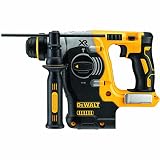
DEWALT 20V MAX DCH273B
- 2.1 Joules impact energy
- SHOCKS Active Vibration Control
- Three application modes
- 6.4 lb cordless body

ENEACRO 13 Amp 7.4 J
- 7.4 Joules impact energy
- Full bit and chisel kit
- Four operating modes
- 13 Amp 1500 watt motor

Bosch 11255VSR Bulldog
- Three modes with Vario-Lock
- 0-5800 BPM
- SDS vibration control
- D-handle control
Two of those three are corded and one is cordless, which is the honest shape of this market right now. Cordless tools have genuinely closed the gap on light and medium anchor work, but the highest impact energies in this roundup all remain corded, and the best-rated cordless options all require you to buy a battery separately if you do not already own the platform.
Best Rotary Hammer Drills for Concrete (October 2026)
| Product | Specs | Action |
|---|---|---|
| DEWALT 20V MAX DCH273B Cordless SDS-Plus Rotary Hammer |
|
Check Latest Price |
| ENEACRO 13 Amp 7.4 J Corded SDS-Plus Rotary Hammer |
|
Check Latest Price |
| Bosch 11255VSR Bulldog Xtreme Corded Rotary Hammer |
|
Check Latest Price |
 DEWALT 20V MAX DCH133B D-Handle Cordless Rotary Hammer DEWALT 20V MAX DCH133B D-Handle Cordless Rotary Hammer |
|
Check Latest Price |
 AOBEN 13 Amp 1-1/4 Inch Corded SDS-Plus Rotary Hammer AOBEN 13 Amp 1-1/4 Inch Corded SDS-Plus Rotary Hammer |
|
Check Latest Price |
 DEWALT D25263K 115V Corded SDS-Plus Rotary Hammer DEWALT D25263K 115V Corded SDS-Plus Rotary Hammer |
|
Check Latest Price |
 Bosch GBH2-28L 8.5 Amp Bulldog Xtreme Corded Rotary Hammer Bosch GBH2-28L 8.5 Amp Bulldog Xtreme Corded Rotary Hammer |
|
Check Latest Price |
 Berserker 26FA 9 Amp Corded SDS-Plus Rotary Hammer Berserker 26FA 9 Amp Corded SDS-Plus Rotary Hammer |
|
Check Latest Price |
 DOVAMAN RH15A 12.5 Amp Corded SDS-Plus Rotary Hammer DOVAMAN RH15A 12.5 Amp Corded SDS-Plus Rotary Hammer |
|
Check Latest Price |
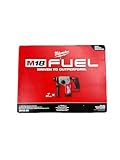 Milwaukee M18 FUEL 2912-20 Cordless Brushless Rotary Hammer Milwaukee M18 FUEL 2912-20 Cordless Brushless Rotary Hammer |
|
Check Latest Price |
How We Picked These Rotary Hammer Drills
We compared ten rotary hammer drills on the four things that actually decide whether a concrete job finishes: published impact energy, maximum concrete hole diameter, the number of real operating modes, and the weight you will be holding when the job turns overhead.
Every figure in this roundup comes from the manufacturer’s own specification data, cross-checked against aggregated verified buyer feedback for the same model. We weighted review count heavily, because a 4.8 average across 600 buyers tells you something different from a 4.5 average across 3500, and we noted recurring complaints rather than isolated ones.
What we did not do is claim laboratory measurements of our own. We have not timed holes in cured concrete, and you should treat any page that does with suspicion. Where buyers report performance, we attribute it to them. Where a spec is manufacturer-stated, we say so.
1. DEWALT 20V MAX DCH273B Cordless SDS-Plus Rotary Hammer
DEWALT 20V MAX SDS Rotary Hammer Drill, Cordless, 3 Application Modes, Bare Tool Only (DCH273B)
2.1 J impact energy
20V MAX cordless
6.4 lb
Drill/hammer/chip modes
Pros
- 2.1 Joules of impact energy for real concrete anchor holes
- SHOCKS Active Vibration Control cuts felt vibration
- Only 6.4 lb so overhead and ladder work stay manageable
- Three modes cover drilling light chiselling and fastening
- Cordless so no extension cord to drag
Cons
- Battery and charger sold separately
- Battery not included with the bare tool
- Not a substitute for a full demolition hammer on thick slab work
This is the tool we recommend to most people, and the reason is straightforward: it is the only pick here that pairs a genuinely usable 2.1 Joules of impact energy with a 6.4 lb body and a 4.7 rating across more than 3400 verified buyers. The German-engineered brushless mechanism and the rotating mode dial give you drill, hammer drill and chip settings from the same housing, so one tool covers anchor holes, rod hanging and light chiselling.
The SHOCKS Active Vibration Control system is the feature owners mention most often in the long run. On a full day of setting seismic attachments or strut, the difference between a tool that shakes your hand loose and one that does not is the difference between finishing and quitting. Reviewers consistently report that the cordless format removes the extension cord friction entirely, which matters more than it sounds when you are on a ladder.
The 2.1 Joules figure is worth putting in context. It sits comfortably above the entry tier of roughly 2 J, which is where SDS-plus rotary hammers stop being marginal in concrete and start being efficient. It is not enough for sustained slab demolition, and the listing itself says so. Buyers describe it as a tool for concrete boring, anchor setting and light chiselling, not for breaking a slab apart.
Two things to know before you commit. It is a bare tool, so the battery and charger are separate purchases unless you already run 20V MAX. And it only accepts dual-slot SDS-plus bits, not three-slot SDS-Max or Hilti-style shanks. If you are starting from zero packs, the total cost of ownership gap versus a corded option is the thing to think hardest about.
Where the DCH273B earns its place
It is the right answer for rod hanging, seismic attachments, cable tray and strut mounting, and for anyone who needs to move between anchor holes without hunting for an outlet. At 6.4 lb you can hold it one-handed on a ladder or in a ceiling cavity without the arm fatigue that stops a 12 lb tool halfway through a shift.
Reviewers also note it handles drilling and chipping jobs interchangeably, which means a homeowner doing a weekend of anchors and a small amount of tile or mortar removal only needs one machine. If you already own any 20V MAX packs, this becomes an easy decision.
Where you should look elsewhere
If your largest hole is three-quarters of an inch or more, or if you plan repeated concrete demolition, the 2.1 J figure is the wrong tool. Corded options in this roundup deliver 7 to 7.4 Joules, which is more than triple the energy, and they will keep that pace for hours instead of draining a battery.
If you own Milwaukee M18 packs rather than DeWalt 20V MAX, the platform maths changes the answer entirely. Buying into a second battery ecosystem for one tool rarely makes sense, and that is the single most common regret we see in buyer feedback across this category.
2. ENEACRO 13 Amp Corded Rotary Hammer with 7.4 Joules of Impact Energy
ENEACRO 1-1/4 Inch SDS-Plus 13 Amp Heavy Duty Rotary Hammer Drill
7.4 J impact energy
13 Amp 1500 watt
1.25 inch max hole
Four modes
Pros
- 7.4 Joules of impact energy is exceptional for the money
- Complete kit includes three bits two chisels brushes grease and case
- Four operating modes including chisel position adjustment
- Safety clutch plus double-layer anti-vibration handling
- Two-year defect-free warranty with responsive seller support
Cons
- 12.6 lb bare weight is punishing overhead
- Lesser-known brand nameplate with lower resale value
- Included 8 10 and 12 mm bits are small for a 1.25 inch capacity
This is the value pick, and the value case is unusual because it is not a stripped-down machine. At 13 Amp and 1500 watts with 5.5 ft-lb of impact energy, it delivers 7.4 Joules, which is more than triple the DCH273B and in the same region as the highest-output tools in this roundup. Maximum concrete hole diameter is 1.25 inch.
The accessory package is where budget tools usually disappoint, and this one does not. You get three SDS-plus drill bits, two ten-inch chisels, an auxiliary handle, a spare carbon brush set, grease, a dust cap and a carrying case. Many owners report years of reliable service, and the 4.6 rating across more than 3500 buyers is the highest review volume in the group.
Four operating modes give it real flexibility: drill only, hammer only, hammer drill, and chisel position adjustment. No-load speed is 820 rpm with a maximum impact frequency of 4200 bpm. The safety clutch and the double-layer anti-vibration system with a soft PU grip are the two features that make a 12.6 lb tool bearable over a long session.
There is a sensible reason it is not the top pick. The 12.6 lb bare weight is genuinely heavy, and reviewers consistently flag it as a problem for extended overhead or one-handed work. The brand nameplate also carries less resale value than Bosch, DeWalt or Milwaukee, which matters if you plan to sell it on.
Where the ENEACRO earns its place
Choose this one for volume concrete work, brick, block, and serious demolition on a budget. If you have a garage or basement project that will take dozens of holes, the 7.4 Joules and the 1.25 inch capacity mean you will not be fighting the tool at any point.
The 360-degree adjustable auxiliary handle and the anti-vibration system also make it a reasonable choice for contract work where you cannot justify a premium brand but need more than a hobby tool. The included grease and spare brushes mean the maintenance essentials are already in the case.
Where you should look elsewhere
Skip it for overhead work from a ladder or a ceiling cavity. At 12.6 lb with a full accessory set it becomes a two-handed, two-person job, and reviewers mention this as the main drawback.
Also skip it if you plan to use it in situations where vibration control is genuinely critical, such as hours of anchor setting in a tight residential job. The tools with active vibration systems, like the DEWALT DCH273B or the Bosch GBH2-28L, are noticeably easier on the hand over a full day.
3. Bosch 11255VSR Bulldog Xtreme Corded SDS-Plus Rotary Hammer
BOSCH 11255VSR Bulldog Xtreme SDS-Plus Rotary Hammer
2.0 ft-lb impact
7.5 Amp 960 watt
0-5800 BPM
Three modes
Pros
- Long service life reported by owners after years of slab and tile work
- SDS-plus tool-free bit changes with automatic locking
- Vario-Lock gives 36 chisel positions for controlled angles
- D-handle improves control for overhead and downward work
- Vibration control reduces fatigue versus older corded hammer drills
Cons
- Included depth gauge is thin and too short for deep holes
- Very sensitive trigger that is hard for users who clench
- Standard drill bits need an SDS-plus adapter for drill-only mode
- 2.0 ft-lb sits low for sustained heavy concrete
The Bosch Bulldog is the recommendation that has aged best. Owners describe decades of anchor drilling, tile removal and slab demolition without failure, and the 4.7 rating sits across more than 3000 verified buyers. At 7.5 Amp and 960 watts with 2.0 ft-lb of impact energy, it delivers 0 to 1300 rpm and 0 to 5800 blows per minute.
Three modes cover rotation only, rotary hammer and hammer only, and the Vario-Lock system gives 36 bit positions for chiselling angle changes without pulling the bit out. The D-handle is the reason this remains a favourite for overhead and downward drilling: it gives you a second grip point and much better control when the bit is buried.
Be honest about the impact energy. 2.0 ft-lb is at the low end for sustained heavy concrete, and this is a tool for anchor holes, chasing channels and moderate slab work rather than a full demolition hammer. The speed is where it feels strong, not the per-blow energy.
The three recurring criticisms are consistent enough to plan around. The included depth gauge is thin and bends, so if you need to hit a consistent depth over an inch you will want a better one. The trigger is very light and sensitive, which is awkward if you tend to clench. And standard drill bits need an SDS-plus adapter if you want the rotation-only mode.
Where the Bulldog earns its place
Pick it when you want a single corded tool you can keep for a decade. The SDS-plus quick-change chuck holds bits securely, the mode selector is straightforward, and the accessory package includes an auxiliary handle, depth gauge and carrying case.
It is also the safest recommendation for someone who is not sure how much they will use a rotary hammer. The 11255VSR is the version most people mean when they say a rotary hammer drill, so bits, chisels and advice all map to it easily.
Where you should look elsewhere
If your job involves thick concrete or repeated demolition, the 2.0 ft-lb figure will feel slow. Corded picks in this roundup at 3.0, 7.0 and 7.4 Joules exist precisely because that work needs more energy per blow.
If you are drilling from a ladder for long stretches, the 10.4 lb weight and the light trigger are a poor combination. The Bosch GBH2-28L is the same brand at roughly 6.4 lb with counter-balanced vibration control, and it is a better ladder tool.
4. DEWALT 20V MAX DCH133B Cordless Rotary Hammer with D-Handle
DEWALT 20V MAX SDS Plus 1 Inch Cordless Rotary Hammer with D-Handle, Bare Tool Only (DCH133B)
2.6 J impact energy
20V MAX cordless
5 lb
D-handle and side handle
Pros
- Highest average rating in the roundup at 4.8 stars
- Only 5 lb so one-handed and overhead work stay comfortable
- 2.6 Joules punches through concrete block and hard soil
- Rotating dial gives drill hammer drill and chip modes
- Includes 360 degree side handle and depth rod
Cons
- Best results need higher amp-hour DeWalt packs that cost extra
- Bare tool with no battery or case included
- No belt hook included which some owners miss
At five pounds this is the lightest tool in the roundup, and it still delivers 2.6 Joules, which is more impact energy than the Bosch Bulldog. The 4.8 star average across more than 2000 buyers is the highest rating of the ten. Owners frequently compare it favourably to rented corded units, which tells you how much of this class used to be rental-only.
The D-handle is the headline feature and it genuinely matters. Combined with the 360-degree side handle and a top speed of 1500 rpm, you get fine control starting a hole and steady control when you are drilling upward into a soffit or sideways into a foundation wall. The rotating dial sets drill, hammer drill and chip modes.
At 300 watts the motor is a brushless design with a German-engineered mechanism, the same lineage as the DCH273B. The difference is the D-handle and the weight saving, and both point to overhead work rather than volume boring.
The catch is battery specification. Reviewers are consistent that this tool shows its best results on higher amp-hour DeWalt packs, which are an extra purchase. If you already run 20V MAX at 5.0 Ah or above, you are in good shape. If you have only small packs, expect the first hole to go well and the twentieth to be slower.
Where the DCH133B earns its place
Ceilings, soffits, upper-floor slabs, conduit runs overhead, anything where the tool weight is going to be fighting you. Five pounds with a D-handle is the best overhead configuration in this roundup, and there is no cord to snag on a ladder or a truss.
It is also a strong first rotary hammer for a homeowner doing forming work, rod hanging and structural connections, because the three modes let you drill and then chip with the same body and the same battery.
Where you should look elsewhere
Do not buy it for volume anchor work on thick slabs. At 2.6 Joules it is not out of range, but it is draining packs quickly on long batches, and this is a tool that will reward a bigger battery than the cheapest one in the platform.
Also skip it if you are not already committed to DeWalt 20V MAX. With no battery and no case included, the entry cost for a first-time buyer is the tool plus a pack plus a charger, and that is real money that a 13 Amp corded machine would never ask of you.
5. AOBEN 13 Amp Corded SDS-Plus Rotary Hammer with Full Kit
AOBEN Rotary Hammer Drill with Vibration Control and Safety Clutch,13 Amp Heavy Duty 1-1/4 Inch SDS-Plus Demolition Hammer for Concrete-Including 3 Drill Bits,Flat/Point Chisels.
13 Amp 1500 watt
1-1/4 inch max hole
Three modes
12 lb
Pros
- Capable of both drilling and light to medium demolition at a low cost
- Kit includes three bits two chisels spare brushes grease and a case
- Balanced 12 lb weight with a comfortable trigger for long sessions
- Owners report drilling hundreds of 5/8 inch holes six inches deep in solid rock
- Good value compared with renting the same class of tool
Cons
- Instruction manual is unclear
- Two separate switches must both be set for hammer modes
- Needs lithium-based high-temperature grease rather than the manual oil
- 12 lb is demanding for extended or overhead use
The AOBEN is the budget pick, and its argument is the package. You get the rotary hammer, auxiliary handle, two spare carbon brushes, dust guard, motor lubricant, three SDS drill bits in 8, 10 and 12 mm, a point chisel, a flat chisel, a carrying case and a warranty card. That is a genuinely complete kit rather than a bare machine with a token bit.
Reviewers describe it as a value workhorse that rivals Bosch and Makita demolition hammers at a fraction of the cost, with some reporting 25 to 40 hours of use with minimal wear. Owners specifically mention drilling hundreds of 5/8 inch holes six inches deep in solid rock, and comparing the cost against renting the same class of tool.
Mechanically it is a 13 Amp, 1500 watt motor with three function modes: hammer only, hammer drill and drill only. Maximum drilling diameter is 1-1/4 inch in concrete and half an inch in metal. The dual switch buttons are designed to extend switch service life compared with single-switch designs, and the heat dissipation motor with double anti-dust bottom structure is sensible engineering.
Three real drawbacks. The manual is unclear enough that reviewers recommend supplementing it with the listing. Both switches must be set correctly before the hammer modes engage, which catches people out. And it needs lithium-based high-temperature grease on the bit shank, not the oil the manual suggests.
Where the AOBEN earns its place
It suits anyone who needs a capable demolition and drilling machine for a defined project rather than a decade of work. Basement digs, small footings, tile and mortar removal, and general masonry repairs all fall well inside what owners report it handling.
If you are outfitting a rental unit, a workshop that gets occasional use, or you simply want a second machine so two people are not queueing, the value math is hard to argue with. The included bits and chisels mean you are not buying consumables on day one.
Where you should look elsewhere
Long-term durability is unproven compared with name-brand tools, and the 4.5 rating reflects that. If you are a contractor drilling concrete every day, the premium for a Bosch or a DeWALT corded model buys a service life this one has not demonstrated.
Skip it overhead. At 12 lb with two chisels, bits and a case in the same van, this is a ground-level tool. And if you already own lithium grease, fine; if you do not, buy a tube before you start rather than after the chuck seizes.
6. DEWALT D25263K 115V Corded Rotary Hammer with 3.0 Joules
DEWALT SDS Rotary Hammer Drill, Vibration Control Shocks, 115 Volts, Corded (D25263K)
3.0 J impact energy
8.5 Amp corded
SHOCKS vibration control
Kit box
Pros
- 3.0 Joules is the highest impact energy of the corded options in this group
- SHOCKS Active Vibration Control reduces felt vibration
- Rotating brush ring gives full power in forward and reverse
- Integral clutch reduces sudden high-torque reactions on jams
- Runs on standard 115V circuits with a kit box included
Cons
- Corded so you need an outlet or a heavy extension cord
- Larger footprint than compact cordless models in confined areas
This is the corded pick for anyone who wants more punch per blow than the Bulldog without carrying 12 pounds. The 3.0 Joules figure is the highest among the mid-weight corded machines here, driven by an 8.5 Amp high-performance motor. Maximum chuck size is listed at 1.13 inches.
Two details make it stand out. The rotating brush ring delivers full power and torque in both forward and reverse, which matters when a bit binds in a deep hole and you need to back it out. And the integral clutch reduces sudden high-torque reactions if the bit jams, protecting both the tool and your wrist.
SHOCKS Active Vibration Control is the DeWALT name for the same class of damped handle system, and owner feedback focuses on being able to work extended periods in concrete without the hand fatigue that shorter tools cause. The tool ships with a 360 side handle, a depth rod and a kit box, plus a two-year free service and a three-year limited warranty.
It is also compatible with the D25301D drilling dust extraction system, which is worth knowing if you are drilling indoors. Drilling concrete indoors produces respirable silica, and tying the tool into extraction is the single most effective control available to a homeowner. A mask alone is not the same thing.
Where the D25263K earns its place
Anchor setting on a slab, medium-diameter holes, and mixed jobsite work where you want corded uptime and vibration control without moving to a 7 Joule demolition-class machine. It is a sensible middle point for a serious DIYer or a contractor who does not need to break concrete apart.
If you have a reliable 115V outlet on site, the whole battery-platform question disappears. It also includes forward and reverse at full torque, which is genuinely useful and not universal at this price.
Where you should look elsewhere
It is still only 3.0 Joules. If you are cutting large holes or doing real demolition, the ENEACRO and DOVAMAN at 7-plus Joules will finish work in a fraction of the time, and the D25263K will frustrate you.
The cord is the other limitation. Reviewers of corded rotary hammers in general point to short cord length and extension cord friction as a recurring annoyance, and the manufacturer does not list a weight for this model, so balance for overhead work is something you should judge in person.
7. Bosch GBH2-28L Bulldog Xtreme Corded Rotary Hammer
BOSCH 8.5 Amp GBH2-28L SDS-plus Bulldog Xtreme Max 1-1/8 In. Rotary
2.4 ft-lb impact
8.5 Amp
Approx 6.4 lb
KickBack Control
Pros
- Contractors report hundreds of hours of continuous demo work without failure
- KickBack Control stops rotation on bind-up and protects bit and wrist
- Counter-balanced vibration control allows one-handed drilling
- Compact 17.4 inch body reaches tight spaces
- HammerHook gives quick on-job storage
Cons
- Included plastic case has flimsy internal retainers that can arrive broken
- Depth stop can slip on first use if the ratchet is not fully engaged
- 120V only which limits use in 230V regions
The GBH2-28L is the same Bulldog family as the 11255VSR but reconfigured for weight and safety. At 2.9 kg, roughly 6.4 lb, it is close to half the weight of most corded rotary hammers in this roundup, and it still delivers 2.4 ft-lb of impact energy from an 8.5 Amp motor.
KickBack Control is the headline. The integrated sensor senses a bind-up and stops rotation, which is exactly the scenario buyers describe as frightening, when a bit catches rebar mid-hole and tries to twist the tool out of your hands. A reviewer on a forum described the safety clutch as a lifesaver when a bit hit a piece of rebar unexpectedly, and this is the same protection in Bosch form.
Counter-balanced vibration control is the other feature that separates it. It is what allows one-handed drilling without the fatigue that stops lighter tools, and professionals consistently praise how quickly and cleanly it punches accurate holes. The D-handle, auxiliary handle and case all come in the box, and the Vario-Lock system rotates and locks the chisel to optimise the working angle.
The complaints are about the box, not the tool. Owners report the included plastic case has flimsy internal retaining pieces that sometimes arrive broken, and that the depth stop can slip on first use if the ratchet is not fully engaged. Both are five-minute fixes at a hardware store.
Where the GBH2-28L earns its place
Tight spaces, above ceilings, inside a joist bay, on a ladder, or anywhere a 10 to 12 lb machine becomes a liability. At 6.4 lb with a D-handle it is one of very few corded rotary hammers here that can genuinely be used one-handed overhead.
It is also the one to buy if rebar is a realistic possibility in your concrete. KickBack Control is not a marketing nicety, it is the feature that turns a dangerous bind-up into a stopped motor.
Where you should look elsewhere
At 2.4 ft-lb it sits in the same energy band as the 11255VSR, so it is not the choice for thick concrete or demolition. If your holes run over half an inch, step up in Joules rather than in brand.
It is 120V only, which makes it unsuitable in 230V regions without a converter, and the review volume at just over 1100 is lower than the other Bosch here. The long-term reputation is strong, but the evidence base is thinner.
8. Berserker 26FA 9 Amp Corded SDS-Plus Rotary Hammer
Berserker 1-1/8″ SDS-Plus Rotary Hammer Drill for Concrete 26FA
4.5 J impact energy
9 Amp 1050 watt
1-1/8 inch max hole
9.5 lb
Pros
- Lowest entry cost in the roundup with genuine SDS-plus concrete performance
- 4.5 Joules from a 1050 watt 9 Amp motor
- Complete kit with bits chisels grease wrench brushes and case
- Aluminum alloy housing survives accidental drops
- Reviewers report 2 inch deep holes in under about 10 seconds
Cons
- Runs hot after roughly 15 to 20 holes and needs cooling time
- 9.5 lb is heavy for a light-duty tool
- SDS-plus bits only so existing SDS-Max bits are unusable
- At least one report of complete motor burnout after light use
The Berserker 26FA answers the question a lot of buyers are actually asking: can a first rotary hammer drill be affordable without being useless? At 1050 watts and 9 Amp it puts out 3.3 ft-lb, which is 4.5 Joules, and it drills up to 1-1/8 inch in concrete at 1050 rpm and 4200 blows per minute.
The owner reports are encouraging for defined jobs. Buyers use it for anchor bolts, radon pits and 8000 psi concrete, and one reviewer reported drilling 2 inch deep holes in under about ten seconds each. They also note it stays on the bit far better than a conventional hammer drill, which is the whole point of the purchase.
The kit is unusually generous: flat chisel, point chisel, three SDS-plus drill bits, depth gauge, grease, wrench, carrying case, spare carbon brushes, adjustable handle and manual. The aluminum alloy housing is a genuine upgrade over the plastic shells on many tools at this level.
Two things temper that. It runs hot after roughly 15 to 20 holes and needs cooling time, which makes batch drilling a process rather than a continuous process. And at 9.5 lb it is heavy for a light-duty machine, which is an odd pairing that shows up in reviews.
Where the Berserker earns its place
One-off and occasional concrete work. Hanging a shelf into a slab, anchoring a gazebo, a handful of Tapcons, a radon pit cover. For that scope, renting a class-two machine for a weekend often costs more than owning this, and forum regulars consistently recommend a budget rotary hammer as a sensible first buy for drilling masonry and concrete.
Three modes cover rotation only, hammering with rotation, and hammering only, plus a 360-degree adjustable handle and overload clutch protection. That is enough capability to cover most homeowner concrete jobs end to end.
Where you should look elsewhere
Skip it for commercial use or continuous batches. The heat build-up and the small number of early motor failures reported in reviews are the two signals to watch, and neither would matter much on a single project but both matter on a job site.
Note the bit compatibility: SDS-plus only, so standard drill bits and SDS-Max bits are both unusable. Budget a separate set of SDS-plus bits for any metal or wood work rather than assuming the chuck will adapt.
9. DOVAMAN RH15A 12.5 Amp Corded Rotary Hammer with 7 Joules
1-9/16” SDS Rotary Hammer Drill, 12.5Amp Heavy Duty Rotary Hammer
7 J impact energy
12.5 Amp 1500 watt
1-1/4 inch max hole
12.3 lb
Pros
- 7 Joules of impact energy among the highest in the roundup
- Reviewers report it chewing through brick and reinforced concrete
- Four functions plus adjustable chisel position broaden the jobs it takes
- Heat dissipation and anti-dust structure support service life
- Complete accessory kit with brushes chuck key case and grease
Cons
- Heavy at 12.3 lb which tires arms on long demolition sessions
- Mode selector switch is stiff and needs deliberate pressure
- One report of a unit arriving with a dead motor
- Variable voltage listing confuses international buyers
The DOVAMAN RH15A exists for one reason: raw impact energy at a modest cost. At 12.5 Amp and 1500 watts it delivers 5.2 ft-lb, which is 7 Joules, and the maximum concrete hole is 1-1/4 inch. It runs 0 to 900 rpm and 0 to 4350 no-load blows per minute on standard 120V household supply.
Reviewers are impressed that a tool at this level delivers 7 Joules, with users demolishing reinforced concrete, cutting holes for 70 mm hole saws and removing tile. Four functions cover chiselling, hammer drill, drill only and chisel position adjustment, and the upgraded vibration damping technology is aimed squarely at the fatigue problem that heavy tools create.
The accessory list is deep: SDS-plus adapter, chuck key, three drill bits, flat and point chisels, two carbon brushes, depth gauge, wrench, dust collector, carrying case, manual and lubricant grease. Being able to change the chuck and brushes yourself matters a lot on a tool that is going to work hard.
The negatives are consistent. At 12.3 lb bare, and 18.1 lb with the accessories, long demolition sessions are tiring. The mode selector switch is stiff enough that owners warn you to set it deliberately. And there is at least one report of a unit arriving dead with no motor function, which is worth a return window in mind.
Where the DOVAMAN earns its place
Reinforced concrete, core-sized holes, 70 mm hole saw work, and breaking out concrete where a 2 to 3 Joule machine would stall. If you know in advance that you are hitting hard material and large diameters, this is where the money should go.
It is also the right tool for anyone who wants a self-serviceable machine. Replaceable brushes, a keyed chuck adapter and included grease mean the maintenance that normally requires a service centre is a garage job.
Where you should look elsewhere
At 12.3 lb this is a ground-level and bench-height tool. If your work is overhead, in a cavity or on a ladder for hours, the weight will end the session before the work does.
With 690 reviews the evidence base is also the thinnest here. For a sustained professional schedule, a machine from a brand with a service network and a longer track record is a safer bet even at higher Joules.
10. Milwaukee M18 FUEL 2912-20 Cordless Brushless Rotary Hammer
Milwaukee 2912-20 M18 Fuel 18V 1″ Sds Plus Brushless Rotary Hammer
800 watts brushless
18V M18 cordless
1 inch SDS-plus
7.5 lb
Pros
- Compact 1 inch body reaches hard-to-access areas
- Brushless motor delivers strong power for its size
- AUTOSTOP senses and responds to bind-ups to protect the wrist
- Battery swaps across the M18 platform avoid cords and outlets
- Works equally well for drilling and chiselling
Cons
- Bare tool so a separate high-capacity M18 pack is required
- Drains packs quickly on sustained heavy boring
- Highest cost of ownership in this roundup
The 2912-20 is the pick if you already run Milwaukee M18 packs. It puts out 800 watts at maximum, turns at 1330 rpm and carries 2 ft-lb of torque, in a 7.5 lb body with a 1 inch SDS-plus chuck. The 4.8 rating is joint-highest in this roundup.
Its selling point is power density in a small shell. Owners rate it as delivering near-corded-class performance from a compact body, and the compact dimensions are what let you reach inside a joist bay or a ceiling void that a full-size corded machine physically will not fit.
AUTOSTOP is the safety feature, and it functions like KickBack Control on the Bosch GBH2-28L: it senses a bind-up and responds, protecting the user’s wrist when a bit catches. Vibration control is credited with relieving chronic elbow pain for long-term users, and the tool handles both drilling and chiselling across three operating speeds.
Being part of the M18 System, with over 200 compatible solutions, is the quiet advantage. If you own M18 batteries, the effective cost of this tool is the tool. If you do not, the effective cost is the tool plus packs plus a charger, which is the highest total in this roundup. If you are weighing the platform decision for general drilling work too, our guides to the best cordless drills for DIY and the best cordless drills for woodworking run through the same pack economics.
Where the Milwaukee earns its place
Tight access work on an M18 platform. Nothing else here combines this little body with this much power, and for someone working inside finished walls or in a service cavity that is the whole decision.
It is also a good match for rebar-adjacent work, because AUTOSTOP handles bind-ups and the compact body keeps your hands close to the trigger. If you already own M18 high-capacity packs, the battery cost problem disappears entirely. Compact accessories also matter here; if the job turns to shaping or grinding work, our rotary tool roundup covers those.
Where you should look elsewhere
Do not buy it as a first M18 tool. At 620 reviews the feedback base is the smallest in the roundup, and buyers consistently report fast pack drain on sustained heavy boring, which is exactly the workload that has no cord.
And if your holes run large, the DEWALT corded options or the 7 Joule machines will still out-drill it. This is a compact, fast, convenient tool, not a volume boring platform.
What to Look For in a Rotary Hammer Drill
Once you know the naming, the buying decision is four questions in order: what chuck do you need, how much impact energy do you need, corded or cordless, and how does it feel in the hand. Work through them in that order and the model choice makes itself.
SDS-Plus vs SDS-Max: which chuck you need
SDS-Plus and SDS-Max are not competing quality levels. They are different shank systems with different capacities. SDS-Plus shanks are 10 mm and 13 mm; SDS-Max shanks are 18 mm and are roughly twice as thick. A tool with an SDS-Max chuck will take far more energy per blow, and it will not accept SDS-Plus bits, or vice versa.
For almost all homeowner and light trade work, SDS-Plus is the correct answer. Every tool in this roundup is SDS-Plus. SDS-Max only makes sense if you are drilling holes over an inch across, core-sized holes, or breaking concrete, and the price step is real. One forum user described the sensible working setup as a cordless SDS-Plus for daily work, a corded SDS-Plus for anchors, and an SDS-Max kept for the jobs that demand it.
Impact energy in joules and the holes it can actually drill
Impact energy is the single most useful number on the box, and almost nobody translates it. Roughly, 2 Joules handles quarter-inch anchor holes and light masonry. Around 3 Joules covers half-inch holes in normal concrete. 4 to 5 Joules is where larger anchor holes and tougher aggregate become comfortable. 7 Joules and above is demolition and large-diameter territory, and it is where the 13 Amp corded tools in this roundup sit.
No-load RPM matters less than the Joules figure. Two tools with the same wattage can feel completely different, and the tool with the higher impact energy will usually finish the hole first. That is also why the two 13 Amp machines here at 7.0 and 7.4 Joules outperform heavier-feeling tools with roughly half the energy.
Corded vs cordless, and the battery platform cost nobody mentions
Cordless wins on mobility, ladder work and jobsites with no power. Corded wins on impact energy, sustained pace and total cost if you do not already own packs. All three cordless picks here require a battery and charger purchased separately, and on a first purchase those add up to more than the tool.
This is the most common regret in the category. Forum buyers repeatedly say the deciding factor is which platform they already hold, and one written warning on a professional pick was blunt: do not buy it if you own no packs, because a battery and charger will cost more than the tool itself. If you want a full primer on platform thinking, our cordless drills for DIY guide covers the same economics for general drilling.
Modes, safety clutch and why they save your wrist on rebar
Three modes is the baseline today: rotation only, rotary hammer, and hammer only. A fourth position for chisel angle adjustment is a bonus, and it matters more than it sounds when you are breaking out mortar or tile. A depth stop is worth having for any repeat anchor work.
The safety clutch is the feature experienced owners value most, and the reason is concrete rebar. Hit a bar of rebar partway through a deep hole and the bit binds, the bit and the hole wall twist against each other, and the reaction can pull the tool out of your hands or break your wrist. A clutch, KickBack Control or AUTOSTOP decouples the tool before that happens. If your concrete is reinforced, treat this as a requirement rather than a feature.
Vibration control, weight and balance for overhead work
Hand-arm vibration syndrome is a real occupational issue with hammer drills, and it is why SHOCKS Active Vibration Control, Bosch counter-balanced vibration control and similar damped-handle systems exist. They do not eliminate the exposure, but they reduce the amount that reaches your hand, which is what determines whether you can finish a day of anchor work.
Weight is the other half. Anything over about 10 lb becomes a two-handed job overhead, and the forum consensus on heavy tools is blunt: they become unmanageable on a ladder. Our light picks here are the DEWALT DCH133B at 5 lb, the Bosch GBH2-28L at roughly 6.4 lb and the DEWALT DCH273B at 6.4 lb.
What actually arrives in the box
This is where budget tools differ sharply, and it is the most common source of buyer frustration. The Bosch 11255VSR and GBH2-28L arrive with an auxiliary handle, depth gauge and case. The DEWALT cordless models include a 360-degree side handle and depth rod but no battery, no charger and sometimes no case.
The budget kits here are the most generous on consumables, including three drill bits, two chisels, spare carbon brushes, grease and a case. Whichever you choose, you will still need a proper SDS-plus bit set: the bits included are usually 8, 10 and 12 mm, which are small relative to the capacity of the tool they ship with.
Frequently Asked Questions
What is the best hammer drill machine for concrete?
For concrete, buy a rotary hammer drill rather than a hammer drill. The piston-driven rotary hammer strikes the bit directly thousands of times a minute, so it pulverises concrete instead of grinding at it, and it will not burn out the way a cam-action hammer drill does. Our top pick is the DEWALT 20V MAX DCH273B, at 2.1 Joules and 6.4 lb. A hammer drill is only appropriate for small masonry screws and light block work.
Will a rotary hammer drill through concrete?
Yes. A rotary hammer drill is specifically built for concrete, brick, block and stone. The piston mechanism delivers roughly 4,000 to 5,800 blows per minute directly into an SDS-plus bit, so the concrete is pulverised rather than abraded. Impact energy, quoted in joules, predicts capability: about 2 J handles quarter-inch anchor holes, 3 J reaches half-inch holes, and 7 J or more is large-diameter and demolition work.
Which is better for concrete, SDS or SDS Plus?
SDS-Plus is the right choice for nearly all concrete drilling, and every tool in this roundup uses it. SDS-Max has a much thicker 18 mm shank and carries roughly twice the impact energy, but it will not accept SDS-Plus bits, and the tools cost more. Step up to SDS-Max only when you need holes over an inch across, core-sized holes, or serious concrete demolition.
What is the best cordless rotary hammer drill?
For most people the DEWALT 20V MAX DCH273B, with 2.1 Joules, a 6.4 lb body and active vibration control. For overhead work the DEWALT DCH133B is lighter still at 5 lb and carries a D-handle. If you already own Milwaukee M18 packs, the 2912-20 gives you 800 watts of brushless power in a compact body. All three ship without a battery, so factor packs and a charger into the cost.
Who makes the best corded rotary hammer drill?
Bosch builds the longest-lasting corded rotary hammers, and the 11255VSR Bulldog and the lighter GBH2-28L are both proven over years of service. DeWalt makes the strongest mid-weight corded option in the D25263K at 3.0 Joules. For raw impact energy at a lower cost, the ENEACRO and DOVAMAN both deliver around 7 Joules from 13 Amp motors.
Which Rotary Hammer Drill Should You Buy?
Start with the largest hole you need to drill. Quarter-inch anchor holes and light block work can be handled by a good hammer drill. Half-inch holes for rods, or anything approaching an inch across, need a rotary hammer drill, and that is where the DEWALT 20V MAX DCH273B at 2.1 Joules and 6.4 lb is our default answer, because it handles the common jobs without asking you to own a battery ecosystem first.
Then adjust for the job. Working overhead or on a ladder, go lighter with the DEWALT DCH133B at 5 lb or the Bosch GBH2-28L at roughly 6.4 lb, both of which have the kickback protection that matters if you are near rebar. Tight access inside a cavity, use the Milwaukee 2912-20 if you own M18 packs. Reinforced concrete, large diameters or demolition, step up to 7 Joules with the ENEACRO or the DOVAMAN. And a one-off weekend project, the Berserker 26FA at 4.5 Joules costs less than a rental and does the job.
Whatever you choose, drill the shank of the bit with a little lithium-based rotary hammer grease before you start, keep the chuck clean, and if you are working indoors, tie the tool into dust extraction where you can. Concrete dust contains respirable silica, and that is a much easier problem to solve before you start drilling than afterwards. For everything else on the tool side, our roundups of the best rotary tools cover the supporting kit.
All specifications and ratings in this guide were verified for 2026 and reflect manufacturer data plus aggregated verified buyer feedback. Prices change constantly, so use the buttons above to confirm current listings before you buy.