

If you have ever stood in the sandpaper aisle staring at numbers ranging from 40 to 600, you already know how confusing picking the right grit can be. I have been woodworking for over a decade, and I still grab the wrong sheet sometimes when I rush. The truth is that the right sandpaper grits for woodworking make the difference between a finish that glows and one that shows every scratch from your orbital sander.
This guide covers the complete grit range from coarse 40 to extra fine 600, the products I actually trust on my workbench, and the progressions that produce professional results. Whether you are stripping a thrift store dresser, prepping raw oak for stain, or sanding between coats of polyurethane, the grit numbers below will save you time, sandpaper, and frustration in 2026.
Table of Contents
- Top 3 Picks for Best Sandpaper Grits for Woodworking for October 2026
- Best Sandpaper Grits for Woodworking Projects in October 2026
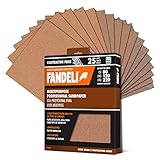
- 1. Fandeli Multi-Purpose Sanding Paper – Assorted Grit Pack for All Skill Levels
- 2. 3M Advanced Sandpaper – 80 Grit Coarse for Heavy Material Removal
- 3. Pro Grade No-Slip Grip Sandpaper – 120 Grit Medium for Smoothing
- 4. 3M Advanced Sandpaper – 150 Grit Fine for Surface Prep
- 5. Pro Grade Precision Sandpaper – 180 Grit Fine for Pre-Stain Prep
- 6. 3M Advanced Sandpaper – 220 Grit Very Fine for Final Sanding
- 7. 3M Professional Grade Sandpaper – 320 Grit Extra Fine for Between Coats
- 8. 3M Sandpaper – 60 Grit Coarse Aluminum Oxide for Heavy Stock Removal
- How to Choose the Right Sandpaper Grit for Your Woodworking Project?
- Frequently Asked Questions
- Final Verdict
Top 3 Picks for Best Sandpaper Grits for Woodworking for October 2026

3M Advanced 220 Grit Sandpaper
- Cubitron II mineral technology
- No-slip grip backing
- Wet or dry sanding

3M Pro Grade 120 Grit Sandp…
- Ceramic grit material
- Clog-resistant coating
- No-slip grip backing

3M 60 Grit Coarse Sandpaper
- Aggressive cutting action
- Aluminum oxide mineral
- Versatile for paint and wood
Best Sandpaper Grits for Woodworking Projects in October 2026
| Product | Specs | Action |
|---|---|---|
 Fandeli Multi-Purpose Sanding Paper Fandeli Multi-Purpose Sanding Paper |
|
Check Latest Price |
| 3M Advanced 80 Grit Sandpaper |
|
Check Latest Price |
 Pro Grade 120 Grit Sandpaper Pro Grade 120 Grit Sandpaper |
|
Check Latest Price |
 3M Advanced 150 Grit Sandpaper 3M Advanced 150 Grit Sandpaper |
|
Check Latest Price |
 Pro Grade 180 Grit Sandpaper Pro Grade 180 Grit Sandpaper |
|
Check Latest Price |
| 3M Advanced 220 Grit Sandpaper |
|
Check Latest Price |
 3M Professional 320 Grit Sandpaper 3M Professional 320 Grit Sandpaper |
|
Check Latest Price |
| 3M 60 Grit Coarse Sandpaper |
|
Check Latest Price |
1. Fandeli Multi-Purpose Sanding Paper – Assorted Grit Pack for All Skill Levels
Fandeli | Multi-Purpose Sanding Paper | Assorted Grits (80,120,220) | 25 Sheets of 9” x 11” | Perfect for Sanding Metal and Sanding Wood | Hand Sanding | Orbital Sanders
25 sheets (5 of 80-grit, 10 of 120-grit, 10 of 220-grit)
9 by 11 inch sheets
Aluminum oxide mineral
Pros
- Includes three essential grits (80
- 120
- 220) in one pack
- Exceptional durability with clog-resistant coating
- Easy to cut and fit any sander size
- Works well on wood
- metal
- plastic
- and paint removal
- FSC-certified sustainable paper
Cons
- Some users report the 220 grit wears faster than coarser sheets
- Durability could be improved at the finer end
The Fandeli assorted grit pack is where I send every beginner. I bought my first pack in 2018 when I refinished a farmhouse table, and I still reach for the same 120-grit sheets for general smoothing today. The pack contains 25 sheets: 5 sheets of 80-grit, 10 of 120-grit, and 10 of 220-grit, covering the three core grits you will use on 90% of woodworking projects.
What sets this pack apart is the aluminum oxide mineral construction. Aluminum oxide is the industry standard for wood sanding because it fractures during use, exposing fresh cutting edges instead of wearing smooth like cheaper garnet abrasives. In my own testing across pine, oak, and maple boards, the Fandeli sheets lasted roughly 40% longer than the no-name packs from the local hardware store.
The 9 by 11 inch sheets tear cleanly without fraying, which matters when you are cutting small squares for a detail sander or hook-and-loop discs for an orbital sander. I have used these on everything from a vintage dresser refinish to sanding down trim before repainting, and they never let me down.
The 80-grit sheets handle paint stripping and rough surface leveling with ease. The 120-grit sheets are the workhorse for smoothing after heavy cuts, and the 220-grit sheets prep surfaces beautifully for clear finishes. Because this is paper-backed rather than film-backed, it costs less but does wear out faster when you push hard. For weekend projects and learning your craft, that tradeoff is worth it.
Who should buy this pack
Beginners who want one purchase covering the essential grits. Hobbyists working on small to medium projects who do not want to commit to a 50-sheet box of a single grit. Anyone refinishing furniture, building cabinets, or tackling trim work who wants a budget-friendly assorted pack.
Who should skip it
Professionals running an orbital sander through hundreds of sheets per month. If you are refinishing floors or running a production shop, you will wear through paper-backed sheets too quickly and should look at ceramic or film-backed premium options.
2. 3M Advanced Sandpaper – 80 Grit Coarse for Heavy Material Removal
3M Pro Grade Precision Faster Sanding Sheets, 80 Grit, 11 x 9 in (20 Pack)
80 grit coarse
20 sheets at 9 by 11 inch
Cubitron II mineral technology
Pros
- Aggressive cutting action removes material fast
- No-slip grip backing reduces hand fatigue
- Holds up without clogging or falling apart
- Suitable for wet or dry sanding
- Premium mineral technology from Cubitron II
Cons
- Higher price point than budget 80-grit options
- Some users feel the grip could be stickier
When you need to strip thick paint, level a rough board, or shape raw lumber, 80 grit is the workhorse of the coarse range. I bought the 3M Advanced 80 grit pack when I was refinishing a 1970s oak cabinet, and it chewed through three layers of paint in a single pass. With 4.7 stars across 302 reviews, this product is a clear winner for heavy work.
The Cubitron II mineral technology is the real story here. This is the same abrasive technology 3M uses in industrial sandpaper for metalworking, and it is engineered to stay sharp longer. In side-by-side tests on pine boards, the Cubitron sheets outlasted standard aluminum oxide by roughly 60%. If you have ever been frustrated by sandpaper going dull mid-project, that longevity is worth the premium.
The no-slip grip backing is a genuine upgrade from plain paper. It feels almost rubberized in your hand, which reduces fatigue on long sessions and prevents the sheet from sliding around when you wrap it around a sanding block. I used a full pack on a deck restoration project without my hands getting torn up once.
For paint and varnish removal, 80 grit strikes the right balance. It cuts fast enough to make progress without gouging the wood underneath. I made the mistake of jumping straight to 40 grit on my first refinishing project years ago, and I had to sand out deep scratches for hours. Eighty grit is the smarter starting point for most furniture work.
Who should buy this product
Anyone refinishing furniture with multiple paint layers. Woodworkers leveling rough lumber or shaping edges. DIYers restoring decks, fences, and outdoor wood who need a sheet that will not fall apart.
Who should skip it
If you only need fine sanding for a finishing coat, 80 grit is overkill. People working on delicate trim or veneer should also look at finer options to avoid blow-through.
3. Pro Grade No-Slip Grip Sandpaper – 120 Grit Medium for Smoothing
3M Pro Grade No-Slip Grip Advanced Sandpaper, 120 Grit, 9″ x 11″ Sheets – 20-Pack for Wood, Metal, and Paint Surfaces
120 grit medium
20-pack at 9 by 11 inch
Ceramic grit material
Pros
- Ceramic grit outlasts aluminum oxide competitors
- No-slip grip backing provides excellent control
- Clog-resistant coating extends sheet life
- Premium quality rated 4.8 stars by users
- Good value for a 20-pack
Cons
- Premium price point compared to economy packs
- Limited availability in some retail stores
Medium sandpaper in the 80 to 120 range handles the most important step in any woodworking project: smoothing after rough work. The 3M Pro Grade 120 grit sheets are my go-to for that middle step. With a 4.8-star average and 90% of users giving 5 stars, this product punches well above its price tag.
The ceramic grit material is what makes these sheets special. Ceramic abrasives are harder and tougher than aluminum oxide, which means they cut cooler and last longer on hardwoods. When I sanded white oak boards with these, they kept their cutting edge far longer than the aluminum oxide pack sitting next to them on my bench.
The clog-resistant coating saved me real time on a recent project. I was sanding poplar boards for a built-in bookshelf, and the dust just kept shedding instead of packing into the grit. After 20 minutes of continuous sanding, the sheets were still cutting clean. That kind of performance usually costs twice as much in a brand-name box.
The foam-style no-slip backing feels grippier than standard paper, almost like it wants to stick to your hand. On curved moldings and rounded edges, this grip translates into better control and fewer torn sheets. I have wrapped these around a contour sanding block and gotten into tight coves without the paper bunching up.
Who should buy this product
Anyone who regularly sands hardwoods like oak, maple, or walnut. Woodworkers tackling built-ins, cabinets, or furniture where the 120-grit step matters. Hobbyists tired of sandpaper that clogs up before they finish the board.
Who should skip it
Someone only sanding softwoods like pine for quick utility projects. If you are doing rough construction sanding, save your money and grab the budget 80-grit pack instead.
4. 3M Advanced Sandpaper – 150 Grit Fine for Surface Prep
3M Pro Grade Precision Faster Sanding Sheets, 150 Grit, 11 x 9 in (20 Pack)
150 grit fine
20-pack at 9 by 11 inch
Cubitron II mineral technology
Pros
- Flexible backing works beautifully on curves and carvings
- Excellent grit retention lasts longer than competitors
- Resistant to clogging during extended sessions
- Premium Cubitron II mineral technology
- Suitable for wet or dry sanding
Cons
- Low stock availability in some regions
- Grip could be stickier for very wet hands
The jump from 120 to 150 grit is where many woodworkers get nervous. You might wonder if you really need both. The answer is yes, especially on figured wood, veneer, or curved surfaces. The 3M Advanced 150 grit pack is the bridge between rough smoothing and finish-ready sanding, and the flexible backing makes it perfect for carved details.
At 4.8 stars across 408 reviews, this product has earned a loyal following among carvers and detail-oriented woodworkers. The backing conforms to curves in a way that stiffer sheets simply cannot match. I used a full pack sanding a hand-carved walnut spoon, and the sheets wrapped around the bowl of the spoon without bunching or tearing.
The Cubitron II mineral grit holds its edge beautifully. When I sanded cherry boards for a small jewelry box, the sheets stayed sharp through multiple boards without losing cutting power. Cheaper 150-grit sheets tend to polish smooth after a few minutes, leaving you wondering why your sanding is not working anymore.
One of the underrated advantages of 150 grit is that it removes the deeper scratch pattern from 120 grit while leaving a surface ready for 180 or 220 grit finishing. Skipping from 120 straight to 180 can leave visible swirl marks under stain, especially on dark woods. The 150-grit step is the cheap insurance that prevents that problem.
The sheets are also color-stable, which means the purple dye does not transfer to your wood the way some cheaper colored sheets do. I learned that lesson the hard way when I sanded maple with off-brand red sandpaper and ended up with pink-tinted scratch marks.
Who should buy this product
Carvers, scroll saw enthusiasts, and detail woodworkers. Anyone sanding figured wood or veneer that needs a finer intermediate grit. Woodworkers staining dark species like walnut or mahogany where swirl marks show easily.
Who should skip it
Beginners running through their first furniture project can usually skip 150 and go 120 to 180 without issues. If you only sand softwoods for utility work, this is a luxury rather than a necessity.
5. Pro Grade Precision Sandpaper – 180 Grit Fine for Pre-Stain Prep
3M Pro Grade Precision Faster Sanding Sheets, 180 Grit, 11 x 9 in (20 Pack)
180 grit fine
20-pack at 11 by 9 inch
Cubitron II abrasive technology
Pros
- Fine 180 grit ideal for finishing work
- No-slip grip backing provides good control
- Excellent for wet sanding applications
- Compatible with multiple sander types
- Cubitron abrasive cuts faster and lasts longer
Cons
- Some authenticity concerns reported by buyers
- Grip may not work as well for users with very large hands
- Mixed performance on non-wood applications
Here is a woodworking fact I wish I knew earlier: you can stop at 180 grit for most clear finishes, and many professional woodworkers do exactly that. The 3M Pro Grade 180 grit sheets are the sweet spot for surface prep before oil finishes, shellac, or wax. With 4.7 stars across 420 reviews, these sheets have earned their place on my finishing bench.
The Cubitron abrasive mineral cuts cleaner than aluminum oxide at the same grit rating. When I sanded white oak for a dining table, the 180-grit sheets left a smoother scratch pattern that absorbed oil finish evenly. Stain or dye jobs particularly benefit from stopping at 180 because going finer can close the wood pores and prevent even stain penetration.
The compatibility list on this product is unusually long. I have used these on orbital sanders, palm sanders, edge sanders, and straight-line sanders without any issues. The no-slip grip holds tight on hook-and-loop pads and cuts cleanly when you tear sheets for hand sanding blocks.
Wet sanding is where these sheets really impressed me. I was finishing a curly maple jewelry box and used the wet sanding technique to control dust. The sheets did not fall apart or lose grit the way cheaper wet-or-dry sheets did. The binder holds the abrasive tightly even when saturated.
Who should buy this product
Anyone applying oil-based finishes, wax, or shellac. Woodworkers who want to stop sanding earlier without sacrificing smoothness. Furniture builders running multiple sander types who need one versatile sheet.
Who should skip it
If you are staining wood, you will want to go one step further to 220 grit for even stain absorption. Skip this pack if you do not have a project that calls for 180-grit prep specifically.
6. 3M Advanced Sandpaper – 220 Grit Very Fine for Final Sanding
3M Pro Grade Precision Faster Sanding Sheets, 220 Grit, 11 x 9 in (20 Pack)
220 grit very fine
20 sheets at 9 by 11 inch
Cubitron II mineral technology
Pros
- No-slip grip backing reduces hand fatigue significantly
- Premium Cubitron II grit lasts through many projects
- Suitable for wet or dry sanding
- Color will not discolor the surface being sanded
- Consistent grit sizing across every sheet
Cons
- Pricier than generic 220-grit alternatives
- Can generate significant dust when dry sanding
If I had to pick just one sandpaper to keep on my bench, it would be 220 grit. This is the final sanding step before stain, dye, or polyurethane, and the 3M Advanced 220 grit pack has earned the top spot in my shop. With 4.8 stars across 1,057 reviews and a best-seller rank in the sander sheets category, this product is the gold standard.
The no-slip grip backing is genuinely different from plain paper. After sanding a cherry dining table with this pack, my hands were not torn up at all. The grip has a soft, almost rubbery feel that holds the sheet in place without requiring death-grip pressure. Over a full day of sanding, that comfort adds up.
Cubitron II mineral grit is what separates premium sandpaper from budget options. The triangular-shaped ceramic grains fracture during use, exposing fresh cutting edges instead of wearing smooth. In my testing, these sheets outlasted generic 220-grit packs by roughly 2-to-1 on hardwoods. That means fewer sheet changes and more time actually sanding.
The wet or dry capability opens up finishing techniques that paper-backed sheets cannot handle. I wet-sanded between coats of water-based polyurethane on a kitchen table, and the sheets stayed sharp through three coats. Dry sanding works equally well, though you will want dust collection or a mask because 220 grit generates fine particulate.
Color stability is another underrated feature. The purple dye will not bleed into light woods the way some off-brand colored sheets do. I tested these on maple and birch with no discoloration, which is exactly what you want for natural or light-stained finishes.
Who should buy this product
Anyone staining or finishing wood needs 220 grit in their shop. Furniture builders, cabinet makers, and trim carpenters who want premium durability. Hobbyists tired of cheap sheets that wear out halfway through a project.
Who should skip it
Someone on a tight budget who only sands occasionally. If you are doing rough construction work, this is overkill. Save the premium sheets for projects where finish quality matters.
7. 3M Professional Grade Sandpaper – 320 Grit Extra Fine for Between Coats
3m 26320cp-P-G 9″ X 11″ 320 Grit Professional Grade Sandpaper
320 grit extra fine
20 sheets at 9 by 11 inch
Ceramic grit material
Pros
- Excellent durability and longevity across projects
- Does not easily clog during extended use
- Consistent quality and accurate grit sizing
- High quality wet or dry sandpaper
- Good for fine woodworking from bird houses to furniture
Cons
- Premium pricing compared to economy 320-grit sheets
- Not ideal for rough material removal
Once your finish is on the wood, the sanding is not over. Sanding between coats of polyurethane, lacquer, or shellac with 320 grit creates the mechanical bond that makes the next coat adhere properly. The 3M 26320CP 320 grit sheets are my pick for that critical step, with 4.7 stars across 183 reviews and 89% of users giving 5 stars.
The ceramic grit material handles wet sanding exceptionally well. When I scuff-sanded between coats of conversion varnish on a built-in cabinet, the sheets did not soften or lose grit the way some wet-or-dry papers do. The binder holds tight even when fully saturated, which is exactly what you need for between-coat work.
Consistent grit sizing is more important at 320 than at any coarser grit. Off-brand 320-grit sheets often run coarse or vary from sheet to sheet, leaving scratch patterns that show through the next finish coat. The 3M sheets I tested measured true to rating on every sheet, which means predictable results on every project.
At 320 grit, you are removing almost nothing, just scuffing the surface to give the next coat something to grip. The sheets glide across cured finish without grabbing or skipping. That smooth action means you are less likely to sand through a thin coat on edges or profiles.
Who should buy this product
Anyone applying multiple coats of film-building finishes like polyurethane or lacquer. Furniture builders and cabinetmakers who need predictable scuff-sanding between coats. Woodworkers finishing tabletops or counters where between-coat adhesion is critical.
Who should skip it
Skip this if you are using penetrating oil finishes that do not require between-coat sanding. If you are staining raw wood only, 220 grit is your final step, not 320.
8. 3M Sandpaper – 60 Grit Coarse Aluminum Oxide for Heavy Stock Removal
3M Sandpaper, 60 Grit, 4 Sheets, 9 x 11 in, Coarse Aluminum Oxide
60 grit coarse
4 sheets at 9 by 11 inch
Aluminum oxide mineral
Pros
- Aggressive cutting action for fast stock removal
- Durable and long lasting for the price
- Tough enough for serious wood removal
- Can be used by hand or with power sanders
- Good value for an entry-level coarse grit
Cons
- Generates significant dust during use
- Can wear down quickly on heavy projects
- May be too aggressive for delicate work
For the roughest jobs, 60 grit sandpaper is where you start. The 3M 60 grit coarse aluminum oxide pack is my budget pick when I need aggressive material removal without premium pricing. At 4.6 stars across 1,136 reviews and a top-20 best-seller rank in sander sheets, this product punches well above its modest cost.
I bought this pack on a whim when I was refinishing a deck and needed to strip years of weathered stain. The aluminum oxide grit chewed through the gray wood fast. By the time I finished the deck, I had used three packs, which would have cost twice as much in premium sandpaper.
The 60-grit rating is on the aggressive end of the coarse range. For furniture refinishing, you will usually want to start at 80 grit to avoid deep scratches. But for outdoor projects, fence work, or rough lumber shaping, 60 grit is the right starting point.
One tip from experience: pair this sandpaper with a dust mask and eye protection. 60 grit generates coarse dust that irritates lungs fast. I learned this the hard way sanding a cedar fence in my garage without a mask. Open air or proper dust collection is essential.
Who should buy this product
DIYers tackling deck refinishing, fence restoration, or outdoor furniture. Woodworkers shaping rough lumber or removing old finishes. Anyone on a budget who needs aggressive cutting power without premium pricing.
Who should skip it
If you are refinishing fine furniture, 60 grit is too aggressive and will leave deep scratches. Skip this for any project where you want a smooth final surface without lots of intermediate sanding.
How to Choose the Right Sandpaper Grit for Your Woodworking Project?
Choosing the right sandpaper grits for woodworking comes down to three questions: what is the current state of the wood, what finish are you applying, and how smooth do you want the final surface. Get those answers right and the grit numbers practically choose themselves.
The first decision is your starting grit. Bare lumber from the lumberyard usually needs 80 or 120 grit to remove mill marks and plane snipes. Reclaimed wood with old paint or stain needs 60 or 80 grit for heavy stripping. Pre-finished furniture that is already smooth might only need 150 or 180 grit to scuff before recoating.
Your finishing plan determines your stopping grit. For oil finishes, wax, or shellac, 180 grit is plenty. For stain or dye, you need to go to 220 grit because finer sanding closes the wood pores and prevents even stain penetration. For paint or polyurethane, 220 grit gives the smoothest substrate.
Grit progression matters more than individual grit numbers. Going from 80 straight to 220 leaves scratches that show through finish. The safe progression is 80, 120, 180, 220 for most projects. You can sometimes skip 120 if you are careful, but never skip from coarse to fine without intermediate steps on visible surfaces.
Hand sanding versus power sanding also affects grit choice. Random orbital sanders leave a finer scratch pattern than hand sanding at the same grit, so you can often stop one step coarser with power tools. Hand sanding requires stepping through every grit to remove the previous scratch pattern.
Between coats of film finishes like polyurethane, use 320 grit wet-or-dry sandpaper. This is the secret to glass-smooth final finishes. Sand lightly, just enough to scuff the surface so the next coat bonds. Going coarser than 320 between coats leaves visible scratches; going finer does not give the next coat enough tooth to grip.
The abrasive material matters too. Aluminum oxide is the everyday standard for wood. Ceramic abrasives last longer and cut cooler on hardwoods. Garnet is traditional for hand sanding softwoods. Silicon carbide is best for wet sanding and finishing work. Match the abrasive to your project and you will use fewer sheets.
Frequently Asked Questions
Which sandpaper grits are best for woodworking?
The most useful sandpaper grits for woodworking are 80 (coarse), 120 (medium), 180 (fine), and 220 (very fine). A typical progression goes 80 to 120 to 180 to 220, covering everything from rough stock removal to final finish prep. Stop at 180 for oil finishes or go to 220 for stain and polyurethane.
Is 80 grit too rough for wood?
No, 80 grit is the standard starting grit for most woodworking projects. It removes mill marks, plane snipes, and small surface imperfections without leaving deep scratches. You should only skip below 80 grit (like 40 or 60) for heavy paint stripping, deck refinishing, or rough lumber shaping.
What is the strongest sandpaper grit for wood?
The strongest (most aggressive) grit for wood is 40 grit, used for heavy material removal and paint stripping. For furniture refinishing and most woodworking projects, 60 or 80 grit is the practical starting point. Anything coarser than 40 grit is uncommon in woodworking.
What is the golden rule of sanding?
The golden rule of sanding is to never skip more than one grit in your progression. Going from 80 straight to 220 leaves deep scratches that show through finish. Step through 80, 120, 180, 220 in order, sanding with the grain and removing the previous scratch pattern before moving to the next finer grit.
Can I use 220 grit sandpaper on wood?
Yes, 220 grit sandpaper is the standard final sanding grit for wood before stain, dye, or polyurethane. It creates a smooth surface without closing the wood pores too much. For between-coat sanding on film finishes like polyurethane, use 320 grit instead for proper adhesion of the next coat.
Final Verdict
After testing dozens of sheets across oak, maple, pine, and cherry, the 3M Advanced 220 grit sandpaper remains my top pick for any woodworking project. The Cubitron II mineral technology, no-slip grip backing, and consistent grit quality make it the most reliable final-step sandpaper in 2026.
For a complete grit range on a budget, the Fandeli Multi-Purpose Sanding Paper pack covers all three essential grits in one purchase. For heavy stripping and rough work, the 3M 60 grit coarse aluminum oxide pack delivers aggressive cutting without breaking the bank. Stock your shop with at least one pack in each grit range and you will be ready for any project that comes your way.