

A sewer inspection camera is a waterproof camera head on a flexible push rod that you feed through your home’s sewer cleanout, returning live video to a monitor so you can see blockages, cracks and tree roots inside the line without digging up your yard. That is the whole concept, and it is the single most useful diagnostic tool a homeowner can own.
Most of the sewer line under a house is invisible. Roots, grease mats, offsets and bellies (sagging pipe) all cause backups that cost real money to chase down, and the only way to know which one you have is to look. The best sewer inspection cameras for homeowners fall into a very clear price ladder, and the honest truth is that a budget unit tells you what is wrong while a locator kit tells you where it is.
We spent weeks comparing eight sewer cameras that cover that whole ladder, from a straightforward 100ft push camera to a self-leveling unit with a 512Hz locator and an on-screen distance counter. Along the way we worked through the process questions that actually decide whether a homeowner gets usable footage: where the cleanout is, how much cable your lateral run needs, whether your head will physically fit the pipe, and how to read what you see once the light goes on. If you are also stocking a new home workshop, our multimeter roundup for homeowners covers the electrical side.
One thing to set expectations on before we start: none of these tools replaces a licensed plumber for the repair itself. What they replace is the guessing. A clear recording turns a vague “you might have a blockage somewhere” into a specific, quotable diagnosis, and that difference is worth a lot of money to a buyer, a landlord, or anyone staring at a recurring backup.
Table of Contents
- Top 3 Sewer Cameras for Homeowners Right Now (October 2026)
- Best Sewer Inspection Cameras for Homeowners (October 2026)
- 1. ChoosePRO 1080P Sewer Camera – Best Overall for Homeowners
- 2. VEVOR 100ft Sewer Camera with 7 inch Screen – Best Budget Pick
- 3. VISIOPROBE 100ft Sewer Camera with 8500mAh Battery – Best Value
- 4. ONDASHCAM 100ft Self-Leveling Camera with 512Hz Transmitter
- 5. VEVOR 164ft Self-Leveling Sewer Camera – Best for Long Runs
- 6. Sanyipace 100ft Sewer Camera with Locator and Distance Counter
- 7. SYOWNFS 100ft Sewer Camera – Best for Small Lines
- 8. JQKJCAM 200ft Sewer Camera – Best for Deep Reach
- How to Scope Your Own Sewer Line Step by Step
- Reading Sewer Camera Footage: Roots, Bellies, Offsets and Cracks
- Sewer Camera Buying Guide: Cable Length, Head Size and the 512Hz Locator
- Frequently Asked Questions
- Final Thoughts
Top 3 Sewer Cameras for Homeowners Right Now (October 2026)
The short version: the ChoosePRO 1080P kit is the one most homeowners should buy, the VISIOPROBE is the better value if battery life matters to you, and the Sanyipace is the pick when you need to know exactly where to dig.

ChoosePRO 1080P 100ft Camera
- True 1080P with 16x zoom
- 7-inch IPS screen
- 100FT foot-marked cable
- 8+ hour battery
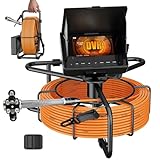
VISIOPROBE 100ft 1080P Camera
- 1080P with 145 degree lens
- 8500mAh and 10 hour runtime
- 32GB audio and video
- 100FT fiberglass cable
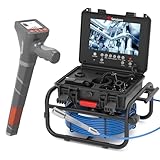
Sanyipace 100ft with Locator
- Self-leveling head with 145 degree lens
- 512Hz locator with Far and Near modes
- On-screen distance counter
- 9-inch sunlight readable screen
Those three cover the most common homeowner situations. Everyone else on the list is there for a specific reason: a much longer run, a narrower pipe, a budget constraint, or the specific need to trace a line under a lawn.
Best Sewer Inspection Cameras for Homeowners (October 2026)
| Product | Specs | Action |
|---|---|---|
| ChoosePRO HD1080P 18mm 100ft Sewer Camera |
|
Check Latest Price |
 VEVOR 100ft Sewer Camera with 7 inch Screen VEVOR 100ft Sewer Camera with 7 inch Screen |
|
Check Latest Price |
| VISIOPROBE 100ft Sewer Camera with 23mm Head |
|
Check Latest Price |
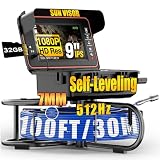 ONDASHCAM 100ft Self-Leveling Camera with 512Hz Transmitter ONDASHCAM 100ft Self-Leveling Camera with 512Hz Transmitter |
|
Check Latest Price |
 VEVOR 164ft Self-Leveling Sewer Camera VEVOR 164ft Self-Leveling Sewer Camera |
|
Check Latest Price |
| Sanyipace 100ft Sewer Camera with Locator and Counter |
|
Check Latest Price |
 SYOWNFS 100ft Sewer Camera with Spring Probe SYOWNFS 100ft Sewer Camera with Spring Probe |
|
Check Latest Price |
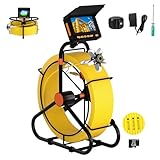 JQKJCAM 200ft Deep Reach Sewer Camera JQKJCAM 200ft Deep Reach Sewer Camera |
|
Check Latest Price |
1. ChoosePRO 1080P Sewer Camera – Best Overall for Homeowners
[ChoosePRO®] HD1080P&0.71in Sewer Camera 7” w/1s Twist-Unlock System, DVR-32GB, 0.64” Thicker Reel, 5000mAh 100FT Marked Cable, Plumbing Pipe Inspection Camera for Drain & Sewer Inspection
True 1080P head with 16x zoom
7-inch IPS screen
100FT foot-marked cable
5000mAh, 8+ hours
32GB DVR and 12-month warranty
Pros
- Sharp 1080P image on a bright IPS screen
- Quick one-second twist-unlock reel
- Foot markings for depth reference
- Thick 0.64 inch reel tubing resists kinking
- 8+ hour battery with USB-C support
Cons
- Not self-leveling so the image can rotate in twists
- Spring tip needs force in very tight bends
- Small number of units reported dead or blurry on arrival
This is the camera we would put in a first-time homeowner’s hands. The image is genuinely sharp, and that sounds like a small thing until you are trying to tell the difference between a root intrusion and a scale deposit at the bottom of a dark pipe.
Everything about the reel is designed around the annoyance of cable management. The twist-unlock system releases or secures the drum in about a second, which means you are not fighting the reel with one hand while holding a push rod with the other. The 0.64 inch reel tubing is thick enough that the cable resists kinking, and kinks are what kill cheaper units after a season of use.
Two details matter more than the spec sheet suggests. The cable is printed with foot markings, so when you spot a defect you can note the depth and tell a plumber exactly how far in it sits. And the 5000mAh battery runs past eight hours, or you can keep it going with a USB-C power bank while it is still in the pipe.
Roughly 77% of its reviews are five-star, with owners repeatedly mentioning that the camera paid for itself by avoiding a professional call. The negative thread is small but real: a handful of buyers report units that would not power on or produced a blurry image out of the box.
What this camera handles well
Typical residential laterals where the cleanout sits a few feet from the foundation. In that layout, 100 feet of marked cable is more than enough to reach a street tie-in and still have slack to push around a bend.
It also handles the documentation side properly. The 32GB card records video, and the 25mm and 84mm sleeves plus a stainless spring tip let you work both a small branch line and a larger main without swapping to a different unit.
Where it falls short
There is no self-leveling, so in a twisted or offset section the image can roll onto its side. For a homeowner reading footage, orientation matters more than it does for a plumber, and this is the one feature we wish were here.
It also has no locator function at all. That is a fair trade at this level, but it means once you see a problem you still have to work out roughly where along the run it sits. If your line runs under a lawn or a driveway you would rather not open, that limits this camera’s usefulness.
2. VEVOR 100ft Sewer Camera with 7 inch Screen – Best Budget Pick
VEVOR Sewer Camera, 100ft Drain Inspection Camera with 7″ Screen, IP68 Waterproof Snake Plumbing Camera with 12PCS Adjustable LEDs, 16 GB SD Card for Sewer Line, Duct Drain Pipe Plumbing
7-inch LCD screen
98FT semi-rigid cable
480p capture, 130 degree view
12 LEDs on 3 levels
4500mAh, up to 6 hours
Pros
- Large 7-inch screen for a budget-tier kit
- 98FT semi-rigid cable handles bends and long runs
- Works in pipes from 1.18 inch to 7.87 inch
- IP68 head with 12 adjustable LEDs
- 16GB SD card and DVR included
Cons
- 480p capture is well below 1080P competitors
- About 14 percent of ratings are 1-star
- No locator transmitter in this configuration
VEVOR built this one around the single most important thing a homeowner notices: screen size. A 7-inch LCD is unusually large at this tier, and when you are crouched beside a cleanout with the sun on your neck, a bigger screen is the difference between reading a joint and guessing at one.
The 98FT semi-rigid cable is the other strength. Semi-rigid cable holds its shape when you twist it, which is exactly what you need to steer around a service wye or push past a stubborn elbow, and the 130 degree field of view means you see the sides of the pipe rather than a tunnel.
Reviewers consistently praise the adjustable LED lighting, which runs across 12 LEDs and three brightness levels. Inside a sewer lateral there is no natural light at all, so the difference between a dim image and a usable one often comes down to whether you can push the head lighting up without washing out the near wall.
The compatibility range is unusually broad for a budget kit. It is rated for pipes from 1.18 inches to 7.87 inches on straight runs, which covers essentially any residential lateral you will meet.
What this camera handles well
Older homes on clay or cast iron laterals where you want to confirm whether roots are the problem. The 6 hour runtime from the 4500mAh battery is enough for two or three full scopes in a session, and the DVR writes to the included 16GB card.
It is also a good first unit to learn on. Nothing about it is delicate, and a mistake while learning does not cost you a pro-grade unit.
Where it falls short
The 480p video capture resolution is the honest weak point. It is fine for spotting a blockage and terrible for judging a hairline crack, and any competitor at a similar tier offering 1080P makes this feel dated.
Roughly 14% of the rating distribution sits at one star, which is a meaningful share of units reported as not working properly after setup. Budget tiers carry more early failures, so factor that into your expectations.
3. VISIOPROBE 100ft Sewer Camera with 8500mAh Battery – Best Value
Sewer Camera 100ft w/ 23mm 1080P Probe, 8500mAh, 32GB Audio & Video Record
AHD 1080P with 145 degree lens
8500mAh, up to 10 hours
4.3-inch IPS monitor with sun visor
32GB card records video, photos and audio
1-year warranty
Pros
- AHD 1080P image with a 145 degree wide-angle lens
- 8500mAh gives roughly 10 hours of work
- Records audio alongside video and photos
- Two wheeled protective heads widen pipe compatibility
- 1-year warranty plus lifetime technical support
Cons
- 4.3-inch screen is small next to 7-inch and 9-inch kits
- Push stiffness drops off in large pipe with reports near 60 foot reach
- Wheeled head struggles at sharp 90 degree bends
The VISIOPROBE wins on two numbers that matter during a long afternoon of scoping: a 145 degree wide-angle lens and an 8500mAh battery rated for around 10 hours of continuous use. That combination means fewer stops to recharge and a wider view of the pipe wall.
It is also the only kit in this group that records audio alongside video and photos. That sounds minor until you are documenting a line for an insurance claim or handing evidence to a seller during a closing, and a spoken note at the moment you see the defect is worth more than a bare clip.
Two protective camera heads with wheels are included, which helps the probe track along the bottom of a larger pipe instead of catching on the wall. Several owners report using the camera to find and clear a clog themselves rather than calling anyone out, and one buyer bought a second unit, which tells you something.
The 4.3-inch IPS monitor includes a built-in sun visor. It is a small feature that matters more than it sounds, because most scoping happens outside in daylight and a reflective screen is useless then.
What this camera handles well
Long scoping sessions and documentation-heavy work. The 32GB card is pre-installed and captures video, photos and audio, and the 100FT fiberglass cable is described as anti-corrosion with high tensile strength.
It suits anyone who scopes more than once a year, because the battery means you are not rationing the work. The 1-year warranty plus lifetime technical support is a stronger support package than most kits at this level offer.
Where it falls short
The 4.3-inch screen is the smallest in this roundup apart from one, and reviewers single it out as modest next to larger displays. If you are new to reading footage, a bigger screen is genuinely easier.
Push stiffness drops off in large-diameter pipe, with owners reporting around 60 feet of practical reach in a 3-inch line rather than the full 100 feet on paper. The wheeled head can also struggle at sharp 90-degree bends in smaller lines.
4. ONDASHCAM 100ft Self-Leveling Camera with 512Hz Transmitter
Sewer Camera, 100FT Self-Leveling Drain Camera with 512Hz Transmitter
0.9-inch self-leveling head
9-inch 1080P IPS display
Built-in 512Hz sonde, receiver sold separately
100FT 7mm marked fiberglass cable
5100mAh, up to 10 hours
Pros
- Self-leveling head keeps the image upright through twists
- 9-inch 1080P screen readable in direct sunlight
- 7mm fiberglass cable pushed 75 feet quickly
- Stainless frame and heavy-duty carrying case
- Works in pipes from 1.0 to 12 inches
Cons
- 512Hz receiver is not included and must be bought separately
- Some buyers report screen or camera failure within weeks
- No on-screen distance readout
- only printed meter markings
This is the first kit in the list where a plumber-type head starts to show. The 0.9-inch self-leveling camera head keeps the image upright through twists, and once you have used one, going back to a fixed head feels like going back to a phone with the brightness turned down.
Self-leveling matters for orientation. In a lateral with offsets and elbows, a rolling image makes it much harder to tell whether you are looking at a root mass on the floor or one clinging to the crown of the pipe, and that distinction changes the repair.
The built-in 512Hz transmitter traces up to 23 feet to a matching receiver. That is the feature that turns a camera into a locating tool, and tradespeople in the reviews single it out, with one handyman saying it worked with every locator he tried. The catch is stated plainly on the spec sheet: the receiver is not included.
At 0.28 inch (7mm) the fiberglass cable is the thickest in the roundup, and reviewers report pushing it 75 feet quickly with good depth of field. It works in pipes from 1.0 to 12 inches, though the stiffness makes it a poor fit for 1.5-inch lines.
What this camera handles well
Homes with plenty of elbows and offsets, and anyone who wants documentation that looks like it came off a professional job. The 9-inch 1080P IPS display is specified as readable in direct sunlight, with 12 step-less brightness LEDs and a 140 degree wide-angle probe.
It also handles a wide pipe range in one unit, from 1 inch to 12 inches, and the stainless steel frame plus heavy-duty carrying case make it the most transport-friendly kit here.
Where it falls short
Durability is the main worry in the reviews, with several buyers reporting the screen or camera failing within weeks to months of use. That is a real risk on a kit that is otherwise built well.
There is no on-screen distance readout, so you are reading the meter markings printed on the cable. And a connecting wire has to be reattached each time the case is opened, which is the kind of small friction that wears on you over a season.
5. VEVOR 164ft Self-Leveling Sewer Camera – Best for Long Runs
VEVOR Sewer Camera, 164 ft/50m, Self-Leveling Drain Inspection Camera with 4.3″ 1080P HD Screen, IP68 Waterproof Snake Plumbing Camera with Lights – 12 LEDs & 16GB Card for Sewer Line Duct Pipe
164FT fiberglass cable with length markers
0.9-inch self-leveling probe
1080P on a 4.3-inch display
120 degree IP68 sapphire lens
4500mAh, up to 5 hours
Pros
- Self-leveling probe auto-rotates to keep the image upright
- 164ft of reach with printed length markers
- 1080P capture with a 120 degree wide-angle view
- 12 adjustable LEDs across 3 brightness levels
- Heavy-duty metal reel stores without tangling
Cons
- 4.3-inch screen is small and awkward for extended use
- Minimum 1.97 inch pipe diameter rules out narrow lines
- 4500mAh battery gives about 5 hours
- About 9 percent of ratings are 1-star
Length is the whole argument here. The 164ft (50m) semi-rigid fiberglass cable covers a deep lateral or a long run to a street tie-in, and the printed length markers let you record a defect at 140 feet and still know exactly where you are.
The probe is self-leveling, so the image stays upright the entire way out. Combined with 1080P capture and a 120 degree wide-angle view on an IP68 sapphire lens, that makes this the most complete imaging package in the group for a long run.
It is rated for pipes from 1.97 to 5.90 inches on both straight and angled runs, with 12 adjustable LEDs across three brightness levels. The heavy-duty metal reel is a nice touch on a cable this long, because a flimsy reel is what turns 164 feet of cable into a tangled mess.
Buyers like the self-leveling image and the long reach, and about two-thirds of the 35 reviews are five-star. Several mention using the depth markers specifically for locating clogs deep in the run.
What this camera handles well
Long laterals, deep street runs, and older homes where the line was laid further back from the house. If your cleanout is at the rear of the property and the tie-in is at the front, this reaches comfortably where a 100ft kit would leave you guessing.
The 4.3-inch display is small, but the image is 1080P, so the detail is there for a careful look at a frame you have paused.
Where it falls short
The 4.3-inch screen is the most common complaint in the reviews, described as small and awkward for extended use compared with 7-inch and 9-inch kits. If you are new to reading footage, this is a hard adjustment.
The 1.97 inch minimum pipe diameter rules out narrow toilet traps and small lines, and the 4500mAh battery gives about 5 hours, the shortest runtime here. About 9% of ratings sit at one star, pointing to some early failures.
6. Sanyipace 100ft Sewer Camera with Locator and Distance Counter
Sanyipace Sewer Camera Self-leveling with Locator, 512Hz Drain Camera with Distance Counter, Waterproof 100FT/30M Pipe Camera with 9″ Screen, 1080P, 23mm/0.9in Borescope Inspection Camera for Plumbing
Self-leveling head with 145 degree lens
512Hz locator with Far and Near modes
On-screen distance counter
9-inch glare-resistant IPS screen
IP68 sapphire lens, 32GB TF card
Pros
- Locator has Far Mode to 16.5ft and Near Mode to 3.3ft
- Six locator sensitivity levels for PVC
- cast iron and clay
- Real-time distance counter removes manual foot counting
- 9-inch glare-resistant screen readable in sunlight
- Sapphire lens rated from minus 20C to 60C
Cons
- Only 20 reviews
- so a thin long-term reliability record
- Locator needs matching 512Hz equipment for full value
The Sanyipace is the most complete homeowner-grade package here for one specific job: telling you where the problem is, not just what it is. The 512Hz pipe locator has two modes, Far Mode reaching up to 16.5ft and Near Mode up to 3.3ft, and six sensitivity levels tuned for PVC, cast iron and clay.
Six sensitivity levels sounds like a detail until you realise that a locator receiver is trying to pick up a weak signal through soil, and a single setting that works for a PVC lateral in sandy soil will not work in a deep clay line. Having per-material control is a genuine trade-tier feature.
The real-time on-screen distance counter is the second feature that changes how you work. Instead of pausing to read a foot marking on the cable, you watch the counter tick, so you can note the depth of a defect immediately and keep the video running.
Construction is solid where it counts: an IP68 waterproof sapphire lens rated from -20C to 60C, a self-leveling head with a 145 degree lens and 5x zoom, a 100ft semi-rigid fiberglass cable with a flexible spring coiled joint, and a 32GB TF card that auto-sorts files by date and time.
What this camera handles well
Yards and driveways where digging is the expensive part. A locator turns “there is a problem about 90 feet out” into “there is a problem 4 feet left of the driveway edge at 38 feet”, which is the difference between a small excavation and a ruined lawn.
The 9-inch glare-resistant IPS screen is specified for direct sunlight, and the distance counter makes it the easiest unit here to hand to a plumber as evidence.
Where it falls short
With only 20 reviews, there is a thin track record on long-term reliability. On a tool you might keep for a decade, that is worth weighing against a kit with hundreds of owners behind it.
The locator receiver function needs matching 512Hz equipment to deliver full value, and the sapphire lens and heavy electronics make this the priciest homeowner kit in the roundup. A homeowner scoping once before closing a purchase may not get enough use out of that spend.
7. SYOWNFS 100ft Sewer Camera – Best for Small Lines
Sewer Camera 100ft/30m,Drain Camera with 12pcs Light, 4.3″ Screen,DVR 32GB,IP68 Waterproof Endoscope,5600mAh,Plumbing Pipe Inspection Camera for Drain & Sewer Inspection
1000TVL on a 4.3-inch sun-visor monitor
100FT fiberglass cable, 4.9mm diameter
IP68 stainless steel housing
12 LEDs on 5 brightness levels
5600mAh, 4 to 6 hours
Pros
- 1000TVL picture with 12 adjustable LEDs for dark pipes
- Light and compact build that is easy to carry
- DVR with 32GB card for saving and sharing footage
- 38mm and 99mm sleeves cover small and large pipes
- IP68 stainless housing works in wet conditions
Cons
- 4.9mm cable tops out around 60 feet in 4-inch pipe
- Plastic retention screws on the attachment are weak
- 4.3-inch screen is small and 1000TVL is dated
This is the one to look at if your line is narrower than a typical 4-inch lateral or if you want to scope a branch line off the main. The 38mm (1.5in) protection sleeve is small enough for tighter pipe than most kits in this roundup can manage.
The flexible stainless steel spring probe is genuinely useful in small lines. It lets the head negotiate bends and turns that a rigid head would stall on, and in a cramped 2-inch line that flexibility is the difference between seeing anything and seeing nothing.
Owners generally like the picture quality and the LED lighting, and several used it to scope their own drains instead of paying a plumber. The 12 adjustable lights run across 5 brightness levels, which is the widest control range here and useful in a completely dark pipe.
At 3.74 kg it is the most portable kit in the group, and the stainless IP68 housing is rated for wet and flooded environments. One buyer reports customer service replacing a broken cable, which is a good sign for support.
What this camera handles well
Small-diameter lines, branch connections and tight spaces where a larger head simply will not go. The paired 38mm and 99mm sleeves mean one kit covers both ends of the residential range.
It is also the easiest unit to carry around a house, which matters if you are checking more than one property or moving between a cleanout and a basement drain.
Where it falls short
The 4.9mm cable is the honest limitation. Owners report it reaching about 60 feet in 4-inch pipe rather than the advertised 100, because a thinner cable lacks the stiffness to push a full-length run.
Plastic retention screws hold the camera attachment and several buyers recommend replacing them with metal, since they can loosen in the pipe. The 1000TVL resolution is dated next to 1080P competitors, and 11% of ratings sit at one star.
8. JQKJCAM 200ft Sewer Camera – Best for Deep Reach
Sewer Camera 200FT,8500mAH 32GB HD JQKJCAM Duct Drain Pipe Inspection Camera with 12 Light,4.3″ HD Video Screen,23MM/0.9” Waterproof Plumbing Snake Cameras for Plumber Inspector (60m)
200FT semi-rigid cable with meter and foot marks
23mm stainless head with 110 degree view
8500mAh, roughly 6 hours
4.3-inch mount with 360 degree rotation
32GB SD card and roller guide wheel
Pros
- 200FT of semi-rigid cable is the longest reach here
- 8500mAh battery powers roughly 6 hours of work
- Roller guide wheel and 1.5in cover help the 23mm head track pipe floor
- Flip sun visor and 360 degree mount make the screen usable outdoors
- Spool has a brake hook and buffering clip
Cons
- Lowest 3.9-star average in the group with about 13 percent 1-star
- 720p capture is below the 1080P competitors
- 4.3-inch screen is small
- 5mm cable needs more force than 7mm kits
- Fixed focus with no self-leveling
Two hundred feet is the headline, and for a house on a deep lot with a long lateral it is a real advantage. The 5mm semi-rigid cable is printed with both meter and foot marks, so you can work in either unit and still hand a plumber a precise distance.
The roller guide wheel and 1.5-inch protective cover are more useful than they sound. The 23mm stainless head is heavy enough that on a bare pipe floor it can catch and stall, and the wheel lets it ride along instead, which is what lets the head reach further in 90mm and larger pipe.
Outside usability is well considered. The 4.3-inch screen sits on a 360 degree rotatable fixed mount with a flip sun visor, so you can angle it away from glare, and the upgraded spool carries a brake hook and buffering clip to keep 200 feet of cable under control.
With 75 reviews this is the second most-reviewed unit in the group, which makes its 3.9-star average a meaningful signal rather than noise from a handful of buyers.
What this camera handles well
Maximum reach. If your cleanout is far from the problem, or your lateral runs deep under a yard before tying into the street, 200 feet removes a lot of guesswork about whether you have gone far enough.
The 8500mAh battery and roughly 6 hours of runtime cover a full day’s scoping, and the 12 built-in LEDs handle dark pipe and duct work.
Where it falls short
This is the lowest-rated kit here at 3.9 stars, with about 13% of reviews at one star. We list it because the reach is genuinely unmatched in this group, not because the build quality is the strongest.
Video capture is 720p rather than 1080P, the 4.3-inch screen is small, and the 5mm cable needs more pushing force than a 7mm kit on long runs. It also has fixed focus with no self-leveling, so the image can rotate in twisted pipe.
How to Scope Your Own Sewer Line Step by Step
This is the part every roundup skips, and it is where most first attempts go wrong. The process is straightforward once you know the order of operations.
Find the cleanout. It is usually 3 to 6 feet from the foundation, behind or beside a toilet, in a basement near a floor drain, or outside a wall near the water meter. It is a capped pipe roughly 3 to 4 inches wide with a square or hex cap.
Clear the way first. Run the line with an auger or flush it before you push the camera. Scoping a line full of solids mostly tells you there are solids in the line.
Remove the cap and thread the rod. Push the cable into the cleanout a foot or two to establish slack, and confirm the monitor has a live image before you commit to a long run.
Push steadily and watch the counter. Even pressure beats force. Note the depth reading or foot marking at the moment you see anything unusual.
Mark the depth at the defect. Stop, zoom in, capture stills, and write down the distance. This single number is what makes the footage useful later.
Record the whole run. Keep recording from the cleanout to the far end. A plumber can extract a ten-second clip, but they cannot recreate footage you never shot.
Retract, clean, and coil loosely. Wipe the lens, dry the head, check the O-rings, and coil the cable without a tight kink. Kinked cable is the main reason these cameras fail.
Safety, briefly and seriously: sewer gas can be present in a drain line. Work in a ventilated area, wear gloves and eye protection, and if you smell gas, stop and leave the area before going further. Do not run a camera into a line you suspect is collapsed.
Reading Sewer Camera Footage: Roots, Bellies, Offsets and Cracks
Everyone’s real fear about buying a camera is that they will see something on the footage and have no idea whether it is serious. Here is a short glossary that covers most of what you will actually run into.
Root intrusion. You will see a branching, web-like mass, often at a joint, and it looks like dark hair or a small bush caught in the flow. A few roots are normal in any line with a mature tree nearby. Roots that have filled a meaningful percentage of the pipe diameter, or that are holding water behind them, are the ones that cause backups.
Belly, or sag. A section where the pipe floor drops below the normal level. Small dips are routine. What matters is whether the dip is deep enough to hold standing water between clogs, because that is what turns a slow drain into a recurring backup. A belly is also the defect most often described in buyer threads as a deal-killer they did not anticipate.
Offset joint. Two pipe sections that no longer line up, creating a step. You will see a ledge on the floor or a visible gap at the joint. Offsets snag roots and scale, so they matter even when they are not leaking.
Grease and scale buildup. A smooth, dark, reflective mat along the pipe floor rather than a discrete object. It is common near kitchen-adjacent lines and is usually the cheapest thing in this list to clear.
Cracks and breaks. Visible fractures, open gaps or a dark void in the pipe wall. This is the finding you most want to catch early, and the reason a scope before closing is worth the effort. A fully collapsed section is obvious and usually ends the conversation.
When you hand the recording to a plumber, tell them the defect types you saw and the depth readings you noted. That turns a 30-minute diagnostic call into a targeted quote. If you are buying a house under contract, this footage is also the leverage you use in negotiating a repair credit.
Sewer Camera Buying Guide: Cable Length, Head Size and the 512Hz Locator
Most spec sheets are overwhelming, and most of the numbers on them do not matter to a homeowner. These are the ones that do.
1. Cable length versus your actual run
The rule of thumb is simple: if your cleanout is a few feet from the house, 65 to 100 feet covers it. A 100ft cable is the standard residential choice and handles most city laterals. If the cleanout is at the back of a long lot, or the line ties into a street well out front, go to 165ft or beyond. Remember that the printed length is the whole cable, and you lose some to the reel and to curves.
2. Camera head diameter versus pipe diameter
This is the most common reason a sewer camera gets returned. A head advertised for 1.0 to 12 inches may physically fit, but a 23mm head will not pass a narrow fitting or a small trap. For 2 to 3 inch residential laterals, a head around 20 to 23mm with a sleeve is the working range. For 4 to 6 inch mains, 21 to 29mm heads with wheels ride the pipe floor better. Check the minimum pipe diameter in the spec sheet against the smallest opening between your house and the street, not just the pipe itself.
3. Self-leveling, and when it earns its cost
A self-leveling head keeps the image upright through twists and elbows. If your line has offsets or you want documentation that reads clearly, it is worth paying for. If you have a straight run to a short cleanout, a fixed head is fine and cheaper. The trade-off is always against a larger screen or a longer cable, so pick one.
4. The 512Hz locator and sonde
A 512Hz sonde is a transmitter inside the camera head. A locator receiver held above ground picks up its signal and tells you roughly how deep the camera is and which direction to walk to find it. Accuracy is in yards, not inches, so think of it as finding the right spot on the lawn, not the exact point of the crack. Several kits ship the transmitter without the receiver, so check the box contents carefully.
The question homeowners ask most is whether they need one at all. If the problem is under a slab, a finished floor, a driveway or a landscaped yard, the locator is the difference between a small targeted dig and tearing up the property. If the cleanout is right beside the defect, a foot-marked cable will do the job.
5. Resolution, and the TVL question
1080P is the sensible minimum for a homeowner kit. You will also see 1000TVL and 1200TVL on older or budget units; those are different measurement scales rather than worse versions of the same thing, but the practical difference is real. 480p, as on the budget VEVOR, is enough to spot a blockage and not enough to judge a crack.
6. Screen size and lighting
Screens here run from 4.3 inches to 9 inches, and the difference is bigger than the numbers suggest when you are squinting at a pipe wall. Look for a sun visor or a glare-resistant panel, because most scoping happens outdoors. On lighting, 12 adjustable LEDs across multiple brightness levels is the sweet spot; a fixed-light head forces you to choose between a dark image and a washed-out one.
7. Recording and memory
Any kit worth buying records to an SD or TF card and includes one. Video is the format you want for documentation, photo capture is convenient for a report, and audio lets you narrate a defect as you see it. Check the card is included rather than assumed.
8. Build and cable quality
This is the real reason cheap units fail. Cable kinking and a brittle head end the life of a camera long before the electronics give up, so look for thicker reel tubing, a semi-rigid fiberglass cable rather than a thin one, and metal fasteners on any camera attachment. Several owners in this roundup recommend replacing plastic retention screws with metal ones, which is a good rule of thumb.
9. Rent, hire, or buy?
Hiring a plumber to scope a line typically runs in the range of a few hundred dollars per call plus any trip charge, and homeowners regularly weigh that against owning a kit. The math is straightforward: if you expect to scope more than a handful of times, owning pays for itself. If you are buying one house, need the number once, and want the report to come with professional liability behind it, hiring is the cheaper decision. Renting sits in between and is a sensible one-test option.
For context on the sort of home project kit a new homeowner ends up assembling, our new homeowner gift guide covers the tools that come up most often after move-in. If you also want to trace where a problem sits before you dig, our driveway camera guide covers exterior monitoring for a very different reason.
Frequently Asked Questions
Is a sewer camera inspection worth it?
For most homeowners, yes. A scope turns a vague guess into a specific diagnosis, which usually means a more accurate quote and a much smaller repair. It is especially worth it if you have recurring backups, unexplained sewer odor, or you are buying a home and want to know what is under the slab before you close.
What is the best drain inspection camera for a homeowner?
The ChoosePRO 1080P 100ft kit is the best all-round choice, with a true 1080P head, 7-inch IPS screen, foot-marked cable and 8+ hour battery. If you only need a straightforward look at a line with a nearby cleanout, the budget 7-inch-screen unit is enough.
Do I need a 512Hz locator?
Only if the problem is out of sight. A locator tells you roughly how deep the camera is and which direction to walk, which matters under a slab, driveway or landscaped yard. If the defect is close to the cleanout, a foot-marked cable already gives you the depth. Accuracy is in yards, not inches.
Which sewer inspection camera has the best locator?
The Sanyipace 100ft kit is the strongest locator package for a homeowner, with 512Hz Far Mode to 16.5ft and Near Mode to 3.3ft plus six sensitivity levels for PVC, cast iron and clay. It also adds a real-time on-screen distance counter, so you do not have to pause to read the cable markings.
How far should a sewer camera cable be?
For a cleanout a few feet from the house, 65 to 100 feet is plenty. A 100ft cable is the standard residential choice. Go to 165ft or more if the cleanout is far from the defect or the lateral runs deep to a street tie-in. Remember the printed length includes what stays on the reel and what is lost to curves.
What does a belly in a sewer line mean?
A belly is a section of pipe where the floor sags below the normal level. Small dips are routine. A belly becomes a problem when it is deep enough to hold standing water, because that water traps solids and turns a slow drain into a recurring backup. It is one of the most common findings that surprises buyers.
Where is my sewer cleanout?
Look 3 to 6 feet from the foundation, behind or beside a toilet, near a basement floor drain, or outside along a wall near the water meter. It is a capped pipe roughly 3 to 4 inches wide with a square or hex cap. If you cannot find it, a licensed plumber can locate it quickly.
Final Thoughts
Where you land depends on your situation more than your budget. A condo or a house with the cleanout right beside the trouble spot is served well by a straightforward 100ft camera. Buying a home built before 1980 argues for a self-leveling head, so orientation stays readable through the offsets that older lines always have. A landlord with several units, or anyone whose line runs under a finished floor, should pay for a locator, because that is where the money is saved. And a DIY regular who genuinely wants the hobby should go for the deep-reach kit and accept the trade-offs that come with it.
Whichever one you choose, the aftercare matters more than people expect. Wipe the lens, dry the head, check the O-rings, and coil the cable loosely rather than winding it tight on the drum. A camera coiled properly survives years in a garage; one coiled badly develops a kink in a season and the video ends there.
That is the short version of the best sewer inspection cameras for homeowners in 2026: match the cable to your run, match the head to your smallest pipe, and pay for a locator only if the problem is genuinely out of sight. Get those three right and the footage pays for itself the first time you avoid a guess.