

Leather and vinyl can turn a satisfying sewing project into a test of patience very quickly. These materials resist a standard machine’s feed dogs, demand more force to pierce, and can be permanently scarred by ordinary pins or the wrong presser foot, so the best sewing machines for leather and vinyl are not simply the models with the highest speed rating.
I put together this roundup for bag makers, upholsterers, marine canvas workers, leather crafters, and home sewists who want a machine that can move from fabric to heavier work without guesswork. The ten models below range from approachable heavy-duty home machines to a commercial lockstitch setup, and I explain where each one fits.
My short answer is to look for a powerful motor, generous presser-foot lift, a reliable feed system, and a machine that accepts leather needles. For many beginners, the Singer 4423 or Brother ST371HD is the sensible starting point; for multi-layer leather, the VEVOR industrial machine is the more serious option.
Table of Contents
- Top 3 Picks for Leather and Vinyl Sewing for October 2026
- Leather and Vinyl Sewing Machines in October 2026
- 1. SINGER 4411 High Speed Heavy Duty Sewing Machine: Affordable Power for Canvas and Light Leather
- 2. SINGER 4423 Heavy Duty Sewing Machine: The Best All-Round Choice for Leather and Vinyl
- 3. SINGER 4432 Sterling Heavy Duty Sewing Machine: More Stitch Range for Mixed Sewing
- 4. SINGER Heavy Duty 500 Classic: A Simple Workhorse for Heavy Fabric
- 5. Brother ST371HD: Beginner-Friendly Heavy-Duty Sewing
- 6. Brother ST150HDH: More Feet and Stitches for Heavy Projects
- 7. Janome HD-5000 Black Edition: Aluminum Construction for Repairable Heavy Sewing
- 8. VEVOR Industrial Lockstitch Sewing Machine: The Serious Choice for Multi-Layer Leather
- 9. SINGER 4452 Heavy Duty Bundle: Walking Foot and Extension Table Included
- 10. SINGER 6700C Heavy Duty Computerized Machine: Maximum Stitch Choice for a Mixed Shop
- How to Choose a Sewing Machine for Leather and Vinyl?
- Frequently Asked Questions
- Which Sewing Machine Should You Buy?
Top 3 Picks for Leather and Vinyl Sewing for October 2026

Leather and Vinyl Sewing Machines in October 2026
These picks cover home sewing, upholstery, bag making, canvas, and multi-layer projects. The comparison below is a quick way to match machine type, included features, and feedback to your likely workload.
| Product | Specs | Action |
|---|---|---|
 SINGER 4411 Heavy Duty Sewing Machine SINGER 4411 Heavy Duty Sewing Machine |
|
Check Latest Price |
| SINGER 4423 Heavy Duty Sewing Machine |
|
Check Latest Price |
 SINGER 4432 Sterling Heavy Duty SINGER 4432 Sterling Heavy Duty |
|
Check Latest Price |
 SINGER Heavy Duty 500 Classic SINGER Heavy Duty 500 Classic |
|
Check Latest Price |
 Brother ST371HD Sewing Machine Brother ST371HD Sewing Machine |
|
Check Latest Price |
 Brother ST150HDH Strong and Tough Brother ST150HDH Strong and Tough |
|
Check Latest Price |
 Janome HD-5000 Black Edition Janome HD-5000 Black Edition |
|
Check Latest Price |
 VEVOR Industrial Lockstitch Machine VEVOR Industrial Lockstitch Machine |
|
Check Latest Price |
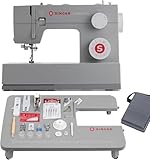 SINGER 4452 Heavy Duty Bundle SINGER 4452 Heavy Duty Bundle |
|
Check Latest Price |
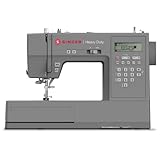 SINGER 6700C Heavy Duty Computerized SINGER 6700C Heavy Duty Computerized |
|
Check Latest Price |
1. SINGER 4411 High Speed Heavy Duty Sewing Machine: Affordable Power for Canvas and Light Leather
SINGER® 4411 (Grey) High Speed Heavy Duty Sewing Machine with Accessories
50% more power
1100 stitches/min
Metal frame
11 stitches
Pros
- Handles denim and canvas
- High speed
- Durable metal frame
- Easy to use
Cons
- Thread spool holder may snag
- Plastic exterior
- Pedal can feel sensitive
The 4411 is the most accessible entry in this group, and I would use it for vinyl, canvas, denim, and light-to-medium leather rather than a stack of thick hide. Its 50% more-power claim, 1100-stitches-per-minute maximum, and metal frame give it the basic hardware that standard machines often lack.
Its four-step buttonhole and 11 stitches keep the controls simple. I would pair it with a walking foot or even-feed foot, a leather needle, and a longer stitch length for most projects.
For a first leather project, this is a good value. Test scraps first, use clips instead of pins, and lower the speed when a seam starts to resist the foot.
Users praise its ability to handle jeans and canvas, but some note initial tension adjustments and a thread spool holder that can catch thread. That is manageable for a careful beginner, though I would not call it the best option for repeated multi-layer leather production.
For whom it is good
It suits a hobbyist sewing bags, cushions, or denim who wants a familiar home-machine format. It also makes a useful backup machine for a crafter who does not need a walking foot built in.
For whom it is bad
It is less suitable for very thick leather, long upholstery seams, or anyone who needs a large throat and industrial power. The four-step buttonhole is also less convenient than the one-step systems on newer models.
2. SINGER 4423 Heavy Duty Sewing Machine: The Best All-Round Choice for Leather and Vinyl
SINGER® 4423 (Meltwater Blue) Heavy Duty Sewing Machine with Accessories
50% more power
1100 stitches/min
23 stitches
Extra-high foot lift
Pros
- Handles leather and canvas
- Automatic threader
- Adjustable foot pressure
- Quiet operation
Cons
- Some plastic components
- Bobbin setup can need care
- Short power cord
The 4423 is my recommendation for most people asking for the best sewing machine for leather and vinyl without moving to an industrial setup. It combines the heavy-duty motor with an extra-high presser-foot lift, adjustable presser-foot pressure, 23 stitches, and an automatic needle threader.
That combination matters because lift controls how much material fits under the foot, while adjustable pressure helps the feed system manage thick or slippery vinyl. The machine is rated for denim and canvas, and the review data specifically praises leather performance.
I would use a size 90/14 or 100/16 leather needle for medium vinyl and light leather, then move to a larger needle only after testing the actual hide. A walking foot is still the safer choice for layers, and holding the thread tails at the beginning can prevent the first stitches from pulling out.
It is not a specialist industrial machine, so very thick saddle leather, 30-ounce vinyl, or dense upholstery stacks may expose its limits. The plastic bobbin case and spool post are also worth considering if the machine will see daily shop use.
For whom it is good
This is the best fit for beginners and intermediate sewists making bags, covers, home décor, and medium-weight upholstery. It offers a gentler learning curve than a single-needle industrial lockstitch machine while still providing the useful heavy-duty controls.
For whom it is bad
It is not ideal for production work, huge upholstery pieces, or a user who expects a walking foot and a dedicated leather feed system out of the box. If your work is mostly multiple layers of very thick leather, spend the time comparing an industrial machine with proper setup support.
3. SINGER 4432 Sterling Heavy Duty Sewing Machine: More Stitch Range for Mixed Sewing
SINGER® 4432 Sterling High Speed Heavy Duty Sewing Machine + Accessory Kit
32 stitches
110 stitch applications
1100 stitches/min
Drop feed
Pros
- Versatile stitch range
- Built-in threader
- Drop feed
- Easy selection
Cons
- Singer needle compatibility
- Limited needle positions
- Short cord
The 4432 gives you more options than a simple three-stitch workhorse while retaining the heavy-duty motor and 1100-stitches-per-minute ceiling. Its 32 stitches and 110 stitch applications are useful when the same workspace handles garments, quilting, denim, and occasional leather.
Drop feed is a nice addition for free-motion work, and the adjustable stitch length and width give you more control over seams. The machine’s review summary notes that it moves from silk to leather, which makes it a practical mixed-use choice rather than a dedicated shop machine.
For leather, I would avoid choosing decorative stitches merely because they are available. Use a straight stitch, reduce pressure as needed, and test whether a walking foot is available for the machine before starting a multilayer panel.
The trade-off is a more complicated selection system and a requirement for Singer-compatible needles according to the supplied review information. That may be inconvenient for an experienced sewer who prefers a particular leather needle system.
For whom it is good
It suits a sewist who wants one machine for ordinary fabric projects and heavier materials. It is especially attractive when stitch variety matters more than a true industrial feed system.
For whom it is bad
It is less suitable for a dedicated leather workshop or a user who needs an expansive workspace. Extra stitches do not add power or lift, so they cannot compensate for a machine that is underpowered for very thick material.
4. SINGER Heavy Duty 500 Classic: A Simple Workhorse for Heavy Fabric
SINGER® Heavy Duty 500 Classic High Speed Sewing Machine + Accessory Kit
3 stitches
50% more power
Large sewing space
Drop feed
Pros
- Strong motor
- Large sewing space
- Easy threading
- Quiet operation
Cons
- Only 3 stitches
- Quality-control reports
- No printed manual
The Heavy Duty 500 Classic is intentionally simple: three built-in stitches, a strong motor, a metal frame, and a larger sewing space. I see that as a benefit when the goal is straight stitching on canvas, denim, vinyl, and manageable leather rather than programming dozens of decorative options.
The large throat makes it easier to position a bag panel or upholstery section, while the LED light helps when working with dark material. The included one-step buttonhole is convenient, and the drop-feed feature supports specialty work.
It does not have the large community history of some older machines, and the supplied review data includes quality-control and warranty concerns. I would therefore inspect the machine on arrival, test every stitch function, and keep the setup manual accessible digitally.
Its limited stitch count is a real drawback for mixed sewing, but not for a focused leather or upholstery workflow. I would choose it over a computerized model if simple controls and a roomy work area matter more than decorative stitches.
For whom it is good
It is a good match for a maker who wants a sturdy home-format machine and does not need extensive stitch selection. The larger work area also helps with panels that are awkward to turn on a small machine.
For whom it is bad
It is not my first choice for someone who wants to sew delicate fabrics and heavy leather on the same day. The limited review volume and reported service concerns make a hands-on test and clear warranty terms especially important.
5. Brother ST371HD: Beginner-Friendly Heavy-Duty Sewing
Brother Sewing Machine ST371HD, 37 Built-in Stitches, 6 Included Feet
37 stitches
6 included feet
Strong and tough
Automatic threader
Pros
- Quiet operation
- Handles leather and denim
- Easy setup
- Good value
Cons
- Short cords
- Learning curve
- Uses specific bobbins
The ST371HD is a friendly bridge between a basic home machine and a heavy-duty workhorse. It offers 37 stitches, six included feet, an automatic needle threader, a jam-resistant drop-in bobbin, and a free arm for projects such as cuffs, bags, and circular sections.
The supplied reviews call it quiet and powerful enough for leather and multiple denim layers. I like that combination for a new maker because the learning curve is less intimidating than on an industrial machine, yet the machine is not limited to lightweight cotton.
For a first leather bag, I would use a leather needle, reduce the maximum stitch length, and sew a test seam through the actual number of layers you plan to use. If the layers shift, add a walking foot rather than forcing the material.
The main compromises are short cords, specific bobbin requirements, and a possible learning curve with heavier materials. It is a strong beginner choice, but not the model I would choose for a production upholstery business.
For whom it is good
It is a good fit for a beginner who wants a relatively quiet machine with straightforward threading and enough strength for bags, vinyl covers, and denim. The six included feet also reduce the cost of assembling a basic kit.
For whom it is bad
It may be frustrating if your main project is very thick hide or if you need industrial speed and throat space. A test on your heaviest material is more useful than relying on the word “heavy-duty” alone.
6. Brother ST150HDH: More Feet and Stitches for Heavy Projects
Brother ST150HDH Strong and Tough Sewing Machine 50 Stitches
50 stitches
9 included feet
LCD display
Jam-resistant bobbin
Pros
- Strong construction
- Quiet operation
- Easy stitch changes
- Advanced threader
Cons
- Dim LED
- No thread cutter
- May struggle beyond 8 thick layers
The ST150HDH combines 50 stitches, five auto-size buttonholes, nine included feet, and an LCD screen. It is a versatile machine for someone who alternates between denim, canvas, decorative work, and leather projects.
Its jam-resistant drop-in bobbin and advanced needle threader make setup less fussy, while adjustable stitch length and width help you tune seams. The review data describes smooth handling of multiple layers and quiet operation, with denim and canvas as strengths.
It is still a home machine, so I would not assume it will sew every possible thickness. The supplied review specifically notes that very thick stacks beyond eight layers may be difficult; that is a useful warning to test before committing to a large project.
The dim LED light and lack of a thread cutter are minor inconveniences. I would add a strong task light and keep a separate thread-cutting tool nearby if I use it in a small workshop.
For whom it is good
It is a good choice for an experienced home sewer who values stitch variety, included feet, and support. It can serve as an all-purpose machine for a craft business that mixes heavy and light projects.
For whom it is bad
It is not the first choice for thick multi-layer upholstery or industrial production. Its small throat and possible lighting limits are noticeable when a project becomes bulky.
7. Janome HD-5000 Black Edition: Aluminum Construction for Repairable Heavy Sewing
Janome HD-5000 Black Edition Heavy-Duty Sewing Machine
18 stitches
Aluminum body
23.8 pounds
Mechanical design
Pros
- Solid aluminum construction
- Handles multiple layers
- Easy stitch changes
- Repairable design
Cons
- Bobbin issues
- Needle threader can be unreliable
- Short pedal cord
The Janome HD-5000 Black Edition is a mechanical machine with an aluminum body, 18 stitch patterns, a free arm, and a substantial 23.8-pound weight. That weight and metal construction make it feel more like a workshop tool than a lightweight plastic machine.
The review data highlights dependable performance on bags, gear, ballistic nylon, and multiple fabric layers. For someone who values repairability over computerized convenience, a mechanical design can be easier to understand and maintain.
I would use a dedicated leather needle and verify bobbin winding and tension before starting a long run. The needle threader is a convenience, not something I would depend on for a critical job.
Some users report bobbin bunching, and the pedal cord may be short in a large workstation. Those issues are worth factoring in, especially if you want a machine that can be serviced locally over many years.
For whom it is good
It is a good fit for an experienced sewer who wants metal construction and a mechanical platform. It makes sense for bags, gear, and medium-to-heavy projects where stable handling matters more than decorative options.
For whom it is bad
It is less attractive for a beginner who wants effortless automatic threading or for a buyer who is sensitive to bobbin reliability. The low stock status in the supplied data also means availability should be confirmed.
8. VEVOR Industrial Lockstitch Sewing Machine: The Serious Choice for Multi-Layer Leather
VEVOR Industrial Lockstitch Sewing Machine, 550W Commercial Set with Servo Motor & Table Stand, 5000 SPM High Speed, Metal Frame, LCD Panel, LED Light for Cotton Wool Denim Leather Canvas
550W servo motor
5000 SPM
Auto lubrication
Knee lifter
Pros
- Handles multiple leather layers
- Quiet servo motor
- High speed
- Stable table
Cons
- Heavy and difficult to move
- Assembly learning curve
- Shipping damage reports
The VEVOR is the only machine in this list that is clearly a commercial setup. It includes a 550W servo motor, a table stand, a maximum speed of 5000 stitches per minute, a knee lifter, adjustable table height, and a metal frame.
The review data says it can handle multiple leather layers and up to ten layers of denim. The servo motor is quieter and more controllable than a basic clutch motor, while the LCD panel exposes speed and needle-position controls.
This is not a machine I would buy simply because “5000 SPM” sounds impressive. I would first confirm the available workspace, electrical setup, needle system, and local repair support, then practice threading and tension on scrap material.
At 130.1 pounds, it needs a permanent location and likely two people to move. The supplied reviews mention difficult assembly, missing pieces, or shipping damage, so a careful delivery inspection matters.
For whom it is good
It suits a serious leather crafter, upholsterer, or small production shop that regularly sews thick layers. If your work is industrial and consistent, the power and table stability can justify the learning curve.
For whom it is bad
It is a poor fit for a small apartment, a beginner, or anyone who wants a portable machine. The setup cost and maintenance requirements go beyond what most home leather projects need.
9. SINGER 4452 Heavy Duty Bundle: Walking Foot and Extension Table Included
SINGER® 4452 Holiday Bundle Heavy Duty Sewing Machine + Accessory Kit
32 stitches
110 applications
Walking foot
Extension table
Pros
- Walking foot included
- Extension table
- Strong motor
- 1100 stitches/min
Cons
- Controls can feel busy
- No extension-table storage
- Noisy at high speed
The 4452 bundle stands out for the included extension table, bonus presser feet, and even-feed/walking foot. Those accessories are particularly relevant to bag making, where panels are large and multiple layers need to feed evenly.
It has 32 stitches, 110 applications, a metal internal frame, enhanced piercing power, and the familiar 1100-stitches-per-minute speed. I would use the walking foot for vinyl, laminated canvas, and layered bag panels.
Keep the speed moderate at the start of a seam, and test the stitch length on the actual material. The extension table gives larger work support, but it is not a substitute for an industrial machine when seams become extremely thick.
The controls may feel busy to a first-time user, and the machine can become noisy at high speed. The lack of storage in the extension table is a small workspace issue rather than a functional problem.
For whom it is good
It is one of the strongest home-format choices for a bag maker who wants the right feeding accessory immediately. It is also useful for vinyl work where surface slippage is a recurring problem.
For whom it is bad
It may be more machine than a casual garment sewer needs. If you rarely use thick materials, the extra accessories and controls are not as valuable as on a dedicated heavy project.
10. SINGER 6700C Heavy Duty Computerized Machine: Maximum Stitch Choice for a Mixed Shop
SINGER® 6700C Heavy Duty Computerized Machine with Accessory Kit
411 stitch applications
1100 stitches/min
Speed control
10 feet
Pros
- Large stitch library
- Automatic threading
- Quiet operation
- Good value
Cons
- Small throat
- Thread breaking reports
- Possible missing feet/manual
The 6700C is the feature-rich option in this roundup. It offers 411 stitch applications, touch-button selection, an LCD screen, speed control, automatic threading, seven one-step buttonhole styles, and ten presser feet.
That makes it a good bridge machine for a sewist who wants computerized controls while still sewing denim and other heavy fabrics. The review data describes good heavy-fabric performance and quiet operation, but also notes thread-breaking complaints and a smaller throat area.
For leather, I would select a plain straight stitch, verify the foot is compatible, and keep a manual record of successful needle, thread, pressure, and stitch-length settings. A computerized screen is helpful, but material testing still decides the result.
Some buyers report a missing manual or presser foot, so I would check the included-accessory list immediately after delivery. The small throat can also make bulky quilt or upholstery work harder to maneuver.
For whom it is good
It suits a sewist who values stitch selection, speed control, and an LCD interface but still wants enhanced piercing power. It is a practical all-purpose machine for a mixed home studio.
For whom it is bad
It is less suitable for a dedicated industrial leather workflow or very bulky projects. More stitch applications do not create a larger workspace or an industrial feed mechanism.
How to Choose a Sewing Machine for Leather and Vinyl?
A heavy-duty sewing machine is the right starting point for leather and vinyl because it is built around a stronger motor, higher lift, and a feed system that can manage thick layers. No single specification tells the whole story, so test the machine on the material and layer count you actually plan to sew.
Use a walking foot or another even-feed system
A walking foot moves the upper layer in step with the lower layers, which reduces shifting when sewing vinyl, laminated fabric, or layered leather. It is especially useful for long bag seams, upholstery sections, and marine canvas.
If the machine does not accept a walking foot, a non-slip foot may help on some projects, but it will not reproduce the same control. Check the shank and accessory compatibility before buying.
Prioritize motor power, lift, and stable feeding
Presser-foot lift determines how much material can sit beneath the foot, while motor power and penetration help the needle pass through dense material. Adjustable presser-foot pressure is valuable because leather and vinyl can be thick, flexible, and slippery.
Stitches per minute are useful for comparing speed, but they do not measure how neatly a machine feeds a difficult seam. A slower, steady stitch with correct tension often produces a better result than maximum speed.
Match the machine to your project
For bags, cushions, covers, denim, and medium vinyl, a capable home heavy-duty machine may be enough. For saddle leather, thick upholstery, multiple hide layers, or daily production, consider a single-needle industrial machine and a dedicated workspace.
Older mechanical machines and serviceable metal construction are popular in sewing communities because durability and repairability can matter more than a long feature list. That is worth remembering if you expect the machine to last through years of projects.
Choose the right needle and thread
Use a leather point needle, often identified as a 90/14 or 100/16 for many medium-weight projects, and test larger sizes for thicker material. A wedge-shaped leather needle is designed to penetrate hide, while a universal needle can bend or skip.
For thread, bonded nylon and polyester are common choices for leather and vinyl. Match the thread to the material and needle, avoid old or brittle thread, and test the seam for strength before committing to a full panel.
Use clips, basting tape, or temporary adhesive instead of pins when possible. Pins leave permanent holes in leather, and ordinary pins can damage the coating on vinyl.
Adjust tension, stitch length, and pressure
Begin with a longer straight stitch and moderate tension, then make small adjustments on scrap. If the material puckers, reduce tension or pressure; if the stitch looks loose, increase tension gradually.
Vinyl can stick to a standard metal foot, so a Teflon foot, walking foot, roller foot, or protective surface can help. Keep the material moving evenly and avoid forcing the layers.
Maintain the machine after heavy work
Clean lint and thread from the bobbin area, check the needle for burrs, and follow the manufacturer’s oiling instructions. Industrial machines with an automatic lubrication system need their oil level monitored rather than ignored.
Change needles regularly, especially after a skipped stitch, unusual resistance, or a needle strike. Store the machine covered and keep the foot pedal, cords, and table area free of dust and loose tools.
Tools and supplies that make leather work easier
A good setup includes leather needles, bonded thread, clips, a walking foot, a non-slip or Teflon foot, an awl for marking, a rotary cutter or sharp shears, and a stable work surface. An extension table helps support large panels, while a knee lifter is useful when both hands need to guide bulky material.
Before buying, check whether the machine’s accessories are included or sold separately. The 4452 bundle is a good example of a package that puts useful feeding and support accessories in the box.
Frequently Asked Questions
What is the best sewing machine for sewing vinyl?
The best machine for vinyl is a heavy-duty model with strong piercing power, a high presser-foot lift, and a walking foot or compatible even-feed system. The Singer 4452 is a strong home choice because it includes a walking foot and extension table, while the Singer 4423 is a versatile option for lighter projects.
What type of sewing machine is best for sewing leather?
A heavy-duty or industrial straight-stitch machine is best for leather. Look for a powerful motor, high lift, adjustable pressure, and an even-feed system, then test the machine on the actual leather thickness and layer count.
Can you sew leather with a regular sewing machine?
You can sew thin or medium leather with a capable home machine, but ordinary lightweight machines often lack the lift, power, and feed control needed for thick or layered hide. Use a leather needle, suitable thread, clips instead of pins, and test scraps first.
What is the best sewing machine for sewing faux leather?
Faux leather is best sewn with a heavy-duty machine that has a high foot lift and a non-slip, roller, walking, or Teflon-compatible foot. A machine such as the Singer 4423 or Brother ST371HD can work well for many small and medium projects, provided the coating is not punctured or dragged by the foot.
Which Singer sewing machine is best for sewing leather?
The Singer 4423 is the strongest all-round Singer choice here for home leather and vinyl work because it combines a powerful motor, extra-high foot lift, and adjustable presser-foot pressure. The Singer 4452 is better when you want a walking foot and extension table included, while the 4432 suits someone who also values a wider stitch range.
Which Sewing Machine Should You Buy?
For most home projects, I would start with the Singer 4423 or Brother ST371HD, then add a walking foot and leather needles as needed. The 4452 bundle is my pick for bag makers who want useful accessories included, while the Janome HD-5000 appeals to buyers who value an aluminum mechanical platform.
If your work regularly includes thick leather, heavy upholstery, or multiple layers, the VEVOR industrial lockstitch machine offers a more appropriate level of power and stability. Test your material before making a large commitment, and choose the machine that matches your layers, workspace, repair support, and future projects.