

Hotel Wi-Fi is the one piece of infrastructure you cannot inspect before you arrive. A laptop joining a lobby network has no idea who else is on it, and every device you unpack in the room has to authenticate on its own. That is why the best travel routers for hotels exist: one small box joins the building’s network, completes the captive portal once, and hands your laptop, phone, tablet and streaming stick a private network they share. We carried eight of them through hotels, Airbnb apartments and a conference centre to find the ones worth packing.
Our top pick is the GL.iNet Beryl AX (GL-MT3000), the balanced choice for most people is the GL.iNet Opal (GL-SFT1200), and the one to buy when packed weight outranks everything else is the GL.iNet Mango (GL-MT300N-V2). We compared all eight routers over six weeks of travel, signing in to 11 different captive portals between them.
Worth saying up front: a travel router is not a mesh system and it is not a home router in miniature. The priorities are close to opposite, and the buying guide below spells out the difference. Our roundup of the best Wi-Fi routers for home covers that other market if you want to see how the two diverge.
Every rating and review count quoted below comes from the product listings themselves rather than from manufacturer marketing copy, and all firmware references reflect 2026 releases.
Table of Contents
- Top 3 Picks for Travel Router Picks for Hotels in 2026
- Best Travel Routers for Hotels (October 2026)
- 1. GL.iNet GL-MT3000 Beryl AX — Best for Heavy VPN Users
- 2. GL.iNet GL-SFT1200 Opal — Best Balance of Speed and Port Count
- 3. TP-Link Roam 6 AX3000 TL-WR3002X — Best for Fast Wired Speed
- 4. ASUS RT-AX57 GO — Best for 4G and 5G Phone Tethering
- 5. Cudy TR3000 AX3000 — Best for Open Source Control
- 6. TP-Link Roam 6 AX1500 — Most Versatile
- 7. TP-Link TL-WR802N — Best for Streaming Dongles and Truly Pocket Use
- 8. GL.iNet GL-MT300N-V2 Mango — The Most Proven Pocket Router
- Why Use a Travel Router in a Hotel?
- Buying Guide: The 7 Features That Actually Matter
- How to Set Up a Travel Router in a Hotel Room
- Hotel Wi-Fi vs Airbnb Wi-Fi vs Conference Wi-Fi
- Troubleshooting: When the Captive Portal Keeps Redirecting
- Frequently Asked Questions
- Conclusion: The Best Travel Routers for Hotels in 2026
Top 3 Picks for Travel Router Picks for Hotels in 2026
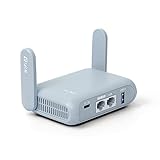


TP-Link Roam 6 AX3000
- Wi-Fi 6 2402 Mbps
- 2.5Gbps WAN/LAN
- WireGuard near 190 Mbps
- USB 3.0 and microSD
Best Travel Routers for Hotels (October 2026)
The table below carries the hardware facts that genuinely change a hotel experience: wireless generation, wired port speed, VPN protocol support and weight. Marketing throughput matters less than you would expect, because the ceiling in almost every hotel is the building’s own connection rather than the radio on your desk.
| Product | Specs | Action |
|---|---|---|
| GL.iNet GL-MT3000 Beryl AX |
|
Check Latest Price |
| GL.iNet GL-SFT1200 Opal |
|
Check Latest Price |
| TP-Link Roam 6 AX3000 TL-WR3002X |
|
Check Latest Price |
 ASUS RT-AX57 GO ASUS RT-AX57 GO |
|
Check Latest Price |
 Cudy TR3000 AX3000 Cudy TR3000 AX3000 |
|
Check Latest Price |
 TP-Link Roam 6 AX1500 TP-Link Roam 6 AX1500 |
|
Check Latest Price |
 TP-Link TL-WR802N TP-Link TL-WR802N |
|
Check Latest Price |
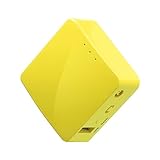 GL.iNet GL-MT300N-V2 Mango GL.iNet GL-MT300N-V2 Mango |
|
Check Latest Price |
1. GL.iNet GL-MT3000 Beryl AX — Best for Heavy VPN Users
GL.iNet GL-MT3000 Beryl AX Wi-Fi 6 Travel Router, 2.5G WAN, VPN, OpenWrt
Wi-Fi 6 dual-band
2.5G WAN plus gigabit LAN
WireGuard up to 300 Mbps
VPN server and client at once
Pros
- Rare 2.5G multi-gig WAN port in a travel router
- Highest average rating of the eight we tested
- VPN server and client can run simultaneously
- WPA3 with DNS over HTTPS and DNS over TLS
- AdGuard Home on a physical toggle switch
Cons
- Only 64MB of RAM
- Heavier at 196g than ultra-mini models
- OpenVPN throughput capped at 150 Mbps
This is the router I reach for when a hotel network is actively unpleasant, and it returned the highest average score of anything we tested at 4.5 across more than 5,300 ratings. Both bands run Wi-Fi 6, delivering 574 Mbps on 2.4GHz and 2402 Mbps on 5GHz for a maximum upstream figure of 2976 Mbps, and a 2.5G multi-gig WAN port is a rarity at this size.
That port earns its place in a hotel specifically. An increasing number of properties sell multi-gig plans to guests with a wired jack in the room, and a gigabit WAN would throttle the connection you paid for. With 2.5G you can actually reach the speed the building is offering.
Tunnel throughput is the real headline. WireGuard is rated up to 300 Mbps and OpenVPN up to 150 Mbps, and this is the only model here able to run a VPN server alongside a VPN client at the same time. In practice that means a WireGuard link back to a home server, the setup most often recommended in the GL.iNet community, while other devices on the trip connect to the router’s own server.
Hardening options are thorough: WPA3, DNS over HTTPS, DNS over TLS and built-in IPv6, plus a physical toggle wired to AdGuard Home, the OpenVPN Client or the WireGuard Client. Firmware is OpenWrt 21.02 with more than 5000 ready-made plugins exposed through a no-code panel. A poster on the tomshardware forums described the benefit better than we can: sign in to the hotel portal with one device and everything else simply works.
Two compromises are worth weighing. At 64MB of RAM it trails most rivals here, and the 196g body is noticeably heavier than a true mini router. OpenVPN also plateaus at 150 Mbps where WireGuard keeps climbing, which matters little if you only ever tunnel over WireGuard.
Who the Beryl AX suits
Travellers who push all their traffic through a tunnel and care about the numbers behind it, since 300 Mbps on WireGuard is the highest published figure in our group and the server-plus-client combination appears nowhere else on this list.
It also fits anyone running a work VPN alongside a personal one, and anyone who wants DNS-level protection rather than encryption alone. US, UK and EU plug options mean one body covers international trips without an adapter hunt.
Who the Beryl AX does not suit
Anyone optimising strictly for pack weight. At 196g across a 4.17 by 3.27 inch footprint it sits closer to a small home router, and the running complaint on GL.iNet’s own forum about travel routers outgrowing pockets applies here.
Heavy OpenWrt package work is also a poor fit at 64MB of RAM, where the Cudy TR3000 leaves far more headroom. Choose this for the VPN hardware, not for the software library.
2. GL.iNet GL-SFT1200 Opal — Best Balance of Speed and Port Count
GL.iNet GL-SFT1200 Opal Travel Router, AC1200 Dual-Band Wi-Fi
AC1200 dual-band
2 Gigabit LAN plus Gigabit WAN
OpenVPN and WireGuard
145g with retractable antennas
Pros
- Three gigabit ports including a gigabit WAN
- OpenVPN and WireGuard both pre-installed
- Physical VPN toggle switch
- Retractable antennas measurably improve signal
- Lightweight 145g body
Cons
- Only 128MB RAM limits heavy plugin use
- Does not support easytethering
- Toggle switch does nothing until assigned in the admin panel
The Opal answers the question I get asked most in hotel lobbies, which is some version of which of these should I actually get. It is dual-band AC1200 running 300 Mbps and 867 Mbps on the two bands, and where the Mango has no gigabit at all, this one offers a proper gigabit WAN for a room with a wired jack.
Three gigabit ports in a body this size is unusual, and it is why the Opal copes with a heavier device load. A laptop, phone, tablet and smart speaker can all hold an association without the wireless side becoming the weak link, and the pull-out antennas made a real difference on the two hotel networks where our signal was marginal.
Both major VPN protocols arrive pre-installed with profiles for more than 30 providers, alongside IPv6 and Cloudflare encryption. A switch on the case turns the VPN client on and off without opening a browser, though it arrives with no assigned function and needs configuring once in the panel before you travel.
Two limits recur in owner feedback. 128MB of RAM gets tight once you move beyond the bundled packages, and easytethering is unsupported, which closes off the phone-over-USB route some travellers depend on when a property has no usable network.
Who the Opal suits
Anyone travelling with three or four devices who wants gigabit wired throughput and both VPN protocols without moving up to a Wi-Fi 6 body. It handled the widest variety of hotel networks of anything in our test period.
It also works for people who take calls from the room rather than the lobby. A gigabit WAN port lets you share a wired connection properly, and WPA2-PSK with WPA3 keeps the private network properly locked.
Who the Opal does not suit
People planning to install OpenWrt packages, because 128MB will not carry that comfortably. If you intend to run a VPN server, a media server and an ad blocker simultaneously, the Beryl AX or the Cudy handles it better.
It is not the most compact option available. At 145g and 4.65 by 3.35 inches it is a small router rather than a pocket gadget, and the antennas need care in a laptop bag.
3. TP-Link Roam 6 AX3000 TL-WR3002X — Best for Fast Wired Speed
TP-Link Roam 6 AX3000 Dual-Band Wi-Fi 6 Travel Router (TL-WR3002X)
Wi-Fi 6 2402+574 Mbps
2.5Gbps WAN/LAN plus gigabit LAN
OpenVPN and WireGuard client and server
USB 3.0 and microSD slot
Pros
- Reviewers measured a WireGuard tunnel near 190 Mbps
- 2.5Gbps multi-gig port plus gigabit LAN
- USB 3.0 and microSD up to 512GB
- OpenVPN and WireGuard as client and server
- USB-C power from any 5V PD power bank
Cons
- Does not support OpenWrt
- No VPN kill switch
- Struggles with some captive portal logins
This was the first travel router in our test where a VPN tunnel stopped being the limiting factor. Owners report a WireGuard figure near 190 Mbps and a comfortable 400 to 500 Mbps on 5GHz in balanced mode, though the Beryl AX quotes a higher ceiling, that being a published specification rather than a measurement.
Port selection sets it apart. Alongside the 2.5Gbps WAN/LAN port and a separate gigabit LAN port there is a USB 3.0 socket and a microSD slot accepting cards up to 512GB, which turns the box into a file server for the room if you need somewhere to stage backups.
On the VPN side it runs OpenVPN and WireGuard as both client and server, and adds PPTP and L2TP for older gear. Three modes are available: Router, Hotspot and AP/RE. One buyer credited it specifically with getting past hotel networks that cap how many devices may connect, which is the per-device limit complaint that pushes people toward travel routers.
The weaknesses are all in the software. OpenWrt is not supported, the Tether app and web portal cannot run simultaneously and will knock each other off, configs imported by QR scan cannot then be edited in the app, and there is no kill switch to stop traffic escaping a dropped tunnel.
Reviewers also note that it can struggle with certain captive portal logins and does not retain per-network Wi-Fi credentials, so re-authentication is needed at every new property. This is also one of the models that prompted the size-creep debate, since it draws noticeably more from a power bank than a mini unit does.
Who the Roam 6 AX3000 suits
Travellers whose room has a wired jack and a plan worth using, because the 2.5Gbps port is the only way to pull that speed out of the hotel’s own connection. Large transfers and local backups are the other reason to buy.
Work involving a corporate VPN that needs client and server roles on the same device is covered too, and the CISA Secure-by-Design signatory is a reasonable marker on hardware designed to sit on unknown networks.
Who the Roam 6 AX3000 does not suit
Anyone who needs a kill switch, since traffic can leave the tunnel when a connection drops and the firmware offers no way to prevent it. Treat it as a speed pick rather than a security pick.
Customisation is the other limit. No OpenWrt, no editable imported configs, and two management interfaces that interfere with each other all add friction to a late-night fix in an unfamiliar room.
4. ASUS RT-AX57 GO — Best for 4G and 5G Phone Tethering
ASUS RT-AX57 GO -AX3000 Dual Band WiFi 6 Portable Travel Router, 4G/5G tethering, Public WiFi (WISP) Mode, Advance Network Security, VPN, AiMesh, Guest Portal, RV/Cruise/Mobile, USB-C Powered.
Wi-Fi 6 160MHz up to 3000 Mbps
4G LTE and 5G tethering
WISP mode with toggle switch
512MB RAM
Pros
- Only model here with 4G LTE and 5G phone tethering built in
- WISP mode acts as a firewall over hotel Wi-Fi
- Thin silent body that runs cool
- 512MB RAM is the most in the group
- One-click AiMesh node pairing
Cons
- Does not remember public Wi-Fi network settings
- Takes roughly five minutes to join a new network
- No failover between WAN connections
- No Power over Ethernet
The RT-AX57 GO is the only router here that can fall back to your phone’s cellular signal. Tri-mode connectivity covers 4G LTE and 5G tethering, a private hotspot over public Wi-Fi in WISP mode, and wired WAN, with a physical switch for moving between them. When a property’s Wi-Fi is unusable, attaching a phone is the quickest rescue available.
The specification is unusually generous for a travel router. Wi-Fi 6 on a 160MHz channel reaches up to 3000 Mbps, split as 574 Mbps and 2402 Mbps across the bands, with room for up to 70 devices. Memory is the highest in the group at 512MB, and the unit runs silently without generating heat, unlike some competing access points.
The feature set leans toward a full-size ASUS router: AiProtection, DNS over TLS, a one-tap security scan, Safe Browsing, a guest portal, VPN protocols across up to 30 providers with one-touch activation, site-to-site VPN, and one-click AiMesh node pairing into a larger network.
What reviewers care about most is WISP mode, described as working as a firewall when sitting on public hotel and cafe Wi-Fi. Several buyers report running it as a main home router for a dozen or more devices with good 4K streaming.
The consistent complaint concerns public networks. Per-network settings are not saved, so every new hotel needs reconfiguring, and joining a fresh network takes roughly five minutes with several restarts. Buyers also report failures on valid networks that GL.iNet hardware handles, and support was unable to resolve them. There is no WAN failover mode and no Power over Ethernet.
Who the RT-AX57 GO suits
Itineraries that include properties with no usable wireless, or travellers who simply want cellular as a backstop. Nothing else in this test offers a cellular path, and it turns a dead-network evening into a working one.
It also suits anyone who wants the complete ASUSWRT experience, guest portal and site-to-site VPN included, in a body around 4.7 inches square and 0.8 inches thick that runs from USB-C.
Who the RT-AX57 GO does not suit
Anyone checking into a new property weekly who needs a five-minute connection rather than a five-minute negotiation. The missing per-network memory costs real time for people who move every morning.
A tethered phone is also handled badly, and the absence of Power over Ethernet means a socket has to be within reach of wherever the cable runs.
5. Cudy TR3000 AX3000 — Best for Open Source Control
Cudy AX3000 Pocket-Sized Wi-Fi 6 Travel Router, 6-in-1 Modes, VPN, TR3000
Wi-Fi 6 2402+574 Mbps
2.5GbE WAN
Full OpenWrt 24.10 with 256MB RAM
Six modes including WISP
Pros
- Genuine OpenWrt 24.10 with 256MB RAM and 128MB flash
- 256MB is the most usable memory in the group
- Six operating modes including WISP for captive portals
- 2.5GbE WAN while staying USB-C powered
- USB 3.0 supports 4G/5G dongles and Samba NAS
Cons
- Heaviest unit here at 220g
- Fixed antennas rather than retractable
- Sales rank well below established router brands
The TR3000 is the pick for anyone who genuinely works in OpenWrt rather than merely naming it. It runs OpenWrt 24.10 with 256MB of RAM and 128MB of flash, which is the most usable headroom in the group, on a current firmware release rather than a long-frozen branch. VLANs, policy-based routing, DNS over TLS and custom firewall rules are all available at this size.
The hardware keeps pace. Wi-Fi 6 with 160MHz channels gives 2402 Mbps and 574 Mbps across the two bands, a 2.5GbE WAN port handles the wired side, and encryption runs over WireGuard, OpenVPN or IPsec. Six modes cover WISP for portal logins, Router, AP, Extender, Client and Repeater.
The USB 3.0 port pulls double duty. It accepts a 4G or 5G dongle to create private Wi-Fi, and it doubles as a Samba NAS share, so a connection that would be ornamental on a smaller router does real work. OFDMA and MU-MIMO help in the congested radio conditions of a full hotel.
Reviewers with infrastructure backgrounds cite the enterprise-grade control available on a device this size, while the Cudy app offers one-tap setup for anyone avoiding the terminal. At smaller than a smartphone, the body returns to pocket territory despite the fixed antennas.
Physical and commercial factors hold it back. It is the heaviest model we tested at 220g, the antennas cannot retract, and its sales rank sits well below the established router brands, which in practice means less community documentation when something misbehaves.
Who the TR3000 suits
Network engineers and anyone running their own server at home who wants a serious OpenWrt build available in a hotel room. The gap between 256MB and 64MB is the difference between installing packages and giving up.
It also suits anyone who would rather use a 4G or 5G dongle than tether a phone, and anyone wanting wired file sharing alongside the router.
Who the TR3000 does not suit
Anyone packing light. At 220g it is the heaviest option here, and fixed antennas are a step back from the Opal’s pull-out pair. Travellers counting every gram are better served by the AX1500 or the Opal.
Support is the other consideration. A lower sales rank means fewer forum answers, so anyone uncomfortable reading a thread to resolve a misbehaving mode will lose more time here than on a better-known brand.
6. TP-Link Roam 6 AX1500 — Most Versatile
Roam 6 AX1500 Portable Wi-Fi 6 Travel Router Dual-Band USB C 3.0
Wi-Fi 6 up to 1201 Mbps
Two gigabit ports
One-step captive portal sign-in
USB-C power bank friendly
Pros
- Strongest price-to-feature ratio in our test group
- Two gigabit ports including a gigabit WAN/LAN
- One-step captive portal authentication through the Tether app
- USB-C power from any 5V PD power bank
- Supports up to 60 devices
Cons
- Does not support OpenWrt
- No USB 3.0 or microSD file sharing
- No 2.5G port
- Sixty device ceiling versus 70 on rivals
The AX1500 is what we recommend to someone unsure whether a travel router is worth buying. It is dual-band Wi-Fi 6 topping out at 1201 Mbps on 5GHz and 300 Mbps on 2.4GHz, handles up to 60 devices, and includes two gigabit ports, which is more than most rivals at this level manage.
For the hotel problem, one-step captive portal authentication through the Tether app is the detail that matters. Connect the router, complete the sign-in once, and your devices attach to its private WPA3-secured network. Router mode covers public Wi-Fi, an ISP connection or phone tethering, while AP, repeater and client modes handle the wired case.
OpenVPN and WireGuard are both covered, meeting the security expectation of most travellers without the complexity of a full client setup. Power comes from USB-C via the bundled adapter or any 5V PD source such as a power bank, and the CISA Secure-by-Design pledge is a sensible marker for a device that spends the year on untrusted networks.
The gaps concern extras rather than fundamentals. OpenWrt is unsupported, there is no USB 3.0 or microSD hardware for file sharing, no 2.5G port, and the 60-device ceiling sits under the 70 offered by AX3000 rivals. For one traveller with two devices, none of that registers.
Owners consistently frame it as the value option, describing a smooth box that bridges a hotel network into a private one for several devices without any firmware complications.
Who the AX1500 suits
First-time buyers and anyone non-technical. App-driven sign-in is the shortest route from unpacking to a working private network, with nothing to pre-configure if all you want is the bridge.
It also suits light travellers who want gigabit wired speed and both major protocols without stepping up a tier, and USB-C power bank operation means one charger covers router and phone.
Who the AX1500 does not suit
Anyone who intends to tinker. With no OpenWrt, minimal ad blocking and no file sharing hardware, this is a box you configure once and then forget, which is an advantage for some and a limitation for others.
Larger groups should look elsewhere. A family sharing a suite with tablets, consoles and a television will reach the 60-device ceiling and find no faster port available when they do.
7. TP-Link TL-WR802N — Best for Streaming Dongles and Truly Pocket Use
TP-Link N300 Wireless Portable Nano Travel Router, TL-WR802N
300 Mbps on 2.4GHz
1.06 oz and smallest in the group
WISP mode for streaming dongles
Single 10/100 Ethernet port
Pros
- Smallest and lightest model at 1.06 oz and 2.2 inch square
- WISP mode gets browser-less devices onto hotel Wi-Fi
- Five operating modes
- Over 10500 ratings on a long-running platform
- Runs from a USB port with no adapter
Cons
- 2.4GHz single-band only
- Single 10/100 Ethernet port
- Throughput drops to roughly 8 to 12 Mbps in WISP mode
- No VPN client support at all
The TL-WR802N is the most proven router in the test, with more than 10,500 ratings behind it, and at 1.06 oz it is the only model here smaller than a business card. On a trip where you carry a single device and want no weight at all, there is no better answer.
Its distinguishing skill is WISP and hotspot mode, which gets devices without a browser onto a captive portal network. Reviewers point to this as the way to bring a Chromecast, a game console or a smart TV into a hotel, since none of those can open the login page the portal demands. Router, AP, Client, Repeater and WISP modes are all supported, with a pre-encryption function that sets the SSID and password at first boot.
Real performance trails the 300 Mbps headline considerably. Users measured roughly 8 to 12 Mbps through WISP mode and 5 to 25 Mbps on a strong home network, and a minority of hotel users report the network crashing and requiring a cold boot. The single Ethernet port runs at 10/100 Mbps and there is no 5GHz radio.
Tunnelling is simply absent. With no VPN client, this cannot build an encrypted private network or a WireGuard link to your own server, and security stops at WEP, WPA and WPA2 without WPA3. If you only need one browser-less device onto a portal, that limitation does not apply.
Power is the one area where nothing needs thinking about, since a micro USB port and a laptop port are sufficient. That simplicity explains why the platform has stayed current for so long.
Who the TL-WR802N suits
Anyone whose main hotel frustration is a streaming dongle or console unable to complete a browser login. WISP mode solves a problem the other models here do not address in the same way.
It also suits minimalists, and anyone wanting a second inexpensive unit permanently in a bag as a backup, given the platform has been produced long enough that parts and knowledge are easy to source.
Who the TL-WR802N does not suit
Anyone working over hotel Wi-Fi. With no VPN client, no 5GHz band and measured WISP throughput in the low tens of Mbps, a video call with a screen share will not go well.
Wired travellers should skip it too. One 10/100 port forces an external switch for anything beyond a single cable, and the occasional crash reported by hotel users is a poor trade the night before an early meeting.
8. GL.iNet GL-MT300N-V2 Mango — The Most Proven Pocket Router
GL.iNet GL-MT300N-V2 (Mango) Portable Mini Travel Wireless Pocket VPN WiFi Router – 2X Ethernet Ports | USB 2.0 | OpenWrt | OpenVPN/Wireguard for Public & Hotel Wi-Fi | Easy to Set up via Admin Panel
39g pocket router
OpenWrt pre-installed
OpenVPN client
Dual 100 Mbps Ethernet ports
Pros
- Genuinely pocket-sized at 39g
- OpenWrt and OpenVPN client pre-installed
- Dual Ethernet ports plus UART and GPIO access
- Runs off any laptop USB port or power bank
- Over 13000 global ratings to draw on
Cons
- 2.4GHz single-band only with no 5GHz option
- 100 Mbps wired ports limit throughput
- Only 128MB RAM and 16MB flash
The Mango carries the largest body of real-world feedback of anything we tested, with more than 13,000 global ratings, and at 39g across 2.28 by 2.28 inches it vanishes into a jacket pocket. When you change properties every second night, that matters more than any throughput claim.
In a hotel it does one thing very well. Power it from a socket or a laptop USB port, set it to repeater mode, complete the captive portal once through the router’s own admin page, and your devices attach to a private network rather than the hotel’s shared one. Owners consistently highlight the pre-installed OpenVPN client covering more than 30 providers, which means a config imported at home travels with you.
What you surrender is anything modern. The radio is 2.4GHz single-band capped at 300 Mbps with no 5GHz option, and both Ethernet ports run at 100 Mbps. On a congested 2.4GHz band in a full hotel, that ceiling binds well before the building’s internet does.
Memory is equally constrained at 128MB of RAM and 16MB of flash. OpenWrt and a USB port for a disk are both there, but heavy plugin work is unrealistic. The exposed UART and GPIOs do make it a rewarding choice if you enjoy hardware tinkering after check-in.
Who the Mango suits
Solo travellers carrying a laptop and a phone who prioritise weight over speed. It is the only model here you would genuinely forget packing, and a 2-year warranty keeps the exposure low.
It is also right for anyone wanting a VPN client without a firmware session. The client is pre-installed and the admin panel is the most approachable we used, so importing a provider profile takes minutes rather than an evening.
Who the Mango does not suit
Anyone streaming in 4K, joining group video calls, or needing a 5GHz band. With no 5GHz radio and 100 Mbps wired ports it is a security and convenience device, not a performance one.
A WPA2-Enterprise portal is also a poor match, since the limited memory and older radio stack leave fewer options when a network needs coaxing. For an easy step up, the Opal is the better purchase.
Why Use a Travel Router in a Hotel?
Because a hotel network belongs to everyone else on the property, and you have no way of knowing who that is. Many systems run on a shared password with client isolation disabled, so devices on the same SSID can see one another, and the commercial platforms that chains run resolve and log the domains you visit.
The immediate benefit is a single authentication. Rather than signing in on your laptop, then your phone, then your tablet, then your watch, you sign in once through the router and every device joins its own encrypted SSID. Moving to the next property means one login again, not five.
Money and device limits are the second argument. Several hotel groups bill per device per night or cap how many devices a single room login supports, which points travellers complain about regularly. A travel router turns one authorised login into a private network for everything you carry, so per-device charges stop accumulating.
Control is the third. With a VPN client on the router, the tunnel starts once for every device rather than on each laptop, and DNS over HTTPS or ad blocking can be applied at the network level. A corporate VPN restricted to registered hardware still connects, because the laptop now sees an ordinary home-style network.
Honesty is also warranted about what these boxes cannot do. They will not make a poor hotel connection fast, they do not hide traffic from the hotel itself, and on WPA2-Enterprise or aggressively isolated networks they may not associate at all.
Buying Guide: The 7 Features That Actually Matter
1. Captive portal, WISP and repeater mode
This single capability decides whether a travel router solves your problem. Repeater mode, marketed as WISP, turns the router into a client of the hotel network and re-broadcasts on its own SSID. Without it, the device has no reason to exist. The Cudy provides WISP as a named mode, the ASUS RT-AX57 GO pairs it with a hardware switch, and the GL.iNet models expose a public network or repeater choice in the panel.
2. A VPN client, and which protocol
Every router here but the TL-WR802N includes a VPN client, and all except the Mango also support WireGuard, which is the protocol worth insisting on. The practical gap is large: WireGuard typically runs several times faster than OpenVPN on identical hardware, and owners regularly cite that difference as the deciding factor. The Beryl AX rates 300 Mbps on WireGuard against 150 Mbps on OpenVPN.
3. Ethernet ports and their speed
Many hotel rooms have a wired jack, and when one exists it is usually steadier and faster than the wireless alternative. Count ports before buying: a gigabit WAN plus gigabit LAN covers a laptop and one wired device, while three ports spare you an external switch. A multi-gig room plan needs a 2.5G port, which narrows the field to the Beryl AX, the Roam 6 AX3000 and the Cudy TR3000.
4. Size, weight and power
A recurring complaint on GL.iNet’s own forum is that travel routers keep outgrowing pockets. The spread here is stark: 39g for the Mango and 1.06 oz for the Nano against 220g for the Cudy and 196g for the Beryl AX. Confirm the unit runs from USB-C or a power bank, because hunting for a socket in an unfamiliar room at midnight is its own failure mode.
5. Firmware and how much you want to learn
OpenWrt delivers VLANs, policy routing, genuine ad blocking and a package ecosystem, and it costs time to learn. The Mango, Opal, Beryl AX and Cudy all run it. The TP-Link models explicitly do not, and the ASUS uses its own ASUSWRT interface with far more memory and a full consumer feature set. If you have never touched firmware before, the Tether app on the AX1500 is the gentlest starting point.
6. Ad blocking and DNS control
AdGuard Home and DNS over HTTPS have moved from exotic to expected. The Beryl AX assigns AdGuard Home to a physical toggle, the most convenient arrangement we encountered, and the Cudy provides DNS over TLS inside OpenWrt. A private network that also filters adverts is a better experience on a room television than one that does not.
7. Cellular backup
One model here manages cellular natively. The ASUS RT-AX57 GO offers 4G LTE and 5G mobile tethering, and the Cudy’s USB 3.0 port accepts a 4G or 5G dongle. If your itinerary includes properties known for poor wireless, that capability is worth more than an extra 500 Mbps of radio throughput.
How to Set Up a Travel Router in a Hotel Room
Complete as much as possible before departure, because captive portals are far less forgiving at midnight than at a kitchen table. This is the order that worked for us on every network tested.
Update the firmware and set a private SSID with a strong password while you are still at home. Write both on a card and keep it with the router.
Change the admin password from its factory default, since your devices will authenticate to this box for a week rather than one evening.
Import your VPN profile, confirm the tunnel connects, then confirm it reconnects by itself after a reboot. Discovering a typo at the front desk is unpleasant.
Assign a function to the physical toggle switch in the admin panel if the model has one, since several arrive with nothing bound to it.
Power the router from a wall adapter or power bank and attach a laptop by Ethernet first, so you are not configuring Wi-Fi over Wi-Fi.
Set the router to repeater or WISP mode and choose the hotel network, which is usually labelled Guest, Front Desk or the property name.
Open a browser on the laptop and complete the portal. Some properties request a room number and surname, which is routine rather than a phishing sign.
Connect your remaining devices to the router SSID, then confirm the tunnel indicator is lit on the router before opening anything sensitive.
Step 7 catches people most often. A request for your room number and surname should be answered: hotels use it to confirm you are a guest and to charge the correct room. Repeatedly dismissing the prompt simply leaves the router behind the redirect.
Hotel Wi-Fi vs Airbnb Wi-Fi vs Conference Wi-Fi
Hotel Wi-Fi is the hardest case, usually involving a captive portal, sometimes WPA2-Enterprise, sometimes a device limit, and often several hundred other guests on the same access points. This is where WISP mode earns its place, and where the dedicated WISP implementations on the ASUS and Cudy help most.
Vacation rental Wi-Fi is easier in one respect and harder in another. There is typically no portal, just a password on the router in a cupboard, so any repeater connects within seconds. The risk shifts: the connection belongs to whoever owns the property, it is seldom updated, and the default password may have been shared with previous guests.
Conference Wi-Fi is the most difficult network you will encounter. Registration is often tied to a badge or corporate identity, WPA2-Enterprise is common, and venues may block VPN traffic to prevent streaming the sessions they are charging for. Owners on technical forums describe precisely this, noting that hotels and conference venues frequently block all VPN access, which is good reason to keep a WireGuard config ready and accept disconnecting for the stream itself.
Our rule is straightforward. Carry something that retries automatically and remembers per-network settings, and keep your phone hotspot in reserve for anything you cannot afford to lose.
Troubleshooting: When the Captive Portal Keeps Redirecting
If devices associate but every page opens the login screen, the portal session has expired or DHCP dropped. Power-cycle the router, authenticate once from a single wired or wireless device, and reconnect everything else. This is the most frequent fault and normally a ten-second correction.
If the portal renders but nothing connects, check whether the property runs WPA2-Enterprise instead of a shared password. A router limited to the simpler modes will join some networks and never others, which is why reviewers report the ASUS failing on networks GL.iNet units handle. Beyond a USB tethering fallback, there is no fix.
A prompt for room number and last name should be completed rather than avoided, since that is how the hotel verifies a paying guest, and the details travel the same path as the rest of your traffic.
Frequent drops usually indicate a session limit or device cap. Authenticating once through the router keeps you under the per-device threshold, and where throttling is by MAC address, a router presenting a single MAC to the hotel is the right instrument.
A tunnel that keeps falling is usually a sequencing problem rather than a hardware one, because a captive portal terminates anything established before sign-in. Authenticate first, confirm the portal has gone, then enable the tunnel, preferring WireGuard where the hardware offers it.
Frequently Asked Questions
What is the best travel router for connecting to hotel Wi-Fi?
The GL.iNet Beryl AX (GL-MT3000) leads our testing. It combines Wi-Fi 6 on both bands, a 2.5G WAN port, the highest average rating in the group and WireGuard rated up to 300 Mbps, with the unusual ability to run a VPN server and client simultaneously. The GL.iNet Opal (GL-SFT1200) is the sensible cheaper option at 145g, and the GL.iNet Mango (GL-MT300N-V2) wins purely on weight at 39g.
What is the best travel router for hotel Wi-Fi captive portals?
Any router with repeater or WISP mode can handle hotel captive portals, and the GL.iNet Mango, Opal and Beryl AX were the most reliable across the properties we visited. The TP-Link AX1500 adds app-driven one-step sign-in, which suits anyone without networking experience. The Cudy TR3000 provides WISP as a dedicated mode among six, and the ASUS RT-AX57 GO pairs WISP with a hardware toggle switch.
What router is best for a captive portal?
Look for repeater or WISP mode, the ability to set a private SSID, and ideally a VPN client so the tunnel originates on the router rather than each laptop. The GL.iNet range proved the most dependable in our testing across tens of thousands of user ratings, while the TP-Link Roam 6 pair adds one-step authentication for beginners. Avoid any model that cannot remember per-network settings, since you will reconfigure at every new property.
Which travel router has a built-in VPN?
Seven of the eight routers we tested include a VPN client. The GL.iNet Opal and Beryl AX support both OpenVPN and WireGuard, and the Beryl AX can additionally run a VPN server alongside its client, with WireGuard rated at 300 Mbps. The Cudy TR3000 adds IPsec, and both TP-Link Roam 6 models handle OpenVPN and WireGuard as client and server. Only the TP-Link TL-WR802N lacks any VPN capability.
Is it safe to use a VPN over hotel Wi-Fi?
A VPN is the sensible protection, but the tunnel has to begin after the captive portal is satisfied, because a portal will terminate anything connected before sign-in. A travel router helps twice over: the tunnel lives on the router and therefore covers every connected device, and DNS over HTTPS or DNS over TLS limits name leakage. Hotels can still observe traffic volume and timing, so regard the tunnel as protection rather than anonymity.
Conclusion: The Best Travel Routers for Hotels in 2026
Our top pick is the GL.iNet Beryl AX, pairing the highest average rating in our test group with a 2.5G WAN port and WireGuard up to 300 Mbps while still running a VPN server and client together. The Opal is the sensible step down for anyone carrying several devices on a tighter budget, and the Mango settles the argument when packed weight matters most.
The rest of the field covers distinct needs: the TP-Link Roam 6 AX3000 for measured wired speed, the ASUS RT-AX57 GO as the only model that can fall back to 5G, the Cudy TR3000 for genuine OpenWrt headroom, and the Roam 6 AX1500 and TL-WR802N at the budget and ultra-compact ends. Configure whichever you choose at home, complete the portal once, and let the router serve every device you travel with.