

Most keepers who search for the best UVB fixtures for large enclosures are not shopping for a brighter lamp. They are fixing a coverage problem they did not know they had. A 24-inch tube mounted in the middle of a 48-inch cabinet does not deliver weaker UVB past its ends. It delivers none, and that silent UV dead zone is where metabolic bone disease shows up years later in an animal that looks perfectly healthy while eating normally.
Two rules carry most of the weight here. First, a large-enclosure UVB fixture should span at least two-thirds of the enclosure top, which makes 34-inch and 36-inch tubes the sweet spot for a 48-inch 4x2x2 build. Second, a UVB fixture provides no heat at all. Every one of the twelve units below needs a separate basking lamp, overhead emitter, or heating pad, and a 72-inch double-wide needs two fixtures or one long fixture, never one short tube stretched thin.
We spent weeks reading review histories, spec sheets, and keeper threads across r/BeardedDragons, TortoiseForum, and r/Chameleons to build this list, and we cross-checked every wattage, dimension, and spectrum figure against the manufacturer data below. What follows is the honest trade-off: which fixture covers a 48-inch top without a gap, which one survives a multi-tank room, and which ones look fine in a listing but disappoint once the tube is twelve months old.
One more framing note before the picks. If your enclosure is under 36 inches wide, most of this list is overkill for you and we say so product by product. And if you already own a large enclosure, the rest of the build matters just as much as the light. Our guide to the best dehumidifiers for large rooms covers the humidity half of a tropical setup, and our best ceiling fans for large rooms guide covers airflow in the same space. If cats share the room with a basking zone, escape-proof containment matters too, which is where our picks for the best cat litter box enclosures and the best cat trees for large cats come in.
Disclosure: As an Amazon Associate we earn from qualifying purchases. Some of the links below are affiliate links and may earn us a commission at no additional cost to you.
Table of Contents
- Top 3 Picks for UVB Fixture Picks for Large Enclosures (October 2026)
- Best UVB Fixtures for Large Enclosures (October 2026)
- 1. REPTITRIP 39-Inch LED UVB Reptile Light with Four UVI Modes – Our Pick for Large Enclosures
- 2. LUCKY HERP 54W T5 Reptile Light Fixture with 46-Inch 10.0 Desert Tube – Best for 48-Inch Tops
- 3. Hygger Zoo 39W Green T5 Reptile Light Kit – Best Value for a 34-Inch Span
- 4. REPTI ZOO 39W T5 HO UVB Lighting Combo Kit – Solid Fit for 36-Inch Tops
- 5. Hygger Zoo 34-Inch 39W T5 HO Kit with 10.0 Desert Tube – Tuned for 4x2x2 Setups
- 6. Ycxydr 35-Inch 39W T5 UVB Reptile Light Kit – Best All-Round Starter
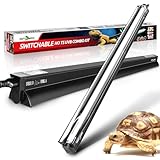
- 7. REPTI ZOO Switchable 39W T5 UVB Kit – Best for Mixed-Species Rooms
- 8. NEPTONION 34.5-Inch 21W T5 HO Kit with 5.0 Tube – Best for Veiled Chameleons
- 9. Eckpo 34.5-Inch 21W T5 HO Kit with 10.0 Desert Tube – Best for Juvenile Desert Reptiles
- 10. Arcadia Pro T5 39W Dragon Kit – Best for High-UV Open-Sun Species
- 11. Arcadia 24W T5 UVB Kit with 12 Percent Desert Output – Best 12 Percent Option
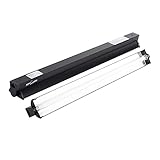
- 12. REPTI ZOO 24W T5 HO UVB Combo Kit – Best for 24-Inch Enclosures
- Buying Guide: Fixture Length vs Enclosure Width
- Buying Guide: T5 HO vs T8 vs LED UVB Bars
- Buying Guide: Choosing Between 5.0, 10.0 and 12 to 14 Percent UVB
- Buying Guide: Mesh, PVC and Inside-Mount vs Top-Mount
- Handling 72-Inch and 120-Gallon Builds
- Verifying UVB Output and Replacing Tubes
- Frequently Asked Questions
- What size UVB fixture do I need for a 48 inch enclosure?
- Should UVB cover the whole enclosure?
- Can UVB penetrate mesh or screen tops effectively?
- Do UVB fixtures provide heat for a large desert enclosure?
- Do I need two UVB fixtures for a 72 inch enclosure?
- How often should I replace a T5 HO UVB bulb?
- Are T5 and T8 fixtures interchangeable?
- What is the difference between 5.0 and 10.0 UVB?
- How do I know if my UVB bulb is still working?
- What is the best light for a bioactive terrarium?
- Final Verdict for Large-Enclosure UVB Lighting
Top 3 Picks for UVB Fixture Picks for Large Enclosures (October 2026)


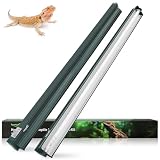
Hygger Zoo 39W 34-Inch
- Green low-profile finish
- 10 percent UVB output
- Mounting screws included
The LED bar takes the top slot on the strength of its rating and its controls, not because it is the cheapest way to light a 48-inch cage. The 46-inch fluorescent is the only single-tube desert option here that physically spans a 48-inch top. The green 39W kit wins on value per inch of coverage.
Best UVB Fixtures for Large Enclosures (October 2026)
We rated all twelve on length coverage against the enclosure sizes large keepers actually build, UVB strength at basking-surface distance, housing material, and the share of one-star reviews, which is the most honest durability signal a product listing offers.
| Product | Specs | Action |
|---|---|---|
| REPTITRIP 39-Inch LED UVB |
|
Check Latest Price |
| LUCKY HERP 54W 46-Inch |
|
Check Latest Price |
| Hygger Zoo 39W Green Kit |
|
Check Latest Price |
 REPTI ZOO 39W Combo Kit REPTI ZOO 39W Combo Kit |
|
Check Latest Price |
 Hygger Zoo 34-Inch 39W Hygger Zoo 34-Inch 39W |
|
Check Latest Price |
 Ycxydr 35-Inch 39W Kit Ycxydr 35-Inch 39W Kit |
|
Check Latest Price |
 REPTI ZOO Switchable 34-Inch REPTI ZOO Switchable 34-Inch |
|
Check Latest Price |
 NEPTONION 34.5-Inch 21W 5.0 NEPTONION 34.5-Inch 21W 5.0 |
|
Check Latest Price |
 Eckpo 34.5-Inch 21W 10.0 Eckpo 34.5-Inch 21W 10.0 |
|
Check Latest Price |
 Arcadia ProT5 39W Dragon Arcadia ProT5 39W Dragon |
|
Check Latest Price |
 Arcadia 24W 12 Percent Kit Arcadia 24W 12 Percent Kit |
|
Check Latest Price |
 REPTI ZOO 24W 24-Inch Kit REPTI ZOO 24W 24-Inch Kit |
|
Check Latest Price |
1. REPTITRIP 39-Inch LED UVB Reptile Light with Four UVI Modes – Our Pick for Large Enclosures
REPTITRIP 39-Inch LED UVB Reptile Light with Auto On/Off & Preset Day-Night Cycle Dimming, 4 UVI Modes Fixture Controller, 27W Aluminum UVA UVB Lamp for Bearded Dragons, Turtles & Snakes, 6500K
39 inch span
27W LED
6500K
Ferguson Zones 1-4
7000 hour rating
Pros
- Highest rating in the group at 4.6 with 83 percent five-star reviews
- Four UVI modes M1-M4 let you shift between Ferguson Zones 1-4
- Automatic on/off plus preset day-night dimming removes manual scheduling
- Cool running with no heat output so it mounts close to the animal
- Aluminum alloy body with a 7000 hour service life
Cons
- Emits no infrared heat so a separate basking source is required
- Controller is an extra failure point beyond a simple switch
- UVB test cards give unreliable readings so a real meter is needed
This is the fixture we come back to for a 48-inch enclosure because the controls solve a problem the fluorescents cannot. The four UVI modes cover Ferguson Zones 1 through 4, which means you can dial the bar down for a shaded end of a bioactive vivarium and up for an open-sun basking zone without buying a second fixture. Owners in r/BeardedDragons repeatedly point out that mode-switching is what makes one bar viable across a mixed habitat.
The day-night cycle is the quiet winner feature. Instead of a separate timer and a dimming dial, the fixture stores a preset ramp, so a large enclosure gets a sunrise-to-sunset transition without extra wiring on the cabinet.
Output is 27W across 39 inches with a 6500K cool white visible spectrum and a stated operating life above 7000 hours. That figure is a hardware claim rather than a measured one, and the honest way to treat it is to verify UVI with a meter rather than trusting the label.
One thing to set expectations on: the LED emits no physical heat at all. Every owner review mentions this and every owner accepts it, because the deal is that you mount it lower and closer without worrying about a basking lamp scorching a plastic hood.
What makes it work in a 48-inch enclosure
The 39-inch span sits at roughly four-fifths of a 48-inch top, which clears the two-thirds rule with room to spare. It also happens to be the second-highest rated fixture in this group, and its one-star share of 4 percent is the lowest among the twelve we reviewed.
Mount it on a board above mesh or inside the enclosure. Because it runs cool, inside mounting above a basking spot is viable where the same placement with a fluorescent would need careful clearance.
Who should skip it
Skip it if your budget rules out a premium tier fixture, or if you want a single unit that both lights and heats. This is a UVB and visible light source only, and pairing it correctly means budgeting for a separate heat fixture and a thermostat.
Also skip it if you are keeping a shallow-UV species and want a cheaper answer. A 5.0 tube at 34.5 inches costs noticeably less and suits tropical setups where Zone 1 to 2 output is plenty.
2. LUCKY HERP 54W T5 Reptile Light Fixture with 46-Inch 10.0 Desert Tube – Best for 48-Inch Tops
LUCKY HERP T5 Reptile Light Fixture Combo Kit 54W (New Upgrade), UVB Reptile Light Fixture with Desert UVB 10.0 46″ Fluorescent Tube, UVA UVB Reptile Light for Lizard, Bearded Dragon, Tortoise
46 inch tube
54W
Desert 10.0 UV
Alloy housing
100V-250V
Pros
- Only single-tube option here that nearly spans a 48 inch top
- 54W gives strong output per inch for desert baskers
- Aluminum alloy housing resists UV aging better than cheaper housings
- Rectifier supply rated 100V-250V so it works across regions
- Brighter and more even light that improves color rendition
Cons
- One-star share sits at 14 percent with early failure reports
- Bulb replacement is awkward at 46 inches
- Largest and heaviest option here so it needs a solid mount
- Reflector and ballast failures reported within the first year
Length is the entire argument here. A 46-inch tube on a 48-inch top covers roughly 95 percent of the width, which means there is no UV dead zone to explain away. For a single bearded dragon, uromastyx, or monitor in a 4x2x2, that is the difference between a complete basking zone and a partial one.
The 54W output and the proprietary alloy reflective layer are what separate it from a 39W kit. Manufacturers claim the alloy layer lifts useful UVB and UVA spectral energy substantially; treat that as marketing until you measure it.
The 100V-250V rectifier supply is a genuine practical advantage over the 110V-only kits in this list, several of which have burned out for European buyers who plugged them in without checking.
It also runs cooler than the visual brightness suggests, which makes it usable above mesh or inside a wooden vivarium where a hotter housing would be a problem.
What makes it work where shorter tubes fail
Coverage ratio is the whole story. Two-thirds coverage is the community rule of thumb quoted constantly in r/BeardedDragons threads, and a 46-inch tube beats it without needing a second fixture or a daisy-chain link.
Owners of 48-inch enclosures consistently describe the light as noticeably more even than a 39W kit, and several report improved color and activity in their animals after switching.
Who should skip it
Skip it if you are on a tight budget and a 34-inch unit would cover your enclosure. You would be paying for coverage you do not need, and the one-star rate of 14 percent is the second highest in this group.
Skip it if you plan to run it on a light wooden stand that cannot take the weight safely, or if swapping a 46-inch tube in a cramped cabinet sounds miserable. It is, according to owners.
3. Hygger Zoo 39W Green T5 Reptile Light Kit – Best Value for a 34-Inch Span
T5 Reptile Light Fixture Green Combo Kit 39W Light Fixture Reptile Terrarium Hood 10.0 UVB Light Bulb Fluorescent Tube Ideal for Tropical and Deserts Such as Bearded Dragon Lizards and Tortoises
34.5 inch fixture
39W
10 percent UVB and 30 percent UVA
5.9 ft cord
Pros
- Strong coverage per dollar for a 34.5 inch desert fixture
- Jungle green finish disappears into planted enclosures
- Curved polished alloy reflector boosts UVB and visible output
- Screws included for undermounting on screen tops
- 5.9 ft power cord gives mounting flexibility
Cons
- Blue protective film must be removed or the tube will not light
- Some units arrive with a shattered tube or dead ballast
- No daisy-chain cord included in the box
- Return process reported as difficult by a few buyers
The green finish is the detail that gets overlooked and then appreciated. In a bioactive planted vivarium, a white fixture hanging over live foliage looks like hardware, and a green one reads as part of the scape.
Underneath the finish is a competent 39W T5 HO kit with a curved polished alloy reflector and a stated 10 percent UVB and 30 percent UVA output. That is a desert-class tube, and at 34.5 inches it covers roughly two-thirds to three-quarters of a 48-inch top.
Owners consistently call this the best budget all-in-one kit for the size, with the common praise aimed at brightness, install ease, and the price-to-coverage ratio. The 35.37 by 4 by 3.37 inch footprint also fits inside most 4x2x2 wooden vivariums.
The failure pattern is consistent and worth knowing before you order: a handful of buyers received units with a cracked tube or a non-functioning ballast. Test the tube the moment it arrives rather than assuming.
Why the protective film catches people out
Several reviewers report a tube that would not light at all until the blue protective film was peeled off. It is a shipping film over the phosphor, it is easy to miss on a dark fixture, and no fault light is obvious when it stays on.
If you are buying this kit, the first five minutes after delivery go to removing that film and confirming the tube strikes before you mount anything.
Who should skip it
Skip it if you are building a 72-inch double-wide. At 34.5 inches you would need two fixtures plus a linking cable, and the box does not include one, so budget for that separately.
Skip it if you need daisy-chain capability out of the box or if you run a 220V system. Several comparable kits in this group are 110V-only and this one lists 120V as well.
4. REPTI ZOO 39W T5 HO UVB Lighting Combo Kit – Solid Fit for 36-Inch Tops
REPTI ZOO T5 HO UVB Lighting Combo Kit, Terrarium Hood Comes with Desert 10.0 UVB T5 Lamp (39W)
39W T5 HO
Desert 10.0 tube
Curved reflector
120V and 240V
Pros
- Strong and even distribution across 36 inch enclosures
- Tube format preferred over screw-in bulbs by many keepers
- Easy bracket mounting inside custom-built habitats
- Curved polished reflector boosts UVB output
- Removable power cable with inline switch
Cons
- Several buyers report measured UVB below premium brands
- Fixtures and tubes frequently fail or dim within months
- Reflector reported degrading and shedding particles
- Some units reject replacement tubes from other manufacturers
- Bulb replacement described as physically difficult
This is the fixture most 4x2x2 keepers land on first, and for a 36-inch top it does the job without ceremony. The tube is long enough that the basking zone sits under real output rather than at the tapering end where UVB falls off.
The curved polished reflector is the standard on this brand and it does what it claims, throwing light down and slightly inward rather than losing it out the sides.
What gives us pause is the durability feedback. Owners report early lamp burnout, measured UVB output below the advertised percentage, reflector breakdown over time, and a ballast that will not accept a replacement tube from another manufacturer.
Customer service does resolve defective units well, so the risk is more about long-term reliability than about getting a working fixture on day one.
Where the 36-inch span actually lands
On a 36-inch enclosure the coverage is close to full width, which makes this one of the safer buys for anyone running a 40 gallon long setup. On a 48-inch top it drops to about three-quarters coverage, which is workable but leaves cold corners.
That is the honest framing: this is a 36-inch solution that stretches to 48 inches, not a 48-inch solution.
Who should skip it
Skip it if you have measured your setup and want a known quantity. Buyers who have compared this against premium brands report lower measured UVB from the same nominal percentage, and that gap matters when distance is tight.
Skip it if you plan to resupply tubes from a different brand. The closed ballast behaviour means your tube choice is limited to what this fixture accepts.
5. Hygger Zoo 34-Inch 39W T5 HO Kit with 10.0 Desert Tube – Tuned for 4x2x2 Setups
T5 UVB Reptile Light Fixture HO UVB Bulb Lighting Combo Kit, 10.0 UVB Light for Reptiles Terrarium Hood with 39W Reptile Light Bar UVA UVB Desert Lamp for Bearded Dragon Turtle Tank, 34Inch
34 inch span
39W
10.0 desert spectrum
Aluminum housing
Pros
- Aluminum housing runs cool and helps extend tube life
- Mounts on mesh inside the tank or screwed to wood
- Output described as strong and stable for desert reptiles
- Arrives well packed with good build finish
- Can be chained for multi-enclosure setups
Cons
- Multiple buyers report the fixture dying within or just after the return window
- Replacement tubes sometimes will not light in the fixture
- Housing is not water resistant or rust proofed
- Slides around inside a tank rather than staying put
- Some units arrived damaged
The 35.5 by 4 by 3.25 inch aluminum body is a genuinely better thermal design than a plastic-hooded kit, and owners with a year of service report roughly that. Aluminum dissipates heat, and a cooler housing slows the decay that shortens tube life.
Long-term users report close to a year of reliable service and happier, more active reptiles, which is a fair benchmark for a T5 HO tube.
The recurring negative thread is premature ballast failure. Several owners had units stop working within a month or two, usually just past the return window, and some found that replacement tubes would not start in the dead ballast.
Positioning is a smaller but real issue. Reviewers note the fixture slides around inside a tank rather than staying put, and a shifting fixture changes your measured UVI without you realising it.
Why 34 inches is the two-thirds sweet spot
Two-thirds of a 48-inch top is 32 inches, so a 34-inch tube clears the community rule with a little margin. That is why this size is the largest single group in the market and why it dominates our list.
The 10.0 desert tube is the right spectrum for bearded dragons, uromastyx, juvenile tortoises, and tegus at typical mounting distances. For tropical species you would want a 5.0 instead.
Who should skip it
Skip it if you have a bioactive setup with misting. The housing is not water resistant or rust proofed, and a humid room plus daily spraying is a combination we would not hand to a budget fixture.
Skip it if your enclosure is 72 inches wide. One 34-inch unit leaves roughly half of a 72-inch top in UV cold, and that is exactly the problem this article exists to solve.
6. Ycxydr 35-Inch 39W T5 UVB Reptile Light Kit – Best All-Round Starter
Ycxydr T5 UVB Reptile Light Kit, 39W T5 Reptile Light Fixture with UVB 10.0 Fluorescent Bulb, 35 in Terrarium Hood Light Fixture, Ideal for Tropical and Desert Habitats Reptile
34.4 inch span
39W
10.0 desert
Flicker-free
13000 hour lamp
Pros
- Curved polished reflector gives strong even UVB across 35 inch enclosures
- Flicker-free operation with aluminum heat dissipation
- All mounting hardware included for mesh screen or wood setups
- Claimed 13000 hour light source life
- Suits both tropical and desert moderate-UV species
Cons
- Lightly reviewed compared with the major brands
- 110V-only design needs a converter in 220V regions
- White brightness listed at only 10 lumens which understates output
- Less-established brand with a smaller replacement-tube ecosystem
The 4.4 rating with 76 percent five-star share is the second-best satisfaction profile in this group, and at 224 reviews the sample is small but consistently positive. Feedback centres on straightforward installation, clean flicker-free light, and broad coverage.
At 34.4 inches wide and 1.65 inches tall it is a low-profile unit that fits under a standard cabinet lip, which matters more in real installs than the specification sheet suggests.
The removable three-way power cable with an inline on/off switch is a detail the bigger brands charge extra for, and it makes moving the fixture for a height change far less annoying.
Owners also note that all mounting hardware is in the box, so a wooden vivarium setup does not require a hardware store run before you can start.
What a smaller review base means for you
A 224-review listing tells you a lot about first impressions and very little about year-three reliability. Long tube failures tend to show up in review counts of a thousand or more.
That makes this a reasonable first fixture and a riskier only fixture. If you buy one, buy the tube as a spare at the same time.
Who should skip it
Skip it outside North America and Japan unless you are comfortable with a converter. The unit is 100V to 120V at 60Hz, and reviewers in 220V regions report problems.
Skip it if you want a documented replacement-tube ecosystem. A less-established brand means a narrower range of compatible parts when the original tube fails at month eleven.
7. REPTI ZOO Switchable 39W T5 UVB Kit – Best for Mixed-Species Rooms
REPTI ZOO Switchable UVB Light for Reptiles, 39W T5 UVB Light Combo Kit for Tropical & Desert Reptile, 34″ Terrarium Hood Lamp Fixture with UVB 10.0 Bulb for Bearded Dragon Snake Gecko Lizard Tortoise
34 inch span
39W
Desert and tropical modes
Quick-plug cord
Pros
- One button switches between desert and tropical UVB output
- Built-in ballast starts quickly and reduces startup flicker
- Aluminum alloy shell aids heat dissipation and bulb longevity
- Quick-plug cord with independent switch simplifies maintenance
- Mounts on wood terrariums or full air-screen cages
Cons
- Highest one-star share of the REPTI ZOO kits at 18 percent
- Switchable output is a compromise rather than true per-animal calibration
- Only a 34-inch tube so it under-covers 48 inch enclosures
- Shares the same early-failure pattern as the brand's other kits
The one-button mode switch is the reason to buy this over a standard kit. Keepers who move an animal between a desert setup and a tropical one, or who run a mixed room, can change spectrum without a second fixture and a second mounting point.
It is designed for enclosures 36 inches and up, which makes it a natural fit for a 36-inch long or a 4x2x2 that you are covering at two-thirds rather than full width.
The built-in ballast is specified for quick startup and reduced flicker, and the quick-plug cable with an independent switch makes routine tube changes a two-minute job.
Be clear-eyed about what switching does and does not do. It is a compromise between two output levels, not a per-animal calibration, and the 18 percent one-star share is the highest of any REPTI ZOO kit in this list.
When one switch is worth two fixtures
If you are running two enclosures with different UV requirements, a switchable kit at roughly the cost of one premium fixture can be better value than buying a second housing and mounting it.
The counter-case is a keeper with one animal and a known species. You would be paying a premium for a feature you never press.
Who should skip it
Skip it if you want the cleanest possible desert output. A switchable tube has to serve two spectra, and a dedicated 10.0 tube will outperform it for an open-sun basker.
Skip it if reliability is your priority. At 130 reviews and an 18 percent one-star rate, this is the least proven fixture we list.
8. NEPTONION 34.5-Inch 21W T5 HO Kit with 5.0 Tube – Best for Veiled Chameleons
NEPTONION 21W Reptile T5 HO UVB 34.5″ 5.0 Light Fixture with Tube, Tall Tropical Habitat Hood for Terrariums, Suitable for Tropical Reptiles Like Veiled Chameleon
34.5 inch span
21W
5.0 tropical spectrum
All-metal body
Pros
- Curved polished aluminum reflector boosts visible light and UVB
- All-metal housing resists warping and cracking while running cooler
- Two mounting clip styles fit mesh tops or wooden vivariums
- Daisy-chain capable for breeders running multiple enclosures
- Noticeably less flicker than cheaper tubes
Cons
- 5.0 tropical output is too weak for desert baskers
- 21W across 34.5 inches is low output per inch
- Uneven reflector coverage reported by some users
- Newer listing with a small review base for reliability data
For tropical vivariums this is the fixture we would put on a 48-inch top. The 5.0 spectrum suits veiled chameleons, dart frogs, geckos, and arboreal species that need UVB but do not need a high-zone desert reading.
The all-metal body is the differentiator against plastic-hooded kits. Metal resists the warping and cracking that shortens the life of a housing sitting over a basking lamp all day.
Two mounting clip styles ship in the box, one set for mesh tops and one for fixing inside a wooden vivarium, and the unit is daisy-chain ready for breeder rooms running several enclosures off one outlet.
Owners of tropical setups report general satisfaction with the 34.5-inch coverage and the housing sturdiness, and specifically call out the daisy-chain capability as useful in a multi-tank room.
Why 21 watts is enough for tropical and not for desert
Output per inch is what separates this from the 39W and 54W kits. A 21W tube across 34.5 inches is a lower output-per-inch figure, and that is fine when your target is Ferguson Zone 1 to 2 with a tall screen cage between the lamp and the animal.
It is not fine for a bearded dragon basking directly under the lamp. Owners pairing it with desert species report it is simply not strong enough.
Who should skip it
Skip it for any open-sun desert species. A uromastyx or bearded dragon under a 5.0 tropical tube is a mismatch that shows up as poor calcium metabolism over months.
Skip it if you need a deep-drop option. Some users report uneven coverage across the span of the reflector, so if your animal is a precision basker, measure rather than assume.
9. Eckpo 34.5-Inch 21W T5 HO Kit with 10.0 Desert Tube – Best for Juvenile Desert Reptiles
Eckpo T5 HO UVB Reptile Light Kit, 34.5″ Fixture with 21W 10.0 UVB Tube, Suitable for Desert Reptiles Including Juvenile Sulcata Tortoises
34.5 inch span
21W
10.0 desert spectrum
All-metal housing
Pros
- Curved polished aluminum reflector amplifies UVB and visible output
- Advanced UVB chips reduce flicker and extend effective tube life
- All-metal housing resists heat warping and runs cooler
- Daisy-chaining supported for breeders and multi-enclosure rooms
- Simple setup with a medium-length power cord
Cons
- Build quality described as budget-tier and cheaply made
- Several units arrived with a dead tube or dead fixture
- 110V only which caused failures for 220V buyers in Europe
- Supplied power plug is US style and needs an adapter internationally
A 21W 10.0 desert tube at 34.5 inches is an interesting middle ground. It puts desert spectrum over a two-thirds span of a 48-inch top without the heat signature and weight of a 54W fixture, and it suits a growing juvenile more than a full adult male does.
Chameleon, gecko, and juvenile tortoise keepers like the coverage and the daisy-chain flexibility, and one detailed review advises testing the tube on arrival and confirming mounting distance before you commit.
That advice matters because this is a 110V-only design, and reviews from European buyers report burned units after connecting it to 220V. The plug is US style, so an adapter alone will not fix the voltage.
Build quality is described as budget-tier and cheaply made, which is a fair summary of the all-metal housing feel even though the material choice is the right one.
Why a 21W 10.0 tube is a real option
Desert spectrum at lower wattage works when the mounting distance is on the longer side. A 21W tube mounted higher gives a moderate-zone reading, which is appropriate for a juvenile that is still growing rather than a full-grown open-sun basker.
Measure rather than assume. A UVI meter reading at your actual basking distance is the only way to know which zone your animal sits in.
Who should skip it
Skip it if you are outside 110V territories. The 14 percent one-star share includes reports of units damaged by connecting them to the wrong supply voltage.
Skip it if you want a fixture you can leave in place for a decade. At 96 reviews there is not enough long-term data to support that expectation.
10. Arcadia Pro T5 39W Dragon Kit – Best for High-UV Open-Sun Species
Arcadia Pro T5 UVB Lighting Kit – 39W – Dragon
39W kit
14 percent UVB and 30 percent UVA
36 inch fitting kit
Pros
- 14 percent UVB and 30 percent UVA is the strongest desert spec in this group
- 36 inch fitting kit is sized for 48 inch enclosures
- Mounts inside the enclosure bringing the animal closer to the source
- Owners report bulbs lasting over a year with consistent output
- Linkable with up to ten fittings for large or multi-pet setups
Cons
- Fixture and bulb sometimes arrive bent or broken in transit
- Premium pricing against budget T5 kits
- No dimming or scheduling so a separate timer is required
This is the quality benchmark in the hobby and the review language reflects it. Multiple owners describe Arcadia as the best UVB brand available, with animals that are visibly more active, better coloured, and growing well.
Spec-wise it is the strongest desert tube here at 14 percent UVB and 30 percent UVA, which is the figure open-sun species like bearded dragons and uromastyx are recommended at shorter mounting distances.
The 36-inch fitting kit inside a 48-inch enclosure is exactly the two-thirds-plus geometry the community recommends, and mounting inside the enclosure removes mesh loss entirely.
Owners also report bulbs holding consistent output beyond a year, which is where the premium tier earns its place over a budget kit with a twelve-month replacement cycle.
Why 14 percent changes the mounting maths
A higher-percentage tube reaches a target UVI from further away, which means more usable basking surface area in a deep enclosure. In a 4x2x2 that is the difference between a narrow hot spot and a zone several feet long.
That also means you can mount it inside a wooden vivarium without crowding the animal, since distance becomes an adjustment rather than a constraint.
Who should skip it
Skip it if your animal is a tropical or crepuscular species. Overdriving a shaded animal with a 14 percent desert tube at close range is a real risk of UV stress, and a 5.0 tube is the right answer.
Skip it if you are building out multiple enclosures on a budget. At a premium tier price, four of these will cost more than the cabinet they light.
11. Arcadia 24W T5 UVB Kit with 12 Percent Desert Output – Best 12 Percent Option
Arcadia T5 UVB Reptile Light Fixture Kit 22.5″ Long 24 Watts 12% UVB Desert – Complete UVB Light for Reptiles, Turtles, Snake, Bearded Dragon Lamp, Long Lasting Easy to Use Professional Lighting
22.5 inch tube
24W
12 percent UVB and 30 percent UVA
Removable reflector
Pros
- Highest five-star share of any fixture here at 86 percent
- 12 percent UVB and 30 percent UVA desert output supports strong calcium metabolism
- Removable curved reflector focuses UV onto the basking zone
- Linkable system runs up to ten fittings from one power source
- Simple installation inside wooden vivariums or over mesh
Cons
- Shortest tube in the Arcadia range at 22.5 inches
- Highest price point among the T5 fixtures reviewed
- Removable reflector can be mislaid which reduces output
A 4.6 rating with an 86 percent five-star share is the strongest satisfaction profile in this list, and buyers treat Arcadia as the trusted reference in reptile UVB. The feedback is about trust and repeat purchase intent rather than about a specific flaw.
The 12 percent UVB and 30 percent UVA desert output sits between a standard 10.0 tube and the 14 percent Dragon lamp, which makes it a flexible middle option for a 24-inch or 30-inch desert enclosure.
The removable curved reflector is what makes it good and what makes it fragile as an ownership habit. It focuses UV onto the basking zone rather than spreading it, which raises usable output but means a missing reflector leaves you with a much weaker fixture.
The linkable system is a real asset. Several fittings can run from a single power source, which is the cleanest answer in this list for a multi-enclosure room.
How to use the linkable system in a large room
Running two or four of these from one supply is a practical answer for a 72-inch top or a 120-gallon build, because the housings line up evenly with no visible gaps in coverage between them.
The catch is length. At 22.5 inches you are tiling short tubes across a wide top, so alignment across the seam is the thing that determines whether the basking zone reads evenly.
Who should skip it
Skip it for a 48-inch enclosure as a single unit. Twenty-two and a half inches is under half of 48, and no reflector geometry rescues a tube that stops where it stops.
Skip it if you are building a premium tier desert setup for a full-grown open-sun basker. The 39W Dragon kit at 14 percent is the stronger choice at that budget level.
12. REPTI ZOO 24W T5 HO UVB Combo Kit – Best for 24-Inch Enclosures
REPTI ZOO T5 HO UVB Lighting Combo Kit, Terrarium Hood Comes with Desert 10.0 UVB T5 Lamp (24W)
24W T5 HO
Desert 10.0 tube
500 lumens
120V and 240V
Pros
- Most reviewed fixture in this group with 1720 ratings at 4.2
- Curved polished reflector increases lamp efficiency and UVB output
- Low-profile design fits inside vivariums or over mesh tops
- Removable power cable with integrated on/off switch
- Plastic end protectors for safer handling
Cons
- 24W tube covers only 24 inch enclosures and is far too short for larger setups
- Fluorescent tubes need periodic replacement as UVB fades
- Aluminum and plastic housing can degrade over extended use
- No dimming or adjustable day-night scheduling
With 1720 ratings this is the most thoroughly reviewed fixture in our list, and at a 4.2 average the feedback is steady rather than ecstatic. Buyers praise the low cost, the easy mesh-top or in-vivarium mounting, and an adequate spread of light for 24-inch desert enclosures.
At 22.64 by 22.83 by 1.65 inches it is a genuinely low-profile unit, which is why it remains the default recommendation for a 24-inch long and for a 30-gallon beginner setup.
The recurring criticism is simply that it is the wrong size for anything larger. A 24-inch tube in a 48-inch top covers half the width, and the other half is a UV dead zone regardless of how good the reflector is.
Owners also note dimming and reduced UVB output as the lamp ages, which is a normal characteristic of fluorescent tubes rather than a defect, and reflector and end-cap deterioration after extended use.
Where this fixture is still the right answer
On a 24-inch enclosure this is close to full-width coverage, and for a juvenile bearded dragon, a leopard gecko, or a small arboreal setup it does the job at the lowest entry point in this list.
For a 30-gallon long or a 36-inch enclosure it stretches, but the two-thirds coverage rule still holds without leaving cold corners.
Who should skip it
Skip it for a 48-inch or 72-inch enclosure. This is the single most common upgrade mistake we see, and it is the reason this article exists.
Skip it if you want adjustable output or a day-night ramp. There is no dimming and no scheduling here, so a separate timer is required for any photoperiod beyond a manual switch.
Buying Guide: Fixture Length vs Enclosure Width
Sizing a UVB fixture is arithmetic before it is a brand decision. The rule keepers quote most often in r/BeardedDragons threads is that a fixture should span at least two-thirds of the enclosure top. That heuristic exists because a fluorescent tube’s usable output ends where the tube ends, not gradually.
Here is how the lengths in this roundup map onto the enclosures people actually build.
24-inch top: a 22.5-inch to 24-inch fixture is effectively full coverage. A 34-inch unit is more than you need and can force a mounting problem in a short cabinet.
36-inch top: a 34-inch fixture covers roughly 95 percent of the width. This is the easiest size to light well and the reason 34-inch and 36-inch kits dominate the category.
48-inch 4x2x2: two-thirds is 32 inches, so a 34-inch fixture satisfies the rule with margin, and a 46-inch fixture gives near-full coverage. A 24-inch unit is the wrong answer here.
72-inch double-wide: a single fixture cannot do this well. One 46-inch unit still leaves a gap, and the correct answer is two linkable fixtures with the basking zone positioned under the overlap.
120-gallon build: treat it as a 72-inch problem. Two 34-inch to 36-inch fixtures, or a linkable premium system, with your heat source centred between them.
One nuance the roundup pages usually skip: the two-thirds rule is a floor for shaded species, not a ceiling for baskers. Bearded dragons and uromastyx are open-sun species that genuinely benefit from a basking zone spanning most of the enclosure, and a full-coverage 46-inch fixture serves them better than a two-thirds 34-inch one.
Buying Guide: T5 HO vs T8 vs LED UVB Bars
T5 HO linear fluorescents are the default for a reason. They are inexpensive per inch, widely available, and the reflector-and-ballast design is understood by every reptile keeper. Every 34-inch and longer fixture in this list is a T5 HO.
T8 fixtures are a legacy format. The tubes are physically longer for the same wattage, the housings are bulkier, and the electronics are older. They are not interchangeable with T5. A T5 HO tube will not fit a T8 housing and vice versa, and fitting the wrong one is the most common hardware mistake in the hobby.
LED UVB bars are the emerging category, and only one appears in this roundup. Their advantages are real: multi-zone UVI modes, scheduled dimming, no heat output, and a longer stated service life. Their weaknesses are fewer years of long-term owner data, a higher entry price, and a controller as an extra failure point.
Our verdict: buy a T5 HO for a first large setup and a second enclosure on a budget, because the replacement ecosystem is proven. Buy an LED bar when you want per-zone control, you are running a mixed habitat, or your basking lamp sits close enough that fixture heat is a real constraint.
The one thing to avoid on either side is an LED UVB bar marketed as a heat source. A fixture that emits no infrared still needs a basking lamp above it, and the forum is full of keepers who discovered that the hard way.
Buying Guide: Choosing Between 5.0, 10.0 and 12 to 14 Percent UVB
Percentage tells you how much of the lamp output is UVB rather than how much UVB reaches the animal. Distance and mesh determine the second number, which is why mounting height matters more than the label.
5.0 tropical: veiled chameleons, dart frogs, arboreal geckos, and any species in a tall screened cage. The NEPTONION 21W kit in this list is the tropical option.
10.0 desert: bearded dragons, uromastyx, tegus, juvenile tortoises. This is the most common choice in the hobby and the tube shipped with most combo kits.
12 to 14 percent desert: open-sun baskers and high-zone species, or desert animals you want to mount at a longer distance inside a tall enclosure. The two Arcadia kits sit here.
There is a known trap worth repeating from the forums: many combo hoods ship with a 5.0 tube when the species needs a 10.0. Check what is actually in the box on delivery. Swapping it takes a few minutes and it is the single most repeated question on keeper forums.
There is also the opposite error. A reptile can get too much UVB, particularly with a high-percentage tube mounted close to a small or shaded animal. Zone matching, not tube strength, is the deciding factor.
Buying Guide: Mesh, PVC and Inside-Mount vs Top-Mount
Mesh screen tops are the most common reason a correctly sized fixture underperforms. Screen blocks a meaningful share of UVB before it reaches the animal, and the loss compounds with distance between the tube and the basking surface.
Inside mounting solves it. Almost every fixture in this list can be mounted inside a wooden vivarium or a PVC enclosure, which removes mesh from the equation entirely. The trade-off is that you lose headroom and the fixture is more exposed to spray and to contact with the basking lamp.
Two safety notes for inside mounting in a large enclosure. Do not stack a basking lamp directly on top of a plastic-hooded fixture; the clearance matters more in a tall 4x2x2 than in a low tank. And on PVC builds, mount the fixture to a board or batten rather than to the panel itself, because PVC is flexible and the fixture will drift over time.
That drift is worth taking seriously. A fixture that slides even an inch inside the enclosure changes your measured UVI, and a keeper checking a printed value instead of a live reading will miss it entirely.
For planted and bioactive vivariums, expect foliage to intercept a large share of what gets past the screen. If your animal basks in the open on a raised branch, position the basking site to the side of the densest planting rather than under it.
Handling 72-Inch and 120-Gallon Builds
Do you need two UVB fixtures for a 72 inch enclosure? In almost every case, yes. One tube on a 72-inch top cannot deliver even output across the width, and a single 46-inch unit still leaves roughly 26 inches of enclosure without a UV source at all.
There are two workable architectures. The first is two linkable or daisy-chain fixtures mounted end to end, with the basking zone centred under the join. The second is two independent fixtures on a dual timer, positioned so each covers half the top.
The linkable route is cleaner and the Arcadia kits in this list support up to ten fittings from a single power source. The independent route costs more in power supplies but gives you redundancy, and it is what we would choose in a room where a single dead ballast should not black out the whole habitat.
For a 120-gallon build, the same logic applies with a third of the width added. Plan the heat source first and centre the UVB on it, because UVB coverage is only useful where the animal can reach it at the right distance.
One practical constraint nobody mentions: mounting hardware. A 46-inch fixture is heavy and long, and a sagging cabinet top or a weak light bar under it will not hold it safely. Use a purpose-built mounting frame rather than a strip light bracket.
Verifying UVB Output and Replacing Tubes
T5 HO tubes lose a meaningful share of their UVB output long before they stop glowing. Keepers who have tracked this with a meter report a 30 to 50 percent loss while the tube is still visibly lit, which is why a fixture that measured correctly last year can be quietly failing this year.
UVB test cards are not a reliable substitute for a meter. Fixture manufacturers themselves say so, and the REPTITRIP listing in this roundup explicitly notes that card results are inaccurate and a professional UVB meter should be used instead.
Our five-step verification routine:
Step one: let the fixture run for fifteen minutes so the ballast and tube reach steady output before you measure anything.
Step two: take the reading at the basking surface height, at the animal’s actual head height, not at the top of the enclosure.
Step three: measure at both the centre of the tube and near one end, and write both numbers down. A large gap between them is your coverage warning.
Step four: log the date alongside the reading. Three readings a year is enough to catch decay before it becomes a health problem.
Step five: replace on a schedule rather than on appearance. Twelve months is the working interval for T5 HO UVB tubes in normal use, and six to twelve months if your enclosure runs warm.
Inspect long fluorescent tubes on arrival. Bent fixtures and cracked tubes from packaging are the most common complaint on premium kits, and it takes thirty seconds to catch before you mount anything.
Finally, run a timer. Photoperiod matters as much as output, and most large-enclosure keepers use a longer day in summer and a shorter day in winter to follow natural seasonal variation. Keepers on r/Chameleons are consistent on the point that a fixed 24-hour cycle causes stress in tropical species.
Frequently Asked Questions
What size UVB fixture do I need for a 48 inch enclosure?
A 34-inch or 36-inch T5 HO fixture is the standard answer for a 48-inch 4x2x2, because it spans about two-thirds to three-quarters of the top. A 46-inch fixture gives near-full coverage and is better for open-sun baskers such as bearded dragons and uromastyx. A 24-inch unit is the wrong size, since the tube delivers no UVB past its end.
Should UVB cover the whole enclosure?
It depends on the species. Shaded and tropical species do fine with a basking zone covering about two-thirds of the top, which is the most quoted rule in keeper forums. Open-sun baskers do better with a zone spanning most of the width, since they spend their day in the light rather than moving between patches of it.
Can UVB penetrate mesh or screen tops effectively?
Only partially. Screen blocks a meaningful share of UVB before it reaches the animal, and the loss grows with distance between the tube and the basking surface. That is why mounting inside a wooden or PVC enclosure gives a measurably different result from sitting above a mesh top with the same fixture.
Do UVB fixtures provide heat for a large desert enclosure?
No. A UVB fixture delivers ultraviolet light only, and the LED bars in this roundup emit no heat at all. Every setup in this guide needs a separate basking lamp, overhead emitter, or heating pad, controlled by a thermostat, positioned over the same basking site the UVB is aimed at.
Do I need two UVB fixtures for a 72 inch enclosure?
In almost every case yes. A single tube cannot deliver even output across 72 inches, and a 46-inch unit still leaves roughly 26 inches with no UV source. Either run two linkable fixtures end to end with the basking zone under the join, or run two independent fixtures on a dual timer for redundancy.
How often should I replace a T5 HO UVB bulb?
About every 12 months in normal indoor use, and sooner if the enclosure runs warm. T5 HO tubes can lose 30 to 50 percent of their UVB output while still glowing visibly, so calendar replacement is safer than waiting for the tube to look dim. Keep a spare tube on hand because a dead ballast can refuse a replacement.
Are T5 and T8 fixtures interchangeable?
No. The tubes are physically different lengths and the housings use different electronics, so a T5 HO tube will not fit a T8 housing and a T8 tube will not fit a T5 HO housing. Forcing one into the other is one of the most common hardware mistakes in the hobby and it voids the reflector geometry.
What is the difference between 5.0 and 10.0 UVB?
A 5.0 tube is a tropical or rainforest spectrum, suited to veiled chameleons, dart frogs, and arboreal species kept in tall screened cages. A 10.0 tube is a desert spectrum, suited to bearded dragons, uromastyx, tegus, and juvenile tortoises. Many combo hoods ship with a 5.0 tube even when the animal needs a 10.0, so check the box on arrival.
How do I know if my UVB bulb is still working?
A meter tells you what a card cannot. Let the fixture run fifteen minutes, measure at the basking surface height, and record the date and reading. Repeat three times a year and compare. A drop of 30 percent or more between readings means the tube needs replacing even if it still looks bright.
What is the best light for a bioactive terrarium?
Start with a 34-inch or 36-inch T5 HO fixture aimed at an open basking site, positioned to the side of the densest planting so foliage does not intercept the light. Add a separate plant-grow light on its own timer for the planted areas, and keep the basking lamp and UVB fixture on the same schedule.
Final Verdict for Large-Enclosure UVB Lighting
Every fixture above should be paired with a separate basking lamp aimed at the same spot the UVB is centred on.
For a 48-inch 4x2x2, the best UVB fixtures for large enclosures come down to two honest answers. The REPTITRIP 39-inch LED bar is the strongest overall choice we reviewed, with the highest satisfaction profile, zone-selectable output, and scheduled dimming. The LUCKY HERP 46-inch 54W kit is the answer when a single tube has to span the whole top.
Below 48 inches, a 34-inch T5 HO kit is the value pick, and the 24-inch fixtures in this roundup are not upgrades. Measure your basking surface, replace on a twelve-month cycle, and remember that no UVB fixture on this list heats anything.
We will keep updating this roundup through 2026 as new fixtures land and the technology shifts.