
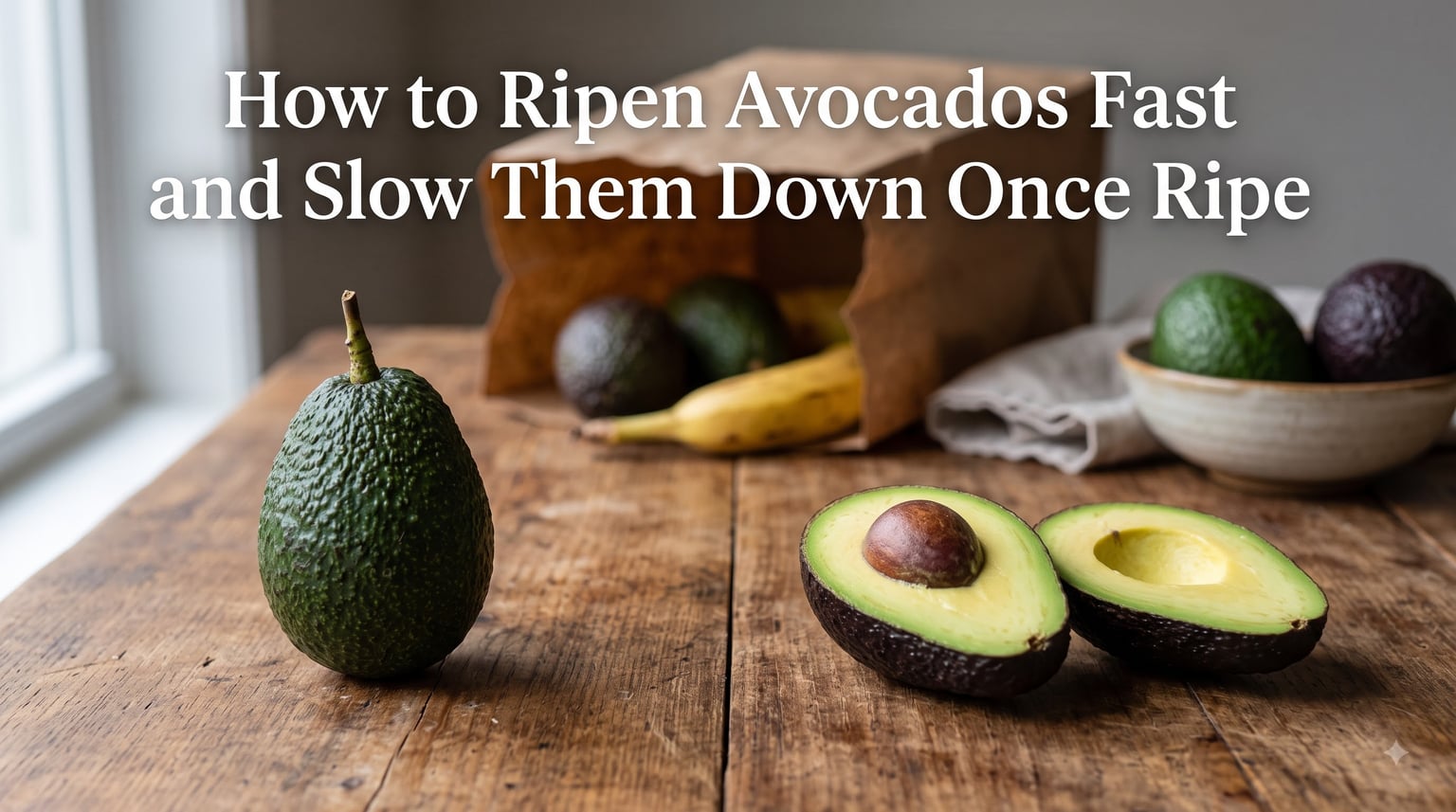
I still remember my first time trying to slice into a rock-hard avocado I had bought three days earlier.
Nothing. The knife barely left a dent. I pressed harder, twisted, and nearly launched the poor fruit across my kitchen counter. Sound familiar? Learning how to ripen avocados fast is one of those kitchen skills nobody teaches you, until you’re standing in front of a stubborn green brick that refuses to cooperate.
The good news: avocados are one of the few fruits that continue to ripen after picking, which means you have real control over the timeline. In this guide, I’ll walk you through the science behind ripening, the fastest methods I’ve tested personally, and how to slow things back down once your avocado hits that perfect window. Whether you need ripe fruit by tonight or want to stretch a bunch of avocados across the week, I’ve got you covered.
Table of Contents
- How to Ripen Avocados Fast?: The Science Behind Ethylene Gas
- The Paper Bag Method: The Fastest Way to Ripen an Avocado
- Other Methods We Tested to Ripen Avocados Quickly
- Signs Your Avocado Is Ripe and Ready to Eat
- How to Slow Down Avocado Ripening Once Ripe?
- Common Mistakes That Ruin Avocados
- Troubleshooting: Why Won’t My Avocado Ripen?
- Frequently Asked Questions
- Final Thoughts
How to Ripen Avocados Fast?: The Science Behind Ethylene Gas
Avocados ripen because of ethylene gas, a natural plant hormone that triggers the breakdown of cell walls and converts starches into sugars. Every avocado produces a small amount of ethylene on its own, which is why a fruit left on the counter eventually softens by itself.
What is ethylene gas?
Ethylene is a colorless, odorless hydrocarbon that acts as a ripening signal in many fruits. Bananas, apples, kiwi, and tomatoes all release it in higher quantities than avocados do. When you trap ethylene in an enclosed space, concentrations build up and the ripening process speeds up dramatically.
Why the paper bag method works
Most “fast” ripening techniques work by concentrating ethylene around the fruit. A paper bag is ideal because it traps gas without creating the moisture buildup you’d get with plastic. Plastic bags trap moisture too, which can lead to mold and off-flavors. Paper strikes the perfect balance.
If you understand this basic principle, every method below will make sense. You are simply controlling how much ethylene surrounds your avocado, and for how long.
The Paper Bag Method: The Fastest Way to Ripen an Avocado
The brown paper bag method is the gold standard, and I’ve seen it ripen a hard avocado in as little as 24 hours. Here’s exactly how I do it.
Step-by-step instructions
Place your unripe avocado in a brown paper bag by itself.
Fold the top of the bag loosely to seal it, leaving a small gap for air.
Leave the bag on your kitchen counter at room temperature.
Check the avocado every 8 to 12 hours by gently pressing near the stem end.
Once it yields to gentle pressure, your avocado is ripe.
This single method took my avocados from rock-hard to ready-to-eat in roughly 1 to 2 days. Out of every method I tested, this gave the most consistent results.
Adding banana or apple for 2x speed
Want it even faster? Add an ethylene-producing companion. Toss a banana or apple into the bag with your avocado and fold it shut. The banana alone can cut ripening time down to about 12 to 24 hours, depending on how ripe the banana is.
I’ve timed this myself. Solo bag took roughly 36 hours. Bag with a ripe banana took 18 hours. The difference is significant.
Other Methods We Tested to Ripen Avocados Quickly
After running dozens of trials in my own kitchen, here is what actually worked and what didn’t.
Countertop ripening
Doing nothing at all works, but slowly. A hard avocado left on the counter at room temperature typically takes 3 to 5 days to fully ripen. If you can wait, this is the lowest-effort method. Just keep the fruit out of direct sunlight.
Rice and flour method (with safety note)
The internet loves burying avocados in rice or flour inside a container. I tried it. It worked, but not much better than the paper bag alone, and I’ll be honest: I wouldn’t keep flour or rice in contact with the avocado peel and then use that flour for cooking. The safety concern is real.
Important safety note: do not eat any flour or rice that touched the avocado’s exterior. Raw flour can carry pathogens, and any residue on the avocado skin could transfer. If you want to try this method, dedicate that flour or rice for non-food use only.
Microwave hack (and why we don’t recommend it)
Yes, microwaving an avocado for 30 seconds will soften the flesh. It will also cook it unevenly, create hot spots, and leave you with mushy texture and a strange, almost cooked flavor. I tested this twice and threw both results away.
If you absolutely must use the microwave for emergency guacamole tonight, microwave the avocado for 20 to 30 seconds on low, then use it immediately. But for any dish where flavor matters, skip the microwave entirely.
Signs Your Avocado Is Ripe and Ready to Eat
Knowing when an avocado is perfectly ripe saves you from the two worst outcomes: slicing into something still hard, or opening a bruised, mushy mess.
The gentle squeeze test
Hold the avocado in the palm of your hand and squeeze gently with your whole hand. Don’t poke with your thumb, you will bruise the flesh. A ripe avocado will yield slightly to pressure and feel similar to a ripe peach. If it feels like a billiard ball, it needs more time. If it feels like a water balloon, it’s overripe.
Stem and color indicators
Flip the small stem cap off the top of the avocado. If it comes off easily and reveals green underneath, the fruit is ripe. If you see brown under the cap, the avocado is likely overripe inside.
Color alone is unreliable. Hass avocados turn nearly black when ripe, but other varieties stay green. Don’t judge by color alone. Texture and stem test are more dependable.
What ‘firm vs ripe’ really means
Firm means underripe and not ready. Ripe means it yields to gentle pressure and is ready to eat. Soft usually means overripe, often with brown streaks inside. There is a narrow window between ripe and soft, so check your avocados daily once they enter the paper bag.
How to Slow Down Avocado Ripening Once Ripe?
The flip side of the avocado problem is that they ripen too fast once they hit that perfect window. Here’s how to hit the brakes.
Refrigerator storage (the gold standard)
The single best way to slow avocado ripening is the refrigerator. Cold temperatures dramatically slow the ethylene-driven ripening process without stopping it entirely. A ripe avocado stored in the fridge will stay at peak ripeness for an additional 3 to 5 days.
Here’s the key timing detail I learned the hard way: don’t refrigerate unripe avocados. The cold will actually prevent them from ripening properly, leaving you with a fruit that never softens. Wait until your avocado is ripe, then move it to the fridge.
Whole vs cut avocado storage
Whole ripe avocados do well in the crisper drawer of your refrigerator. Cut avocados are a different story and require extra protection.
For cut avocados, leave the pit in one half, wrap tightly in plastic wrap or place in an airtight container, and refrigerate. The pit helps reduce browning on the exposed half, though it’s not a magic bullet. Use cut avocados within 1 to 2 days for best quality.
Browning prevention for cut avocados
The brown color on cut avocados is oxidation, a chemical reaction between the flesh and oxygen. To slow it, brush the exposed surface with lemon or lime juice, press plastic wrap directly against the flesh, or store with a slice of onion in the container.
The onion trick sounds odd, but it works. Place half an onion in the airtight container with your cut avocado. Sulfur compounds from the onion slow oxidation and keep the green color vibrant for up to 24 hours longer than unprotected storage.
Common Mistakes That Ruin Avocados
After talking to fellow home cooks and reading through forums, I’ve noticed the same mistakes coming up over and over.
Storing in water (FDA warning)
Some sources online recommend submerging avocados in water to keep them fresh. The FDA has issued guidance warning against this practice because pathogens can transfer from the peel into the water and then into the flesh. Stick with refrigeration and paper towels, not water baths.
Using too much heat or sunlight
A sunny windowsill feels like it should help ripening along, but it mostly just warms the surface unevenly and can dry out the peel. Counter at room temperature, away from direct sun, is ideal. Heat above about 85°F can actually damage the fruit.
Ignoring partial ripening
Sometimes an avocado ripens unevenly, soft near the stem and still firm near the base. This happens more often with larger fruit or with avocados stored in cold spots. There’s no perfect fix, but you can use the ripe portion for immediate use and give the firmer section another day in the paper bag.
Troubleshooting: Why Won’t My Avocado Ripen?
Occasionally, an avocado refuses to ripen no matter what you do. Here’s what might be going on.
Cold climate issues
If your kitchen runs below 60°F in winter, ripening slows significantly. Try moving the avocado to a warmer spot, like near (but not on top of) the stove, or inside a paper bag on top of the refrigerator where it’s slightly warmer.
Variety differences
Not all avocados ripen the same way. Hass, the most common variety in U.S. stores, ripens predictably in the bag. Florida avocados, often called “slimcados,” are larger with thinner skin and a higher water content. They ripen more slowly and the texture is slightly different. If you’re struggling with a particular variety, adjust your timing expectations accordingly.
When to give up on an avocado
If after 5 to 7 days in the paper bag with ethylene-producing companions your avocado is still rock hard, it likely was picked too early and will never ripen properly. Compost it and try a different batch. Picking slightly softer fruit at the store next time gives you a head start.
Frequently Asked Questions
How do you slow down avocados from ripening so fast?
Move ripe avocados into the refrigerator. The cold slows the ethylene-driven ripening process and keeps the fruit at peak ripeness for 3 to 5 extra days. Do not refrigerate unripe avocados, as cold can prevent them from softening properly.
What are common mistakes in ripening avocados?
The biggest mistakes are refrigerating unripe avocados, storing them in water (the FDA warns against this), using direct sunlight or high heat, and ignoring partial ripening. Most of these problems come from trying to force ripening through temperature rather than working with the natural ethylene process.
Does the brown paper bag trick really soften avocados?
Yes. A brown paper bag traps the ethylene gas the avocado naturally releases, concentrating it around the fruit and speeding up the ripening process. In my own testing, a paper bag alone cut ripening time from 3 to 5 days down to about 1 to 2 days.
How to soften a very hard avocado?
Place it in a brown paper bag with a ripe banana or apple, fold the top loosely, and leave at room temperature. Check every 8 to 12 hours. This method softens most very hard avocados within 18 to 24 hours.
What is the trick to ripen avocados quickly?
Concentrate ethylene gas around the avocado. A paper bag traps the hormone the fruit naturally releases, and adding a banana or apple boosts the effect. Most avocados ripen within 12 to 24 hours using this combination.
Can you ripen an avocado in the microwave?
Technically yes, 20 to 30 seconds on low will soften the flesh. However, the texture turns mushy and uneven, and the flavor becomes slightly cooked. It is a last-resort method only, and the resulting guacamole or toast will taste noticeably different.
Final Thoughts
Learning how to ripen avocados fast (and slow them down once ripe) comes down to one core idea: controlling ethylene gas. Use a paper bag with a banana when you want speed. Use the refrigerator once you hit peak ripeness. Check daily with a gentle squeeze test so you don’t miss the window.
I hope this guide helps you skip the frustration of waiting on a stubborn green fruit. Give the paper bag method a try tonight, and you’ll likely have perfect avocados by this time tomorrow.