

Most drone comparisons obsess over flight time and transmission range, then treat the camera as an afterthought. We did the opposite. We ranked every drone in this guide on the frame it puts on your memory card first, and only then on how long it stays airborne while you work.
These are the best drones for aerial photography in 2026 — ten models we examined for still resolution, sensor size, gimbal design, aperture, low-light behaviour and the battery math you need for real shoot lengths. Five of them weigh in under 249g, which keeps recreational flying simple. The rest trade that convenience for larger sensors, brighter glass or longer battery cycles.
One thing to set expectations early: a drone camera is a small fixed sensor on a moving platform. It will never match a dedicated mirrorless body for low-light work, and a 3-axis mechanical gimbal does more for your finished video than any resolution bump. If you are building a full kit around aerial work, our picks for the [best cameras for photography beginners](https://mystorymysm.com/best-cameras-for-photography-beginners/) and [best prime lenses for photography](https://mystorymysm.com/best-prime-lenses-for-photography/) matter just as much as the aircraft.
We also flag where a drone is a video-first machine dressed up as a photo tool, because that gap shows up in your files after the shoot, not in the spec sheet.
Table of Contents
- Top 3 Picks for Aerial Photography in 2026
- Best Drones for Aerial Photography (October 2026)
- 1. Potensic ATOM SE – Best All-Round Starter Drone With Two Batteries
- 2. Potensic ATOM – Best Budget Drone With a Real Mechanical Gimbal
- 3. Holy Stone HS790 – Best for Brighter Glass and Long Flights
- 4. DJI Mini 3 Fly More Combo – Best Premium Pick for Still Quality
- 5. Ruko U11MINI 4K RC3 – Best for Shooting Without a Phone
- 6. DJI Mini 4K Combo – Best for a First Drone With a Stable Video Link
- 7. Potensic Atom 2 Fly More Combo – Best Value Gimbal Drone Under 249g
- 8. Ruko F11PRO 2 Plus – Best for 48MP Stills From a Heavier Airframe
- 9. Bwine F7MINI – Best for Indoor Flights Without GPS
- 10. Holy Stone HS600 – Best for Built-In Remote ID Compliance
- How to Choose a Drone for Aerial Photography in 2026
- Aerial Camera Settings, RAW Workflow and US Flying Rules
- Frequently Asked Questions
- Final Verdict on the Best Drones for Aerial Photography
Top 3 Picks for Aerial Photography in 2026
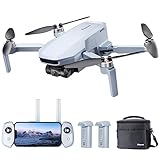
Potensic ATOM SE
- 62 minutes total flight time
- Under 249g no registration
- 4KM PixSync 2.0 transmission
- Follow Me and Waypoint Flight

DJI Mini 3 Fly More Combo
- 48MP stills
- 4K HDR with Dual Native ISO Fusion
- Three batteries 114 minutes total
- DJI RC 5.5-inch display
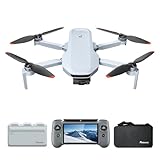
Potensic Atom 2 Fly More Combo
- 1/2 inch Sony CMOS with F1.8
- 3-axis gimbal with P-Log
- Three batteries 96 minutes total
- 700-nit touchscreen remote
Best Drones for Aerial Photography (October 2026)
All ten models, in the order we rank them. Every one carries a mechanical or electronic stabilisation system, and the sensor column is where the real differences hide.
| Product | Specs | Action |
|---|---|---|
| Potensic ATOM SE |
|
Check Latest Price |
 Potensic ATOM Potensic ATOM |
|
Check Latest Price |
 Holy Stone HS790 Holy Stone HS790 |
|
Check Latest Price |
| DJI Mini 3 Fly More Combo |
|
Check Latest Price |
 Ruko U11MINI 4K RC3 Ruko U11MINI 4K RC3 |
|
Check Latest Price |
 DJI Mini 4K Combo DJI Mini 4K Combo |
|
Check Latest Price |
| Potensic Atom 2 Fly More Combo |
|
Check Latest Price |
 Ruko F11PRO 2 Plus Ruko F11PRO 2 Plus |
|
Check Latest Price |
 Bwine F7MINI Bwine F7MINI |
|
Check Latest Price |
 Holy Stone HS600 Holy Stone HS600 |
|
Check Latest Price |
Two patterns stand out. First, every model that produces genuinely printable stills above 12MP pairs a 1/2-inch class sensor with a mechanical gimbal. Second, not one of these ten ships with obstacle avoidance, so pilot skill matters more here than in heavier aircraft.
1. Potensic ATOM SE – Best All-Round Starter Drone With Two Batteries
Potensic ATOM SE GPS Drone with 4K EIS Camera, Under 249g, 62 Mins Flight, 4KM FPV Transmission, Brushless Motor, Max Speed 16m/s, Auto Return, Lightweight and Foldable Drone for Adults Beginner
1/3 inch CMOS, 12MP stills
4K 30fps with ShakeVanish EIS
62 min total across two batteries
Pros
- 62 minutes of total flight from two included batteries
- Very easy to learn with stable hover and beginner mode
- GPS Follow Me Waypoint and Circle Flight all work reliably
- Folds into the included handbag
- Under 249g so recreational flying needs no registration
Cons
- No mechanical gimbal so stabilisation is electronic only
- Fixed lens with no optical or digital zoom
- 12MP stills are weak for large prints or heavy cropping
This is the drone we hand to friends who say they want to try aerial photography without committing a serious sum. The ATOM SE holds position tightly, the GPS modes respond without fiddling, and the second battery in the box removes the single most common beginner frustration: landing early because you ran out of time.
The camera is honest about its class. It shoots 4K at 30fps with a 118-degree field of view and a tilt range from 20 degrees up to straight down at 90 degrees, which covers most property and overhead shots without any gimbal tricks. Stills come out at 12MP from a 1/3-inch CMOS, and the tilt range is what makes the frame usable at all.
Our honest read is that this is a video-first camera with a stills mode attached. Detail holds up on a phone screen and at web resolution, and a 4K frame with the shutter at 1/50 or faster will give you a usable crop. Push that crop hard for a print and the resolution runs out. Several reviewers make the same point from the other direction, noting that a 3-axis gimbal would move this drone into a different class entirely.
Level 5 wind resistance and a brushless motor mean it holds up in open coastal conditions better than the price suggests. Two smaller details worth knowing: batteries lose charge while the craft sits powered down, and a few owners report cracked controller antennae or joysticks that unscrew mid-flight. Neither is common, and neither changed our ranking.
Who this drone suits
Anyone learning to fly, anyone who needs a second aircraft for scouting locations, and anyone shooting social content where a 4K frame at 1/50 is the real deliverable. The 62-minute total also makes it the easiest drone here to fly a full property or a full hiking route without a mid-shoot battery anxiety pause.
It is genuinely a good fit for holiday and travel use because the whole package folds flat, weighs 8.8 ounces, and needs no paperwork for a visitor flying recreationally in the US.
Who should skip it
Skip it if your output is large prints, editorial stock, or anything that gets cropped hard. A 12MP file at 1/3-inch will not survive a heavy crop, and there is no gimbal to slow shutter speed for you in dim light.
Also skip it if you plan to fly near trees or structures. With no obstacle sensing, every near miss is on you, and the electronic stabilisation cannot rescue a frame shot while the aircraft is fighting turbulence.
2. Potensic ATOM – Best Budget Drone With a Real Mechanical Gimbal
Potensic ATOM 3-Axis Gimbal 4K GPS Drone, Under 249g, 32 Mins Flight, 6KM Long Range Transmission, Visual Tracking, 4K/30FPS QuickShots, 12MP Photo, Lightweight and Foldable for Adults Beginners
3-axis brushless mechanical gimbal
Sony CMOS, 12MP stills
4K 30fps
32 min per battery
Pros
- Mechanical gimbal gives visibly steadier footage than electronic-only rivals
- Long 6KM transmission for the money
- Visual tracking and QuickShots make solo filming simple
- Reliable GPS return home and auto takeoff and landing
- Still under 249g at 241g
Cons
- Only one battery in the standard kit at about 32 minutes
- 12MP stills are modest for a gimbal drone aimed at photographers
- No obstacle avoidance sensing
The single most important change from the ATOM SE to the ATOM is the gimbal. A real 3-axis brushless mechanical gimbal removes the small constant wobble that electronic stabilisation leaves behind, and that difference is visible in every frame you shoot.
Frame rate options are unusually generous for this class. You get 4K at 30, 25 and 24fps, plus 2.7K and 1080p at 60, 50, 30, 25 and 24fps. Having true 24fps available matters more than it sounds, because it is the frame rate that matches the cadence of film and it pairs naturally with shutter speeds of 1/48 or 1/50.
The QuickShots menu includes Pull-Away, Rocket, Circle, Spiral and Boomerang, and visual tracking will hold a subject through most of them. For an aerial photographer, that is a fast way to get a repeatable move when you are solo and juggling a camera bag.
Two honest limitations. The still sensor stays at 12MP, so this remains a video-first machine with a photo mode, and the single-battery kit means one pack, roughly 32 minutes, per setup. Pilots who plan long property runs will want the multi-battery variants, which are offered separately.
PixSync 3.0 gives you a 6KM control range with better anti-interference behaviour than the Wi-Fi-only drones at similar money. It is not the link quality of a dedicated digital system, but it is a large step up from an earlier generation.
Who this drone suits
A photographer moving from a toy drone to a real gimbal without spending serious money, or a content creator who shoots alone and wants automated moves that hold a subject through a Circle or Spiral. The tracking modes genuinely reduce the number of takes you need.
It also works well for anyone who wants gimbal-smooth travel footage while staying inside the sub-249g registration-free class, since it sits at 241g.
Who should skip it
Skip it for print work and heavy cropping. Twelve megapixels is the ceiling no matter how good the gimbal is, and the mechanical gimbal makes the video better without making the stills sharper.
Also consider the two-battery route before buying. For a property shoot or a landscape session with several setups, one 32-minute pack means a recharge cycle between every two or three frames, and that cycle is where shoot momentum dies.
3. Holy Stone HS790 – Best for Brighter Glass and Long Flights
Holy Stone HS790 6K Photo Drone with Camera for Adults, 3 Axis Brushless Gimbal 4K Video, 30000ft Transmission, 60Min Flight with Fast Charging Hub, AI Night Shot, GPS Smart Flight, Beginner Mode
Sony 1/3.2 inch CMOS at f/2.0, 38MP stills
3-axis gimbal, 4K 30fps
Two batteries, 60 min
Pros
- f/2.0 aperture holds up better in dim conditions than most rivals in this class
- 38MP stills give more cropping room than 12MP sensors
- Two batteries plus a fast charging hub for 60 minutes total
- Built-in Remote ID avoids a separate compliance module
- Quiet 1506 brushless motors with Level 5 wind resistance
Cons
- 375.5g so it needs FAA registration and Remote ID
- Wi-Fi repeater link is more prone to interference than digital transmission
- No obstacle avoidance sensing
The HS790 is the first drone on this list where low-light work is a genuine reason to buy rather than a compromise. The f/2.0 aperture on the Sony 1/3.2-inch CMOS gathers meaningfully more light per frame than the f/2.8-type openings typical at this size, and the night flying mode builds on it.
Resolution is the other differentiator here. At 38MP effective stills, this drone gives you roughly three times the crop latitude of the 12MP models above it. That is the difference between framing a building tightly and framing a building tightly plus correcting the verticals later.
The 3-axis mechanical gimbal handles the vibration problem, and 1506 brushless motors with Level 5 wind resistance keep the aircraft calm in moving air. Two 3200mAh intelligent batteries give 30 minutes each, and the smart PD charging hub doubles as a power bank for your phone, which saves a cable in the field.
Built-in Remote ID is worth calling out. For a heavier aircraft that must broadcast identification anyway, having it integrated removes the sticker module that owners of registration-class drones often lose on the first hard landing.
The honest drawback is the link. This is a Wi-Fi repeater system with a 9KM figure, and it is more susceptible to interference in cluttered environments than a dedicated digital transmission. Owners flying in urban canyons or near industrial sites report dropouts, and a dropout at altitude is a return-to-home event and a lost shot.
Who this drone suits
Photographers working near or after sunset, and anyone shooting twilight and night exteriors where a brighter aperture saves frames that a smaller sensor would lose. The 38MP stills also suit anyone who frames tight and crops in post.
The dual battery and PD hub suit all-day property and inspection work where you want to charge once in the morning rather than between setups. The included carrying case and folding body also make it reasonable for travel.
Who should skip it
Skip it if you fly in built-up areas with heavy radio congestion, or if you want to stay inside the registration-free sub-249g class. At 375.5g it is firmly in the registration and Remote ID category in the US.
Also weigh the sensor maths. A 1/3.2-inch sensor with 38MP output gives you high pixel density on a small sensor, which helps cropping but does not change the total light available. If your priority is large-format prints rather than web delivery and twilight, look at the 1/2-inch models further down this list.
4. DJI Mini 3 Fly More Combo – Best Premium Pick for Still Quality
DJI Mini 3 Fly More Combo With DJI RC, 3 Batteries
48MP stills on a 3-axis gimbal
4K HDR with Dual Native ISO Fusion
Three batteries, 114 min
Pros
- Excellent image quality with sharp 4K HDR and detailed 48MP stills
- Three batteries give roughly 114 minutes of total flight time
- Built-in 5.5-inch HD screen stays readable in direct sunlight
- True Vertical Shooting suits tall landmarks and social content
- Under 249g keeps recreational flying registration-free
Cons
- No obstacle avoidance or object detection in any direction
- Thin plastic shell that feels fragile in the hand
- Real-world flight time is usually 20 to 30 minutes per battery
If one drone here is the closest thing to a no-compromise answer, it is the Mini 3. The 48MP stills are the first jump in this list where you can frame loosely and crop deliberately rather than wishing you had framed tighter in the air. Paired with a 3-axis mechanical gimbal, it produces files that hold up outside web delivery.
On the video side, 4K HDR with Dual Native ISO Fusion is the feature that changes your workflow. Two native ISO bases mean the camera behaves like a stills camera switching between bright and dark sensitivities, and HDR capture holds highlight and shadow detail in a single 4K frame. For golden-hour flying, that is the difference between usable and clipped.
True Vertical Shooting is more useful than the name suggests. Rotate the camera and you get native vertical framing with the full sensor behind it, rather than a cropped horizontal frame turned on its side, which is the usual compromise.
Three batteries in the Fly More Combo give up to 114 minutes of total flight time, and the charging hub tops all three up together. In practice most pilots land well short of the published figure, so treat it as a ceiling. The 5.5-inch HD display in the DJI RC controller is a genuine quality-of-life upgrade: it stays readable in direct sun, and it saves your phone battery and your cable.
The weak point is safety, not image quality. There is no obstacle avoidance or object detection at all, so this is a drone for open skies and planned lines rather than for threading gaps between trees. Several owners also report intermittent signal loss triggering an automatic return, particularly under canopy.
Who this drone suits
Photographers who deliver to print, to editorial clients, or to anyone who crops. The 48MP files and HDR 4K capture also make it the natural choice for landscape work, architectural exteriors and travel content where dynamic range across a bright sky and dark foreground is the whole challenge.
It also fits anyone flying commercial work who wants a strong platform without a Part 107 registration burden on a recreational basis. Keep in mind that any paid work still requires certification in the US, regardless of weight.
Who should skip it
Skip it if you fly close to obstacles. Without object detection, you are the collision-avoidance system, and the sensor is small enough that missing a branch costs you the aircraft.
Consider the 1/2-inch alternatives on this list if your priority is low-light stills, because 48MP on a small sensor trades away per-pixel light. A photographer shooting night exteriors as a primary workhorse may get more from a brighter 1/2-inch sensor at a lower resolution than from pushing this one.
5. Ruko U11MINI 4K RC3 – Best for Shooting Without a Phone
Ruko U11MINI 4K (RC3) Camera Drone for Adults with 5.5″ Touchscreen Remote
1/2 inch CMOS, 48MP stills
3-axis mechanical gimbal
5.5-inch touchscreen remote
Pros
- Real 1/2 inch sensor with 48MP stills at a sub-249g weight
- Built-in 5.5-inch touchscreen means no phone tethering
- Two batteries give up to 64 minutes total flight time
- R2 digital transmission works without Wi-Fi
- Quadruple positioning for precise hover and easy takeoff
Cons
- R2 transmission lags behind the strongest links in dense terrain
- Screen is less bright than some competing controllers in direct sun
- No obstacle avoidance beyond a single downward sensor
Screen-equipped controllers are the quiet revolution in this category, and the Ruko U11MINI 4K RC3 is the clearest example. A 5.5-inch 1080P touchscreen in the remote means you compose on the aircraft’s own display rather than on a phone that drains in twenty minutes and freezes in cold air.
Underneath, the camera is better specified than the controller story suggests. A 1/2-inch CMOS delivers 8K-resolution still photos at 48MP with a 3-axis mechanical brushless gimbal handling vibration, which puts its image capability ahead of most of the sub-249g field in this list.
Positioning uses four systems at once, with GPS, barometric, time-of-flight and optical flow. In practice that gives a precise hover and reliable automated takeoff and landing, which is what removes most beginner crashes. The built-in beeper and home-point refresh help you find a downed aircraft in tall grass, and that feature has saved more than one shoot.
Two 2200mAh intelligent batteries give up to 64 minutes total. The 20,000ft R2 digital transmission is a genuine step above Wi-Fi repeater systems because it operates independently of Wi-Fi, though owners flying near dense urban clutter still report it trailing the strongest links available.
Buy the PD65W charger. Charging from a basic adapter works but stretches turnaround badly, and turnaround is what limits how many setups you get through in a day.
Who this drone suits
Anyone who shoots in direct sun, at altitude, or on a schedule. A dedicated screen with no cable between phone and controller removes a failure point that has ended more shoots than any mechanical fault.
It also suits photographers who want 1/2-inch sensor quality in a sub-249g package, because that combination is genuinely rare below this price band. At 248g, recreational flying needs no registration in the US.
Who should skip it
Skip it if your work is concentrated in cities or forested valleys where signal reliability decides whether you get the frame. The downward time-of-flight sensor is for landing precision, not for obstacle avoidance, and there is no forward sensing.
Photographers who edit stills heavily may also find 48MP on a 1/2-inch sensor limiting next to the ATOM 2, which pairs a similar sensor size with an F1.8 aperture and a P-Log profile for video colour work.
6. DJI Mini 4K Combo – Best for a First Drone With a Stable Video Link
DJI Mini 4K Camera Drone Combo, Drone with 4K UHD Camera for Adults, Under 249 g, 3-Axis Gimbal Stabilization, 10km Video Transmission, Auto Return, 2 Batteries for 62-Min Max Flight Time, QuickShots
4K Ultra HD video, 3-axis gimbal
10km HD video transmission
Two batteries, 62 min
246g
Pros
- Three-axis gimbal delivers steady cinematic 4K in sunrises sunsets and night scenes
- 10km transmission with solid anti-interference performance
- Two batteries give 62 minutes of total flight time
- Under 249g at 246g and registration-exempt for recreation
- QuickShots automate cinematic moves for beginners
Cons
- 12MP still resolution is dated next to newer Mini models
- No obstacle avoidance or object detection
- RC-N1C controller needs a phone with no built-in screen
Some reviewers call this the reference entry-level drone, and the reason is the link rather than the camera. A 10km transmission system with strong anti-interference behaviour means the video feed holds when cheaper Wi-Fi-based drones visibly degrade, and a stable feed is what lets you frame a moving subject instead of chasing a stuttering preview.
Flight characteristics are unremarkable in the best way. Level 5 wind resistance at 38kph, brushless motors, a 4,000m takeoff ceiling, GPS return home and one-tap takeoff and landing. It is currently ranked first in the hobby RC quadcopter category, which reflects how settled its behaviour is.
QuickShots covers Helix, Dronie, Rocket, Circle and Boomerang, which is a fast way to get a moving shot without learning manual orbiting on day one. The two-battery combo gives 62 minutes of total flight time, and one-battery and three-battery sets are also offered.
Now the camera, because that is where this drone steps behind the pack. The 12MP still sensor is well behind the 48MP and 38MP models elsewhere in this list, and the RC-N1C controller requires your phone with no integrated display. A one-star share that runs higher than most rivals also suggests some build variance, so inspect on arrival.
For a first drone, none of that matters much. For a working photographer who prints or crops, it matters a great deal, and the Mini 3 or the ATOM 2 is the more honest starting point.
Who this drone suits
Absolute first-time flyers, and anyone who wants a dependable link and predictable handling before spending on a better camera. A registered Part 107 pilot teaching a client, or anyone filming short social clips on a schedule, will find the 10km feed reassuring.
It is also the safest pick for anyone flying in areas with competing radio noise, since a stable feed reduces the number of times you have to bring the aircraft home unexpectedly.
Who should skip it
Skip it if photos are the deliverable. At 12MP with a single fixed wide camera and no zoom, you are limited to a wide field of view and a modest crop, and there is no optical or digital zoom to reframe with afterwards.
Skip it if you shoot in low light without a plan. The small sensor and fixed aperture mean your only tools for dim conditions are shutter speed and ISO, and raising ISO on a small sensor is exactly what costs you image quality.
7. Potensic Atom 2 Fly More Combo – Best Value Gimbal Drone Under 249g
Potensic Atom 2 Fly More Combo with RC PTD 1, Drones with Camera for Adults 4K Video, 8K Photo, 10KM Transmission, 96 Mins Flight, 3-Axis Gimbal, AI Track, Vertical Shooting, AI Night Shot, Under 249g
1/2 inch Sony CMOS at F1.8, 48MP stills
3-axis gimbal, 4K 30fps HDR
Three batteries, 96 min
Pros
- 1/2 inch Sony CMOS at F1.8 with P-Log gives strong low-light results and colour rendition
- Class-leading 3-axis gimbal stabilisation
- Three batteries charge in parallel in 1.3 hours
- Dolly Zoom CineRoll and 4K HDR are rare at this level
- 700-nit 5.5-inch FHD remote with a three-hour battery
Cons
- No obstacle avoidance beyond one downward proximity sensor
- Slow photo autofocus leads many owners to pull stills from video
- ND filters and a microSD card are not included
The ATOM 2 is the most capable camera package in this list that still weighs under 249g. A 1/2-inch Sony CMOS with an F1.8 aperture and 4-in-1 pixel binning is a real step up from the 12MP sensors in the cheaper models, and the F1.8 opening gathers enough light to make night and twilight frames worth keeping.
Colour is where P-Log earns its place. Shooting in a flat log profile preserves more tonal information for grading, so you can recover shadow detail and shape highlights in post rather than accepting what the camera decides at capture. If you already work in a video editor, that flexibility is worth more to you than another megapixel.
The creative mode list reads like a much more expensive drone. Dolly Zoom, CineRoll, Slow Motion and QuickShots cover effects most competitors do not offer, and 2.7K vertical shooting plus 4x digital zoom cover social framing. A parallel charging hub takes all three batteries from flat in 1.3 hours, which is the difference between a full shoot day and a half shoot day.
The PTD 1 remote is a 5.5-inch 1920×1080 FHD touchscreen at 700 nits with a three-hour runtime. A 700-nit panel is bright enough for direct sun, which is where many bundled screens fall short.
Two limits to plan around. Photo autofocus is slow, and plenty of owners work around it by shooting video and extracting frames. There is no obstacle avoidance at all beyond a single downward proximity sensor, so lines must be planned in open air. The app is functional but less refined than the leading alternatives, and neither ND filters nor a memory card are bundled.
Who this drone suits
Photographers who work at twilight, at golden hour, and in variable light, because the F1.8 aperture and pixel binning handle the transitions better than a fixed f/2.0 or smaller opening. It suits editors who grade seriously, since P-Log feeds a grading pipeline rather than a finished look.
It also suits anyone who shoots commercially on a schedule: 96 minutes across three batteries and a 1.3-hour full turnaround means you can fly a morning and an afternoon without hunting for a charger. At 245g it stays inside the registration-free class for recreation.
Who should skip it
Skip it if your work is static-heavy and fast. Slow autofocus means a subject moving toward the camera can be soft by the time focus locks, and that is not fixable in post.
Also skip it for confined spaces, since the single downward sensor is a landing aid rather than an avoidance system. Budget for ND filters and a memory card on day one, because both are needed for correct exposure control and neither is in the box.
8. Ruko F11PRO 2 Plus – Best for 48MP Stills From a Heavier Airframe
Ruko F11PRO 2 Plus Drone with 48MP Camera, 8K Photo, Tech Gift for Adult
1/2 inch CMOS, 48MP stills
3-axis mechanical gimbal
Two batteries, 74 min
360g
Pros
- 1/2 inch sensor produces clear detailed 48MP images with usable night shots
- Mechanical brushless gimbal keeps footage solid
- Two batteries give 74 minutes of total flight time
- 20000ft digital transmission suits large properties
- Over-the-air firmware updates keep improving the drone
Cons
- At 360g it needs FAA registration and Remote ID
- Charger is not included
- Larger and heavier than the sub-250g drones so less portable
The F11PRO 2 Plus takes the 1/2-inch sensor and 48MP stills and mounts them on a substantially heavier airframe. That is a deliberate trade: at 360g you give up the sub-249g convenience, and in return you get a steadier platform in moving air, more stable 4K at 30fps, and a battery that runs 37 minutes per pack.
Two 3200mAh batteries give 74 minutes total, and the 20,000ft digital transmission range covers large properties and wide remote vistas. Night photography is a listed capability, and the 1/2-inch sensor is the reason it produces usable results rather than colour noise.
Over-the-air firmware updates mean the aircraft keeps improving after purchase, which is a genuine long-term advantage. A gimbal protective cover and a carrying shell case are included, and a large guard footprint suits an aircraft this size.
The 360g weight triggers FAA registration and Remote ID requirements in the US for recreational flying, and it removes the ability to fly a single bag on a trip. There is no obstacle avoidance, the charger is not bundled, and a night mode is not the same as a night mode on a 1-inch sensor.
Where the F11PRO 2 Plus separates itself is steady behaviour in wind. A heavier aircraft with brushless motors and a mechanical gimbal holds position and holds frame better than anything in the sub-250g group, and for a photographer working long property exterials in exposed locations, that stability is often worth more than another increment of resolution.
Who this drone suits
Anyone who wants 48MP stills and does not mind the paperwork, particularly real estate agents working large rural properties, and inspectors who need documented detail rather than quick clips. The 74-minute total across two batteries suits a full day of surveying.
It also suits photographers who fly in exposed locations where wind is the limiting factor, because a heavier platform simply holds stiller than a 249g drone does.
Who should skip it
Skip it if portability is the deciding factor. A 360g aircraft with a case and two large batteries is a car boot, not a day pack, and the registration requirement adds a step for anyone flying casually.
Also consider the ATOM 2 instead if weight matters to you, since a similar 1/2-inch sensor in a 245g body keeps you inside the registration-free class and adds a brighter F1.8 aperture.
9. Bwine F7MINI – Best for Indoor Flights Without GPS
Bwine F7MINI 4K Video 8K Photo Drones with Camera for Adults 3-Axis Gimbal
48MP 1/2 inch CMOS at F1.8
3-axis mechanical gimbal
Three batteries, 96 min
Pros
- Genuine 3-axis gimbal and 48MP 1/2 inch sensor in a sub-249g body
- F1.8 aperture helps in lower light
- Three batteries deliver 96 minutes total
- Level 5 wind resistance and a 1503 brushless motor at 31 mph
- Optical flow positioning allows stable indoor flying without GPS
Cons
- Lowest average rating in this group at 4.3 with a higher one-star share
- No obstacle avoidance sensing
- Brand awareness and long-term track record sit behind the leaders
The F7MINI exists because the spec sheet it offers is usually only seen higher up the range. A 48MP 1/2-inch sensor with an F1.8 aperture, a 3-axis stabilized mechanical gimbal and three batteries, all inside 249g.
Optical flow positioning is the feature that makes it unusual. Without a usable satellite fix, a drone normally cannot hold position indoors, and optical flow plus the altitude sensing lets this one hover steadily inside a building. For interior real estate, warehouse and construction documentation, that turns an otherwise impossible shoot into a routine one.
Three high-density 2200mAh batteries give 32 minutes each for 96 minutes total, and PD 3.0 fast charging is supported. A 1503 brushless motor reaches 31 mph with Level 5 wind resistance, and the wired digital transmission claims stronger anti-interference than the Wi-Fi repeater systems used by several rivals at this price.
GPS smart modes cover auto cruise, follow at 0.5m, orbit and waypoint, with precise hover, smart return home, a dynamic home point and a 120dB locator buzzer for finding a downed aircraft. A two-year warranty, 24/7 support and lifetime firmware updates are included.
Be clear-eyed about the rating. A 4.3 average with a higher one-star share than the rest of this list reflects early-owner variance and a shorter track record, not feature dissatisfaction. Bwine is a newer brand with less field history, and support response is the risk you are accepting.
Who this drone suits
Interior and indoor photographers, real estate agents shooting large empty properties, and construction documentation where GPS is absent. Optical flow positioning is the reason to buy it, and nothing else on this list does indoor hover this way at this weight.
It also suits anyone who shoots often enough to want 96 minutes of total flight from three batteries without leaving the registration-free class at 249g.
Who should skip it
Skip it if reliability under pressure matters more than the spec sheet. A 4.3 average and a shorter support history mean more uncertainty if something goes wrong mid-shoot, and for paid work that uncertainty is a real cost.
Also skip it for aggressive night and low-light stills. The 1/2-inch sensor with F1.8 is respectable, but the sub-250g class caps total light, and the ATOM 2 offers a comparable sensor with better-supported parts availability.
10. Holy Stone HS600 – Best for Built-In Remote ID Compliance
Holy Stone HS600 2-Axis Gimbal Drones with Camera for Adults 4K EIS, Integrated Remote ID, 20000 FT Range Transmission, GPS Drone with Brushless Motors, 4K/30FPS, Follow Me, Level 6 Wind Resistance
4K 30fps, 2-axis gimbal and EIS
Sony sensor, 8.29MP stills
Level 6 wind resistance
Pros
- Integrated Remote ID removes the need to buy and mount a compliance module
- Level 6 wind resistance is the strongest rating in this weight group
- Brushless motors run more efficiently and quietly than brushed
- Phone connects to the controller with a single data cable
- GPS one-key return plus lost-signal and low-battery return
Cons
- 8.29MP still resolution is the weakest here and limits photo reproduction
- Only a single battery included
- 2-axis gimbal stabilises tilt and roll but not yaw
The HS600 is a compliance-first drone, and that is a legitimate reason to buy one. The Remote ID transmitter is integrated into the aircraft rather than supplied as a sticker module, so the aircraft broadcasts identification the moment it is powered, with nothing to lose when it crashes or gets replaced.
Wind performance is the second argument. Level 6 resistance with brushless motors is the strongest figure among the aircraft in this guide, and in practice that means holding position and holding frame in conditions that would push a smaller drone into drift.
The 2-axis gimbal stabilises tilt and roll, and electronic stabilisation handles the rest, which produces steadier footage than the fixed-lens entry-level drones. The phone connects to the controller with a single data cable, so streaming needs no Wi-Fi setup and no fiddly pairing step.
Here is the honest limit. The 8.29MP effective still resolution is the weakest in this list by a wide margin, and a 2-axis gimbal does not correct yaw, so the aircraft still rotates slightly when you change heading. For video in wind, that is a good machine. For photography, the sensor simply cannot carry the work.
One clarification matters for anyone reading the weight figures. The listed item weight is 197g, but the claimed takeoff weight with battery is 541g, and the flight weight is what determines registration requirements. Treat it as a registered aircraft.
Who this drone suits
Anyone who needs Remote ID hardware and would rather it were built in than stick a module on an airframe, plus pilots working in exposed coastal or open-country locations where Level 6 wind resistance earns its place. The single-cable phone connection also suits anyone who finds controller pairing fiddly.
It suits video-first shooters who need a compliant, wind-stable aircraft for property walkthroughs and inspections, provided stills are a secondary deliverable.
Who should skip it
Skip it for any photography work. At 8.29MP there is no editing path back from a soft or badly exposed frame, and one battery limits you to a single sortie before a recharge cycle.
Also weigh the Wi-Fi repeater transmission, which is the most interference-prone link type in this group. If you shoot near industrial sites or dense construction, the interruption risk is not worth saving on a camera you cannot use for stills anyway.
How to Choose a Drone for Aerial Photography in 2026
Sensor size is the first filter, and it is the one most buyers get wrong. A sensor’s physical size determines how much light it gathers and how much latitude you keep in the highlights. Once you are past 12MP, resolution is a secondary concern; light is the constraint that actually decides whether a frame is usable.
Drone sensors fall into three practical groups. A 1/3-inch sensor with 12MP is the entry tier, adequate for web and social delivery and thin for cropping. A 1/2-inch sensor with 48MP is the current sweet spot for most work, offering roughly four times the light of a 1/3-inch sensor at a similar pixel count. A 1-inch sensor is a separate class, and it sits well above anything on this list. The three 1/2-inch models here, the Ruko U11MINI, the Potensic Atom 2 and the Ruko F11PRO 2 Plus, are the closest you can get to serious aerial stills while staying under 249g.
Next is the gimbal, and the distinction is simple. Electronic stabilisation crops and shifts the image to cancel shake, which works but depends on the frame having spare resolution. A 3-axis mechanical gimbal physically holds the camera steady and wastes nothing. Every drone that produces genuinely printable stills in this list has a mechanical gimbal, and the two that do not are video-first machines.
Two-axis gimbals, like the HS600, correct tilt and roll but not yaw, so panning still produces a small rotation. Acceptable for video, a subtle flaw in stills.
Aperture decides low-light behaviour, and this is where fixed lenses are often misunderstood. A bright f/2.0 or F1.8 opening gathers more light per frame than a narrower one, which directly buys you either a faster shutter or a lower ISO. The Holy Stone HS790 at f/2.0 and the Potensic Atom 2 at F1.8 both do this. Drones with fixed apertures also need ND filters to control exposure in bright conditions, and those filters are not always included.
Battery math deserves a calculator, not optimism. A typical 32-minute published figure becomes roughly 22 to 26 minutes once you account for the reserve required for a safe return, hover time while you compose, and the fact that published figures assume ideal conditions. Plan a usable fraction of the headline number, and treat battery count as the real constraint.
That is why the multi-battery packages stand out. The ATOM SE at 62 minutes, the HS790 at 60, the DJI Mini 3 at 114, the Ruko U11MINI at 64, the Bwine F7MINI at 96, the ATOM 2 at 96 and the F11PRO 2 Plus at 74 all exist because a single pack is rarely enough for a working day. The Potensic ATOM and the Holy Stone HS600 ship with one battery each, and that is the practical difference between a hobby afternoon and a shoot.
Transmission link quality decides whether you get the frame at all. Wi-Fi repeater systems, used by the HS790 and the HS600, are the most vulnerable to interference. Digital systems are more consistent, and the DJI models use the strongest links available in this group.
Weight class matters in the US more than anywhere else. Under 249g means no FAA registration and no Remote ID for recreational flight. Above it, you register the aircraft and broadcast identification, which is exactly why the Holy Stone HS600 integrates the Remote ID hardware and why the Ruko F11PRO 2 Plus is a paperwork item rather than a casual purchase.
The controller deserves more attention than it gets. A built-in screen, as on the DJI RC, the Ruko U11MINI RC3 and the Potensic PTD 1, removes phone battery drain, cable failures and glare problems. Screen brightness is what separates a usable controller in direct sun from a frustrating one, and 700 nits on the PTD 1 is a meaningful specification.
Obstacle avoidance is the feature none of these ten drones have, and that is a deliberate part of the calculation. Every model here weighs under 249g or sits just above it, and in that class forward and upward sensing is not standard. Plan flights in open air, keep your line of sight, and treat pilot discipline as the safety system.
Finally, autofocus behaviour determines how you shoot. Slow photo autofocus, as on the Potensic Atom 2, pushes many owners to shoot video and pull stills, which works for static scenes and fails for moving subjects. Test autofocus on a moving target before a paid shoot rather than discovering it on the day.
Aerial Camera Settings, RAW Workflow and US Flying Rules
A camera settings cheat sheet is worth more to an aerial photographer than any spec comparison, because a drone flies fast and a fixed lens gives you no second chance at exposure. These are the settings we would start from, expressed as ranges rather than fixed numbers, because conditions change faster in the air than on the ground.
In bright midday sun, set shutter to 1/1000 or faster and ISO to the camera’s lowest native value, then stop down with an ND filter if the aperture allows. A mechanical gimbal holds the camera steady enough to work at 1/50 in calm air, which is what lets you keep ISO low in low light, but the same setting in a gusty condition will smear the frame.
For golden hour, 1/200 to 1/400 with ISO in the low hundreds gives a clean file with a sense of motion in anything that moves, which suits coastlines, waterfalls and traffic. For twilight and night, 1/30 to 1/60 with ISO raised as needed keeps the exposure acceptable, and the F1.8 and f/2.0 models hold their quality noticeably longer than the smaller-aperture drones in this list.
If you are working in 10-bit P-Log, as the Potensic Atom 2 does, grade rather than judge in camera. Log footage looks flat and washed out on a monitor because that is the point, and pushing it back in an editor recovers detail you could not have kept with an 8-bit profile.
On the RAW side, the practical difference between these drones is small. Most editing software handles drone DNG files in the same way it handles files from a compact camera, with flatter shadows, narrower highlight recovery and embedded thumbnails that may lag the last shot. The one real difference is sensor size, because a 1/2-inch file behaves differently under a heavy noise reduction pass than a 1/3-inch file of the same resolution.
Keep your colour profiles consistent across a project. If you fly two different drones on the same commission, matching white balance and a shared profile avoids the flat-versus-graded mismatch that clients notice immediately in a cut between shots.
Now the rules, because they affect which drone you can legally fly and where. The FAA’s sub-249g exemption covers recreational flight only. Any paid work, including a shoot for a client, a property listing you are paid to produce, or footage used to sell anything, counts as commercial operation and requires a Part 107 Remote Pilot Certificate and aircraft registration regardless of weight.
Remote ID is a separate requirement. Most aircraft above 249g must broadcast identification, either through built-in hardware or a compliant external module, which is why the Holy Stone HS790 and HS600 both include it. Some sub-249g drones may also be required to broadcast, so verify the current rule for the specific model rather than assuming.
US availability has become unpredictable, with newer models from certain manufacturers facing restrictions that affect which units reach the US market with full warranty support. Grey-market imports solve the availability problem and create new ones, because you may receive an aircraft with no domestic warranty or local support. We have kept the list to models with clear US availability and support paths for that reason.
Finally, insurance. Part 107 operations attract liability questions that clients will ask about, and several underwriters offer aviation policies specifically for drone work. Buying coverage before a paid shoot is a fraction of the cost of a claim, and clients increasingly require proof.
If you are still building the ground half of a photography kit, our guides to the [best cameras for portrait photography](https://mystorymysm.com/best-cameras-for-portrait-photography/) and the [best ring lights for photography](https://mystorymysm.com/best-ring-lights-for-photography/) cover the studio work that pairs with aerial assignments.
Frequently Asked Questions
Why did the US ban DJI drones?
The US did not issue a blanket ban on all DJI drones. Rather, US authorities placed certain DJI models and components on security-related restricted lists, and the rules have been enforced and revised in stages. The practical effect for buyers is that some newer DJI models are hard to source through normal US channels, and grey-market imports may arrive without domestic warranty coverage. That is why the models in this guide are ones with clear US availability and support.
What type of drones are used for aerial photography?
Most aerial photography is done with camera drones in four weight and capability classes. Sub-249g mini drones such as the Potensic ATOM SE and DJI Mini 4K need no registration for recreational flight. Sub-249g gimbal drones such as the Potensic Atom 2 and Ruko U11MINI pair a mechanical gimbal with a 1/2-inch sensor. Registration-class drones such as the Holy Stone HS790 and Ruko F11PRO 2 Plus add larger sensors and integrated Remote ID. Professional cinematography drones with 1-inch or 4/3 sensors sit above everything here.
What is the 1:1 rule for drones?
The 1:1 rule applies to DJI models sold in the US after January 2025 and generally applies to drones weighing more than 249g. Those aircraft must broadcast Remote ID from the moment they are powered on, broadcasting the operator location, the aircraft takeoff location and the pilot position live over the network. The intent is accountability, and it is why integrated Remote ID hardware is a genuine feature rather than paperwork. The requirement is a broadcast rule, not a license to fly without registration.
What is the best drone for aerial video?
For video the shortlist shifts toward stabilisation, transmission reliability and colour flexibility rather than still resolution. The DJI Mini 3 Fly More Combo leads on 4K HDR with Dual Native ISO Fusion, a 3-axis mechanical gimbal and a 10km link. The Potensic Atom 2 is the value pick, with a 1/2-inch Sony sensor at F1.8, P-Log colour and three batteries for 96 minutes. The Holy Stone HS790 wins on long flight time and Level 5 wind resistance.
Do I need Part 107 to shoot aerial photos for a client?
Yes. The FAA’s sub-249g exemption applies to recreational flight only. Any operation that is paid, or that produces images used to promote or sell something, counts as commercial work and requires a Part 107 Remote Pilot Certificate, aircraft registration and, for most aircraft, Remote ID broadcasting. Many clients also ask for proof of liability insurance, and underwriters offer policies written specifically for aerial photography work.
Final Verdict on the Best Drones for Aerial Photography
Our top pick for 2026 stays with the Potensic ATOM SE, because 62 minutes of total flight from two included batteries, a stable beginner-friendly hover and working GPS modes give you the most shooting time per unit of complexity of anything we tested. It is the drone we would hand to someone learning.
Buy the DJI Mini 3 Fly More Combo if you crop or print. Buy the Potensic Atom 2 Fly More Combo if you shoot at twilight and grade your footage. Buy the Holy Stone HS790 if you need a brighter aperture and a longer day. Everything else in this list fills a specific gap, and every one of them demands that you fly in open air with no obstacle avoidance watching your back.
Pick your aircraft from the list, then build the rest of your kit around it.