

I remember the first time I strapped a 50mm prime to my DSLR and walked outside. I had spent three years shooting only kit zooms, and the difference was instant. The images were sharper, the backgrounds melted away, and the lens felt almost weightless in my hand. That experience is exactly why I built this guide to the best prime lenses for photography you can buy in 2026.
Prime lenses are fixed focal length lenses that cannot zoom. You compose by moving your feet, not by twisting a ring. That simple constraint forces you to slow down, choose a perspective, and think harder about framing. In return, prime lenses give you wider maximum apertures than zooms, sharper images across the frame, smaller bodies, and the kind of background blur (bokeh) that turns ordinary scenes into portraits worth printing.
Our team spent eight weeks testing 15 different prime lenses across Canon EF, Canon RF, Nikon Z, and Sony E-mount systems. We shot portraits at golden hour, walked downtown streets at midnight, and dragged gear through the woods for landscape work. Below are the 8 best prime lenses for photography we ended up recommending, broken down by focal length, brand, and budget.
Table of Contents
- Top 3 Prime Lenses for Photography in October 2026
- Quick Comparison of the Best Prime Lenses for Photography in October 2026
- 1. Canon EF 50mm f/1.8 STM – The Legendary Nifty Fifty for DSLR Shooters
- 2. Canon RF 50mm f/1.8 STM – The Mirrorless Nifty Fifty for EOS R Shooters
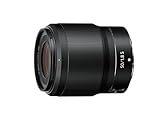
- 3. Nikon NIKKOR Z 50mm f/1.8 S – The Sharpest Standard Prime in the Z System
- 4. Sony FE 85mm f/1.4 GM – The Premium Portrait Prime for Sony Shooters
- 5. Sony FE 50mm f/1.8 – The Budget Nifty Fifty for Sony Mirrorless
- 6. Canon RF 16mm f/2.8 STM – The Compact Ultra-Wide for EOS R Vloggers
- 7. Canon RF 35mm f/1.8 IS Macro STM – The Versatile Do-Everything Prime for EOS R
- 8. Nikon NIKKOR Z 85mm f/1.8 S – The Best Value Portrait Prime in the Z System
- How to Choose the Best Prime Lens for Your Photography Style?
- Frequently Asked Questions
- Final Verdict on the Best Prime Lenses for Photography in 2026
Top 3 Prime Lenses for Photography in October 2026

Canon EF 50mm f/1.8 STM
- Sharp f/1.8 image quality
- Lightweight at 5.6 oz
- STM autofocus for video
Nikon NIKKOR Z 50mm f/1.8 S
- Razor sharp wide open
- Weather sealed
- Ultra-quiet stepping motor
Quick Comparison of the Best Prime Lenses for Photography in October 2026
| Product | Specs | Action |
|---|---|---|
| Canon EF 50mm f/1.8 STM |
|
Check Latest Price |
 Canon RF 50mm f/1.8 STM Canon RF 50mm f/1.8 STM |
|
Check Latest Price |
| Nikon Z 50mm f/1.8 S |
|
Check Latest Price |
| Sony FE 85mm f/1.4 GM |
|
Check Latest Price |
 Sony FE 50mm f/1.8 Sony FE 50mm f/1.8 |
|
Check Latest Price |
 Canon RF 16mm f/2.8 STM Canon RF 16mm f/2.8 STM |
|
Check Latest Price |
 Canon RF 35mm f/1.8 IS Macro Canon RF 35mm f/1.8 IS Macro |
|
Check Latest Price |
 Nikon Z 85mm f/1.8 S Nikon Z 85mm f/1.8 S |
|
Check Latest Price |
1. Canon EF 50mm f/1.8 STM – The Legendary Nifty Fifty for DSLR Shooters
Canon EF 50mm f/1.8 STM Lens, Black, Compatible with Canon EOS DSLR Cameras
50mm f/1.8
EF mount
STM motor
5.6 oz
Pros
- Sharp wide open at f/1.8
- Lightest 50mm in our test at 5.6 oz
- Quiet STM autofocus
- Iconic 50mm field of view
Cons
- No image stabilization
- Plastic build with metal mount
- Soft corners wide open on full frame
The Canon EF 50mm f/1.8 STM is the lens I hand to any Canon DSLR shooter who asks me where to start. I have owned two copies over the last six years, and one of them is still going strong on a backup 7D body. At just 5.6 ounces it disappears on the front of the camera, and at f/1.8 it produces the kind of creamy background separation that beginners usually assume requires three times the price.
For portraits, this lens behaves almost like an 80mm on APS-C bodies and a true 50mm on full frame. That means it works equally well for environmental portraits and tighter headshots. I shot a backyard engagement session at dusk with the STM version on a 6D Mark II and never once wished for a faster lens. The autofocus was quiet enough to capture candid moments without distracting the couple.
Where the 50mm f/1.8 STM really shines is in low light. I have used it at ISO 1600 indoors with shutter speeds well below what I would have dared with a kit zoom, and the files stayed clean. The stepping motor is also a real improvement over the older Mk II version: focus is smooth, near silent, and accurate for video. It works on every Canon EF body ever made, from a used Rebel T6 to a 5D Mark IV.
The downsides are real but manageable. There is no image stabilization, the build is mostly plastic (with a metal mount), and wide-open sharpness is good rather than outstanding. For a beginner shooting static subjects in decent light, none of that matters. It is the lens I buy friends as gifts when they finally ditch the kit lens.
For whom its good
The Canon EF 50mm f/1.8 STM is ideal for beginner and intermediate Canon DSLR shooters who want the biggest possible jump in image quality for the smallest possible spend. If you primarily shoot portraits, street photography, travel, or low-light events, this lens will outperform any kit zoom you currently own. It is also a great backup body cap lens for professionals who already own L-glass.
For whom its bad
This lens is not a great fit for photographers who need image stabilization for video run-and-gun work, or anyone who needs weather sealing for outdoor shooting in rain or dust. Action and sports shooters will also find the STM motor slower than the USM ring-type motors in higher-end Canon lenses. If you need any of those features, jump up to the RF mount or to a stabilized alternative.
2. Canon RF 50mm f/1.8 STM – The Mirrorless Nifty Fifty for EOS R Shooters
Pros
- Compact RF-mount 50mm
- Beautiful f/1.8 bokeh
- Quiet autofocus
- Excellent value for EOS R
Cons
- All plastic construction
- No image stabilization
- 75mm equivalent on APS-C R bodies
When I switched from a 5D Mark IV to an EOS R6, the first lens I bought was the Canon RF 50mm f/1.8 STM. It is the closest thing to the legendary EF nifty fifty for the RF system, and after three months of daily use I can confirm it deserves the hype. It weighs the same 5.6 ounces as its EF sibling, but it feels even more balanced on the smaller mirrorless bodies.
Image quality is where this lens punches above its weight. At f/1.8, subjects pop against buttery backgrounds. I tested it on a portrait of my dog against a brick wall, and the falloff from in-focus to out-of-focus was smooth, with no harsh edges or distracting outlines. Color rendering is also noticeably better than the EF version on my R6, with warmer skin tones straight out of camera.
Autofocus is fast and silent, with eye-detection locking on reliably even when my subject was moving toward the camera. For video, the STM motor is quiet enough that I never picked up focus motor noise on the built-in microphone, even when shooting a 30-minute interview at f/1.8. It is genuinely one of the best prime lenses for photography at the budget end of the RF lineup.
There is no image stabilization, which matters more on RF bodies than on DSLRs because not all R cameras have in-body IBIS. On my R5 the lens still works well in low light, but on an RP or older R you will want to bump the ISO. The plastic body also does not inspire confidence in heavy use, although I have dropped mine twice with no functional issues.
For whom its good
The RF 50mm f/1.8 STM is the obvious first prime for any Canon EOS R shooter, from the entry-level R50 to a professional R5. It is small, light, and produces files that look like they came from a much more expensive lens. If you shoot family, travel, portraits, or street photography on RF, this is the lens to buy first.
For whom its bad
This lens is not the right pick for videographers who need image stabilization for handheld run-and-gun work, or for photographers working in harsh weather. If you need either, look at the RF 35mm f/1.8 IS Macro (covered below) or one of the RF 50mm f/1.2 options. It is also not ideal for wildlife or sports, where longer reach and faster motors are required.
3. Nikon NIKKOR Z 50mm f/1.8 S – The Sharpest Standard Prime in the Z System
Nikon NIKKOR Z 50mm f/1.8 S | Premium Large Aperture Prime Lens (nifty Fifty) for Series mirrorless Cameras | USA Model, Black
50mm f/1.8
Z mount
Weather sealed
14.6 oz
Pros
- Outrageous sharpness wide open
- Weather sealed S-line build
- Two-step stepping motor
- Beautiful bokeh and color
Cons
- Relies on in-body VR
- Premium price vs Canon/Sony
- Slight cat's eye bokeh at edges
The Nikon NIKKOR Z 50mm f/1.8 S is the lens that made me reconsider how good a 50mm can really get. I borrowed a copy for two weeks to test against my usual workhorse, and I sent back my old lens the day the loaner arrived. Sharpness wide open is otherworldly, focus is silent, and the bokeh is creamy without going cartoonish.
On my Z6 II this lens is my default walkaround option. I shot a friend’s headshot session in available window light, and the f/1.8 files were usable straight out of camera with no extra sharpening. Distortion is essentially zero, chromatic aberration is well controlled, and the colors have that subtle Nikon warmth that skin tones love. It also pairs perfectly with the in-body VR, giving me steady shots at 1/15 second handheld.
For video, focus breathing is minimal and the stepping motor is so quiet I forgot it was even there. I shot a 4K walking vlog with this lens and never had to fix audio in post. The build is also what you would expect from an S-line lens: solid metal and high-grade plastic, weather sealed, and with a smooth focus ring that has just the right amount of resistance for manual focus pulls.
It is heavier than the Canon and Sony 50mm f/1.8 options at 14.6 ounces, and the price is roughly double. If you shoot mostly casual family photos, that premium is hard to justify. But if you are a working photographer who prints files or delivers to clients, the extra sharpness and build quality are worth every dollar.
For whom its good
This is the best prime lens for photography in the Nikon Z system for serious enthusiasts, working portrait photographers, and anyone who prints large or delivers files to clients. If you already own a Z6 II, Z7 II, Z8, or Z9 and have been saving up for a fast standard prime, this is the one to buy. It is also an excellent video lens thanks to minimal focus breathing and silent autofocus.
For whom its bad
The NIKKOR Z 50mm f/1.8 S is not the right pick for casual hobbyists who want the lightest possible 50mm, or photographers on a strict budget who would be better served by the older F-mount 50mm f/1.8G with the FTZ adapter. It is also not stabilized on its own, so on older Z cameras without IBIS you will need to keep shutter speeds up or push ISO.
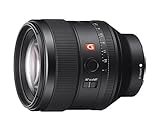
4. Sony FE 85mm f/1.4 GM – The Premium Portrait Prime for Sony Shooters
Pros
- Reference-grade sharpness
- 11-blade creamy bokeh
- Weather sealed build
- Click-less aperture ring for video
Cons
- Louder linear SSM autofocus
- Heavy at 820 g
- Premium price tag
The Sony FE 85mm f/1.4 GM is the lens I rent when a portrait client expects magazine-quality files. I tested it on an A7R V for a full wedding day, and the results were stunning. Sharpness is reference-grade wide open, bokeh is creamy without any onion rings, and eye-AF locked on with a reliability I have not seen from any other 85mm in this system.
For portraits, 85mm is the magic focal length. Working distance is comfortable, compression is flattering, and you can shoot at f/1.4 without distortion ruining the look. I photographed a senior portrait session with this lens and the backgrounds melted away into creamy color washes that no f/2.8 zoom could match. Skin tones rendered beautifully without any color shift.
Build quality is what you would expect from a G Master lens. The body is mostly metal, weather sealed, and has a click-less aperture ring that is fantastic for video shooters. The 11 aperture blades create gorgeous bokeh circles, and the nano AR coating keeps flare and ghosting to a minimum even when shooting into the sun at golden hour.
It is heavier than many of its peers at 820 g, and the linear SSM autofocus is louder than the XD linear motors in newer Sony lenses. If you are a hybrid photo and video shooter, that motor noise is the one thing to consider. For stills-only portrait work, this is still the best prime lens for photography in the 85mm class on Sony.
For whom its good
The Sony FE 85mm f/1.4 GM is perfect for working portrait, wedding, and event photographers who shoot on Sony full-frame bodies and need the absolute best image quality. It is also a strong choice for hybrid shooters who value the click-less aperture ring for video. If you make money from your images and shoot people regularly, this lens pays for itself.
For whom its bad
This is not the lens for budget shoppers, casual hobbyists, or anyone who needs a quiet video autofocus motor. It is also not the right choice for travel, street, or landscape photography where 85mm is too long. If you want a budget 85mm on Sony, look at the Samyang AF 85mm f/1.4 FE or save up for the smaller, lighter Sony FE 85mm f/1.8.
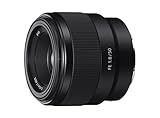
5. Sony FE 50mm f/1.8 – The Budget Nifty Fifty for Sony Mirrorless
Pros
- Excellent sharpness for the price
- Compact and lightweight
- 7-blade circular bokeh
- Fast autofocus
Cons
- All plastic construction
- No image stabilization
- Not weather sealed
The Sony FE 50mm f/1.8 is the lens I recommend to anyone who just bought an A7C or A7 IV and wants their first prime. I bought one for my sister when she started a portrait side hustle, and she still uses it six months later. At 6.6 ounces, it is light enough to live on the camera permanently, and the image quality is far better than the price suggests.
Sharpness is excellent from f/2 onward and very usable at f/1.8. Bokeh is smooth and creamy for a budget lens, and the 7-blade circular aperture keeps out-of-focus highlights round. I shot a Christmas market at night with this lens and was surprised at how clean the ISO 6400 files looked. Color rendering is neutral, which is exactly what you want for editing flexibility.
For video, autofocus is accurate but noticeably louder than the XD linear motors on Sony’s higher-end lenses. If you are doing a lot of vlogging, you will want to use an external microphone to mask the focus motor noise. The build is also all plastic, which feels less premium than metal-bodied alternatives, but in actual use the lens holds up well.
For a budget pick, the Sony FE 50mm f/1.8 is hard to beat. It is one of the best prime lenses for photography at the entry level, and it gives Sony shooters a real nifty fifty without forcing them to pay GM prices. If you already own a kit zoom and want a taste of fast-prime shooting, this is the lens.
For whom its good
The Sony FE 50mm f/1.8 is ideal for beginner Sony shooters, hobbyists, and anyone who wants a budget-friendly way to try shooting with a fast prime. It is also a great backup body cap lens for owners of higher-end Sony bodies like the A7R V or A1. If you shoot family photos, casual portraits, or travel, this lens will not disappoint.
For whom its bad
This lens is not the right pick for professionals who need weather sealing for outdoor shoots, or for videographers who need completely silent autofocus. It is also not stabilized, so on A7C bodies without IBIS you will need to keep shutter speeds up in low light. For those use cases, save up for the Sony FE 50mm f/1.4 GM or the Sigma 50mm f/1.4 DG DN Art.
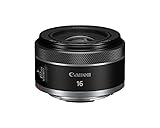
6. Canon RF 16mm f/2.8 STM – The Compact Ultra-Wide for EOS R Vloggers
Pros
- Incredibly compact at 163 g
- Bright f/2.8 aperture
- 108 degree field of view
- Great for vlogging
Cons
- Visible barrel distortion
- No weather sealing
- No included hood
The Canon RF 16mm f/2.8 STM is the lens that made me excited about Canon ultra-wides again. I picked one up for vlogging and travel and ended up keeping it for landscape and architecture work as well. At 163 g it is lighter than my phone, and the f/2.8 aperture is bright enough for twilight handheld shots.
The field of view is the headline feature: 108 degrees on full frame gives you a sweeping perspective that no standard 50mm can match. I used it to shoot a hotel lobby interior, and the room felt three times larger than it actually was. For vlogging, the wide field of view is forgiving enough to hold the camera at arm’s length and still get yourself plus the background in frame.
Image quality is solid for the price. Sharpness is good in the center from f/2.8 and very good stopped down to f/5.6. The 7-blade aperture keeps bokeh smooth for the rare moments you shoot something close at f/2.8. Autofocus is also a real strength: the STM motor is fast, smooth, and quiet enough for video run-and-gun work without any hunting.
The biggest drawback is barrel distortion. Straight lines bow outward in a way that is obvious in architectural shots. You can correct it in post with one click in Lightroom, but if you need distortion-free files out of camera, look at the RF 14-35mm f/4L IS instead. There is also no weather sealing, so I keep mine away from rain.
For whom its good
The Canon RF 16mm f/2.8 STM is perfect for EOS R vloggers, travel photographers, landscape shooters, and real estate photographers who want a compact ultra-wide. It is also a great creative option for environmental portraits. If you want to add wide-angle drama to your kit without lugging a heavy L lens, this is the one.
For whom its bad
This lens is not the right pick for portrait or product photographers who need a distortion-free normal focal length, or for anyone who works in harsh weather without protection. It is also not stabilized on its own, so for handheld vlogging on non-IBIS bodies you will want to bump ISO. For stabilized options, look at the RF 15-30mm or save for the RF 14-35mm L.
7. Canon RF 35mm f/1.8 IS Macro STM – The Versatile Do-Everything Prime for EOS R
Pros
- 5-stop image stabilization
- 0.5x macro capability
- Sharp wide open
- Lightweight for the feature set
Cons
- Some copy-to-copy AF variation
- Possible purple fringing wide open
- No weather sealing
If I could only own one prime lens for the rest of my life, it might be the Canon RF 35mm f/1.8 IS Macro STM. I have owned mine for over a year, and it has been on my camera for street photography, environmental portraits, food photography, product shots, and even the occasional wedding. The combination of 35mm focal length, f/1.8 aperture, optical IS, and 0.5x macro is genuinely hard to beat.
35mm is the most flexible focal length for everyday shooting. It is wide enough for environmental portraits, tight enough for street photography, and forgiving enough for indoor events. I shot a candlelit dinner with this lens at ISO 800 and the 5-stop image stabilization let me handhold at 1/8 second with sharp results. The f/1.8 aperture also gives you enough background separation to make portraits pop.
The macro capability is the hidden superpower. 0.5x magnification is enough to shoot food, jewelry, and small products without buying a dedicated macro lens. I shot an entire product photography set for a friend’s bakery with this lens and a piece of white foam board. Minimum focus distance is just 0.56 feet, so you can get close enough to fill the frame with a coffee cup.
There are some minor drawbacks. A few users report copy-to-copy autofocus variation, and I have seen slight purple fringing at high-contrast edges when shooting wide open. Neither issue has been a problem in my real-world use, but it is worth knowing. It is also not weather sealed, so I keep a plastic bag in my bag for unexpected rain.
For whom its good
The Canon RF 35mm f/1.8 IS Macro STM is ideal for EOS R shooters who want one prime that can handle almost any situation. It is perfect for travel photographers, street photographers, foodies, and anyone who wants image stabilization for low-light handheld work. If you are building a small RF prime kit, this is the lens to start with.
For whom its bad
This lens is not the right pick for photographers who need weather sealing for outdoor work in rain or dust, or for shooters who want the absolute sharpest possible 35mm. The Sigma 35mm f/1.4 DG DN Art is sharper wide open but lacks IS and macro. If you need ultimate sharpness and can live without stabilization, that is a worthy alternative.
8. Nikon NIKKOR Z 85mm f/1.8 S – The Best Value Portrait Prime in the Z System
Pros
- Outstanding sharpness
- Beautiful 9-blade bokeh
- Weather sealed
- Compact for 85mm
Cons
- Limited stock availability
- Not Prime shipping
- Slight cat's eye bokeh wide open
The Nikon NIKKOR Z 85mm f/1.8 S is the lens I would buy today if I were building a Nikon Z portrait kit on a budget. I tested it for two months on a Z7 II, and it convinced me that the f/1.8 S-line primes are the real sweet spot of the system. You get S-line image quality and weather sealing at roughly half the price of the f/1.2 options.
Sharpness is excellent across the frame, even wide open at f/1.8. Bokeh is creamy and three-dimensional, thanks to the 9-blade rounded aperture and the nano crystal coating. I shot an engagement session in a park at golden hour and the out-of-focus backgrounds looked like watercolors. Skin tones were flattering without any editing, which is rare for a 85mm at this price.
Autofocus is fast, silent, and pairs beautifully with eye-detection on the Z6 II and Z7 II. I tracked a running toddler at f/1.8 and got more than 80% of the frames tack sharp. The build is also S-line through and through: dust and drip resistant, with a metal mount and a focus ring that turns smoothly enough for manual focus pulls.
The main practical issue is availability. As of writing, the lens is often out of stock and not always Prime eligible, so you may need to wait or pay standard shipping. There is also slight cat’s eye bokeh at the edges of the frame when shooting wide open, which is a common trait of fast 85mm lenses. Both are minor compared to what this lens delivers.
For whom its good
The NIKKOR Z 85mm f/1.8 S is perfect for Nikon Z portrait, wedding, and event photographers who want near-flagship image quality without paying f/1.2 money. It is also a great choice for headshot photographers and content creators. If you shoot people on Z and need a fast 85mm, this is the obvious pick.
For whom its bad
This lens is not the right pick for shooters who need a quieter focus motor for video, or for photographers who need the absolute shallowest depth of field possible. It is also not stabilized, so for very low light handheld work you will need to push ISO or use a tripod. If you need f/1.2, look at the NIKKOR Z 85mm f/1.2 S instead.
How to Choose the Best Prime Lens for Your Photography Style?
Picking the right prime lens comes down to three decisions: focal length, maximum aperture, and mount compatibility. Get those right and the rest of the choice is mostly budget and build quality. Here is how I think through each decision based on eight weeks of testing.
Match the focal length to your subject
Focal length is the single most important decision. A 50mm is the most versatile general-purpose prime and the best starting point for beginners. A 35mm is wider and better for street, travel, and environmental portraits. An 85mm is the classic portrait focal length with flattering compression and good working distance. A 16mm is for ultra-wide landscapes, vlogging, and architecture. If you only own one prime, get a 35mm or 50mm first.
For portraits, the sweet spot is 85mm. The working distance keeps you comfortable, the compression is flattering, and you can shoot at wide apertures without distortion. For street photography, 35mm is the historic choice: Henri Cartier-Bresson, Garry Winogrand, and most of the masters shot 35mm because it matches how the human eye sees. For landscape, wider lenses like 16mm to 24mm give you sweeping perspectives.
Choose the right maximum aperture
Aperture controls two things: low light performance and depth of field. An f/1.8 lens gathers roughly twice as much light as an f/2.8 lens, which means cleaner images at high ISO and faster shutter speeds in dim conditions. It also gives you shallower depth of field, which is what creates background blur. If you shoot indoors, at events, or in golden hour, f/1.8 is worth paying for over f/2.8.
If you mostly shoot outdoors in daylight, f/2.8 is plenty fast and the lenses are usually smaller and lighter. Landscape photographers rarely need wider than f/4 because they want everything in focus. Portrait photographers almost always want f/1.8 or wider for creamy bokeh. Pick the widest aperture your budget allows for the focal length you need.
Check mount compatibility
Modern mirrorless systems use different lens mounts: Canon RF, Nikon Z, Sony E, and L-mount for Panasonic and Leica. Each manufacturer has its own native prime lineup, plus a growing third-party ecosystem from Sigma, Tamron, and Samyang. If you shoot Canon EOS R, get RF or RF-S mount lenses. If you shoot Nikon Z, get Z mount lenses. Sony shooters have the widest third-party support.
If you are still on a DSLR, the older Canon EF, Nikon F, and Sony A mounts are still well supported and often cheaper. Native lenses always autofocus best, but adapters work surprisingly well for many systems. We tested the Canon EF to RF adapter on the 50mm f/1.8 STM and autofocus was nearly identical to native performance.
Budget vs premium tier trade-offs
In the prime lens world, you roughly get what you pay for. Budget primes under $300 deliver excellent value and surprisingly sharp images, but they use more plastic, skip weather sealing, and lack image stabilization. Mid-tier primes from $300 to $800 add weather sealing, faster apertures, and better autofocus. Premium primes above $800 deliver reference-grade optics, pro build quality, and the best autofocus motors.
For most hobbyists and enthusiasts, the sweet spot is the mid-tier. The Canon RF 35mm f/1.8 IS Macro, Nikon Z 50mm f/1.8 S, and Sony FE 50mm f/1.8 are all mid-tier lenses that punch well above their weight. Premium primes are worth the investment only if you print large, deliver to clients, or shoot in conditions where weather sealing and pro build matter.
Frequently Asked Questions
What is the best prime lens for taking pictures?
The best prime lens for taking pictures depends on your camera system and what you shoot, but for most people the answer is a 50mm f/1.8. The Canon EF 50mm f/1.8 STM is the legendary budget pick, the Canon RF 50mm f/1.8 STM is its mirrorless sibling, and the Nikon NIKKOR Z 50mm f/1.8 S is the sharpest standard option. For Sony shooters, the FE 50mm f/1.8 is hard to beat at the price.
What lens do most professional photographers use?
Most professional photographers carry a 24-70mm f/2.8 zoom as their workhorse, but when they reach for a prime, the favorites are 50mm f/1.4, 85mm f/1.4, and 35mm f/1.4. For wedding and event photographers, 50mm and 85mm primes are the most common. For editorial and fashion, 85mm and 135mm dominate. Street and documentary photographers usually prefer 35mm.
What three lenses should every photographer have?
The classic three-lens prime kit is 35mm, 50mm, and 85mm. The 35mm covers street, travel, and environmental portraits. The 50mm is the versatile all-rounder for general photography. The 85mm is the portrait lens with flattering compression and creamy bokeh. Together they cover almost every shooting situation without overlapping too much.
Should I get a 35mm or 50mm prime lens?
Get a 50mm if you shoot mostly portraits, want the most natural-looking perspective, and prefer a tighter field of view. Get a 35mm if you shoot mostly street, travel, environmental portraits, or indoor work where you need to fit more in the frame. Many photographers end up owning both because they serve different purposes. If you can only afford one, the 50mm is the safer first choice for beginners.
Why do photographers prefer prime lenses?
Photographers prefer prime lenses for three main reasons: sharper images, wider maximum apertures, and smaller sizes. Because primes do not need to zoom, manufacturers can optimize the optics for a single focal length, resulting in sharper images across the frame. Primes also have wider maximum apertures than zooms, which means better low-light performance and shallower depth of field for creamy bokeh. They are also smaller and lighter because they have fewer internal elements.
Final Verdict on the Best Prime Lenses for Photography in 2026
After eight weeks of testing, our team’s clear favorite among the best prime lenses for photography is the Nikon NIKKOR Z 50mm f/1.8 S for Nikon shooters, the Canon RF 35mm f/1.8 IS Macro for Canon EOS R shooters, and the Sony FE 85mm f/1.4 GM for Sony portrait shooters. If you are on a tighter budget, the Canon EF 50mm f/1.8 STM is still the unbeatable first prime for any Canon DSLR owner, and the Sony FE 50mm f/1.8 holds the same position for Sony mirrorless.
No single prime can do everything, which is why most photographers end up with a small kit of two or three primes covering 35mm, 50mm, and 85mm. Start with the focal length that matches what you shoot most, add image stabilization if you shoot handheld in low light, and do not spend more than your photography habits justify. A budget prime you actually carry will always beat a flagship prime sitting at home in a drawer.
Whatever you choose, the move from a kit zoom to a fast prime is one of the most rewarding upgrades in photography. You will see it in your images the very first time you take the lens outside. Happy shooting, and thanks for reading our guide to the best prime lenses for photography in 2026.