

A trail camera sits on a tree beside a deer trail and photographs or records every buck that passes while you are forty miles away at home. That single function is why these cameras exist: they turn pattern into evidence, and they let you build a rut plan around where deer actually move rather than where you hope they move.
After logging owner reviews across eight models, this roundup of the best trail cameras for deer hunting covers every segment that matters, from a no-subscription card camera to a live-streaming cellular unit with a solar panel. We ranked these on the four axes hunters actually complain about: trigger speed, night detection, power draw in cold weather, and how often the unit lets you down mid-season.
One honesty note before we start. We did not bench-test these cameras in the woods, so every sensor range, trigger time and megapixel figure below is a manufacturer or listing claim, not an independent measurement. The reliability verdicts come from aggregated owner reviews and from recurring patterns in hunting forum threads, and we name the brand whenever a specific failure mode shows up again and again. The best outdoor security cameras roundup covers the fixed-mount side of the market if you also want eyes on the driveway.
Table of Contents
- Top 3 Picks for Deer Hunting in 2026
- Best Trail Cameras for Deer Hunting (October 2026)
- 1. WOSPORTS G600-4K – Best Overall Deer Trail Camera in 2026
- 2. Meidase P70 – Best Value Deer Trail Camera
- 3. Moultrie Edge 2 – Best for Cellular Scouting
- 4. GardePro E5S – Best Wide Detection Zone
- 5. GardePro A3S – Best for Low-Light Detail
- 6. SPYPOINT Flex-M – Best with a Free Cellular Plan
- 7. MAXDONE PH970S – Best Solar Without a Subscription
- 8. SEHMUA RBX-H10 – Best for Live Streaming a Feeder Camera
- How to Choose a Deer Trail Camera
- Where to Mount a Deer Camera
- Frequently Asked Questions
- What is the best trail camera for deer hunting?
- What is the best deer trail camera for the money?
- What’s the best cellular trail camera for the money?
- Are cellular trail cameras worth it?
- What is the best non-cellular trail camera on the market?
- Which brand of trail camera is the most reliable?
- What are some common SD card problems with trail cameras?
- Do deer avoid trail cameras?
- The Bottom Line
Top 3 Picks for Deer Hunting in 2026

WOSPORTS G600-4K
- 64MP stills with 4K video
- 0.2s trigger with 120-degree detection
- 32 no-glow 940nm IR LEDs
- 16GB card and mount included
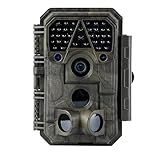
Meidase P70
- 64MP stills and 1296p video
- 0.1s trigger with side sensors
- 100ft no-glow night vision
- 2.4-inch color display

Moultrie Edge 2
- Multi-carrier 4G LTE
- 36MP photos and 1080p video
- 100ft detection with low-glow IR
- Game Plan maps in the app
Our best all-round trail camera for deer hunting is the WOSPORTS G600-4K, because it combines the deepest owner-review base in the group with a 120-degree detection cone and a memory card already in the box. The Meidase P70 is the pick when you want the fastest trigger on a card camera and care more about night clarity than about video resolution.
Best Trail Cameras for Deer Hunting (October 2026)
| Product | Specs | Action |
|---|---|---|
| WOSPORTS G600-4K |
|
Check Latest Price |
| Meidase P70 |
|
Check Latest Price |
| Moultrie Edge 2 |
|
Check Latest Price |
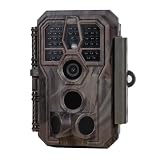 GardePro E5S GardePro E5S |
|
Check Latest Price |
 GardePro A3S GardePro A3S |
|
Check Latest Price |
 SPYPOINT Flex-M SPYPOINT Flex-M |
|
Check Latest Price |
 MAXDONE PH970S MAXDONE PH970S |
|
Check Latest Price |
 SEHMUA RBX-H10 SEHMUA RBX-H10 |
|
Check Latest Price |
1. WOSPORTS G600-4K – Best Overall Deer Trail Camera in 2026
WOSPORTS Trail Camera(Non-Cellular Non-WiFi) 64MP 4K 0.2S Trigger Motion Activated,Game Camera with No-Glow Night Vision 2.0”LCD 120°Wide for Outdoor Scouting Wildlife Monitoring Home Security
64MP stills and 4K video
0.2s trigger, 120-degree detection
32 no-glow 940nm IR LEDs
16GB card and wall mount in the box
Pros
- Adjustable 5MP to 64MP stills plus 4K video
- 0.2s trigger with 120-degree wide detection and 1-3 shot burst
- 32 invisible 940nm IR LEDs for no-glow night vision
- 2-inch color LCD for preview without pulling the card
- Comes with a 16GB card strap USB cable and wall mount
Cons
- 8 AA batteries not included
- AVI video container is less universal than MP4
- No WiFi or cellular for remote viewing
The G600-4K is the one I keep coming back to after reading thousands of owner comments on card-based cameras. Its review base is deeper than anything else in this roundup, and that matters more than it sounds: when a number of owners describe the same behaviour, you can plan around it, and the recurring verdict here is reliable motion detection across a 120-degree field with adjustable still resolution from 5MP up to 64MP.
What sells it for deer work is the combination of a 0.2-second trigger and a 2-inch color screen. You can walk up, frame the lens, and check the last few shots without removing the memory card, which saves a second trip to the truck when you are not sure the camera is pointed at the right funnel. The 32 IR LEDs run at 940nm, so there is no visible red glow to give your position away.
Its 4K video sits above the 1296p and 1080p used by most cameras in this group, and the 1-to-3 shot burst helps when a pair of does crosses together. Owners also point out the box contents as a small quality-of-life win: a 16GB card, a nylon strap, a USB-C cable and a wall mount with screws all come in the box, which is not true of several rivals here.
There are real compromises. It records to AVI rather than MP4, so older editing software may stumble on files, and the push-button interface with manual focus is dated compared with app-driven models. It is also a card camera, so seeing anything means a physical visit to the tree.
Why this is the best trail camera for deer hunting right now
A buck at a 20-yard stringer crossing is moving fast and at an angle, which is the exact situation where a marginal trigger loses the shot. At 0.2 seconds with a wide detection cone, the G600-4K holds the frame on moving deer far more often than the slower units, and the burst mode catches the follow-up pose.
For anyone who runs cameras on a lease, a food plot or a back corner, it also removes the two things that generate returns: a subscription and a separate memory card purchase. Owners running it alongside premium cellular units describe it as the low-cost camera that covers the secondary trails, which is exactly how a mixed fleet is supposed to work.
Where it is the wrong choice
If your land is more than a short walk from the truck and you want to know about movement the same day, a card camera makes you plan around your own schedule. The same goes for anyone who needs a live view of a feeder camera during daylight hours or video clips suitable for sharing.
Night capture is a claimed 80 feet, shorter than the 100-foot figures on the GardePro units, and reviewers mention the shutter dragging in low light. If your treeline is deep and dark, the GardePro A3S with its Sony Starvis sensor is the stronger night performer.
2. Meidase P70 – Best Value Deer Trail Camera
Meidase P70 (Non-Cellular,Non-WiFi) Trail Camera, 64MP 1296p, Game Cameras with No-Glow IR Night Vision, Motion Activated, Waterproof for Wildlife Deer Cams, Hunting
64MP stills and 1296p video
0.1s trigger with side sensors
100ft no-glow 940nm IR
2.4-inch color display
Pros
- 64MP photos and 1296p video through an f/1.6 lens
- 0.1s trigger with side sensors for fast-moving deer
- 100ft no-glow 940nm night vision
- 2.4-inch color display for on-site review
- Solar-ready with the SP350 panel sold separately
Cons
- SD card and 8 AA batteries not included
- Night shutter speed slow for action
- Video trigger depth limited at night
The P70 ties for the fastest trigger in this roundup, and for deer that is the spec that matters most. At 0.1 seconds with side-mounted sensors that watch the flanks, it captures animals entering from the edge of the detection zone rather than only those walking straight down the middle of the trail.
Image quality punches above its weight. Owners comparing it to cameras from well-known premium brands report sharp daytime stills and genuinely usable night photos, and the f/1.6 lens plus 36 IR LEDs deliver a claimed 100 feet of no-glow illumination. The on-camera color screen is the largest in the group at 2.4 inches, which makes setup fast.
Several buyers run multiple P70s alongside premium units and describe it as the camera they trust most for daytime deer work. Wide customization of sensitivity, time-lapse and burst settings lets you tune it for a busy feeder versus a quiet crossing, and H.264 compression keeps file sizes manageable on a 512GB card.
The tradeoffs are budget realities. No SD card and no batteries are included, so the first trip out requires a hardware run. The night shutter also slows down, and owners put usable video-trigger depth at roughly 15 feet, so treat night clips as confirmation shots rather than the main event.
Where the P70 earns its slot
This is the camera to buy when you are covering a wide network of trails and feeders that you visit regularly. Battery draw is low, the enclosure is IP66, and the operating cost over a season is a card and a set of lithium cells.
It is also the pick if you want to add solar later, since the SP350 panel mounts to the same body, and that panel is a separate purchase.
Where it falls short
Owners do report motion sensor trouble after extended use on some units, which matters on a camera left out for a full season. If you cannot check on it until the end of the hunt, that uncertainty is worth factoring in.
It is also strictly a card camera with no wireless option, so it does nothing for you during the rut when you want same-day confirmation that a buck is still showing.
3. Moultrie Edge 2 – Best for Cellular Scouting
Moultrie Edge 2 Cellular Trail Camera 2-Pack – 36MP, Low-Glow Flash
Multi-carrier 4G LTE
36MP stills and 1080p video
100ft detection, low-glow IR
8GB internal memory plus cloud
Pros
- Auto Connect multi-carrier 4G LTE across major US networks
- 36MP photos and 1080p HD video with audio
- 100-foot detection range with low-glow infrared flash
- Game Plan maps and activity charting in the Moultrie Mobile app
- 8GB internal memory plus cloud storage
Cons
- Battery drains faster than rival cellular cameras in cold weather
- Condensation and lens fogging reported after sundown
- Ongoing data subscription required
The Edge 2 is the cellular option I recommend when the property is a real drive rather than a walk. Auto Connect multi-carrier LTE picks whichever major network is strongest at the site, which removes the single most common cellular complaint, that a camera silently stops uploading because it locked onto a weak carrier.
The app is the differentiator here. Game Plan puts your cameras on a map, charts activity by time of day, and shows where movement is clustering across a whole property rather than one tree. Owners upgrading from card cameras cite the on-phone sharpness and the straightforward setup as the reason they stopped walking in.
Image output is 36MP stills and 1080p video with audio, and the low-glow infrared flash covers a claimed 100 feet at a 50-degree viewing angle. That narrower cone compared with the 120-degree units is a deliberate choice that reduces empty frames from roadside traffic, which is a real problem on a public-land edge.
The costs are the standard cellular ones. A paid data plan is required after activation, and cold weather drains the batteries faster than the card cameras in this group. Reviewers also mention condensation inside the battery compartment and lens fogging shortly after sundown, both worth checking during the first week.
Why it beats the other cellular options here
Compared with the other cellular units in this roundup, the Edge 2 pairs the broadest app feature set with one of the deepest owner-review bases. Several owners running a cell camera across a full season report it holding up year after year once the plan is active.
Multi-carrier selection also means a camera on marginal land still uploads something, and 8GB of internal memory means you can retrieve images over USB even if the signal drops mid-season.
Where it disappoints
A minority of owners report motion detection degrading within a few weeks, where a buck walks through the zone and no file appears. If you depend on one camera for your whole rut plan, test it early and often rather than trusting it from day one.
The 50-degree cone is also narrower than most card cameras here, so it needs careful aiming at a specific trail or feeder, and multi-camera subscription discounts are limited when you scale to four or more units.
4. GardePro E5S – Best Wide Detection Zone
GardePro E5S Non-Cellular Trail Camera, 64MP Photo & 1296P HD Video
64MP stills and 1296p video
0.1s trigger from 3 PIR sensors
120-degree field of view
IP66 with 1/4-20 thread
Pros
- 64MP photos and 1296p video through an optical lens
- 0.1s trigger from three PIR sensors
- 120-degree field of view
- Non-cellular low-power design stretches battery life
- IP66 body with a standard 1/4-20 mounting thread
Cons
- SD card and 8 AA batteries not included
- High sensitivity can record empty frames from wind
- No wireless connectivity for remote viewing
The E5S covers the most ground per camera. A 120-degree field of view plus three PIR sensors means a single unit can watch a crossing, a feeder and part of the approach, which reduces how many cameras you need across a food plot and how many trees you have to climb.
Trigger speed is 0.1 seconds, and image claims are 64MP stills with 1296P video through an optical lens. Owners consistently compare the photo quality favorably to cameras from premium-priced brands, and the no-glow 100-foot night illumination keeps the flash invisible to wary does.
Power draw is the quiet advantage. With no cellular radio cycling all night, the E5S runs long stretches on lithium cells, and the on/off switch with a five-minute startup delay means setup photos never waste card space after you swap it in.
The wide cone is also the weakness. High sensitivity plus a broad field means wind-blown branches, road traffic and livestock can fill a card with empty frames in a single day, and some units report weak night-time detection. There is no wireless option at all, so every check is a walk-in.
Where the wide zone pays off
If you are covering a crossroads or a plot where deer approach from several directions, one wide camera often replaces two narrow ones, and the 1/4-20 thread mounts to almost any bracket or pole. The three-sensor layout also catches animals entering from the side rather than head-on.
Hunting forum threads repeatedly single out GardePro as inexpensive and stronger than several premium-priced brands, and the E5S is where that reputation shows up most clearly on image quality.
Where it falls short
Over-triggering is the main complaint. Without an app, you cannot review frames remotely and filter them, so blank captures directly eat card space and battery.
Some units also report video mode adding audible crackling from the microphone, and if you need a real-time view of a feeder, this camera simply cannot provide one.
5. GardePro A3S – Best for Low-Light Detail
GardePro A3S Non-Cellular Trail Camera, 1296P HD Video with Sound
Sony Starvis sensor
64MP stills and 1296p video with sound
0.1s trigger, 120-degree PIR angle
940nm no-glow IR to 100ft
Pros
- Sony Starvis sensor for strong low-light imaging
- 64MP photos and 1296P video with sound
- 0.1s trigger with 120-degree PIR angle and 5-shot bursts
- Invisible 940nm no-glow night vision to 100 feet
- Motion
- time-lapse and hybrid modes with loop recording
- Supports cards up to 512GB
Cons
- 8 AA batteries and SD card not included
- Push-button controls feel dated
- Only a 2.31-inch screen for playback
The A3S is the camera to pick when your deer move in the dark. Its Sony Starvis sensor is the genuine hardware advantage in this roundup, and owners consistently report cleaner night images and better usable flash range than the interpolated megapixel claims on cheaper units suggest.
Everything else here is well suited to patterning. A 0.1-second trigger, a 120-degree PIR angle, five-shot bursts, invisible 940nm illumination to a claimed 100 feet, and video with sound so you can log which direction a buck came from and when.
Storage is generous for a card camera, with support up to 512GB and loop recording so a full card rolls into new files instead of stopping. Motion, time-lapse and hybrid modes let you cover a food plot with a wide time-lapse between dawn and dusk, then switch to motion sensitivity for the hours deer actually move.
The frustration is the interface. Push-button controls and a 2.31-inch screen feel old next to anything app-driven, and there is no wireless connectivity, so reviewing a season of footage means sitting with the camera or pulling the card to a computer.
Why the sensor matters more than the megapixel number
Two cameras in this group can both print 64MP and produce very different night frames, because megapixel is an output figure rather than a measure of how much light the sensor gathers. The Starvis sensor in the A3S is the reason its night photos hold detail where the others wash out.
For buck patterning after dark, that is the difference between identifying a buck by rack and antler detail and getting a grey shape. It is the single strongest reason to pick this model.
Where it falls short
Its review base is deep, but not the deepest here, and the pattern in the reviews is consistency rather than excitement. Buyers like the dependability and dislike the dated controls.
Batteries and a card are not included, and with no app there is no way to check remotely whether the camera is still running during the middle of a three-week trip.
6. SPYPOINT Flex-M – Best with a Free Cellular Plan
SPYPOINT Flex-M and SD Card Pack – Cellular Trail Cameras |Best Value in Hunting Accessories |No WiFi Needed & GPS-Enabled |Hunting Night Vision | IP65 Waterproof |28MP Photos, 720p Videos
Free plan of up to 100 photos monthly
28MP stills and 720p video
Dual preactivated SIMs, cross-carrier
Comes with a 32GB microSD
Pros
- Free photo transmission plan of up to 100 photos per month
- Dual preactivated SIMs with automatic network selection
- Signal holds in remote woods where phones struggle
- BUCK TRACKER AI species filtering in the SPYPOINT app
- Photo
- video
- time-lapse and Constant Capture modes
- 32GB microSD card included in the pack
Cons
- 720p video is lower resolution than rival cellular cameras
- Image quality drops off beyond about 20 feet
- Default settings can exhaust the free monthly allowance
The Flex-M starter pack is the most direct route into cellular scouting without a plan. It comes with a 32GB card and two preactivated SIMs, and the free allowance covers up to 100 photos a month, which is enough for a low-traffic feeder camera if you tune the check-in settings down.
Cross-carrier selection is the feature owners care about most. Hunters running this on remote land report that the signal holds in woods where their own phones barely register, which is the practical difference between a cellular camera that works and one that does not.
The app adds BUCK TRACKER AI species filtering plus maps and weather, so you can sort out does and turkeys from bucks without pulling every thumbnail. Constant Capture sends and records at the same time, and photo, video, time-lapse and time-lapse-plus modes cover most hunting setups.
Image quality is the limitation. At 28MP and 720p video, this is the lowest-resolution camera here, and owners report noticeable degradation past about 20 feet, so it works best on a close feeder or trail rather than a long open funnel. Default settings can also burn the free allowance quickly.
Who this camera suits
Put it on the feeder you cannot reach often and treat it as an early-warning system rather than a trophy-photo machine. When the app tells you a buck showed at dawn, you adjust your timing, and the resolution stops mattering.
For anyone who wants cellular without a recurring bill, this is the least risky entry point in the roundup, and owners running it through a full season report the connection holding up.
Where it falls short
A minority of owners report defective units needing replacement, and the bundled mounting strap is reported to degrade quickly outdoors, so plan on your own strap and a proper bungee or lock.
At 720p you also cannot crop into a distant buck for identification, and once you exceed the free allowance the paid tiers add a recurring bill without improving the picture quality.
7. MAXDONE PH970S – Best Solar Without a Subscription
MAXDONE Solar Trail Camera WiFi Bluetooth, 4K 64MP Night Vision Game Camera
Integrated solar with 6000mAh battery
64MP stills and 4K video
0.1s trigger, 100-degree angle
65ft low-glow IR
Pros
- Built-in 6000mAh rechargeable battery with integrated solar panel
- Free app with no subscription for viewing and sharing
- 64MP photos and 4K video with 65ft low-glow night vision
- 0.1s trigger with 100-degree detection angle and 5-shot burst
- Compact body mounts almost anywhere including with velcro
- 32GB card pre-installed
Cons
- WiFi is a self-generated hotspot
- not home WiFi
- Phone must be within roughly 55 feet to connect
- App pairing is slow and VPNs can block it
The PH970S solves the two problems that slow most hunters down: dead batteries and subscription fatigue. The solar panel and 6000mAh rechargeable cell are built into the body, so there are no AA swaps in November and no monthly bill, and owners point to that as the main reason they bought it.
It also records 64MP stills and 4K video with a 0.1-second trigger, a five-shot burst, and low-glow infrared out to a claimed 65 feet. The app is free and handles viewing, downloading, time-lapse, loop recording, password protection and a programmable detection zone.
The most important thing to understand before buying is the WiFi. The camera creates its own hotspot and does not join your home network, and your phone has to be within roughly 55 feet, so this is a phone-at-the-tree tool rather than remote scouting.
That single limitation defines the purchase. If you want a solar camera that runs all winter with no plan and no battery carrying, it is a strong fit. If you want to check a remote lease from the couch, it is the wrong camera entirely.
Why solar changes the ownership rhythm
Card cameras on lithium cells need a battery visit every few weeks in cold weather, and that visit is often the only time you look at the camera. A unit that holds its own charge changes when you show up, and in practice hunters report running it much longer between checks.
The 32GB card is pre-installed and expandable to 256GB, and loop recording keeps the newest footage when the card fills, which matters for a camera left alone through a whole season.
Where it falls short
Night range is the shortest claim in the group at 65 feet, and the low-glow flash is not the invisible 940nm type used by the WOSPORTS and GardePro units, so it is worth testing before committing on a pressured treeline.
App connection is also slow, and a VPN on your phone can block the first pairing attempt. The power switch and card slot sit on the underside, which is awkward on a tripod mount.
8. SEHMUA RBX-H10 – Best for Live Streaming a Feeder Camera
SEHMUA Trail Camera, 2K HD Live Streaming Game Camera AI Animal Detection
2K HD live stream over cellular
4W solar panel with 7800mAh battery
0.2s trigger, adjustable PIR
850nm low-glow IR to 82ft
Pros
- 2K HD live streaming with phone remote access through the Ucon app
- 4G LTE with a built-in prepaid SIM and 7-day unlimited data trial
- Works across Verizon
- T-Mobile and AT&T networks
- 4W solar panel with a 7800mAh battery
- 0.2s trigger with adjustable PIR sensitivity
- 120-degree field of view with two-way audio
Cons
- Ongoing data subscription required after the trial
- SIM is non-detachable and US-only
- Cloud storage and AI species ID need a subscription
The RBX-H10 is the only camera here with true live streaming, and for a feeder or a cabin approach that is a genuine advantage. You open the app and see the scene, which is the closest thing to sitting in a blind without leaving the couch.
Power is handled by a 4W solar panel and a 7800mAh battery, so the runtime is not tied to AA swaps. The unit works across Verizon, T-Mobile and AT&T, includes a prepaid SIM and a seven-day unlimited data trial, and the 120-degree field with 850nm low-glow illumination covers a claimed 82 feet.
AI species recognition and a seven-day activity prediction sit in the app, though both require a subscription to use. The two-way audio is a nice touch for checking a blind or a feeder without walking in and adding your scent to the approach.
Cost is the decisive factor. Once the trial ends, the per-camera data plan is the most expensive of the cellular options here, and cloud storage plus the AI features are gated behind that plan as well. Recorded video is only 1080p even though the live stream is 2K, and no memory card is included.
Who should pay for the live view
The case for this camera is a property with a feeder you want to watch without making the drive, or a blind you want to confirm is clear before you walk in at dawn. In those situations the live stream saves real time each week over a season.
It also suits anyone who wants multiple carriers supported from one unit rather than managing a specific network. The seven-day trial lets you test coverage at the exact site before committing.
Where it falls short
The subscription is the reason most hunters pass. Several owners describe the post-trial cost as the single biggest disappointment in an otherwise capable camera, and the non-detachable SIM means no cross-regional use.
On a marginal-coverage property, a live stream that buffers or drops is worse than a photo that arrives late, so test the signal at the tree before you mount anything. Our buying guide covers how to run that test.
How to Choose a Deer Trail Camera
Trigger speed matters more than resolution. Owners across hunting forums describe sharp photos of an empty trail as the number one disappointment, and that failure is almost always a slow trigger or a badly aimed detection zone, not a weak sensor.
Next, match the detection cone to the site. The wide 120-degree units such as the WOSPORTS G600-4K and the GardePro E5S cover a crossing in one placement but will record the road behind it, while the 50-degree Moultrie Edge 2 needs precise aiming. A narrower cone aimed at a funnel beats a wide cone pointed at a corridor.
No-glow versus low-glow infrared is the next decision. 940nm illumination is invisible to deer and to people, which is why the WOSPORTS G600-4K, the Meidase P70, the GardePro E5S and the GardePro A3S use it. 850nm low-glow flashes are slightly cheaper and can throw light a little further, but a red glow on a dark timber night is a tell.
Cellular versus non-cellular comes down to how far you are from the tree. Are cellular trail cameras worth it? If the property is a drive rather than a walk, yes, because checking a card camera puts your scent and noise on the exact ground you are trying to pattern. If you are already at your feeder twice a week, a card camera does the same job with no subscription attached.
Test coverage at the exact mount site, not at the property entrance or your house. Timber kills signal far more than open fields, and antenna position matters. Place a phone on the spot at the height you intend to mount, check signal strength there, and rotate the camera a few degrees until it reports a strong reading.
Storage is the most common self-inflicted problem. Format cards as FAT32 rather than exFAT where a camera refuses to configure, use a high-endurance card, and size it to the trigger volume. A camera at a busy feeder in video mode fills a card far faster than one on a quiet crossing, so rotate cards weekly on heavy sites and keep a spare in the truck.
Expect several seasons of service from a body in normal hunting use, and keep the spare batteries, a spare card and the mounting strap with the camera. Anti-theft matters more on accessed or public land, and note that an external solar panel is a visible target, which argues for an integrated panel such as the one on the MAXDONE PH970S. For coverage of the rest of your property, our smart garage camera picks cover fixed indoor and driveway viewing.
Where to Mount a Deer Camera
Deer generally do not avoid cameras the way some hunters claim, but they do notice movement, reflections and anything at eye level. Mounting around 4 to 5 feet keeps the lens above a whitetail’s line of sight and reduces the chance a curious buck investigates the box itself.
Avoid pointing the lens at the rising or setting sun. Glare ruins both stills and video, and it is one of the most common reasons a night image comes back unusable. Choose a north-facing position in open timber, and keep the strap on a tree rather than a wire fence where a walking deer can rattle it.
Walk-test the zone after mounting. Trigger it by hand at the edges of the frame, then move low and slow across the frame the way a buck would, and check that you get a photo or clip rather than an empty frame. Sensitivity settings usually need to come down from the factory default on a feeder site.
Finally, take a spare card, spare cells, a strap and a small screwdriver with you on the first visit, then leave the camera alone. A camera that is constantly adjusted produces a contact sheet of deer backs instead of a usable pattern.
Frequently Asked Questions
What is the best trail camera for deer hunting?
The WOSPORTS G600-4K is our best all-round pick for deer hunting, with a 0.2-second trigger, a 120-degree detection cone and the deepest owner-review base in this group. The GardePro A3S is the stronger choice when your deer move after dark, and the Moultrie Edge 2 is the pick when the property is a drive rather than a walk.
What is the best deer trail camera for the money?
The Meidase P70 pairs a 0.1-second trigger with side sensors and a 100-foot no-glow infrared claim, which makes it the strongest card camera in this roundup on spec. Remember that the SD card and eight AA batteries are not included, so budget for both before the first trip out.
What’s the best cellular trail camera for the money?
The SPYPOINT Flex-M starter pack includes 32GB of storage, two preactivated SIMs and a free plan of up to 100 photos a month, so you can test cellular scouting before paying for a plan. Its 720p video and weaker detail past 20 feet mean it works best on a close feeder rather than a long funnel.
Are cellular trail cameras worth it?
They are worth it when the property is more than a short walk away, because checking a card camera puts your scent and noise on the ground you are trying to pattern. If you already visit your feeder or stand twice a week, a card camera costs far less over three seasons and does the same job.
What is the best non-cellular trail camera on the market?
The GardePro A3S is the pick for night work, with a Sony Starvis sensor, a 0.1-second trigger, a 120-degree detection angle and invisible 940nm no-glow illumination out to a claimed 100 feet. The WOSPORTS G600-4K is the better choice if you want 4K video and a wider 120-degree cone.
Which brand of trail camera is the most reliable?
GardePro is the most consistent positive signal across hunting forum threads, described as inexpensive and stronger than several premium-priced brands. The most common complaints in the category are cellular units that stop checking in, PIR sensors that under-detect moving deer, and SD cards formatted exFAT that a camera will not configure.
What are some common SD card problems with trail cameras?
The most common issue is a card formatted exFAT when the camera expects FAT32, which stops it configuring at all. Beyond that, cards that are not high-endurance, cards that are full without loop recording enabled, and cards corrupted by a camera losing power mid-write all produce missing files with no error message.
Do deer avoid trail cameras?
Deer do not routinely avoid cameras, but they notice movement, reflections and anything at their eye level. Mounting around 4 to 5 feet keeps the lens out of a whitetail’s line of sight, and pointing the camera away from rising and setting sun removes the glare that can make a buck stop and stare.
The Bottom Line
The WOSPORTS G600-4K is the best trail camera for deer hunting overall in 2026, because the trigger speed, the 120-degree cone and the included card and mount add up to the lowest-risk way to cover a property well. Pick the GardePro A3S instead if your pattern happens after dark, and pick the Moultrie Edge 2 if the tree is a two-hour drive.
For a mixed setup, most owners in hunting forums end up running one cellular unit on the high-traffic feeder and cheap card cameras like the WOSPORTS or Meidase P70 on the secondary trails. That combination is the best value setup in this roundup for 2026, and it is where we would start. For anything that needs a live view, the SEHMUA RBX-H10 does it, at a subscription price you should test before you accept.
If you also want fixed views of a driveway or cabin, see our outdoor security camera roundup and our vlogging camera picks for the indoor and close-range side of the market.
4 thoughts on “8 Best Trail Cameras for Deer Hunting (October 2026) Quality Reviews”