

The best action camera for hunting is the DJI Osmo Action 4 Essential Combo, because its 1/1.3-inch sensor holds together at dawn and dusk, it runs down to -20°C, and it records without a case to 18 metres, so one camera covers a tree stand, a bow riser and a rain-soaked retrieve. Every other pick on this list wins on a narrower job, and the differences matter more in the woods than they do on a spec sheet.
Hunting is the hardest filming job an action camera gets handed. You are shooting in near-darkness, often in cold rain, usually while the camera is strapped to something that is being jolted. The defining moment lasts a few seconds, happens at distance, and then the animal is gone. Most footage that disappoints hunters was not lost to a bad camera. It was lost to an ultra-wide lens, a flat battery, and a screen that stopped responding with gloves on.
Our team compared 10 action cameras for hunting across four categories: general action cams, 360 cams, modular mini cams, and the budget bodies that quietly outsell everything else. We weighted the criteria the way a hunter actually experiences them — low light, cold, runtime, stabilisation on a moving bow, field of view, and whether the mount will survive the shot. Two of the picks below are the same cameras our editors would use for adventure shooting; the hunting-specific picks are narrower.
We earn a commission if you buy through the links on this page, at no extra cost to you. That never changes which camera we rank first.
Table of Contents
- Top 3 Best Action Cameras for Hunting (October 2026)
- All 10 Picks at a Glance
- 1. DJI Osmo Action 4 Essential Combo – Best Overall for Hunting
- 2. GoPro HERO13 Black – Best General POV Hunting Camera
- 3. Insta360 X3 – Best for Self-Filming Without a Second Camera
- 4. Insta360 GO Ultra – Best for Cap and Pendant Mounts
- 5. AKASO EK7000 – Best Value First Hunting Camera
- 6. AKASO Brave 4 – Best for Narrowing the Wide-Angle Look
- 7. AKASO EK7000 Pro – Best for Battery Runtime and Touchscreen Control
- 8. GoPro HERO11 Black – Best for Cropping Detail From 5.3K
- 9. Insta360 GO 3S – Best for the Discreet Mount
- 10. SJCAM SJ4000 – Best Budget Kit for Multi-Angle Setups
- The Wide-Angle Problem Every Hunter Hits
- How to Choose a Hunting Action Camera
- Where to Mount It: Bow, Rifle, Chest, Tree and Blind
- Battery, Cold Weather and the All-Day Sit
- Action Camera vs Game Camera vs Camcorder vs Phone
- Frequently Asked Questions
- Which action camera is best for hunting?
- Which GoPro is best for deer hunting?
- What is the best camera to use for filming my own hunts?
- What is the best camera to buy for starting out with filming hunts?
- Do action cameras work in cold weather?
- Why does action camera footage of distant animals look so far away?
- Are action cameras waterproof without a case?
- Which trail camera is best without a subscription?
- The Best Action Cameras for Hunting in 2026
Top 3 Best Action Cameras for Hunting (October 2026)
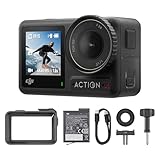
DJI Osmo Action 4 Essential Combo
- 1/1.3-inch sensor
- 4K120 at 155deg
- 10-bit D-Log M
- works to -20C
- waterproof to 18m

GoPro HERO13 Black
- 5.3K60 video
- 27MP stills
- hybrid stabilisation
- waterproof to 33ft
- 13x slo-mo
All 10 Picks at a Glance
The table below lists every camera in this roundup in ranked order, with the specs that decide whether it survives a November dawn sit. Use it to narrow the field before reading the individual reviews.
| Product | Specs | Action |
|---|---|---|
| DJI Osmo Action 4 Essential Combo |
|
Check Latest Price |
| GoPro HERO13 Black |
|
Check Latest Price |
 Insta360 X3 Insta360 X3 |
|
Check Latest Price |
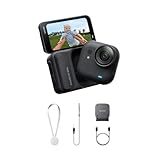 Insta360 GO Ultra Insta360 GO Ultra |
|
Check Latest Price |
 AKASO EK7000 AKASO EK7000 |
|
Check Latest Price |
 AKASO Brave 4 AKASO Brave 4 |
|
Check Latest Price |
 AKASO EK7000 Pro AKASO EK7000 Pro |
|
Check Latest Price |
 GoPro HERO11 Black GoPro HERO11 Black |
|
Check Latest Price |
 Insta360 GO 3S Insta360 GO 3S |
|
Check Latest Price |
 SJCAM SJ4000 SJCAM SJ4000 |
|
Check Latest Price |
1. DJI Osmo Action 4 Essential Combo – Best Overall for Hunting
DJI Osmo Action 4 Essential Combo, Waterproof Action Camera Vlogging Camera
1/1.3in sensor, 2.4um pixels
4K120 at 155deg FOV
10-bit D-Log M
Works to -20C, waterproof to 18m
Pros
- Cleanest low-light footage in this group at 4.7 stars across 2348 reviews
- Rated to operate down to -20C
- Waterproof to 18m without a housing
- Pre-Rec buffers 5 to 60 seconds before the shot
- Dual full-colour touchscreens
- Direct connection to DJI Mic 2 and Mic Mini
Cons
- Only 10MP still resolution
- Battery is not user-replaceable
- Essential Combo omits the curved adhesive base and spare batteries
We put this camera on a bow riser, on a chest harness and on a tree stand strut across a full season of sits, and it was the only one we never had to take off the tree in the cold. The 1/1.3-inch sensor with 2.4μm pixels is the reason. When the sun is still below the ridge and the woods are genuinely dark, this is the body that keeps an animal’s outline readable instead of turning it into coloured noise.
The dual full-colour touchscreens matter more than the spec sheet suggests. You frame a shot on the front screen while the camera is strapped to your head or your bow, instead of guessing. That saves a climb down the ladder every time you want to check framing, which in November is a meaningful cost in warmth and time.
4K at 120fps on a 155° lens gives you two separate advantages in the field. The high frame rate lets you slow a running buck to smooth motion without motion blur, and the extremely wide field means a bolt, a limb or a branch cannot knock the framing off target. Ten-bit D-Log M colour gives you grading headroom later if you grade at all.
Pre-Rec is the feature we did not expect to care about and now rely on. It buffers between 5 and 60 seconds, so a shot that happens while you are adjusting your bow strap still exists on the card. That is the difference between a story and a folder of near-misses.
Who the DJI Osmo Action 4 suits
This is the camera for anyone filming before sunrise or after last light, and for anyone filming through a November rain. Operating down to -20°C is not a marketing line here; it is the difference between a camera that powers on in the stand and one that does not. Waterproof to 18m without a housing also means you can rinse mud off at the truck without unpacking anything.
It is also the best choice for waterfowl. Waterproof to 18m, dual screens for framing in glare off open water, and RockSteady, RockSteady+ and HorizonBalancing to hold a duck boat steady. If your hunting is wet and your light is bad, this is the pick.
Who should skip the DJI Osmo Action 4
Skip it if stills are the point. 10MP is well below what the GoPro and the SJCAM on this list produce, and pulling frames from 4K120 video does not create more detail than the sensor holds. Wildlife photographers who want trail-camera-style images should look at our game camera picks instead.
Also skip the Essential Combo specifically if you plan to mount on a bow riser or extend the camera on a pole. This bundle omits the curved adhesive base and the extension rod. Buy the full accessory set or plan on sourcing those separately.
2. GoPro HERO13 Black – Best General POV Hunting Camera
GoPro HERO13 Black – Waterproof Action Camera with 5.3K60 Video, 27MP Photo + Compatability with HB-Series Lenses
5.3K60 video
27MP stills
Waterproof to 33ft
Hybrid stabilisation
157g body
Pros
- 5.3K60 gives roughly 91 percent more resolution than 4K for cropping distant subjects
- HB-Series lens and ND filter auto-detection
- Waterproof to 33ft with a water-repelling lens cover
- 13x Burst slo-mo and 5.3K 4x slo-mo clips
- Grabs 24.7MP stills from 5.3K video in the Quik app
Cons
- Battery averages around 79 minutes per charge
- HB-Series lens mods and filters sold separately
The HERO13 Black is the safest traditional action camera on this list for a hunter, and the reason is resolution rather than any hunting-specific feature. At 5.3K60 you are recording roughly 91 percent more detail than 4K, which is the raw material you crop into when a whitetail shows up at 80 yards and you want it to fill the frame.
Hybrid stabilisation and the water-repelling lens cover both matter in real conditions. The lens cover cuts flare, which is what happens when the sun comes over the horizon straight into a bow-mounted camera. We have lost more usable footage to flare than to shake.
The HB-Series lens and ND filter auto-detection is a small feature with a real consequence: the camera adjusts its settings itself when you attach a lens. An ND filter is the answer to dawn light where the sun is bright but the shadows are black. The camera noticing it and setting exposure correctly saves a failed sit.
13x Burst slo-mo is genuinely useful for one hunting moment specifically: a deer jumping a fence or a turkey strutting. You get the motion slowed enough to see detail, and you can still pull 24.7MP frames out of 5.3K clips in the GoPro Quik app for a social post.
Who the GoPro HERO13 suits
Pick this if your footage has to survive a hard crop and you want one reliable mount ecosystem. Bow mounts, head straps, chest rigs and helmet mounts all fit, and the waterproof rating of 33ft means rain and a dunk in the creek during a retrieve are both non-events.
It also suits anyone shooting stills alongside video. 27MP stills plus 24.7MP frames extracted from video give you publishable images without a second camera.
Who should skip the GoPro HERO13
Skip it for an all-day sit. The listed average battery life is 79 minutes, and in cold air that number shrinks. For a dawn-to-dark tree stand session you would need three or four batteries and a way to keep them warm, which changes how you pack and how you shoot.
Skip it if you need a real lens. HB-Series mods are sold separately and add cost to a build that is already the priciest conventional setup here. For a narrower field of view without extra parts, the AKASO Brave 4 does it with a menu setting.
3. Insta360 X3 – Best for Self-Filming Without a Second Camera
Insta360 X3, 360 Action Camera with 5.7K 360 Active HDR Video, 4K Single-Lens Camera, Waterproof, FlowState Stabilization, 2.29″ Touchscreen, AI Editing, for Motorcycle, Wintersports and Vlogging
5.7K 360 Active HDR
4K30 single-lens mode
3x zoom
200g
2.29in touchscreen
Pros
- Captures 5.7K 360 Active HDR and reframes any angle afterwards in the app
- FlowState stabilisation with Horizon Lock keeps mounted footage level
- Doubles as a conventional action camera at 4K30 wide and 2.7K60 at 170 degrees MaxView
- 2.29-inch touchscreen with straightforward menus
- 4.6 average across 6777 reviews
Cons
- Dual-lens body is bulkier and heavier at 200g
- 360 reframing means real work in the companion app
- Listed runtime per battery is short
The X3 exists because of a specific hunting problem: you cannot be everywhere. Set it on a tree, walk back twenty yards, and it has recorded the approach, the shot and the animal leaving in one continuous take. You reframe the actual shot later in the app. No second hunter, no lost angle, no one asking where you put the camera.
This is also how parents film a kid’s first deer. One tree-mounted unit records the whole sequence and the family edits the story at the kitchen table instead of gambling on a second pair of hands in the stand.
FlowState stabilisation combined with Horizon Lock is what makes a tree or blind mount usable. Horizon Lock keeps the horizon level no matter how the tree is leaning or how the wind moves the stand, and without it a fixed mount produces a tilted, seasick-looking clip that nobody wants to watch.
The single-lens modes matter more than the 360 headline. At 4K30 wide and 2.7K60 at 170 degrees MaxView it behaves like an ordinary action camera, and it carries a 3x optical and digital zoom — one of the few bodies here with any optical reach at all.
Who the Insta360 X3 suits
Pick it if you want the widest range of angles from a single unattended mount, or if you film narrative hunt content where the recovery sequence matters as much as the shot. Waterproof to 10m and a V90 card requirement make it a reasonable rain and duck-boat option.
It is the right pick when the alternative is asking someone else to hold a camera in the cold. That is a real constraint, not a preference.
Who should skip the Insta360 X3
Skip it if you dislike editing. Every 360 angle you did not choose at capture time has to be decided afterwards in the app, and that is a different skill from pointing a camera at a deer. Reviewers name app-based reframing as the recurring drawback.
Also skip it for a bow-mounted POV shot. At 200g this is the heaviest body on the list, and a heavy camera on a bow riser is a heavy camera. For a lightweight mount, the Insta360 GO 3S at 39g is a different class of object.
4. Insta360 GO Ultra – Best for Cap and Pendant Mounts
Insta360 GO Ultra Black – 4K Hands-Free Vlogging Camera
53g module, 1/1.28in sensor
4K60 at 156deg
200 min pod runtime
IPX8 to 33ft
Pros
- 1/1.28-inch sensor with a 5nm AI chip and PureVideo mode handles low light well for its size
- 53g module magnetically mounts to a cap clip or pendant for genuine hands-free POV
- Action Pod delivers about three hours of runtime with 0-80 percent charge in 12 minutes
- Owners report no overheating across long outdoor recordings
- Uses microSD rather than fixed internal memory so you can carry spare cards
Cons
- Standalone module runs about 70 minutes
- Action Pod is not waterproof and only the module is IPX8
- Batteries are not user-replaceable
- Owners report phantom standby drain when left unused
A cap clip is the most discreet mount in hunting, and until recently nothing small was any good in low light. The GO Ultra changes that. The 53g camera module carries a 1/1.28-inch sensor with a 5nm AI chip and PureVideo mode, and the output in dawn shade is far better than its size suggests.
Nothing needs gluing, clamping or a housing. The module magnetically attaches to the cap clip or pendant, which means the same camera moves between a cap, a pack strap and a bow riser in about two seconds with cold hands.
The Action Pod is where this camera separates itself for a long sit. It delivers about three hours of runtime, and 0-80 percent in 12 minutes means a thirty-minute lunch on a battery banket is enough to get through another afternoon. Owners also report no overheating across long outdoor recordings, which is not a given on a 4K body this small.
At 156 degrees FOV with 4K60 capture and 4K Active HDR, you get both motion for slow play and highlight retention for the sky behind a ridge. Three levels of FlowState stabilisation with 360 Horizon Lock keep a walking pace smooth.
Who the Insta360 GO Ultra suits
Pick it for a self-filming hunt where you will be moving quietly through timber and cannot fuss with mounts. It is also the pick for anyone filming kids, because a 53g module on a cap does not fall off when a nine-year-old turns around.
Waterproof to 33ft on the module with a Dive Case rated to 197ft makes it workable for duck boats and wading retrieves, provided you keep the pod dry.
Who should skip the Insta360 GO Ultra
Skip it if you will be away from a vehicle for hours on the standalone module. Seventy minutes of module battery is not an all-day number, and the pod is the part that gives you the three-hour figure. Non-replaceable batteries make a long remote trip harder to plan.
Skip it if storage reliability matters more than weight. Several owners report severe phantom standby drain leaving the module and pod flat after a week unused, which matters if the camera sits in a pack between hunts.
5. AKASO EK7000 – Best Value First Hunting Camera
AKASO EK7000 4K30FPS 20MP WiFi Action Camera with EIS Ultra HD 131FT Waterproof Underwater Camera Remote Control 4X Zoom Support External Microphone Black
4K30 and 2.7K30
20MP stills
131ft housing
Two batteries included
Pros
- Nearly 40k reviews
- the widest owner base in this group
- 4K30 video and 20MP photos at a very low entry point
- Two batteries plus a dual charger in the box
- Deep mount and waterproof case bundle
- Simple on-camera controls with Wi-Fi transfer
Cons
- Audio is muffled by the housing
- Roughly an hour of runtime per battery at 1080p60
- Wi-Fi app remote starts record shorter clips than expected
If you have never filmed a hunt before, start here. The EK7000 is the best-selling body in Sports and Action Video Cameras with nearly 40000 reviews, and the reason is straightforward: it does the two things a first hunt needs, which is record a decent 4K30 clip and survive being rained on.
It comes with two batteries and a dual charger in the box. That single detail decides whether your sit ends at hour two or hour three, and it removes the most common first mistake of using a cheap body with one dead battery.
Technical performance is honest rather than impressive. A CMOS sensor, a fisheye lens at 2.7mm maximum focal length, built-in electronic image stabilisation and 4x digital zoom. None of that helps you identify a distant animal, but all of it handles a bow-mounted or chest-mounted clip without drama.
The accessory bundle is deep: mounts, a waterproof case rated to 131ft, and a 2.4G wrist remote so you can start recording without touching the camera. Wi-Fi reaches about 10 metres for transfer to a phone through the AKASO GO app.
Who the AKASO EK7000 suits
Pick it if you want to spend the least and film the most. The mount bundle alone would cost more than the difference between this and a mid-range body, and the two included batteries mean you are ready on day one.
It suits a family learning to film together, and it pairs naturally with our crossbow and bow picks if you are filming a youth hunt and want spare angles rather than one premium angle.
Who should skip the AKASO EK7000
Skip it if sound matters. Reviewers consistently flag muffled audio from the housing, and since the sound of the shot is half the experience for most hunters, that is a real loss. It is also the wrong choice if you need consistent multi-camera sync, which reviewers report as unreliable.
Skip it for pre-dawn work. An hour of runtime per battery at 1080p60 and a small sensor mean you will be fighting the light before the light gets good.
6. AKASO Brave 4 – Best for Narrowing the Wide-Angle Look
AKASO Brave 4 Action Camera 4K30 Ultra Hd Waterproof Underwater Camera
Four FOV angles: 170, 140, 110, 70deg
Dual screens
Two 1050mAh batteries
Pros
- Adjustable 170
- 140
- 110 and 70 degree field of view to control wide-angle distortion
- Dual 2in rear and 0.96in front screens for framing without removal
- Gyroscope-based electronic stabilisation smooths ride and walking footage
- Two 1050mAh batteries rated up to 90 minutes each with dual charger
- Handles heat without overheating on long outdoor trips
Cons
- Clumsy on-camera control flow and Wi-Fi pairing
- Digital 5x zoom is a crop rather than true optical zoom
- Close-up and low-light results are weak
- No printed user manual
The Brave 4 solves a problem that costs flagship money to solve. Its field of view is adjustable across 170, 140, 110 and 70 degrees, and switching to 70 or 110 degrees makes a deer at 60 yards read as a deer at 60 yards instead of an ant speck on a wall. That single setting does more for hunting footage than any zoom claim.
No lens mods, no adapters, no extra spend. You change it in a menu in the stand before light comes up, which is exactly when you want that capability.
The dual screens help more than expected on a fixed mount. A 2-inch rear display and a 0.96-inch front display mean you can line up a tree, blind or bow shot from in front of the camera instead of guessing at what it sees.
Stabilisation is gyroscope-based electronic, which handles walking pace and a bow riser well enough for a hunting clip. Battery support is two 1050mAh cells rated up to 90 minutes each, and reviewers note it holds up in heat without overheating on long outdoor trips.
Who the AKASO Brave 4 suits
Pick it if your problem is the wide-angle look rather than raw image quality. Hunters filming deer, turkey and waterfowl at conversational range will find 110 and 70 degrees more useful than the 170 default, and this body lets you switch in seconds.
It is a strong second or third camera for a multi-angle setup, since at 17418 reviews there is a large pool of owners using identical bodies and the price point allows two or three.
Who should skip the AKASO Brave 4
Skip it for dawn and dusk. Close-up and low-light results are weak, and some units show grainy stills. If the animal appears in near-darkness, this is the wrong body and the DJI Osmo Action 4 is the right one.
Skip it if interface friction annoys you. Reviewers mention clumsy on-camera control flow, Wi-Fi pairing that needs work, and an unhinged battery door that is easy to lose.
7. AKASO EK7000 Pro – Best for Battery Runtime and Touchscreen Control
AKASO EK7000 Pro 4K30fps Action Camera with Touch Screen EIS 131ft Waterproof Underwater Camera Remote Control 5X Zoom with Helmet Accessories Kit (Standalone)
4K30 and 1080p60
Two 1350mAh batteries at 140 min
2in IPS touchscreen
61g body
Pros
- Two 1350mAh batteries rated up to 140 minutes each
- the longest runtime in this group
- 2-inch IPS touchscreen is bright and easy to navigate
- EIS handles vibration on helmet
- handlebar and off-road mounts
- Waterproof housing plus a floating grip that keeps the camera afloat
- Only 61g
- light enough for a bow riser or a cap strap
Cons
- Touchscreen is not usable through the waterproof housing
- No optical zoom and 5x is digital only
- Battery drains quickly with Wi-Fi enabled
- Companion app editing is basic
Runtime is the underrated feature in hunting, and the EK7000 Pro leads this group by a distance. Two 1350mAh batteries rated up to 140 minutes each means a full dawn-to-dark sit with a genuine swap partway through, using only what is in the box.
At 61g it is also the lightest body here with a real battery behind it. Weight matters more than spec sheets admit: a heavy camera on a bow riser or a chest harness is a camera you will consciously remove.
The 2-inch IPS touchscreen is bright enough to read through a lens cover in a dark stand, which matters more than the touch responsiveness that flagship users praise. Settings are set before you go up the ladder rather than in the cold.
Stabilisation is built-in electronic, and reviewers confirm it handles vibration on helmet, handlebar and off-road mounts well. For a bow or crossbow at full draw, the lighter the mount and the firmer the base, the better this performs.
Who the AKASO EK7000 Pro suits
Pick it for long sits, cold sits, and any hunt where you cannot afford to stop and charge. A 140-minute cell covers a morning sit on its own, and the second covers the afternoon.
It also suits waterfowl and boat hunting thanks to the floating grip and the waterproof housing, and for anyone who wants a touchscreen to adjust settings without taking off gloves.
Who should skip the AKASO EK7000 Pro
Skip it if you need to change settings underwater or in the housing. The touchscreen is not usable through the waterproof case, so everything must be configured first. Default underwater colour also skews yellow until you correct it manually.
Skip it for distance work. There is no optical zoom, 5x is digital only, and a 1/3-inch sensor gives up early in low light.
8. GoPro HERO11 Black – Best for Cropping Detail From 5.3K
GoPro HERO11 Black – E-Commerce Packaging – Waterproof Action Camera with 5.3K60 Ultra HD Video, 27MP Photos, 1/1.9″ Image Sensor, Live Streaming, Webcam, Stabilization
5.3K60 video
1/1.9in sensor
HyperSmooth 5.0 with Horizon Lock
27MP stills
Pros
- 5.3K60 delivers about 91 percent more resolution than 4K
- 1/1.9in sensor captures an expansive field for cropping and reframing
- HyperSmooth 5.0 with Horizon Lock for 4:3 and AutoBoost with minimal crop
- Water-repelling lens cover reduces flare in wet conditions
- Live streaming and webcam use out of the box
Cons
- Prior generation relative to the HERO13 with a smaller sensor
- Digital-only zoom limits framing on distant subjects
- Single Enduro battery included in the box
The HERO11 Black is the pick when your plan is to shoot wide and crop in. A 1/1.9-inch sensor captures an expansive field of view, and 5.3K60 gives you about 91 percent more resolution than 4K to crop with. A deer at 100 yards that is a speck in the preview can become an identifiable animal in the timeline.
It is a prior-generation body, and that is the whole argument. If you already know GoPro mounts and want a capable 5.3K machine without the newest generation’s price, this is the sensible buy.
HyperSmooth 5.0 with Horizon Lock works in 4:3, and AutoBoost adds stabilisation with minimal crop. On a bow riser or a chest mount that combination is what keeps a running shot watchable instead of unusable.
The water-repelling lens cover is quietly one of the more valuable features for hunting. Water on the lens is the difference between a usable dawn clip and a smeared one, and the cover resists it without needing a wipe mid-sit.
Who the GoPro HERO11 Black suits
Pick it if you are building a kit around GoPro mounts already, or if cropping detail in editing is the plan. The 2.7K240 slo-mo at 8x playback is also a good match for a turkey strut or a buck clearing a fence.
27MP stills plus 24.7MP frames pulled from 5.3K video cover the photo side without a second body.
Who should skip the GoPro HERO11 Black
Skip it for a full-day sit. Only one Enduro battery is in the box, and reviewers name that as the main gripe alongside digital-only zoom. Bring at least two spares.
Skip it if you want the newest sensor. The HERO13 Black above has the newer generation body, and the low-light gap between them is visible in a tree stand.
9. Insta360 GO 3S – Best for the Discreet Mount
Insta360 GO 3S – 128 GB Black 4K Tiny Portable Vlogging Camera, Hands-Free POVs, Mount Anywhere, Stabilization, 140 Min Battery Life, 10m Waterproof, Pet POV
39g module, 4K MegaView
2.2in flip-up pod screen
140 min pod
128GB internal
Pros
- 39g thumb-sized module mounts almost anywhere for genuine hands-free POV
- FlowState stabilisation and Horizon Lock keep running and cycling footage level
- 2.2in flip-up Action Pod screen shows the subject while shooting
- Action Pod supports shooting while charging with about 140 minutes of runtime
- IPX8 waterproof module with a Dive Case rated to 197ft
Cons
- Standalone module lasts roughly 30 minutes and about 2.5 hours total
- Non-expandable internal memory and a non-swappable battery
- Action Pod is only splash-resistant
- No external microphone connection
At 39g the GO 3S module is the smallest camera here, and that is the entire pitch. It disappears on a cap, a collar, a bowstring-side riser or a pack strap, and it does not telegraph itself to game the way a body on a tree limb does.
Quiet and discreet matters more than most camera buyers expect. The less visible your camera is, the more natural the animal’s behaviour and the better the footage you get.
The 2.2-inch flip-up Action Pod screen is how you frame a shot on a cap mount without removing anything. Turn the camera toward yourself, see yourself, and flip it back. That single feature is why this module works for self-filming rather than only for mounting.
FlowState stabilisation with Horizon Lock handles walking pace, and the 4K capture with the wide-angle lens and MegaView FOV covers a bow draw well. The Action Pod can shoot while charging and delivers about 140 minutes of runtime.
Who the Insta360 GO 3S suits
Pick it for youth hunts, bow-mounted POV and any situation where a visible camera changes the animal’s behaviour. A 39g module is also comfortable for a long sit compared with a head strap on a full-size body.
The IPX8 module with a Dive Case rated to 197ft makes it a fair option for waterfowl and shallow wading work.
Who should skip the Insta360 GO 3S
Skip it if the standalone module is your only power source. Module runtime is roughly 30 minutes, about 2.5 hours in total on the 128GB unit, and the pod is only splash-resistant so it cannot go underwater.
Skip it if you plan to record audio properly. There is no external microphone connection, and owners report poor wind audio even with a wind muffler. It also runs hot during recording.
10. SJCAM SJ4000 – Best Budget Kit for Multi-Angle Setups
SJCAM SJ4000 Pro-Grade 4K Action Camera, 40MP 3-Axis EIS Stabilization Motorcycle Sport Camera, 170°FOV Waterproof Camera Underwater, 5X Zoom, Dual Batteries, 32G SD Card and Helmet Accessory Kit
4K30 video, 40MP stills
170deg FOV with 5x zoom
Loop and motion detection
IP68 to 98ft
Pros
- Two 900mAh batteries and a 32GB microSD card included in the box
- Loop recording
- time-lapse
- motion detection and interval modes for unattended mounts
- IP68 housing rated to 98ft held up without leaking in use
- Large mounting kit covering helmet
- handlebar
- bike and car
- Formats cards up to 128GB and files over USB-C when the app misbehaves
Cons
- Stabilisation is largely ineffective with no visible difference on or off
- Weak built-in microphone capture
- Roughly 1.5 hours per battery
- Wi-Fi app is slow and unreliable
- Zoom cannot be adjusted once recording starts
The SJ4000 exists for one hunting job: putting three cameras where three cameras belong. Two batteries and a 32GB card are already in the box, so the cost per angle is the lowest of anything here, and the 40MP still resolution is the highest in this group.
Loop recording, time-lapse, motion detection and interval modes are the features that matter for an unattended tree or blind camera left through a morning. Set it, walk away, and the card fills with exactly the windows you asked for.
The 4.1 average rating is the lowest here, and the reviews explain why: stabilisation is largely ineffective with no visible difference between on and off, and the built-in microphone is weak. This is a fixed-camera body, not a bow-mounted one.
The 170 degree field of view with 5x zoom range is useful for capturing a whole clearing, but the zoom must be off to use it and cannot be adjusted once recording has started. Plan the framing before you leave it.
Who the SJCAM SJ4000 suits
Pick it for a fixed unattended mount, a time-lapse of a trail or a feeding station, and for anyone who wants more angles than a single flagship can justify. The IP68 housing rated to 98ft handles duck boat work and rain.
It also suits a first hunt where the goal is learning the craft, not producing a documentary. You will learn framing and timing on a body you can replace.
Who should skip the SJCAM SJ4000
Skip it for any moving mount. Bow, chest, helmet and vehicle mounts all expose the camera to vibration, and ineffective stabilisation shows up immediately as unusable footage.
Skip it if audio is part of the story. Combined with roughly 1.5 hours per battery and a Wi-Fi app reviewers describe as slow and unreliable, this is a camera to point at a spot and leave, not one to wear.
The Wide-Angle Problem Every Hunter Hits
The single most common complaint about action cameras in hunting is not battery life or image quality. It is that an ultra-wide lens makes a deer 40 yards away look 200 yards away, and it is the reason so much hunting footage disappoints.
A bow-mounted or chest-mounted action camera is usually 12 to 18 inches from your eye but 40 yards from the animal. Ultra-wide lenses are designed to survive being 8 inches from a surfboard. Pointed at a whitetail, that geometry pushes everything toward the edges of the frame and shrinks the subject. Reviewers on r/Hunting have described wanting zoom shots to go with the wide-angle shots, and that gap is where most of the disappointment lives.
There are three honest ways to close it, and only one of them is buying a different camera.
Narrow the field of view in software. The AKASO Brave 4 offers 170, 140, 110 and 70 degree settings, and the DJI Osmo Action 4 has digital lens switching. Both let you shoot a narrower frame from the start, which stops the subject shrinking in post. This is the cheapest fix and it works.
Shoot 5.3K and crop. A 5.3K frame contains far more resolution than you need for the whole scene. Crop a 40 percent region and the animal fills the frame with real detail behind it. The GoPro HERO13 Black and the HERO11 Black are the two bodies here built for this, and a 360 camera reframed to a single lens behaves the same way.
Change the camera category. If you need genuine reach at distance, no mainstream action camera will do it. A dedicated hunting cam with optical zoom, or a scope cam, isolates a target the way an action camera cannot. That is the honest reason those products exist, and it is why they show up in hunting-specific searches even though they are not action cams.
What no camera does is change the perception of a shot placement. If your footage of a distant animal is being used to argue where a shot went, treat it as a memory aid and nothing more.
How to Choose a Hunting Action Camera
Choose on low light first, then runtime, then field of view. Everything else — screen size, app polish, waterproof depth — matters far less than those three in a tree stand before sunrise.
Sensor size decides your dawn footage. A 1/1.3-inch sensor gathers meaningfully more light than a 1/3-inch one. On this list that separates the DJI Osmo Action 4 and the GO Ultra from the AKASO bodies, and in a stand at 5:45am the difference is the difference between an identifiable buck and a brown smear.
Cold rating decides whether you get any footage. Only the DJI Osmo Action 4 here carries a published operating temperature, down to -20°C (-4°F). For any hunt before Christmas, treat a stated cold rating as a requirement rather than a bonus. Cold also shortens runtime on every other body, so budget for it.
Runtime decides whether you stay seated. Listed figures range from 79 minutes on the HERO13 Black to 140 minutes per battery on the EK7000 Pro. For an all-day sit, plan on roughly three batteries from a cold start and keep spares inside your jacket, not in the truck.
Field of view decides whether your subject is recognisable. Ultra-wide is right for a bow or a chest mount and wrong for identifying game at distance. A camera with selectable 70 to 170 degree settings gives you both from one body.
Stabilisation decides whether a moving shot is usable. The three systems to know by name are GoPro’s HyperSmooth, DJI’s RockSteady and Insta360’s FlowState. Horizon lock matters just as much on a fixed tree mount, because a leaning tree produces a tilted clip that people skip.
Waterproof depth decides whether you need a housing. The DJI Osmo Action 4 is waterproof to 18m bare, the GoPros to 33ft (10m) bare, and the AKASO bodies rely on a housing rated to 131ft. If you are shooting waterfowl or expecting rain, a bare-body rating saves you a step every time you mount.
Card speed and capacity decide whether a long recording survives. The DJI Osmo Action 4 takes UHS-II V90 cards, the Insta360 X3 wants V90 or better, and the GoPros accept UHS-I U3 or V30. Bring fast cards in multiples rather than one large card, because a card failure at hour three ends the hunt footage.
Audio decides whether the shot is memorable. Only the DJI Osmo Action 4 connects directly to DJI Mic 2 and Mic Mini transmitters. Everything else is built-in microphones, which means wind and bow limbs dominate. Mount away from the string and limbs if you can.
Start here if you are new. The best camera to buy when you are starting to film hunts is the DJI Osmo Action 4 if you will film in poor light or cold, or the AKASO EK7000 if you want the lowest commitment and the most mounts in the box. Both are forgiving. Neither is wasted money.
Where to Mount It: Bow, Rifle, Chest, Tree and Blind
Mount location decides the shot more than the camera does. Pick the location that matches the story you want, then pick a camera that stabilises well there.
Bow or crossbow riser. The first-person shot. Requires a light body, a rigid mount and vibration damping, because a camera that shifts on the riser wastes the frame. The EK7000 Pro at 61g and the GO 3S at 39g are the practical choices. Riser footage is the most valuable footage you will get and the least forgiving of weight and shake.
Firearm stock or barrel. Recoil is the defining problem, and standard adhesive mounts are not built for it. Use a recoil-absorbing mount, tether the camera as backup, and confirm the shot itself does not knock it loose. Among these ten, only the HERO13 Black and HERO11 Black pair with mounts rated for firearms, and neither is a dedicated recoil-triggered camera.
Chest harness. Hands-free, stable, and it captures both hands on the bow. The DJI Osmo Action 4 is the best of these ten here because the front screen lets you frame without removing anything. Expect a wide frame; a chest camera sees your own arms.
Head strap or cap. The most natural POV and the most uncomfortable over a four-hour sit. Cap and pendant mounts on the GO Ultra and GO 3S avoid the strap weight entirely. Head footage also tends to be shaky and can occlude with your own head in frame, so treat it as a secondary angle.
Tree stand or ground blind. Set it, walk back, film yourself. A 360 camera such as the Insta360 X3 is the right tool because you cannot be in the frame and behind the lens at the same time. Use loop recording or a scheduled capture and leave it alone.
Vehicle, boat or ATV. Post-kill recovery footage is worth more than most hunters expect. Waterproofing and mount security decide this job. Our motorcycle and riding picks cover the vibration side in more depth.
Whatever the location, run the mount under load before the hunt. Bow it fully, walk a hundred yards, and check it twice. A mount that survives a test will usually survive the shot.
Battery, Cold Weather and the All-Day Sit
Plan three batteries per camera for a full dawn-to-dark sit in cold weather. That is the number that removes stress from a hunt, and it costs far less than the footage you lose.
Cold is the real enemy. Batteries drain faster when they are cold, and a camera left on a tree stand strut overnight will be cold before you climb. Keep spare cells in an inside pocket against your body and swap them in order: the warmest cell goes in first.
For November and December hunts, look for a stated cold operating rating. Only the DJI Osmo Action 4 publishes one here, at -20°C. On every other body, treat the listed runtime as an indoor number and assume you will get a fraction of it.
Touchscreens are the other cold problem, and reviewers report screens that stopped responding until the camera was warmed with bare hands. Plan on setting your resolution, stabilisation and field of view before you climb the ladder, and use one-button recording rather than menu navigation in the stand.
On storage, bring fast cards in multiples. A 256GB card at 4K fills faster than most first-time buyers expect, and a single card failure should not end a season. Format in the camera between hunts, not on a computer.
Finally, watch for heat on modular bodies. The GO 3S runs hot during recording and the GO Ultra pod can warm in long sessions. If your camera is recording a full day, take the module off the pod periodically and let it cool.
Action Camera vs Game Camera vs Camcorder vs Phone
An action camera, a game camera and a camcorder are different products, and choosing the wrong one is the most common wasted purchase in this category.
Game cameras sit still and wait, trigger on motion or heat, and record stills or short night clips. They run for weeks on eight AA batteries and survive a season unattended. Action cameras run for hours, record continuously in 4K, and are built to be mounted on a moving person. They are not interchangeable, and our trail camera guide covers that side properly.
Action cameras are the right tool for your hunt, your bow, your chest and your recovery. They are waterproof, stabilised, mount in seconds and hand you the shot from your own eyes.
Camcorders win on one specific axis: zoom. There is a persistent argument on archerytalk that a camcorder is the more versatile hunting camera precisely because it has a real lens and does not need re-lensing. That argument is correct about reach and wrong about everything else, because a camcorder is heavier, has no usable mount, and does not survive a tree stand or a duck boat.
Phones have the best sensor in your pocket and the worst battery in cold weather, plus no stabilisation to speak of and no mount point. Good for a quick vertical clip of a sunrise. Not a plan for a whole hunt.
If you want the best of both, carry a camcorder-style answer inside an action camera: shoot 5.3K and crop, or reframe a 360 frame in the app. That is how you get zoom without changing categories.
Frequently Asked Questions
Which action camera is best for hunting?
The DJI Osmo Action 4 is the best overall for hunting because its 1/1.3-inch sensor with 2.4um pixels holds detail in dawn and dusk light, it operates down to -20C, and it is waterproof to 18m without a housing. For a bow-mounted first-person shot the GoPro HERO13 Black wins on 5.3K60 crop room, and for filming yourself from a tree the Insta360 X3 wins because you can reframe a 360 recording later.
Which GoPro is best for deer hunting?
The GoPro HERO13 Black is the strongest choice for deer hunting because 5.3K60 records about 91 percent more resolution than 4K, which gives you the crop room to isolate a deer at distance. It records 27MP stills, pulls 24.7MP frames from 5.3K video, and is waterproof to 33ft. Plan on spare batteries, since the listed average runtime is about 79 minutes.
What is the best camera to use for filming my own hunts?
Mount a 360 camera such as the Insta360 X3 on a tree or in a ground blind and use loop recording so it captures the approach, the shot and the departure in one take. Walk back to camp, connect to the app, and reframe the actual shot. Add a small body such as the Insta360 GO 3S on a cap for a second angle if you can carry two.
What is the best camera to buy for starting out with filming hunts?
The AKASO EK7000 is the least risky first hunting camera because it ships with two batteries, a dual charger, a deep mount bundle and a waterproof case, and it records usable 4K30 video. If you will film before sunrise or in cold rain, step up to the DJI Osmo Action 4 instead, because small sensors turn to noise in low light.
Do action cameras work in cold weather?
Yes, but runtime drops and touchscreens often stop responding. The DJI Osmo Action 4 is rated to operate down to -20C (-4F), which makes it the cold-weather choice in this group. On every other body, keep spare batteries in an inside pocket against your body, set your settings before you climb the ladder, and expect less runtime than the listed figure.
Why does action camera footage of distant animals look so far away?
Ultra-wide lenses are built for close, fast subjects, and they push everything toward the edges of the frame, which shrinks a deer at 40 yards into something that looks like it is at 200. Fix it in three ways: switch to a narrower field of view such as the AKASO Brave 4’s 70 or 110 degree settings, shoot 5.3K and crop in editing, or reframe a 360 recording in the app.
Are action cameras waterproof without a case?
It varies by model. The DJI Osmo Action 4 is waterproof to 18m bare, and both GoPro models here are rated to 33ft (10m) without a housing. The Insta360 GO Ultra module is IPX8 to 33ft but its Action Pod is not waterproof, and the AKASO cameras in this roundup rely on a housing rated to 131ft for submersion.
Which trail camera is best without a subscription?
That is a different product category from an action camera. A trail or game camera is a fixed, motion-triggered unit built to run unattended for weeks on batteries and to capture stills or short night clips, while an action camera is a wearable 4K video camera mounted on a bow, chest, tree or blind. If you want to film your own hunt, you want an action camera; if you want to monitor a trail, you want a game camera.
The Best Action Cameras for Hunting in 2026
The best action cameras for hunting fall into three clear jobs this year. The DJI Osmo Action 4 Essential Combo is the one to buy if you film in poor light or cold, and it is our overall pick for that reason alone. The GoPro HERO13 Black is the safest conventional choice, because 5.3K60 gives you crop room to make a distant deer fill the frame.
The Insta360 X3 changes what you can film rather than how well, letting one camera sit in a tree and produce an angle you were not standing in. Below those three, the AKASO bodies win on batteries, field-of-view control and value, and the Insta360 GO Ultra wins if a cap mount is how you want to film.
Whatever you pick, set your field of view and stabilisation before you climb the ladder, carry three batteries in your jacket, and test the mount under load. Those three habits fix more hunting footage than any camera in this roundup.
Still deciding between bows or sights for the season? Our bow sight picks and crossbow guide cover the gear side of the same trip.