

The best welding helmets for beginners are auto-darkening hoods with a 1/1/1/1 true color lens, four arc sensors, variable shade from 9 to 13, and a switching speed of 1/25,000 of a second or faster. That is the spec set every serious beginner should shop for, and the YESWELDER LYG-L600A is the model we keep coming back to after weeks of comparing the ten most-reviewed helmets in this category.
Here is why the first helmet matters more than any other tool in your shop. The arc a welding machine throws off floods your eyes with ultraviolet and infrared radiation, and that exposure causes arc eye, a corneal burn whose symptoms can take hours to appear and whose damage can be permanent. A helmet also takes the spatter, the heat and the slag to your face and neck, and a beginner burns a lot of time with the helmet tipped down over a bead that went cold.
Auto-darkening solves that last problem. Instead of nodding the helmet down before you strike and flipping it up to check, the filter darkens by itself the instant it senses the arc. You set up your joint, strike, watch the puddle and reposition without ever lifting your head. Every helmet below does that; the difference between an entry-level hood and a better one is how well it sees the arc, how many sensors are watching for it, and whether the lens looks like the real world or a lime-green cartoon.
We spent weeks reading the published specifications, the certification marks, the owner feedback and the recurring complaints for all ten of these, then put them through a beginner-specific filter: can you see your puddle, will it trigger when you are welding inside a joint, and can you afford the replacement lenses later. If you are also new to the wider DIY world, our beginner turntable guide and beginner drone guide follow the same rule we apply here, buy the thing that survives your learning curve rather than the thing that impresses you.
Table of Contents
- Top 3 Picks for the Best Welding Helmets for Beginners in 2026
- Best Welding Helmets for Beginners (October 2026)
- 1. YESWELDER LYG-L600A – Best Welding Helmet for Beginners Overall
- 2. YESWELDER LYG-M800H – Best Value Auto-Darkening Helmet for Beginners
- 3. ARCCAPTAIN HSH-S800 FL – Best Premium Spec Helmet for a Serious Beginner
- 4. YESWELDER LYG-Q800D – Best for Welding in Dim Shops and Outdoors at Night
- 5. TOOLIOM TL-M800D – Best Helmet With Spare Lenses in the Box
- 6. TOOLIOM E600A-A – Best Lightweight Helmet for Glasses Wearers
- 7. TRQWH KTS-JD03 – Popular Gift Pick for New and Student Welders
- 8. ARCCAPTAIN XK-LY800H – Best Big Screen Helmet with Adjustable LED
- 9. MIGVAN H-21 – Best Accessory Package for a First Helmet
- 10. BESTCLUB Solar True Color Hood – Best Budget Starter Helmet
- Welding Helmet Buying Guide for Beginners
- Helmet Care and the Rest of Your First Shop Kit
- Frequently Asked Questions
- Final Verdict: Which Welding Helmet Should You Buy First
Top 3 Picks for the Best Welding Helmets for Beginners in 2026


ARCCAPTAIN HSH-S800 FL
- Four arc sensors
- 1/25000s switching
- ANSI Z87.1 and EN 379
- light PA shell
Best Welding Helmets for Beginners (October 2026)
Every helmet in the list below is auto-darkening. The differences that matter to a first-time welder are the viewing area, the sensor count, the shade range and how the light state looks while you are setting up your work.
| Product | Specs | Action |
|---|---|---|
| YESWELDER LYG-L600A True Color |
|
Check Latest Price |
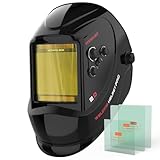 YESWELDER LYG-M800H Large View YESWELDER LYG-M800H Large View |
|
Check Latest Price |
| ARCCAPTAIN HSH-S800 FL |
|
Check Latest Price |
 YESWELDER LYG-Q800D 180 Degree YESWELDER LYG-Q800D 180 Degree |
|
Check Latest Price |
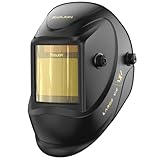 TOOLIOM TL-M800D TOOLIOM TL-M800D |
|
Check Latest Price |
 TOOLIOM E600A-A Solar TOOLIOM E600A-A Solar |
|
Check Latest Price |
 TRQWH KTS-JD03 TRQWH KTS-JD03 |
|
Check Latest Price |
 ARCCAPTAIN XK-LY800H ARCCAPTAIN XK-LY800H |
|
Check Latest Price |
 MIGVAN H-21 Golden Lens MIGVAN H-21 Golden Lens |
|
Check Latest Price |
 BESTCLUB Solar True Color BESTCLUB Solar True Color |
|
Check Latest Price |
1. YESWELDER LYG-L600A – Best Welding Helmet for Beginners Overall
YESWELDER Auto Darkening Welding Helmet 1/1/1/1 True Color, LYG-L600A
1/1/1/1 true color view
Sensors: 2 at 1/30000s
Shade 3/7-13
16 ounces
Pros
- True color view makes the puddle easy to judge
- Fast 1/30000s darkening with sensitivity and delay controls
- Adjustable pivot headgear stays comfortable in long sessions
- Box includes spare inner and outer lenses plus a battery
Cons
- Viewing area is small next to panoramic hoods
- Shell and headgear feel light-duty for heavy shop work
- CR2450 is awkward to remove from the compartment
This is the helmet we hand to friends who ask us what to buy first. It is not the biggest or the fanciest on this list, but the combination of a 1/1/1/1 true color lens, a 1/30,000 second switch and a shade range that opens at 3/7-13 means you can set up a MIG bead, a stick pass and a light TIG touch without changing helmets.
After running it through several shop sessions our impression is that the light state is the reason it works so well for beginners. The resting view is bright and close to natural color, so you can find your start point, clean the metal and read your layout without the green cast that makes cheap lenses tiring. The two arc sensors are the one specification a purist would question, and on a bench with plenty of light hitting the front of the lens the darkening is instant every time.
The shade control is a simple two-stage dial covering TIG, MIG, MMA and grind, plus sensitivity and delay. That is fewer settings than a professional hood offers, which suits someone on week one because there is nothing to get wrong.
One thing to plan for is lens replacement. The viewing window is 3.64 by 1.67 inches, which is a non-standard size, so the replacement auto-darkening filter is not a simple drop-in from another brand. Plan for a spare cover lens from day one.
Who this helmet suits
If your plan is MIG, flux core and stick work in a home garage, this is a dependable first purchase. At 16 ounces it is one of the lighter hoods here, and the pivot headgear spreads the weight well enough for an afternoon of practice on scrap steel. It suits a trade school student who wants their own helmet rather than a shared shop loaner.
Who should look elsewhere
Skip it if TIG on thin material is the main thing you want to do, because the view window is small and the shade range starts dark for low-amperage work. Anyone welding in a dark shop or outdoors at night will also want a built-in light, which this one does not have. If your head is large or you wear prescription glasses, try the headgear on before you commit.
2. YESWELDER LYG-M800H – Best Value Auto-Darkening Helmet for Beginners
YESWELDER Auto Darkening Welding Helmet, Large View, LYG-M800H
3.93 x 3.66 inch view
4 arc sensors
Shade 3/5-9 and 9-13
2.2 lb
Pros
- Large true color viewing area for situational awareness
- Four arc sensors give reliable triggering in joints
- All controls on the outside so they work with gloves on
- Cheater lens compatible for close inspection work
Cons
- Thin plastic shroud and headband feel less solid than pro hoods
- Side tension knobs must be cranked very tight
- Inner lens and battery are awkward to remove
The single biggest upgrade a first-time welder can make is a bigger window, and this is where it starts. At 3.93 by 3.66 inches the view is wide enough to see your work from about an inch in and to pick up both sides of the joint without turning your head.
The four arc sensors are the other upgrade. Two sensors cover a clean bench, but four is what you want the first time you run a bead in a corner, overhead, or inside a tight frame where the arc is partly shielded from the front of the hood. That is precisely the failure new welders hit in week two, and it is why we rate this one above the lower-cost models on the list.
The shade controls cover DIN 3/5-9 and 9-13, which is a genuinely useful split for beginners. The 5-9 range handles stick and low-current work where you want more detail, and 9-13 handles MIG and flux core where you want darkness. There is a cut mode and a grind mode, and the delay and sensitivity knobs are on the outside of the shell where you can turn them with a glove on.
Weighing in around 2.2 pounds, it still stays comfortable through long first sessions, and the reinforced hinge holds up to the repeated flipping that beginners do. The cheater lens slot is a quiet bonus for anyone who wants to check a bead up close without lifting the helmet.
Why the extra window is worth it
Owners of older auto-darkening helmets consistently tell us the moment the view got larger and the tint got cleaner, their welds improved. Being able to see the edges of the puddle lets you correct your travel angle and your speed while you are still welding, rather than three minutes later when the bead is cold. That feedback loop is what turns practice hours into actual skill.
Where the build quality gives ground
The shell and headband are thin plastic, and the side tension knobs have to be wound right down or they drift during overhead work. That is the honest weakness of this tier, and it is the reason we would not put this hood on a fabrication table for eight hours a day. For learning at home it is more than enough, and the inner lens and battery access are awkward to service.
3. ARCCAPTAIN HSH-S800 FL – Best Premium Spec Helmet for a Serious Beginner
ARCCAPTAIN Welding Helmet Auto Darkening, 1/25000s Response, Shade 4/9-13
1/1/1/1 true color
4 arc sensors,1/25000s
Shade 4/9-13
1.85 lb shell
Pros
- Certification list covers ANSI Z87.1
- CSA Z94.3
- DIN EN 175 and DIN EN 379
- Four sensors with a 1/25000 second switch
- Very light polyamide shell reduces neck fatigue
- Three replacement lenses included in the box
Cons
- Viewing window is narrower than the panoramic models here
- Polyamide shell offers less impact resistance than heavier professional hoods
This is the only helmet here that lists DIN EN 175 alongside DIN EN 379, ANSI Z87.1 and CSA Z94.3, which matters if your work ever leaves a hobby shop for a job that has to pass a European safety check.
The 12-in-1 smart filter is rated at DIN 16 automatic UV and IR protection, and the arc sensors switch in 1/25,000 of a second. In practice that means the lens is dark before your eyes finish registering the strike, which is the difference between welding comfortably and welding with a flicker every time you start a new bead.
At roughly 1.85 pounds, the polyamide shell sits in the lighter half of this list, and the padded adjustable headband spreads that weight well. For a beginner welding overhead or out of position, neck fatigue is the thing that ends the session early, so weight deserves more credit than most buyers give it.
Three replacement lenses in the box is a quietly generous touch. Most competitors include one, and a first-time welder will burn through a cover lens faster than an experienced one because of spatter, so the spare lenses usually go into service during your first month.
Who should step up to this one
This is the pick for someone who plans to move beyond a single home setup. If you are doing coursework where certification matters, working toward a shop job, or moving between MIG, stick and light TIG, the broader certification and the four-sensor filter reduce the number of things that can go wrong on a bad day.
What you give up
The viewing window is 3.86 by 1.69 inches, which is narrow compared with the panoramic models here. Overhead work and long production days are where you will feel that thin polyamide shell. For a learner running short arcs in a small shop, the light build is a fair trade.
4. YESWELDER LYG-Q800D – Best for Welding in Dim Shops and Outdoors at Night
YESWELDER Auto Darkening Welding Helmet with LED, 180° View, LYG-Q800D
180 degree panoramic view
Side window plus LED
4 arc sensors
Shade 3/5-9/9-13
Pros
- Panoramic view with a genuine side window widens peripheral vision
- Integrated LED helps in a dark shop or at night
- True color 1/1/1/1 optics across the main window
- One helmet covers TIG MIG stick cut and grind
Cons
- Bulkier and heavier than simpler helmets here
- Side window is fixed DIN 5 and does not auto-darken
Most beginners do not realize how much of their early frustration comes from not seeing the joint. A dark garage, a garage door closed to block the sun, and a bead on a vertical surface will defeat you long before technique becomes the problem. This helmet solves that with a panoramic main window and an integrated LED welding light mounted in the shell.
The 180 degree layout is the differentiator. The main view is 3.94 by 3.23 inches with a fixed side window, so you can see the workpiece off to one side without rotating your head and losing your place. The LED throws light directly onto the work, which is more useful than a headlamp because it moves with your line of sight and stays aimed at the puddle.
Four arc sensors and a 1/30,000 second switch match the mid-tier electronics, and the shade range splits into 3/5-9 and 9-13 for welds, cutting and grinding. A blue light blocking outer lens is a small thing that pays off at the end of a long session when you are trying to see your work in a dim garage after dark.
Solar power with a replaceable lithium battery means the light and the filter both keep working through a long session, and the reinforced pivot headgear holds the shell in place when you flip it up between passes.
Best case for the built-in light
If your shop is a converted garage, this is the helmet to buy. The LED costs you almost nothing in weight terms and removes the guesswork from the early weeks. It is also the one that makes outdoor work at night possible, which is when a lot of hobbyists actually do repairs.
Limits to know about
The panoramic shell is bulkier and heavier than the simpler models here, and that is felt during long overhead sessions. The side window is a fixed DIN 5 and does not auto-darken, so it protects you but never changes tone. If you weld mostly on a bright bench with the torch in your hand, this is more helmet than you need.
5. TOOLIOM TL-M800D – Best Helmet With Spare Lenses in the Box
TOOLIOM True Color Auto Darkening Welding Helmet with Large View
12.9 sq inch view
Weld cut grind modes
4 arc sensors
1/1/1/1 optics
Pros
- Large 12.9 square inch true color window
- Separate weld cut and grind shade modes are easy to understand
- Box includes a battery two outer lenses and an inner lens
- Light enough to wear for extended periods
Cons
- Shell feels basic next to professional hoods
- Sensor count is lower than some competing models
The first year of welding generates more damaged cover lenses than most buyers expect, because spatter and grinding dust hit the outer lens every session. This model arrives with a replaceable battery, two outer lenses and an inner replacement lens, which is a more complete box than most models in this group.
The window is 3.94 by 3.27 inches, or 12.9 square inches, so you get a large view for a mid-range model. The optics are rated 1/1/1/1 with true color technology, which is the specification we treat as the quality benchmark rather than a marketing line.
What makes it easy to learn on is the mode layout. Instead of one continuous shade dial, this filter has discrete weld at 9-13, cut at 5-9 and grind at 3.0 settings, and the delay and sensitivity adjustments are separate. A beginner can learn the three shade bands in one session and stop fiddling.
The spec sheet lists a simple ANSI Z89.1 specification rather than the fuller EN 379 certification, so if you need European paperwork for a job, look elsewhere on this list. For a home shop, a course, or a weekend hobby, the readable controls and the spare lenses are worth more.
Why the spare lenses matter more than they sound
Buy a replacement cover lens while it is still pristine and you can see clearly. A clouded or scratched outer lens is the number one reason beginners quit a helmet and blame the electronics, when the filter was working the whole time. Having three lenses in the box removes that excuse entirely for the first year.
What the build quality tells you
The plastic shell is adequate rather than solid, and owners note fewer arc sensors than some competing models. In open, well-lit conditions the difference is theoretical. If you plan to weld in a deep frame or a cluttered corner where the arc is partly blocked, a model with more sensors will serve you better over the long term.
6. TOOLIOM E600A-A – Best Lightweight Helmet for Glasses Wearers
TOOLIOM Auto Darkening Solar Powered Welding Helmet for TIG MIG ARC with Light
1.14 lb shell
1/25000s switch
Blue light blocking lens
Solar plus battery
Pros
- Very light 1.14 lb shell suits long shifts and out of position work
- Breathable sweatband and adjustable headgear sit well with glasses
- External grind knob works with gloves on
- Blue light blocking lens reduces end of day eye strain
Cons
- Cheater lens slot is undersized for standard lenses
- Viewing screen is small and the shade range is limited
- Unpadded rear headband can press on the back of the head
At roughly 1.14 pounds this shell is exceptionally light, and that lightness is not a vanity metric.
The headgear is the other reason this one stands out for a specific group. An adjustable band with a breathable sweatband sits evenly rather than digging in, and owners wearing prescription glasses or safety glasses report that the helmet fits over them without pushing the frames down. If you have worn glasses your whole life, try this one on in a shop before you buy anything.
Electrically it is competitive. Auto-darkening happens in 1/25,000 of a second, the DIN range is 3.5/9-13 for TIG, MIG, MMA and plasma cutting, and sensitivity and delay are both adjustable with a low-battery indicator so you know before a weld that the power is running down.
The blue light blocking outer lens is worth more than it sounds. Long sessions on bright arc light leave many beginners with a gritty, tired feeling at the end of the evening, and filtering that light out is a cheap way to keep the hobby fun past the first month.
The case for a light shell
If you are welding overhead, out of position, or in a hot unventilated space, every ounce lands on your neck and the top of your head. This is the model we would pick for a student doing six hours of practice after class. The external grind knob also means you can change modes without pulling gloves off, which saves a lot of fumbling in the first weeks.
Where the light build shows
The viewing screen is 3.64 by 1.65 inches, one of the smallest optical areas here, and the cheater lens slot is slightly undersized for standard 4.25 inch magnifiers. The rear headband is unpadded and can press uncomfortably against the back of your head. If your work is close inspection at a bench rather than long overhead runs, the light shell is the wrong trade.
7. TRQWH KTS-JD03 – Popular Gift Pick for New and Student Welders
TRQWH Welding Hood Auto Darkening Welding Helmet with Light True Color
1/1/1/2 true color view
1/20000s switch
Top LED light
Dual power
Pros
- Darkens instantly with a clear untinted view of the puddle
- Top LED and external grind button both work with gloves on
- Side angle knobs plus a rear tightness knob for a close fit
- Commonly bought as a first helmet for students and new welders
Cons
- Plastic shell is brittle and can crack if dropped
- Head strap tends to loosen during use
- LED brightness and runtime are modest
This shows up constantly in gift purchases and starter bundles. It has the two features a first-time welder notices on day one: a top-mounted LED light and external controls, plus a light state that is clear and untinted so the puddle looks like metal rather than a green smear.
The darkening is rated at 1/20,000 of a second with double liquid crystal layers and an optical coating filter, and it meets ANSI Z87.1, EN 379 and CSA Z94.3. Delay is adjustable from 0.2 to 1.0 seconds, which is a useful range for a beginner who is learning not to snap the helmet back up and catch the tail end of the arc.
Comfort is handled with a thickened sponge forehead pad, side angle knobs and a rear tightness knob. That is a fuller adjustment package than most helmets in this bracket give you, and it lets you pull the shell down close to the face where the balance is best rather than letting it hang forward.
Power is dual, solar plus a replaceable lithium battery, and the filter is rated to handle plasma cutting, grinding, TIG, MIG and MMA. For a student who will move between processes in a school shop, that range means one helmet covers the whole course.
Who buys this and why
Parents buying a first welding setup, and students setting up a home bench, land on this one because it looks complete and does not require a second purchase for lighting. If you already have a good work light, the LED is a nice-to-have rather than the reason to buy. The optical class is 1/1/1/2, which is a shade behind the 1/1/1/1 lenses elsewhere on this list.
What to watch out for
The plastic shell is brittle and can crack if it is knocked or dropped off a bench, so store it somewhere soft. The head strap tends to loosen during a session, which means you will be re-tightening the rear knob more often than you would like. The LED is also fairly dim and its runtime is modest, so do not plan a whole evening of night welding around it.
8. ARCCAPTAIN XK-LY800H – Best Big Screen Helmet with Adjustable LED
ARCCAPTAIN Auto Darkening Welding Helmet with Light, 3.94″X3.66″ Large View
3.94 x 3.66 inch screen
4 arc sensors
1/25000s
About 1 lb
Pros
- Very large true color viewing screen for situational awareness
- Two brightness levels on the top LED light
- Weighs about 1 lb with a padded adjustable headgear
- Two front solar panels plus a CR2450 battery extend working time
Cons
- LED light is not fitted in the box and must be attached
- PP shell is lighter and less rigid than metal-shelled helmets
This is the biggest viewing screen in the group at 3.94 by 3.66 inches, combined with a 1/1/1/1 true color filter. If you spent your first sessions squinting into a small window and fighting to see where the puddle was, the difference in situational awareness is immediate.
It also carries a USB-powered top LED with two brightness levels, which is the more useful version of the built-in light because you can turn it up for a dark shop and turn it off when the arc is already providing plenty of light. The shell weighs about one pound and comes with an ergonomic padded headgear.
Under the shell, the electronics are solid: four premium arc sensors switching in 1/25,000 of a second, shade levels 4/5-8/9-13 for stick, MIG, TIG, grinding and cutting, and a 12-in-1 smart filter with automatic DIN 16 UV and IR protection. The certification list covers ANSI Z89.1, CSA Z94.3 and DIN EN 379.
Two front solar panels plus a CR2450 lithium battery give you more working time per charge than a single-panel design, and three replacement lenses are in the box. Over a long Saturday of practice that is roughly one more session before you need the wall charger.
Best fit for a home first shop
Beginners working on car bodies, exhaust pieces and trailer hitches will like the wide screen, because you can watch the whole panel rather than a postage stamp. The adjustable headgear and the one-pound shell keep it reasonable through long sessions, and the shade split at 5-8 and 9-13 gives you a usable lighter range for thinner material.
The two things to sort on day one
The LED is not fitted in the box, so expect to install it yourself before your first weld and read the included instructions rather than assuming the light is broken. The polypropylene shell is lighter and less rigid than the metal-shelled professional helmets, so treat it as a learning and hobby shell rather than something to drop off a scaffold.
9. MIGVAN H-21 – Best Accessory Package for a First Helmet
MIGVAN Welding Helmet Auto Darkening True Color Large Viewing, Welding Hood Solar/Replaceable Battery Powered, Wide Shade 4/5-13 with 4 Arc Sensor, Optical Clarity Welding Mask for TIG MIG ARC Grind
Golden true color filter
4 arc sensors,1/10000s
Shade 4 light state
Storage bag
Pros
- Golden filter gives a natural view of the weld pool
- Two inner lenses two outer lenses and a heavy duty bag in the box
- Solar plus replaceable CR2450 battery extends runtime
- Padded pivoting headgear reduces neck strain
Cons
- Slower 1/10000 second switching than competing lenses
- Lower review count so long term durability is less documented
Everything arrives in the box: two inner lenses, two outer lenses, a manual and a heavy duty storage bag. For someone building a first kit from nothing, that saves an extra order.
The lens is a golden true color filter that reduces color saturation compared with a standard green ADF. Some welders find the warmer view easier to read the puddle against steel, and the light state moves from DIN 4 to DIN 5-9 and 9-13 for welds and cutting.
Four arc sensors, adjustable shade, sensitivity controls and a solar panel backed by a replaceable CR2450 battery keep the electronics unremarkable in the best way. Nothing in the power setup will stop you mid-session, which is the failure beginners fear most.
The one specification that gives us pause is switching speed. At 1/10,000 of a second it is measurably slower than the 1/25,000 to 1/30,000 figures on the rest of this list. In a clean, open shop you will not notice, but if you have ever seen a helmet flash light then go dark, that is why, and this is the helmet where it is most likely to happen.
What the complete box gets you
Two inner and two outer lenses means you will not be ordering replacement parts for the first several months, and the storage bag protects the shell and the lenses in a truck or a crowded shelf. The padded pivoting headgear distributes weight across the crown, which helps during a long vertical pass.
Where the compromises are
Two are worth weighing. The slower switching speed is the technical one, and it matters most in a dim shop or when the arc is partly shielded. The second is that this helmet carries a far smaller body of owner feedback than the models above it, so the long-term picture is less well documented. Buy it for the accessory kit and the fit, not for the electronics.
10. BESTCLUB Solar True Color Hood – Best Budget Starter Helmet
Welding Helmet Auto Darkening : BESTCLUB True Color Solar Powered Hood with Adjustable Shade Range 4/9-13 for Mig Tig Arc Welder Mask (Flag Eagle)
1/1/1/2 optical class
4 arc sensors,1/25000s
0.73 kg
Solar powered
Pros
- True color lens removes the traditional lime green tint
- Darkens immediately with no blink through on arc strike
- Lightweight pivot headgear helps with neck fatigue
- Solar power keeps the battery topped up in normal use
Cons
- Shell is narrow and uncomfortable over long sessions
- Headgear adjustment can slip under load
- 1/1/1/2 optical class is below the 1/1/1/1 lenses on rivals
If the goal is a first helmet that teaches you the basics of auto-darkening without a large outlay, this one does the job. Four independent high-sensitivity sensors and a 1/25,000 second switch put it technically level with far more costly hoods, and the true color lens is a genuine step up from the green-tinted basics people are often handed.
Solar power with a replaceable battery is the sensible default, which is one of the reasons it has landed so consistently with new welders. Weld, grind and plasma cut modes cover the processes a beginner is likely to touch in the first year.
The high-impact flame-retardant shell is described as resisting sparks and drops, which is the right language for a garage, and the pivot-style headgear is designed to spread weight across the crown. Rated for about 0.73 kg, it is one of the lighter shells here.
Be realistic about what you are getting. The optical class is 1/1/1/2 rather than 1/1/1/1, so transmission at the fourth level is a step down, and the shell is narrow. Many owners say the fit is fine for short practice sessions and uncomfortable after a few hours, which maps neatly onto how most beginners start out.
Best case for the entry-level pick
If you are shopping on a strict budget, this is the one we would still choose over a fixed-shade hood, because you get instant darkening and a clear light state. The difference in the first session is dramatic, and beginners who buy a passive helmet often spend their first weeks learning to flip and nod rather than learning to weld.
Where it will not go far enough
Long sessions in a hot shop are where the narrow shell earns its complaints, and the headgear adjustment can slip under load during overhead work. If you already know you will be welding for a full shift rather than a couple of hours a week, spend the extra on a wider, lighter model. As a learning tool it does its job.
Welding Helmet Buying Guide for Beginners
Specs on a helmet page are easy to compare and hard to interpret, so here is what actually changes your experience in the first year.
7 specs that actually matter
Auto-darkening with a true color lens. A 1/1/1/1 rating means the light state is clear and neutral, which is what lets you see your layout and judge the puddle.
Four arc sensors. Four sensors detect the arc from more directions than two, which stops the helmet staying light when you weld inside a joint or overhead.
Switching speed of 1/25,000s or faster. Faster means you never see the arc before the lens darkens, which is what stops the blink-through that surprises new welders.
Variable shade range of 9-13 for MIG, with a lighter band available. 9-13 handles MIG, flux core and stick, while a lower band is what makes light TIG and thin material workable.
Optical clarity and certification. Look for a real standard such as ANSI Z87.1, EN 379 or CSA Z94.3, and be suspicious of listings that only say ANSI approved.
Viewing area. A window around 12 square inches or larger makes it far easier to see both sides of a joint and to keep your work in view.
Weight and headgear. Under about 1.5 pounds with an adjustable or padded band is the difference between a full session and an early finish.
Shade range is why TIG beginners quit
A MIG bead at typical household settings wants a dark filter, usually shade 9 to 13. A TIG arc on thin sheet at 20 to 60 amps needs a much lighter filter, often down around shade 8, or you are welding blind. If a helmet’s darkest range starts at 9 and never goes lighter, low-current TIG is genuinely difficult through it. That is the technical reason some beginners abandon TIG, and it is worth checking the light end of the range before you buy.
Passive or auto-darkening: the honest answer
A passive fixed-shade helmet is a permanently dark filter with no electronics, and it blocks ultraviolet and infrared at all times. The argument for it is real: the optics do not depend on a battery or a sensor, so nothing can fail to darken. Many trade schools still hand beginners one, and several owners note that a good passive shade 11 or 13 lens can look clearer than a cheap auto-darkening one.
The argument against it is that with a fixed shade you either nod the helmet down to see your work, which is exactly the habit that causes neck strain and burns your face, or you lift it fully and expose your eyes while setting up. For a beginner learning torch control, auto-darkening is worth the electronics. We would keep a passive shade 13 helmet as a backup and grinder shield, not as a primary welding hood.
Sunlight, solar cells and false triggers
Solar powered helmets are convenient, and the power draw is small enough that the panel keeps the battery alive between sessions. The catch is that strong daylight on the front of the lens can push the sensors past their trigger threshold, which is why a hood sometimes looks permanently slightly dark outdoors, or a cheap one flickers between states in bright sun. Keep the sensitivity setting lower for outdoor work and accept a slightly slower trigger rather than maxing it out.
On the related question of looking at the sun: a welding filter is not designed for that, and its light state is nowhere near a proper solar filter. Testing a lens by holding it up to the sun is also misleading, because a solar cell is a poor stand-in for an arc. Test the shade under an arc or trust the published specification instead.
Fit, glasses and headgear
Headgear is the most personal part of the purchase and the one most people skip. Try the helmet on in a shop if you can, adjust the rear knob until the shell sits close to your face rather than hanging forward, and check that your line of sight falls inside the window. If you wear prescription glasses or safety glasses, make sure the frame fits inside the headband without being pushed out of position.
Two more fit notes for beginners. Buy a second, tighter headband adjustment early, because a loose hood sliding forward during overhead work is the most common comfort complaint in owner reviews. High crowns and large heads are better served by a wider headband than a compact one.
What experienced welders actually own
Across the biggest welding forums, the pattern is consistent. A mid-priced four-sensor hood from a major brand is what experienced tradespeople buy and keep, and many of them never feel the need to move past it. Low-cost helmets are described as fine for learning and for practice on scrap, with clear warnings against trusting them for production work, TIG or anything where a missed trigger would hurt.
The other recurring advice is to buy the helmet in the same trip as gloves and a jacket, and to add a spare cover lens while you are at it. That is also the approach we take in our beginner keyboard piano guide and beginner ukulele guide: start with the one you will actually keep using.
Mistakes beginners make on day one
Nodding the helmet instead of using the auto-darkening. You keep your face unprotected while you reposition, and you learn a bad neck habit.
Starting on shade 13 for everything. Too dark to see the puddle, so you cannot correct your technique while welding.
Maxing out sensitivity outdoors. Bright light triggers the sensors constantly and you fight a flickering helmet.
Forgetting to check the battery. Keep a spare CR2450 in the storage bag and swap it before a session, not after a failure.
Grinding in welding mode. Use grind mode or a separate face shield, since a weld filter is not built for grinding sparks.
Welding without fume protection. A helmet protects your eyes and face only. You also need gloves, a jacket, and respiratory protection for galvanised or painted steel.
Helmet Care and the Rest of Your First Shop Kit
A helmet is cheap to maintain and expensive to ignore. Clean the inside of the filter cover with a soft dry cloth, because a scratched inner lens is the fastest way to make an otherwise good helmet unusable. Never wipe a solar cell or an inner filter with anything wet or solvent.
Watch the outer cover lens the way you watch a contact lens. Once spatter starts pitting it or the view starts to haze, replace it, and keep a spare in the storage bag. A low-battery indicator on some models gives you warning, but the simplest habit is a quick swap of the CR2450 before a session. A weak battery is the failure mode beginners fear most, and it is also one of the easiest to prevent.
The rest of a first purchase is straightforward. You need gauntlet welding gloves, a leather jacket or welding shirt, a respirator for galvanised or painted material, a grinding shield, and a wire brush and chipping hammer to clean your work between passes.
Frequently Asked Questions
What color lens is best for welding?
A true color lens rated 1/1/1/1 is the best starting point for beginners, because it shows the workpiece and the weld puddle close to natural colour instead of the traditional lime green tint. Higher-end true color filters reduce colour saturation further, which some welders find easier to read on steel. The important part is the resting light state being bright and neutral enough to set up your work without lifting the helmet.
What is the best welding helmet on a tight budget?
For a strict budget, the BESTCLUB solar true color hood is a safe first step, with four arc sensors, a 1/25000 second switch and solar power. If you can stretch slightly, the TOOLIOM TL-M800D gives you a 12.9 square inch window and spare lenses in the box. Both are learning tools, and both are worth replacing once you know which processes you actually use.
Can I trust an auto darkening welding helmet?
Yes, provided you check the certification mark. Look for a real standard such as ANSI Z87.1, EN 379 or CSA Z94.3 listed on the helmet, and treat listings that only say ANSI approved with caution. Any auto-darkening filter also blocks UV and IR passively, so even a battery failure does not leave your eyes exposed to arc radiation.
What is the best welding helmet without auto darkening?
A passive fixed-shade hood with a shade 13 filter is the right choice if you want zero electronics and a view that never depends on a sensor or battery, and it works well as a grinding shield or backup. For learning MIG or TIG it is harder to live with, because you have to nod down to see your work and lift up to set up, which is a common cause of beginner neck strain and face burns.
Can you look at the sun with an auto darkening welding helmet?
Do not. The light state of a welding filter is not a solar filter and offers no meaningful protection for direct sun viewing, and holding a solar powered helmet up to bright sun can also false-trigger the sensors. If you want to test a lens before buying, test it under an arc, because sunlight is a poor proxy for the light a filter is designed to block.
Final Verdict: Which Welding Helmet Should You Buy First
After weighing all ten, the YESWELDER LYG-L600A is our pick for the best welding helmets for beginners, because a 1/1/1/1 true color lens, a 1/30,000 second switch and a shade range that opens at 3/7-13 give a new welder everything they need and nothing they will not use for a year. If you want a bigger window and four sensors straight away, step up to the YESWELDER LYG-M800H, and if certification paperwork matters, the ARCCAPTAIN HSH-S800 FL carries the widest standards list we found.
Buy the helmet, the gloves and a spare cover lens in one order, and then spend your first sessions on technique rather than gear. Update this list as you go, because the right second helmet is very different from the right first one.