
I buy a big clamshell of mixed greens every Sunday, and by Wednesday half of it is a slimy mess at the bottom of the bag. If that sounds familiar, this guide is for you.
After a month of testing in my own kitchen, I cracked a method that genuinely keeps lettuce, kale, and spinach fresh and crisp for a full two weeks. The trick comes down to balancing two things: moisture and air. In this article I’ll walk you through the exact method I use, why it works, and how to fix greens that are already on their way out.
Whether you’re a meal-prepper, a smoothie lover, or just tired of throwing out $7 of wilted lettuce, here’s everything I learned about how to keep leafy greens fresh for two weeks.
Table of Contents
- Why Greens Go Bad So Fast? (The Science Behind Wilted Leaves)
- The Two Golden Rules for Keeping Leafy Greens Fresh
- How to Keep Leafy Greens Fresh for Two Weeks? (Step-by-Step)
- Washing Greens the Right Way (Without Ruining Them)
- Storage Method Comparison (Container vs Bag vs Glass Jar)
- Which Greens Last the Longest (Shelf Life Comparison)
- How to Revive Wilted Greens (Quick Ice Water Trick)
- Signs Your Greens Have Gone Bad (When to Toss Them)
- What to Look for When Buying Fresh Greens
- Frequently Asked Questions
- The Bottom Line on Keeping Leafy Greens Fresh
Why Greens Go Bad So Fast? (The Science Behind Wilted Leaves)
Leafy greens are roughly 95% water, and that water is the reason they spoil so quickly.
When you buy a head of romaine or a clamshell of spinach, those leaves are still actively respiring. They’re releasing moisture, taking in oxygen, and giving off small amounts of ethylene gas. In the field, that process is balanced. In your fridge, it’s a slow-motion collapse unless you intervene.
The two things that destroy greens faster than anything else are trapped condensation and bruised leaves. Bruised spots release enzymes that turn the tissue brown and slimy within 24 hours. Condensation does the same thing across the whole leaf surface, which is why bagged greens often turn to mush long before they should.
The fix isn’t complicated. You need to absorb excess water without drying the leaves out, and you need a little bit of air movement so carbon dioxide doesn’t build up around them. The paper towel container method does both at once, and that’s why it’s the foundation of every good leafy green storage system.
The Two Golden Rules for Keeping Leafy Greens Fresh
After comparing several methods in my kitchen, I found that every approach that works comes back to two simple rules.
Rule 1: Control moisture, don’t eliminate it. Greens need a small amount of humidity to stay crisp. A dry paper towel inside the container absorbs the extra condensation that would otherwise pool on the leaves. Don’t wrap greens in so many towels that they dry out, and don’t seal them airtight without any absorbent material inside.
Rule 2: Allow gentle air circulation. Greens respire even after harvest. If you seal them in a totally airtight container, the carbon dioxide they release speeds up breakdown. A loosely closed lid or a bag with a small opening is enough.
Those two rules apply whether you use a plastic container, a glass jar, or a zip-top bag. Whatever container you choose, those principles decide whether your greens last five days or fourteen.
How to Keep Leafy Greens Fresh for Two Weeks? (Step-by-Step)
This is the method I use every week. I tested it with romaine, butter lettuce, baby spinach, and lacinato kale, and all four stayed crisp for 14 days in my refrigerator’s crisper drawer.
Step 1: Start with greens that are already dry. If your greens came pre-washed, that’s fine. If they came from the farmer’s market or your garden, give them time to air-dry on a clean towel before storing. Any surface moisture at this stage becomes trapped condensation later, and trapped condensation becomes slime.
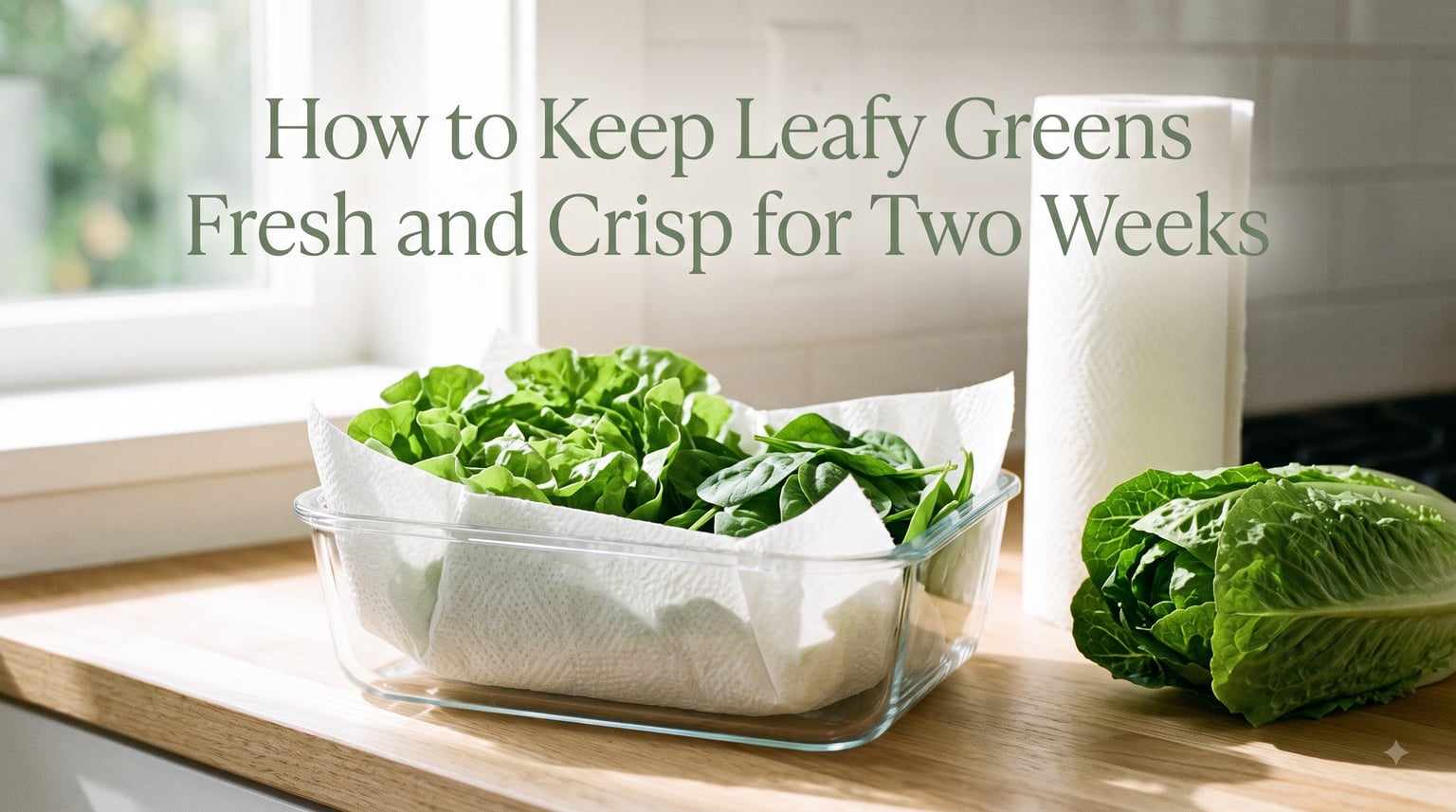
Step 2: Line a container with a dry paper towel. Use a hard-sided container with a lid. A clear plastic deli container or a glass Tupperware-style box both work. Place one folded paper towel on the bottom of the container, and add one more on top once the greens are inside.
Step 3: Loosely arrange the leaves. Don’t pack them in. Crushed leaves bruise faster and the bruised spots decay first. Lay the leaves gently, or roll heartier greens like kale loosely.
Step 4: Close the lid, but don’t snap it airtight. If your container has snap tabs, leave one corner slightly open. If it’s a screw-top, tighten it most of the way and back off a quarter turn. The goal is to slow moisture loss without suffocating the leaves.
Step 5: Store in the crisper drawer and check the towel every 4 days. If the paper towel feels damp, swap it for a fresh dry one. That’s it. No special produce keeper, no fancy equipment.
Warning: Don’t store leafy greens next to ethylene-producing fruit like apples, bananas, or tomatoes. The gas will yellow and wilt the leaves within a couple of days.
Tip: Label the container with the date you stored them. Two weeks feels longer than it sounds, and you’ll know exactly when to use the last of the batch.
Washing Greens the Right Way (Without Ruining Them)
The biggest mistake people make with greens is washing them too early and storing them wet.
Pre-washed bagged greens are convenient but they go slimy faster than unwashed greens, because every rinse in the factory adds moisture and a little bit of cell damage. If you can buy unwashed greens, you’ll get noticeably longer storage life.
When you’re ready to use them, here’s how to wash without speeding up decay. Fill a bowl with cold water. Submerge the leaves and swish gently. Lift them out instead of pouring the water through them, since grit settles at the bottom. Dry in a salad spinner, then lay them on a clean towel for 10 minutes before dressing or storing.
For heartier greens like kale and collards, a quick rinse under cold running water is enough. Skip the spinner and pat them dry with a towel.
Storage Method Comparison (Container vs Bag vs Glass Jar)
I tested three common storage setups side by side to see which one really keeps leafy greens fresh the longest.
Container with paper towels (the winner): Lasted 14 days for romaine, butter lettuce, and spinach. The hard sides prevent crushing, and the paper towels handle condensation without drying out the leaves. This is the method I recommend above all others.
Zip-top bag with a paper towel: Lasted 10 to 12 days. Works almost as well as a container, but the bag collapses onto the leaves, which can bruise delicate types like spring mix. Leave the bag slightly open at the top so condensation can escape.
Glass jar (for hardy greens only): Lasted 14 days for kale and chard. Works well because the rigid sides don’t crush the leaves. Not a good fit for delicate butter lettuce, which gets bruised against the glass.
For most households, the container method is the easiest to stick with. You probably already have the right container, you only need one paper towel, and you don’t have to remember to puff air into a bag every time you open the fridge.
Which Greens Last the Longest (Shelf Life Comparison)
Not all greens are created equal when it comes to storage life. Here’s how the most common ones compare using the container method above.
Kale (lacinato or curly): 14 to 21 days. The thick, fibrous leaves hold up better than any other green. Kale actually sweetens slightly after a week in the fridge.
Romaine and butter lettuce: 12 to 14 days. Hearty enough to handle the container method well. The inner leaves are the last to wilt.
Swiss chard and collard greens: 10 to 14 days. Similar to kale in durability. The stems can go rubbery faster than the leaves, so check them mid-week.
Baby spinach: 10 to 14 days. Surprisingly resilient if kept dry. Pre-washed baby spinach tends to go slimy by day 7.
Arugula and spring mix: 7 to 10 days. The most delicate of the common greens. Use these first.
If you want maximum shelf life, build your weekly shopping list around kale and chard. If you want variety, mix those with a small clamshell of arugula to use up first.
How to Revive Wilted Greens (Quick Ice Water Trick)
Already opened the bag to find limp, sad lettuce? Don’t throw it out yet.
Fill a large bowl with ice water. Submerge the wilted leaves for 15 to 30 minutes. The cold water rehydrates the cells through osmosis, and most greens will crisp back up noticeably. Spin them dry afterward and use them the same day, since revived greens don’t store as long the second time around.
This trick works especially well for romaine, butter lettuce, and spinach. It works less well for kale and chard, which are usually too far gone by the time they wilt noticeably.
Signs Your Greens Have Gone Bad (When to Toss Them)
Not every limp green is a lost cause, and not every slimy leaf is unsafe. Here are the three signs that mean it’s time to compost.
Slimy texture across multiple leaves. A single slimy spot can be cut off. A whole layer of slime means the batch is done. The texture feels slippery and won’t rinse off.
Sour or off smell. Fresh greens smell green and slightly sweet. If they smell sour, fermented, or like rotting vegetation, bacteria have taken over and they should go.
Dark brown or black patches spreading. A little browning on the outer edge of a leaf is normal oxidation. Patches that spread quickly across the leaf or onto neighbors mean active decay.
When in doubt, taste a small piece of a leaf from the inside of the bunch. If it tastes fresh and slightly bitter, the batch is fine. If it tastes sour or metallic, compost it.
What to Look for When Buying Fresh Greens
The best storage method in the world can’t save greens that were already past their prime when you bought them. Here’s what I look for at the store or farmer’s market.
Vibrant color. Leaves should look bright and saturated, not dull or yellowed. Yellowing at the edges means the greens are already a few days old.
Crisp stems and ribs. Bend a stem gently. If it snaps cleanly, the greens are fresh. If it bends or feels rubbery, they’ve been sitting too long.
No wetness in the bag. A dry bag or clamshell is a good sign. Visible condensation or pooled water means the greens have been in a moisture trap, and they’ll go slimy fast.
Unwashed when possible. As I mentioned earlier, unwashed greens store noticeably longer than pre-washed ones. Look for bunched greens with stems still attached, or tubs labeled “unwashed.”
Buy from a high-turnover source. If you’re at a grocery store, check the delivery date stickers. If you’re at a farmer’s market, ask what’s been picked that morning. Greens lose about 5% of their freshness every day after harvest.
Choosing well at the store is half the battle. The other half is what you do in the first hour after you get home, and that’s where the container method pays off.
Frequently Asked Questions
How to keep greens fresh for 2 weeks?
Line a hard-sided container with a dry paper towel, loosely arrange the leaves inside, add a second paper towel on top, close the lid most of the way, and store in the crisper drawer. Swap the paper towels every 4 days. This method keeps romaine, butter lettuce, spinach, and kale crisp for 14 days.
How do restaurants keep lettuce so crisp?
Restaurants wash greens in ice water, spin them completely dry, and store them in containers lined with paper towels inside walk-in fridges. The cold water rehydrates leaves and the dry towels prevent condensation, which is the same principle behind the home method above.
How to store leafy greens so they last longer?
Store them dry in a container with paper towels, keep the lid slightly open for air flow, and place the container in the crisper drawer. Keep greens away from ethylene-producing fruit like apples and bananas, and don’t wash them until you’re ready to use them.
What leafy greens stay fresh the longest?
Kale and collard greens last 14 to 21 days. Romaine, butter lettuce, and chard last 10 to 14 days. Baby spinach lasts 7 to 14 days depending on whether it’s pre-washed. Arugula and spring mix are the most delicate and usually last 7 to 10 days.
The Bottom Line on Keeping Leafy Greens Fresh
If you remember nothing else, remember this: a dry paper towel in a loosely closed container, stored in the crisper drawer, is the single most effective thing you can do to keep leafy greens fresh.
Skip the pre-washed clamshell when you can, buy unwashed bunches, and only rinse your greens right before you eat them. With these small changes and the step-by-step method above, two weeks of crisp greens is absolutely realistic. I’ve been doing it consistently for over a month now, and I’ve cut my produce waste nearly in half.