
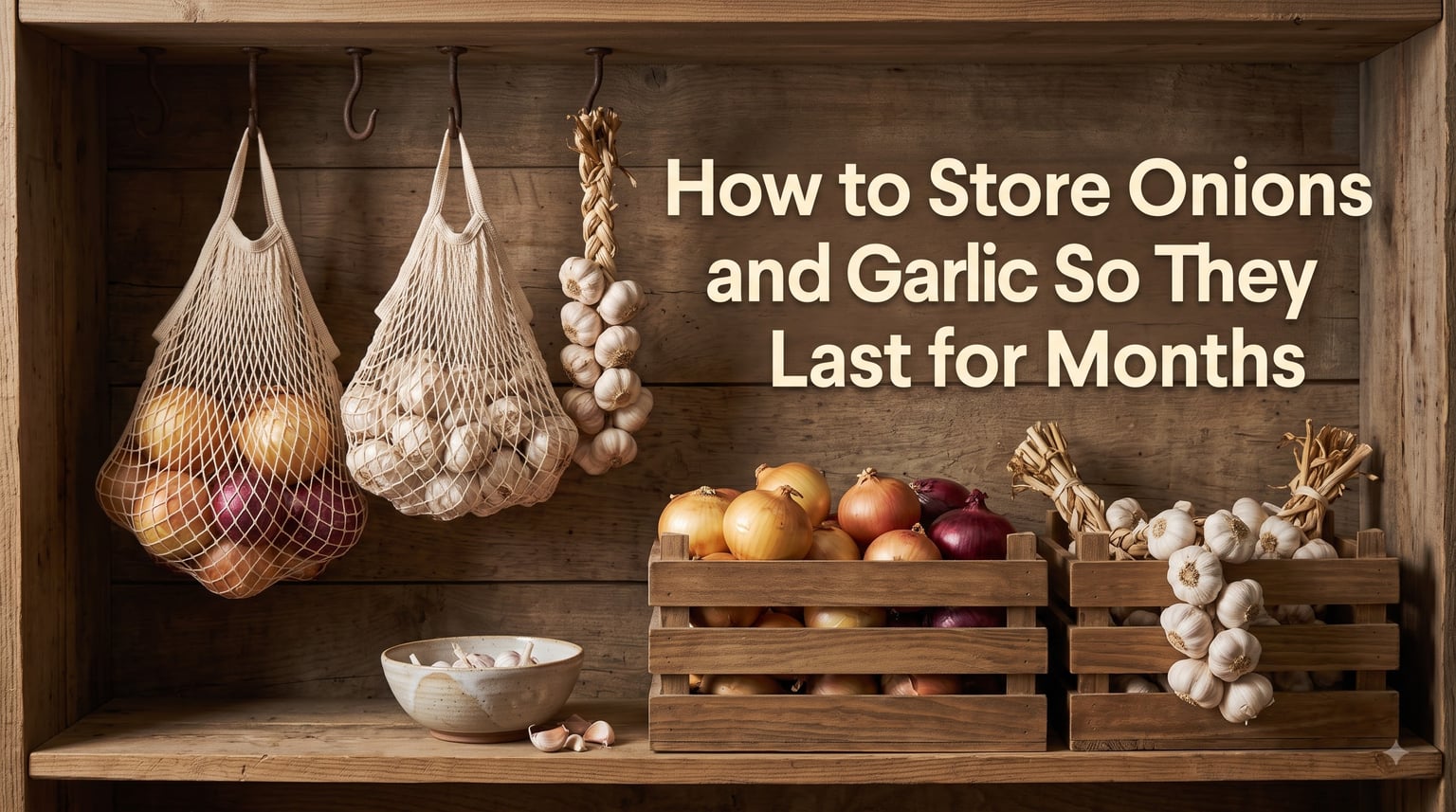
I learned the hard way that a three-pound bag of onions does not belong on the kitchen counter. After watching half of them sprout green shoots within three weeks, I started digging into proper storage methods. The result: I now store onions and garlic successfully for up to six months from a single purchase, even in a small apartment without a root cellar. This guide walks you through exactly what I do, why it works, and how you can replicate it.
Whether you buy in bulk, grow your own, or just want to stop tossing slimy alliums in the trash, the steps below will save you money and cut food waste. We will cover the ideal temperatures, the best containers, curing methods, freezer backups, and how to handle cut pieces. By the end, you will have a clear routine for keeping these kitchen staples fresh for months.
Table of Contents
- Why Proper Storage Matters When You Store Onions and Garlic?
- The Ideal Conditions to Store Onions and Garlic Long Term
- Best Containers When You Store Onions and Garlic
- How to Prepare Onions Before You Store Them
- How to Prepare Garlic Before You Store It
- Where to Store Onions and Garlic in Your Kitchen
- Can You Store Onions and Garlic in the Same Container?
- How to Store Cut or Chopped Onions and Garlic
- Freezing Onions and Garlic for Months of Storage
- Signs of Spoilage to Watch For
- Monthly Monitoring Checklist for Stored Alliums
- Frequently Asked Questions
- Final Tips: How to Store Onions and Garlic With Confidence
Why Proper Storage Matters When You Store Onions and Garlic?
Proper storage is the difference between onions lasting three weeks and six months. The USDA estimates that about 30 percent of the food supply in the United States is lost or wasted, and a large share of that waste happens at home. Alliums are some of the worst offenders because people shove them in plastic bags and forget about them.
When you store onions and garlic correctly, you protect the flavor, the texture, and the nutrients. Sprouted bulbs lose moisture, develop bitter compounds, and invite mould. Spoiled garlic transmits its problems to nearby produce, especially potatoes. A little effort up front prevents a cascade of waste.
The Ideal Conditions to Store Onions and Garlic Long Term
The three ingredients that decide shelf life are temperature, humidity, and air circulation. Get all three right and your onions can last 1-6 months while garlic stretches to 3-5 months or longer.
Temperature Requirements: 7-16 Degrees Celsius Sweet Spot
Onions prefer a cool range between 7 and 12 degrees Celsius (about 45 to 54 degrees Fahrenheit). Garlic does best slightly warmer, around 13 to 16 degrees Celsius (55 to 60 degrees Fahrenheit). Above 20 degrees Celsius, both vegetables sprout faster and lose firmness within weeks.
Most apartments stay warmer than this. A spare room, an interior closet, or an unheated garage often hits the sweet spot during cooler months. One Reddit user I follow keeps theirs in an unheated garage that hovers in the mid 40s Fahrenheit and reports three months of perfect bulbs.
Humidity: Keep It Below 65 Percent
High humidity is the number one enemy. Anything above 65 percent relative humidity encourages mould growth and premature sprouting. A dry basement, a pantry away from the stove, or a climate-controlled cupboard usually works well. Avoid sealing onions in plastic, which traps moisture and ruins them within days.
If you live in a humid climate, a small dehumidifier in your storage area pays for itself in saved produce. Some gardeners add a bowl of rice or silica gel packets near their storage bins to absorb extra moisture.
Air Circulation and Darkness
Air circulation prevents moisture from pooling on the skins. Darkness prevents light-driven sprouting. That is why the classic mesh bag hung in a dark corner outperforms a plastic tub on the counter.
Stack your containers so air can move around each bulb. Wire baskets, slatted crates, and breathable bags all do the job. Keep the storage spot away from the stove, the dishwasher, and any window that catches direct sunlight.
Best Containers When You Store Onions and Garlic
The right container makes or breaks your storage success. Skip the plastic and choose something that breathes.
Mesh Bags: The Gold Standard
Mesh bags are the industry standard for a reason. They allow 360-degree airflow, prevent moisture buildup, and let you see what you have at a glance. Most onions arrive at the grocery store in mesh bags, and you can reuse those.
Hang the bags from a hook in a closet or pantry. Make sure they are not packed against a wall, which blocks airflow.
Paper Bags With Holes
If mesh bags are not available, paper bags work almost as well. Punch small holes about an inch apart along the sides and fold the top loosely. The paper absorbs stray moisture while the holes keep air moving.
Never use sealed plastic bags for long-term storage. They trap ethylene gas and moisture, which causes rapid decay.
Wooden Crates, Baskets, and Wire Racks
Wooden crates and wire baskets stack easily and promote airflow. Line them with newspaper to absorb small amounts of moisture. A common setup is a slatted wooden bin in a cool closet, holding 10 to 15 pounds of onions through winter.
How to Prepare Onions Before You Store Them
Preparation is the difference between three months of storage and six. Skip the prep and even the best containers will not save you.
Curing Homegrown Onions
If you grow your own, curing is non-negotiable. Lay the freshly pulled onions in a single layer on a screen or newspaper in a warm, dry, shaded spot with good airflow. Let them cure for two to three weeks until the necks are tight, the roots are dry, and the outer skins are papery.
Curing seals the moisture inside and forms a protective barrier. Without it, stored onions rot within weeks. The Yummy Life confirms that properly cured onions stay firm and fresh for up to three months in breathable containers.
Handling Store-Bought Onions
Store-bought onions have usually been cured already. Your job is to inspect, sort, and give them room to breathe. Remove any rubber bands or plastic wraps immediately. Discard any bulbs that feel soft, smell sweet, or show signs of mould.
Keep the papery outer skins on. They protect the inner layers from bruising and moisture loss.
Trimming and Sorting
Trim the tops to about one inch for cured onions. Cut the roots close to the bulb. Sort by size: use the largest bulbs first because smaller ones store longer.
Do not wash onions before storage. Water introduces the moisture that causes mould. Brush off dirt with a soft cloth instead.
How to Prepare Garlic Before You Store It
Garlic follows a similar pattern to onions but likes slightly warmer temperatures. The papery skin is your best friend.
Curing Garlic Bulbs
Homegrown garlic needs curing too. Hang the stalks in bundles of 10 in a warm, dry, airy place for two to four weeks. You will know they are ready when the necks are stiff and the outer skins are papery and dry.
The Amish preserve garlic by braiding the cured stalks and hanging them in cool cellars. This traditional method combines good airflow with easy access.
Keeping Papery Skin Intact
Do not peel garlic before storage. The papery wrappers protect the cloves from moisture loss and pests. Leave the bulbs whole until you are ready to cook.
Store cured garlic in mesh bags, paper bags with holes, or shallow baskets. Keep it away from direct sunlight, which turns cloves green and bitter.
Where to Store Onions and Garlic in Your Kitchen
If you do not have a basement or garage, you can still find workable spots. The key is to pick a location that stays cool, dark, and dry.
Try an interior closet on an outside wall, a cabinet under the kitchen sink (away from plumbing leaks), or a hallway linen closet. Avoid the countertop, where light and warmth trigger sprouting. Avoid the refrigerator for whole bulbs, where moisture causes mould within weeks.
A spare bedroom closet kept at 16 to 18 degrees Celsius works fine for garlic. Onions need something cooler, so a basement, garage, or unheated mudroom is ideal for them.
Can You Store Onions and Garlic in the Same Container?
You can store them in the same room but keep them in separate containers. The main reason is that onions release moisture and gases as they cure, which speeds up garlic spoilage. Garlic also has stronger odors that onions can absorb.
Place the two in side-by-side mesh bags or adjacent baskets on the same shelf. This keeps airflow high and prevents flavor transfer. Both should still be far from potatoes, which release moisture that rots everything nearby.
How to Store Cut or Chopped Onions and Garlic
Cut pieces follow different rules. Once you slice into a bulb, you have exposed the moist interior to bacteria and oxygen. Refrigeration is mandatory from this point.
Wrap cut onions tightly in plastic wrap or place them in an airtight container. They keep for 7 to 10 days in the refrigerator. Sliced or diced onions in a sealed container last up to two weeks.
Chopped garlic should go into a small airtight container and stay in the fridge for up to one week. For longer storage, freeze it in oil using ice cube trays, then transfer the frozen cubes to a freezer bag. Each cube equals about one clove.
Freezing Onions and Garlic for Months of Storage
Freezing is the best backup method when you have more than you can use fresh. The texture changes, so frozen alliums work best in cooked dishes.
Dice onions and spread them on a parchment-lined tray. Freeze for two hours, then transfer the pieces to a freezer bag. This prevents clumping and lets you grab a handful whenever you need it. Frozen onions keep for 6 to 12 months.
For garlic, peel the cloves and blanch them for one minute in boiling water. Cool quickly in ice water, drain, and freeze on a tray before bagging. Alternatively, roast whole heads of garlic, squeeze out the soft cloves, and freeze those for an easy spread.
Signs of Spoilage to Watch For
Check stored alliums once a week. The earlier you catch a problem, the less you lose.
Soft spots or squishy necks mean the curing was incomplete or humidity got too high. Dark mould, especially on garlic, means the whole batch needs inspection. A sweet smell signals fermentation, which is the first stage of rot.
Green sprouts are not always a deal-breaker. Sprouted onions are still safe to eat if the bulb is firm. Cut away the sprout and use the rest. Sprouted garlic cloves are also fine, though slightly bitter. Toss any bulbs that feel hollow, smell sour, or leak liquid.
Monthly Monitoring Checklist for Stored Alliums
A quick monthly check keeps storage problems from snowballing. Here is the routine I follow.
Walk to your storage area once a month. Open the bags or bins and look for soft bulbs, mould, or sprouting. Remove anything questionable immediately so it does not contaminate the rest.
Check the temperature and humidity with a simple thermometer. If humidity creeps above 65 percent, move the storage spot or add a moisture absorber. Rotate stock by placing newer bulbs at the back and using older ones first. Refill mesh bags so no bulb is crushed under too much weight.
Frequently Asked Questions
How do I store my onions for 6 months?
Keep them in a cool, dry, dark spot between 7 and 12 degrees Celsius with humidity below 65 percent. Store cured onions in mesh bags, paper bags with holes, or slatted wooden crates. Inspect monthly and remove any soft or sprouting bulbs right away.
How do the Amish preserve garlic?
The Amish braid cured garlic stalks and hang them in cool cellars or root cellars. The braids combine good airflow with easy access, and the cool temperatures keep the cloves dormant for 3 to 5 months.
Can I store onions for 2 years?
Most homegrown onions last 6 to 9 months in good conditions, with some long-keeping varieties stretching to a full year. Two years is unrealistic without commercial curing and climate-controlled storage at 0 to 4 degrees Celsius.
Can I store onions and garlic in the same container?
No. Keep them in separate mesh bags or baskets even when stored on the same shelf. Onions release moisture and gases that speed up garlic spoilage, and the strong garlic odor can transfer to onions.
Why can’t you put garlic and onions together?
Garlic and onions release moisture and ethylene gas as they age. When packed together, this trapped moisture triggers mould, sprouting, and faster spoilage in both. Side-by-side storage works, but mixed containers do not.
Where to store onions and garlic in the kitchen?
Use a cool, dark, dry closet or pantry away from the stove and direct sunlight. The countertop is too warm and bright, while the refrigerator is too humid for whole bulbs. Aim for temperatures between 7 and 16 degrees Celsius.
How to keep onions fresh after cutting?
Wrap cut onions tightly in plastic wrap or seal them in an airtight container, then refrigerate. Sliced or diced onions keep 7 to 10 days in the fridge, and up to two weeks in a sealed container.
Final Tips: How to Store Onions and Garlic With Confidence
To store onions and garlic so they last for months, remember the three pillars: cool temperature, low humidity, and good airflow. Pick a dark closet, basement, or unheated garage. Use mesh bags or wooden crates. Cure homegrown bulbs before you put them away. Inspect monthly and remove any problems before they spread.
Pick up an extra mesh bag on your next grocery run and start treating your alliums with the respect they deserve. Within a few weeks you will notice fewer soft bulbs in the pantry, fewer green shoots in the onion bin, and a real dent in your food waste. The routine is simple, and the savings add up fast.